Marcus thought he had built the perfect splitter. He bolted a 22 GPM pump onto a 6.5 HP engine, matched it with a 4-inch cylinder, and expected commercial cycle times. On the first test, the engine bogged down before the wedge touched the wood. The pump demanded more power than the engine could deliver, and the system never reached rated pressure.
That mistake cost him a weekend, a rebuilt engine mount, and a second pump. It is also one of the most common errors in log splitter design. A log splitter hydraulic pump does not work in isolation. GPM, PSI, cylinder bore, engine horsepower, valve selection, reservoir size, and power source must operate as a matched system. Change one variable without adjusting the others, and performance drops or the system fails.
In this guide, you will learn how a log splitter hydraulic pump works, how to size it for your build, and how to match it to the rest of the hydraulic circuit. You will also see real component combinations, worked formulas, and a complete bill of materials for 11 GPM, 16 GPM, and 22 GPM builds. Whether you are designing a single splitter or sourcing pumps for OEM production, this article gives you a framework for reliable system selection.
What Is a Log Splitter Hydraulic Pump?

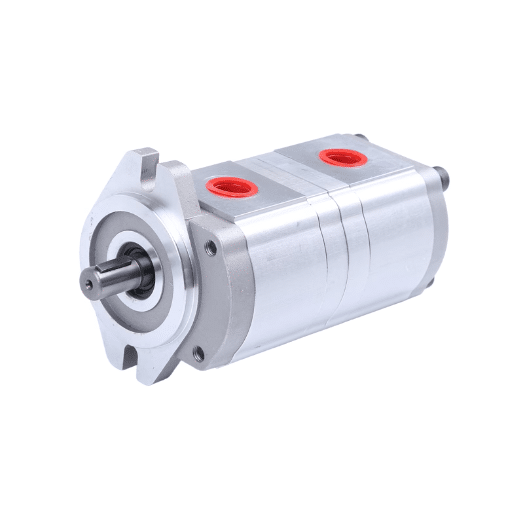
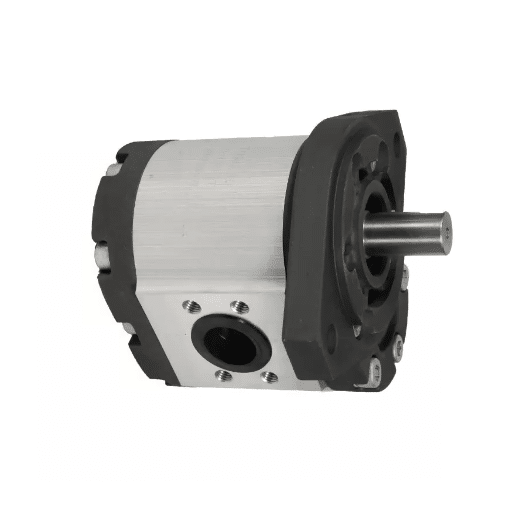
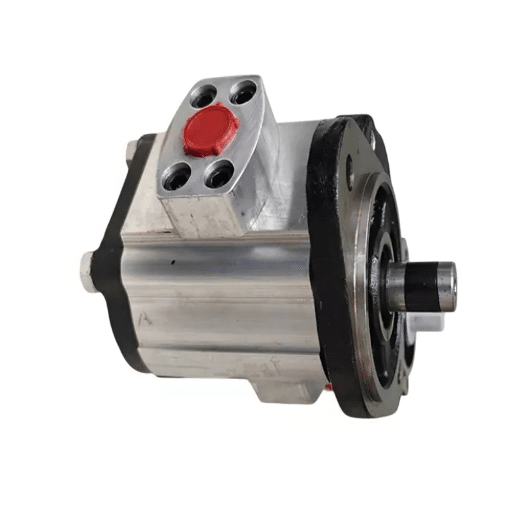
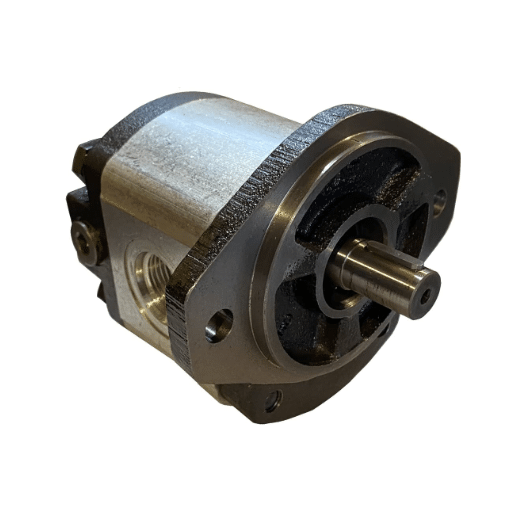
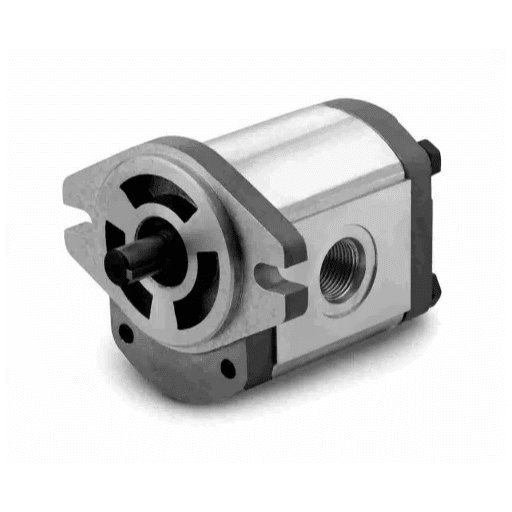
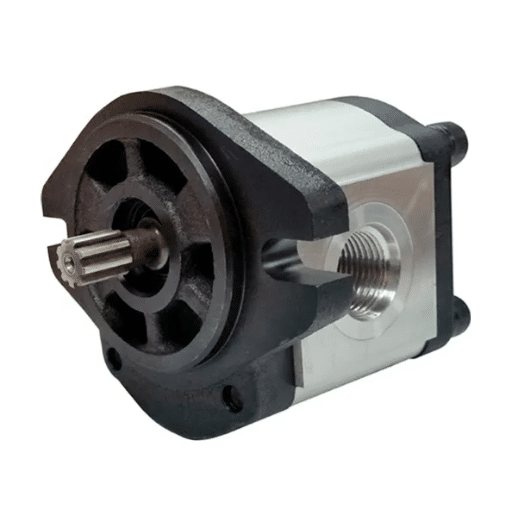
A log splitter hydraulic pump converts mechanical energy from an engine or motor into hydraulic energy. It draws oil from the reservoir and pressurizes it, sending flow through a control valve to a hydraulic cylinder. The cylinder then converts that fluid pressure into the linear force that drives the wedge through the log.
The pump is the heart of the system, but it does not create pressure on its own. Pressure develops when the oil meets resistance, such as the log pushing back against the wedge. The pump’s job is to deliver enough flow at the right pressure to move the cylinder at a useful speed while generating enough force to split the wood.
Pump selection directly determines two things: cycle time and splitting force. A higher GPM pump moves the ram faster. A higher pressure system, combined with the right cylinder bore, generates more force. Most modern log splitters use a two-stage gear pump because it delivers both fast cycle times and high force without requiring an oversized engine.
How a Log Splitter Hydraulic System Works
The Basic Circuit
The simplest log splitter hydraulic system follows a closed loop:
Reservoir → Pump → Control Valve → Cylinder → Reservoir
When the engine starts, the pump pulls oil from the tank through a suction line. It pressurizes the oil and sends it to the inlet port of the directional control valve. Moving the valve handle to Extend sends oil to the cap end of the cylinder, pushing the piston and ram forward. When the log splits or the ram reaches the end of its stroke, the operator releases the handle or the valve auto-kicks back to Neutral. Oil bypasses through the valve and returns to the reservoir. Moving the handle to Retract sends oil to the rod end, pulling the ram back for the next cycle.
Most log splitter valves include a relief valve and a return detent. The relief valve limits maximum system pressure, protecting the pump, cylinder, and hoses. The detent holds the valve in the retract position and automatically kicks out when the cylinder fully retracts and pressure spikes.
Pressure, Flow, and Force Relationship
Three variables govern hydraulic performance:
- Flow (GPM) determines how fast the cylinder moves.
- Pressure (PSI) determines how much force the cylinder produces.
- Power (HP) determines whether the engine or motor can sustain both at the same time.
The relationship between these variables is fixed. If you want more speed, you need more flow. If you want more force, you need more pressure or a larger cylinder bore. If you want both, you need more input power. Understanding this trade-off is the foundation of proper log splitter pump sizing.
The Two-Stage Pump Advantage
A two-stage pump, also called a hi-lo pump, solves the speed-versus-force problem by operating in two modes.
In the first stage, both pump sections move oil at low pressure. This delivers high flow, typically 11 to 22 GPM, for a fast approach stroke. When back pressure rises, usually between 400 and 900 PSI, an internal unloader valve redirects flow from the large section back to the inlet. Only the small section continues to pump, producing lower flow but much higher pressure, up to 3,000 PSI or more.
This automatic switch is the reason a 13 HP engine can power a 22 GPM pump and still generate 25 tons of splitting force. The engine only sees the full load during the brief high-pressure portion of the cycle. During the fast approach and retraction, the pump runs at low pressure, and the engine operates well within its capacity.
For a deeper technical explanation of how this transition works, see our guide on how does a 2 stage hydraulic pump work.
Types of Hydraulic Pumps for Log Splitters
Not every log splitter uses the same pump technology. The right choice depends on duty cycle, power source, budget, and production goals.
Two-Stage Gear Pump
This is the standard for modern log splitters. It combines high speed at low pressure with high force at low flow, making it ideal for the repetitive extend-retract cycle. Two-stage pumps are compact, cost-effective, and widely available in 11, 16, 22, and 28 GPM sizes. They are the default choice for gas-engine splitters from 12 tons to 40+ tons. If you want to understand why two-stage pumps dominate this application, read our article on 2-stage hydraulic pump for log splitter performance.
Single-Stage Gear Pump
A single-stage pump delivers one fixed flow rate regardless of pressure. It is simpler and sometimes cheaper, but it forces a compromise. A pump sized for fast cycle times may overload a small engine at high pressure. A pump sized for the engine may produce slow cycle times. Single-stage pumps work for light-duty or specialized builds where simplicity matters more than speed.
Piston Pump
Piston pumps offer higher efficiency and pressure capability than gear pumps. They appear on heavy-duty commercial splitters and firewood processors where cycle count, fuel efficiency, and long service life justify the higher cost. For most homeowner and light commercial builds, a piston pump is overkill.
12V DC Hydraulic Pump
These self-contained power units run from a battery or vehicle alternator. They are common on small electric splitters and trailer-mounted units where AC power or a gas engine is impractical. Flow rates are usually lower, often 2 to 6 GPM, so cycle times are slower. They suit occasional use, small-diameter wood, and portable applications.
PTO-Driven Pump
Tractor-powered splitters can run from the tractor’s hydraulic system or a PTO-driven pump. This eliminates the need for a separate engine but introduces compatibility constraints. Tractor hydraulics may deliver low flow at modest pressure, resulting in slow cycles. PTO shaft-driven pumps must match the tractor PTO speed, typically 540 RPM, which is much lower than the 3,600 RPM speed of most small gas-engine pumps. A pump rated for 16 GPM at 3,600 RPM will deliver far less flow at 540 RPM unless it is specifically sized for PTO operation.
To make the best choice, please read our article on the best hydraulic pump for a log splitter.
Log Splitter Pump Sizing: GPM, PSI & Horsepower

The Core Formulas
Three formulas control log splitter pump sizing.
Cylinder force:
Force (lbf) = Pressure (PSI) × Piston Area (in²)
Piston Area = Bore² × 0.7854
For example, a 4-inch bore cylinder at 3,000 PSI produces:
4² × 0.7854 × 3,000 = 37,699 lbf, or about 18.9 tons
Hydraulic horsepower:
HP = (GPM × PSI) / (1,714 × Efficiency)
Most gear pumps run at 80 to 90 percent efficiency. For a 16 GPM pump at 2,500 PSI:
HP = (16 × 2,500) / (1,714 × 0.85) ≈ 27.5 HP
That number represents peak hydraulic power during the high-pressure stage. Because a two-stage pump only reaches full pressure for a fraction of the cycle, the real-world engine requirement is lower. A gas engine rated at 8 to 13 HP can drive a 16 to 22 GPM two-stage pump in normal log splitter duty.
You can use our hydraulic pump horsepower calculator to check engine requirements for your specific pump and pressure.
Pump flow from displacement:
GPM = (RPM × Displacement) / 231
This is useful when comparing pump specifications. A pump displacing 0.85 cubic inches per revolution at 3,600 RPM delivers about 13.2 GPM.
For detailed worked examples, see our guide on what size hydraulic pump for a log splitter.
Matching Pump GPM to Cylinder and Cycle Time
Cylinder volume determines how much oil the pump must move for each stroke.
Cylinder Volume (gallons) = (Bore² × 0.7854 × Stroke) / 231
For a 4-inch bore, 24-inch stroke cylinder:
(16 × 0.7854 × 24) / 231 = 1.31 gallons
During extension, the effective flow rate depends on which stage the pump is in. A 16 GPM two-stage pump might deliver 13 GPM at low pressure and 3 GPM at high pressure. The low-pressure stage handles most of the stroke quickly. The high-pressure stage takes over only during the final splitting motion.
A rough cycle time estimate for extend plus retract on a 4 × 24 cylinder with a 16 GPM pump is 10 to 15 seconds. Actual time depends on transition pressure, relief valve setting, engine RPM, and load.
Log Splitter Pump Size Comparison: 11 GPM vs 16 GPM vs 22 GPM vs 28 GPM
The table below shows typical pairings for gas-engine direct-drive splitters. Electric and PTO setups follow different sizing rules.
| Pump Size | Typical Engine | Splitting Force Range | Approx. Cycle Time | Best Use Case |
|---|---|---|---|---|
| 11 GPM | 5.5–6.5 HP | 12–20 tons | 12–20 seconds | Light residential, occasional use |
| 16 GPM | 8–11 HP | 20–28 tons | 10–15 seconds | Standard residential/prosumer |
| 22 GPM | 9–13 HP | 25–35 tons | 8–12 seconds | Commercial, high-volume firewood |
| 28 GPM | 15+ HP | 30+ tons | Sub-10 seconds | Extreme commercial, processor builds |
Higher GPM does not automatically mean more force. Force comes from pressure and cylinder bore. A 22 GPM pump on a small engine with a 3.5-inch cylinder will cycle fast but may not split knotty hardwood. A 16 GPM pump with a 5-inch cylinder and a properly set relief valve will deliver more usable force at a moderate speed.
Commercial 2026 models from manufacturers like Wolfe Ridge illustrate this clearly. Their 28C and 28HO splitters pair a 22 GPM two-stage pump with a Honda GX390 13 HP engine and a 25 to 30 gallon reservoir. Cycle times range from 4.2 to 8.5 seconds depending on tonnage and cylinder configuration. The pump, engine, and reservoir are matched as a system, not selected independently. For a dedicated side-by-side comparison, read our article on 11 GPM vs 16 GPM vs 22 GPM log splitter pump.
Matching the Pump to the Cylinder and Engine
Common Cylinder Bore and Stroke Combinations
Cylinder bore has a larger impact on splitting force than pump size. The most common combinations for log splitters are:
- 3.5 × 24 inch: Light duty, 12–16 tons at 3,000 PSI
- 4 × 24 inch: Standard duty, 18–22 tons at 3,000 PSI
- 4.5 × 24 inch: Mid-duty, 23–28 tons at 3,000 PSI
- 5 × 24 inch: Heavy duty, 29–36 tons at 3,000 PSI
- 6 × 24 inch: Commercial/processor, 42+ tons at 3,000 PSI
A longer stroke increases the maximum log length the splitter can handle but does not change force. Force depends only on bore and pressure.
Tonnage vs. Wood Hardness
Soft, seasoned pine splits easily. Green oak, hickory, or knotty elm can require twice the effective force. A useful rule of thumb is to add 50 percent to your calculated force requirement when splitting green hardwood or wood with knots and crotches.
Recommended practical tonnage by log diameter:
- Up to 10 inches: 12–16 tons
- 10 to 18 inches: 20–28 tons
- 18 to 24 inches: 30+ tons
- Knotty or green hardwood: Size up by one bore class
For more detail on cylinder sizing, see our log splitter hydraulic cylinder size guide.
Power Source Options: Gas, Electric, and PTO

Gas Engine
Gas engines are the most common power source for log splitter hydraulic pumps. A direct-drive setup mounts the pump directly on the engine crankshaft or through a flexible coupler. Most small gas engines run at 3,600 RPM at full throttle, which matches the rated speed of most two-stage pumps.
Typical pairings:
- 5.5–6.5 HP engine → 11 GPM pump
- 8–11 HP engine → 16 GPM pump
- 9–13 HP engine → 22 GPM pump
- 15+ HP engine → 28 GPM pump
AC Electric Motor
Electric motors are quieter and require less maintenance than gas engines, but they are limited by available power. A standard 115V household circuit can support a 1.5 to 2 HP motor, which is only suitable for small 5 to 8 ton electric splitters. A 230V single-phase circuit can support 3 to 5 HP, enough for a light 11 GPM build.
Electric motors also run at fixed speeds, typically 1,725 or 3,450 RPM. If the motor speed does not match the pump’s rated speed, you must use a belt or pulley drive to correct the ratio.
12V DC Hydraulic Pump
A 12V DC power unit combines a small motor, pump, reservoir, and valve in one package. These units are convenient for portable or trailer-mounted splitters but are limited to low flow and intermittent duty. They are not a substitute for a gas-engine or AC-motor build if speed and continuous operation matter.
PTO-Driven Splitter
PTO-driven pumps must be selected for 540 RPM or 1,000 RPM PTO speed. A pump rated at 16 GPM at 3,600 RPM will deliver only about 2.4 GPM at 540 RPM if the displacement stays the same. To get useful flow at PTO speed, you need a larger-displacement pump or a pump specifically designed for PTO operation. You must also confirm that the tractor hydraulic system can handle the return flow and reservoir requirements.
For a full power-source comparison, see our guide on electric vs gas vs PTO log splitter hydraulic pump.
Complete Log Splitter Hydraulic Pump Kit Components
A complete build kit ties the pump to every other part of the system. Below is a bill of materials for a typical 16 GPM two-stage gas-engine build.
| Component | Specification | Notes |
|---|---|---|
| Pump | 16 GPM two-stage gear pump | 3,000 PSI working, 4,000 PSI max |
| Engine | 8–11 HP gas engine | 3,600 RPM direct drive |
| Cylinder | 4 × 24 inch | 18–22 tons at 3,000 PSI |
| Control valve | Auto-return detent valve | Includes integral relief valve |
| Reservoir | 8–12 gallon | 1 gallon per GPM minimum |
| Suction hose | 1 inch ID reinforced | Prevents collapse and cavitation |
| Return hose | 3/4 inch ID | Rated for low pressure return |
| Pressure hose | 3/8 or 1/2 inch ID | Rated 3,500 PSI or higher |
| Filter | 25 micron return filter | Protects pump and valve |
| Coupler | SAE A 2-bolt mount with keyed shaft | Match pump shaft size |
| Pressure gauge | 0–5,000 PSI | Install at valve test port |
| Hydraulic oil | AW32 or AW46 | Choose based on climate |
For 11 GPM builds, scale the engine down to 5.5–6.5 HP and the reservoir to 5–7 gallons. For 22 GPM builds, use a 9–13 HP engine and a 15–20 gallon reservoir. For 28 GPM builds, plan for 15+ HP and 20+ gallons of tank capacity. If you need a complete sourcing checklist, read our log splitter hydraulic pump kit guide.
Installation and Setup Best Practices
Proper installation protects the pump and improves performance. Follow these guidelines for a reliable build.
Mounting alignment. The pump shaft and engine shaft must be aligned within a few thousandths of an inch. Misalignment causes premature seal wear, vibration, and coupling failure. Use a flexible coupler rated for the pump torque and check alignment after the first few hours of operation.
Inlet plumbing. The suction line should be short, straight, and oversized relative to the pump inlet. A 16 GPM pump typically has a 1-inch inlet, and the suction hose should be 1-inch ID or larger. Restricted inlets cause cavitation, which sounds like gravel in the pump and destroys internal components over time.
Filtration. Install a 25-micron return filter between the valve and reservoir. Clean oil extends pump and valve life. Some builders also add a suction strainer, but it must be large enough that it does not restrict inlet flow.
Bleeding air. After filling the reservoir, run the engine at low RPM and cycle the valve several times without load. This purges air from the cylinder and hoses. Foamy oil or erratic cylinder movement indicates trapped air.
Setting relief pressure. Start with the relief valve at its lowest setting. Slowly increase pressure while watching the gauge until the system reaches the desired working pressure, typically 2,500 to 3,000 PSI. Never exceed the cylinder, hose, or pump maximum rating.
Troubleshooting Common Log Splitter Pump Problems
When a log splitter hydraulic pump underperforms, the cause is usually one of a few common issues.
No pressure or weak force. Check the relief valve setting first. A valve set below 1,500 PSI will feel weak regardless of pump size. Next, inspect the pump for internal wear. A two-stage pump that fails to transition from high-flow to high-pressure mode will produce fast but weak cycles. Worn cylinder piston seals can also allow oil to bypass internally.
Slow cycle or failure to transition. Low oil level, a clogged suction strainer, or a restricted return filter reduce flow. Cold oil also moves slowly. In cold weather, use AW32 or allow the system to warm up before working under load.
Overheating. An undersized reservoir, continuous high-pressure operation, or a relief valve stuck partially open will heat the oil. Oil temperature above 180°F degrades hydraulic fluid and accelerates seal wear. Allow cooling periods and confirm the reservoir holds at least one gallon per GPM of pump flow.
Cavitation or whining noise. Cavitation occurs when the pump cannot draw enough oil. Causes include a restricted inlet, collapsed suction hose, low fluid level, or oil that is too thick for the temperature.
External leaks. Check fittings, cylinder rod seals, and pump shaft seals. A leaking shaft seal often indicates excessive crankcase pressure on the engine or misalignment between the pump and engine shafts.
For a full diagnostic guide, see log splitter hydraulic pump not building pressure. For replacement guidance, see our log splitter hydraulic pump replacement & compatibility guide.
The Maintenance Schedule for Long-Term Reliability

Regular maintenance prevents the failures that shorten pump life. Use this schedule as a starting point and adjust for duty cycle and environment.
Before each use:
- Check oil level in the reservoir
- Inspect hoses and fittings for leaks or damage
- Clean the suction strainer if equipped
Every 25 hours or monthly:
- Check and tighten mounting bolts and coupler hardware
- Inspect the cylinder rod for scoring or corrosion
- Wipe the cylinder rod and apply light hydraulic oil to prevent rust
Every 100 hours or seasonally:
- Change hydraulic oil
- Replace the return filter element
- Check relief valve operation and pressure setting
- Inspect pump shaft seal for leakage
Annually or every 250 hours:
- Flush the reservoir and remove sludge
- Replace suction strainer if clogged
- Inspect cylinder seals and rod condition
- Pressure-test the system and verify relief valve setting
Oil selection matters. AW32 flows better in cold weather and is the right choice for temperatures below 50°F. AW46 works better in warm climates and under continuous duty. Never mix hydraulic oil grades without flushing the system first. For a complete maintenance checklist, read our log splitter hydraulic pump maintenance schedule.
Frequently Asked Questions
What is a log splitter hydraulic pump?
A log splitter hydraulic pump converts mechanical power from an engine or motor into pressurized hydraulic flow. That flow drives a hydraulic cylinder, which produces the linear force needed to push a wedge through wood.
What size hydraulic pump do I need for a log splitter?
Match pump size to engine power and cylinder bore. For 5.5–6.5 HP engines, use an 11 GPM pump. For 8–11 HP engines, use a 16 GPM pump. For 9–13 HP engines, use a 22 GPM pump. Larger engines can support 28 GPM pumps.
Is 11 GPM or 16 GPM better for a log splitter?
16 GPM is better for most residential and prosumer builds because it offers faster cycle times without requiring a large engine. An 11 GPM pump is suitable for light-duty, occasional use with a smaller engine.
How much horsepower does a log splitter pump need?
Peak hydraulic horsepower equals GPM times PSI divided by 1,714, adjusted for pump efficiency. In practice, a 16 GPM two-stage pump runs well on an 8 to 11 HP gas engine, and a 22 GPM pump runs well on 9 to 13 HP.
What PSI should a log splitter relief valve be set to?
Most log splitter systems operate at 2,500 to 3,000 PSI. The relief valve should be set no higher than the lowest rated component, usually the cylinder, hose, or pump maximum pressure rating.
Can I use a single-stage pump on a log splitter?
Yes, but it forces a compromise. A single-stage pump cannot deliver both fast cycle times and high force efficiently on a small engine. Two-stage pumps are the standard for this reason.
What size cylinder do I need for a 25-ton log splitter?
A 4.5-inch bore cylinder at 3,000 PSI produces about 23.9 tons. A 5-inch bore cylinder at 3,000 PSI produces about 29.5 tons. For a true 25-ton rating, use a 4.5-inch bore at 3,150 PSI or a 5-inch bore at 2,550 PSI.
Why is my log splitter running slow?
Common causes include low oil level, clogged suction strainer or return filter, cold oil, worn pump, internal cylinder seal bypass, or a relief valve set too low.
How big should the hydraulic tank be?
Use at least one gallon of reservoir capacity for every GPM of pump flow. A 16 GPM pump needs a 16-gallon tank minimum. Larger tanks improve cooling and reduce aeration, so 2 to 3 times the minimum is preferred for commercial use.
Can I run a log splitter pump with an electric motor?
Yes, but the motor must match the pump’s speed and power requirement. A 16 GPM two-stage pump at 3,000 PSI peak can require 5 to 7.5 HP continuous electric power, which usually needs a 230V single-phase or three-phase supply.
Conclusion
A log splitter hydraulic pump is only one part of a complete fluid power system. Selecting the right pump means matching GPM, PSI, engine horsepower, cylinder bore, valve capacity, reservoir size, and power source together. When these variables are balanced, the splitter delivers fast cycle times, consistent force, and long service life. When they are not, the result is engine overload, slow cycles, overheating, or premature pump failure.
Start by defining the force and speed your application needs. Choose a cylinder bore and pressure target that deliver that force. Size the pump GPM to meet your cycle time goal. Match the engine or motor to the pump’s power demand. Then build the rest of the system- reservoir, hoses, valve, and filtration- around those decisions.
For OEMs, equipment manufacturers, and bulk buyers, sourcing a log splitter hydraulic pump as part of a complete kit simplifies procurement and ensures component compatibility. Contact LOYAL INDUSTRIAL PTE. LTD. to request a technical specification sheet, get a customized hydraulic system recommendation, or request a quote for a complete log splitter pump kit.