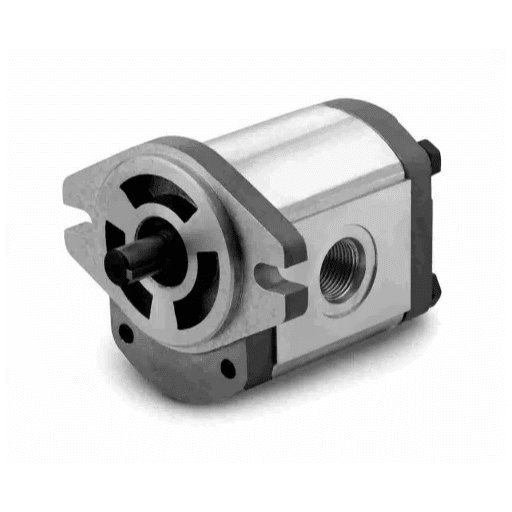
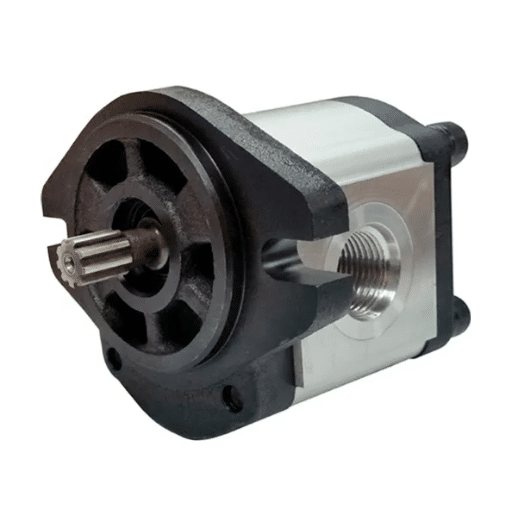
Mike upgraded his log splitter from an 11 GPM pump to a 22 GPM pump, expecting the cycle time to drop by half. Instead, his 6.5 horsepower engine bogged down under load, the hydraulic oil climbed past 200°F, and the wedge moved more slowly on tough oak than it had before. The problem was not the pump. It was the mismatch.
Choosing the right flow rate is one of the most misunderstood decisions in log splitter specification. A higher GPM number does not automatically mean faster or better performance. The right choice depends on engine power, cylinder bore, system pressure, and the type of work the machine will do. This guide compares 11 GPM, 16 GPM, and 22 GPM log splitter pumps side by side so you can match flow rate to your setup instead of guessing. Need more information about log splitter hydraulic pumps? You can read our complete guide to log splitter hydraulic pumps.
What GPM Means for a Log Splitter Pump

GPM stands for gallons per minute. In a log splitter hydraulic system, it measures how much fluid the pump moves through the circuit in one minute. More flow means the cylinder extends and retracts faster, which reduces cycle time. Less flow means slower movement but lower demand on the engine and reservoir.
Flow rate is only half of the performance equation. The other half is pressure. A pump that moves a lot of fluid at low pressure will extend the cylinder quickly when there is no load. When the wedge hits the log, pressure rises, and the pump needs power to maintain force. That is why most log splitters use two-stage hydraulic pumps: a high-flow, low-pressure stage for fast approach, and a low-flow, high-pressure stage for the splitting stroke. If you want to understand why two-stage pumps dominate this application, read our article on 2-stage hydraulic pump for log splitter performance.
For a log splitter pump, GPM tells you how fast. PSI tells you how hard. Engine horsepower determines whether the pump can deliver both at the same time.
For detailed worked examples, see our guide on what size hydraulic pump for a log splitter.
How Flow Rate Translates to Cycle Time
Cycle time depends on how much fluid the cylinder needs to move and how fast the pump delivers it. A 4-inch bore cylinder with a 24-inch stroke holds roughly 0.52 gallons in the cap end. If the pump supplies 11 GPM, the theoretical extension time is under three seconds. In practice, valve restriction, hose size, and the transition to the high-pressure stage add several seconds.
Real-world cycle times also depend on return speed. The rod side of the cylinder holds less volume, so retraction is usually faster than extension. When comparing 11 GPM vs 16 GPM vs 22 GPM log splitter pump options, expect the biggest time savings to appear on the no-load approach and the return stroke, not during the actual split.
11 GPM Log Splitter Pump: Best Use Cases
An 11 GPM pump is the smallest flow rate commonly used on gas-powered log splitters. It is a practical choice for light-duty residential machines, electric splitter conversions, and compact equipment where engine size is limited.
Typical Specifications
- Recommended engine: 5 to 6.5 horsepower
- Common pump type: gear pump or small two-stage pump
- Typical cycle time with 4-inch bore / 24-inch stroke: 15 to 20 seconds
- Recommended reservoir: 3 to 5 gallons
- Typical operating pressure: 2,500 to 3,000 PSI
When 11 GPM Is the Right Choice
This flow rate works well for homeowners who split a few cords per season. It pairs naturally with smaller engines and does not require a large reservoir or heavy-duty cooling. The lower flow rate also places less strain on hoses, fittings, and valves, which can reduce maintenance costs over time.
Sarah runs a small farm and splits about 20 cords of softwood each winter. Her 5.5 horsepower splitter uses an 11 GPM two-stage pump with a 4-inch cylinder. The cycle time is not the fastest in her county, but the machine starts easily, stays cool, and has not needed a hydraulic repair in four seasons. For her workload, the smaller pump is the more reliable choice.
Limitations
An 11 GPM pump is not the best fit for commercial firewood operations or rental fleets. The longer cycle time reduces throughput, and the pump may not supply enough flow for large-bore cylinders. If the machine will run for hours at a time with heavy hardwood, a higher flow rate will usually deliver better productivity.
16 GPM Log Splitter Pump: The Commercial Standard

The 16 GPM log splitter pump is the most common specification for commercial and farm-grade gas-powered splitters. It hits a balance between speed and engine demand that matches the 6.5 to 9 horsepower engines used on most mid-duty and heavy-duty machines.
Typical Specifications
- Recommended engine: 6.5 to 9 horsepower
- Common pump type: two-stage piston pump
- Typical cycle time with 4-inch bore / 24-inch stroke: 10 to 14 seconds
- Recommended reservoir: 5 to 8 gallons
- Typical operating pressure: 2,500 to 3,500 PSI
Why 16 GPM Is the Most Popular Choice
A 16 GPM pump delivers a noticeably faster cycle than an 11 GPM pump without requiring the large engine, reservoir, and cooling system that a 22 GPM pump demands. For commercial firewood producers, rental companies, and farm maintenance crews, this flow rate offers the best combination of speed, reliability, and cost.
The two-stage design is important here. During the no-load approach, the pump moves close to its full rated flow. When the wedge contacts the log, it shifts to the smaller high-pressure stage. This gives the operator a quick cycle when the machine is not under load and the force needed to split dense wood.
Best Applications
- Commercial firewood processors
- Farm and ranch maintenance
- Rental equipment fleets
- Medium to heavy-duty residential splitters with 7 to 9 HP engines
If you are unsure which flow rate to choose, 16 GPM is usually the safest starting point for a gas-powered splitter with a 4-inch cylinder and a 6.5 horsepower or larger engine.
22 GPM Log Splitter Pump: High-Flow Considerations
A 22 GPM hydraulic pump log splitter setup moves fluid fast. It can deliver very short cycle times, but only if the rest of the system is sized to support it. This flow rate is not a simple upgrade. It requires more engine power, a larger reservoir, bigger hoses, and often a larger cylinder bore.
Typical Specifications
- Recommended engine: 9 horsepower or higher
- Common pump type: two-stage piston pump
- Typical cycle time with 4-inch bore / 24-inch stroke: 7 to 10 seconds
- Recommended reservoir: 8 to 12 gallons
- Typical operating pressure: 2,500 to 3,500 PSI
When 22 GPM Makes Sense
High-flow pumps are appropriate for high-volume processors, large-bore cylinders, and machines that split big-diameter logs continuously. If the splitter runs all day in a commercial yard, the time saved per cycle adds up. A 22 GPM pump also makes sense when paired with a 5-inch or larger cylinder that needs more fluid volume to move at acceptable speed.
The Oversizing Risk
The biggest mistake buyers make is installing a 22 GPM pump on an engine that cannot supply it. Hydraulic power is the product of pressure and flow. At 3,000 PSI and 22 GPM, the pump demands roughly 38 hydraulic horsepower. Even accounting for pump efficiency and the two-stage reduction under load, the engine must have enough reserve power to keep the pump from bogging.
If the engine is too small, the pump will cavitate, overheat, and wear faster. The cylinder may also move erratically. Before selecting 22 GPM, verify that the engine, reservoir, cylinder, and hoses are all rated for the increased flow.
11 GPM vs 16 GPM vs 22 GPM Log Splitter Pump Comparison

The table below summarizes the practical differences between the three flow rates for a typical 4-inch bore, 24-inch stroke cylinder.
| Specification | 11 GPM | 16 GPM | 22 GPM |
|---|---|---|---|
| Recommended engine HP | 5–6.5 | 6.5–9 | 9+ |
| Typical cycle time | 15–20 sec | 10–14 sec | 7–10 sec |
| Common pump type | Gear / small two-stage | Two-stage | Two-stage |
| Recommended reservoir | 3–5 gal | 5–8 gal | 8–12 gal |
| Best use case | Light residential / farm | Commercial / rental | High-volume processing |
| Operating pressure | 2,500–3,000 PSI | 2,500–3,500 PSI | 2,500–3,500 PSI |
| Heat load | Low | Moderate | High |
This comparison assumes a two-stage pump for 16 GPM and 22 GPM. Single-stage gear pumps at those flow rates would require even more engine power and would not provide the high-pressure second stage needed for efficient splitting.
How to Match GPM to Engine Horsepower and Cylinder Size
The goal of pump selection is to match flow, pressure, and engine power. A useful rule of thumb is that one hydraulic horsepower is required for every 1 GPM at 1,500 PSI. At 3,000 PSI, the same 1 GPM requires roughly two hydraulic horsepower. This means a 16 GPM pump at 3,000 PSI needs more than 30 hydraulic horsepower if it ran continuously at full pressure. In practice, two-stage pumps spend most of the cycle in the fast low-pressure stage, so the engine sees an average load well below the peak.
Cylinder Volume Matters
A larger cylinder needs more fluid to move the same distance. Doubling the cylinder volume without increasing pump flow doubles the cycle time. If you want to maintain speed with a larger cylinder, you need more GPM. You can estimate the flow needed for a target cycle time using standard hydraulic capacity references.
Engine Speed and Pump Displacement
Pump output depends on displacement and engine RPM. A pump rated at 16 GPM at 3,600 RPM will deliver less flow at lower engine speeds. When sizing a pump, check the flow curve at the engine speed you plan to use, not just the headline rating.
Common Mistakes When Selecting a Log Splitter Pump GPM
Many performance problems in log splitters come from mismatched components. Here are the most common errors buyers make when comparing 11 GPM vs 16 GPM vs 22 GPM log splitter pump options.
Choosing GPM Based Only on Cycle Time
A shorter cycle time is attractive, but it is not the only metric. If the engine, reservoir, and cylinder cannot support the higher flow, the system will overheat and underperform. Always size the pump to the power available.
Undersizing the Reservoir
Higher flow generates more heat and needs more fluid volume for cooling. A 22 GPM pump on a 3-gallon reservoir will overheat quickly. The reservoir should be three to five times the pump’s GPM rating for most applications.
Ignoring Hose and Fitting Sizes
Hoses and fittings must be large enough to pass the flow without excessive restriction. Undersized plumbing creates pressure drops, slows the cylinder, and generates heat. Match port sizes and hose inner diameter to the pump flow rating.
Forgetting the Relief Valve Setting
The relief valve limits maximum system pressure. If it is set too low, the pump will shift to the high-pressure stage early and the cycle will slow. If it is set too high, it can overload the engine and risk component damage.
Maintenance and Reliability by Flow Rate

Higher flow rates increase the thermal and mechanical load on the system. Maintenance priorities shift as GPM rises.
11 GPM Systems
Light duty means lower heat and less wear. Standard maintenance includes checking fluid level, changing hydraulic oil annually, and inspecting hoses for cracks. Most residential users can keep an 11 GPM system reliable with basic care.
16 GPM Systems
Commercial use requires more attention. Check fluid temperature during long runs, clean or replace filters on schedule, and inspect couplings and pump mounts for vibration. A 16 GPM two-stage pump should be paired with a reservoir large enough to keep oil temperature below 180°F under normal conditions.
22 GPM Systems
High-flow systems need robust cooling and filtration. Consider a larger reservoir, an oil cooler for continuous operation, and high-quality hydraulic oil rated for the operating temperature. Monitor pump inlet conditions to prevent cavitation, which is the leading cause of premature failure in high-flow setups.
Frequently Asked Questions
Is a higher GPM pump always faster on a log splitter?
Not always. A higher GPM pump is faster only if the engine, cylinder, reservoir, and hoses can support the increased flow. On an undersized engine, a higher GPM pump will bog down and may produce slower, hotter operation.
What GPM pump do I need for a 7 HP log splitter?
A 7 horsepower engine typically pairs well with a 16 GPM two-stage pump. This combination provides good cycle time without overloading the engine. An 11 GPM pump would work but would be slower; a 22 GPM pump would likely be too much unless the cylinder and reservoir are also larger.
Can I put a 22 GPM pump on a 4-inch cylinder?
Yes, but the benefit depends on the rest of the system. A 22 GPM pump on a 4-inch cylinder with a 9+ horsepower engine and an 8+ gallon reservoir will cycle quickly. With a smaller engine or reservoir, it will overheat and underperform.
How does a two-stage pump affect GPM selection?
A two-stage pump delivers high GPM at low pressure and low GPM at high pressure. This lets you choose a higher flow rate for fast approach and return without demanding full engine power during the split. Most 16 GPM and 22 GPM log splitter pumps are two-stage designs.
What happens if the reservoir is too small for the pump GPM?
The hydraulic oil overheats. High oil temperature degrades seals, thins the fluid, and reduces pump life. As a rule, size the reservoir at three to five times the pump’s GPM rating.
Conclusion
The right flow rate depends on more than a headline GPM number. An 11 GPM log splitter pump is a solid choice for light residential and farm use. A 16 GPM pump is the practical standard for commercial firewood and rental equipment. A 22 GPM pump delivers the fastest cycle times, but only when paired with a large enough engine, cylinder, reservoir, and cooling system.
Match the pump to the complete system, not just the desired speed. Check engine horsepower, cylinder bore, reservoir capacity, and hose sizing before making a decision. A well-matched 16 GPM setup will outperform a poorly matched 22 GPM setup every time.
If you need help selecting the right pump flow rate for your log splitter or fleet, contact our engineering team for a customized recommendation.