Imagine watching a log splitter extend its ram at full speed, then instantly shift into a slow, forceful pressing motion that splits a hardwood round in seconds. That speed-to-force transition is not magic. It is the result of a 2 stage hydraulic pump automatically switching between two internal operating modes.
If you have ever wondered how one pump can deliver both rapid cylinder movement and high-pressure force without a larger engine, you are asking the right question. In this article, we break down the two stage hydraulic pump working principle from the gear set level to the valve level. You will learn exactly how a 2 stage hydraulic pump works, what components control the transition, and why this design matters for industrial equipment.
By the end, you will understand the internal mechanics of the two-stage switching process, the role of the unloader valve, and where this pump type delivers the most value.
Need help selecting the right pump for your machinery? Contact our engineers for a customized hydraulic system recommendation.
What Is a 2 Stage Hydraulic Pump

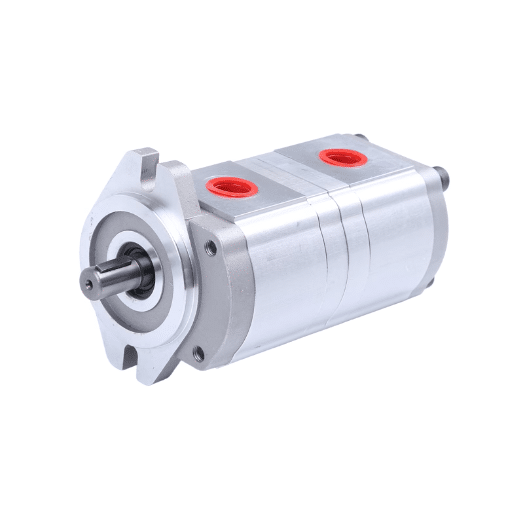
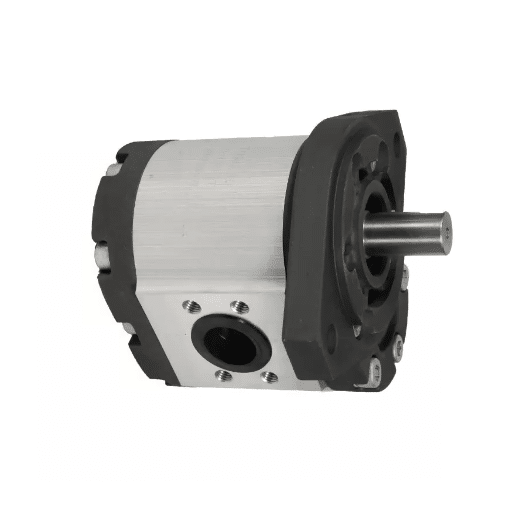
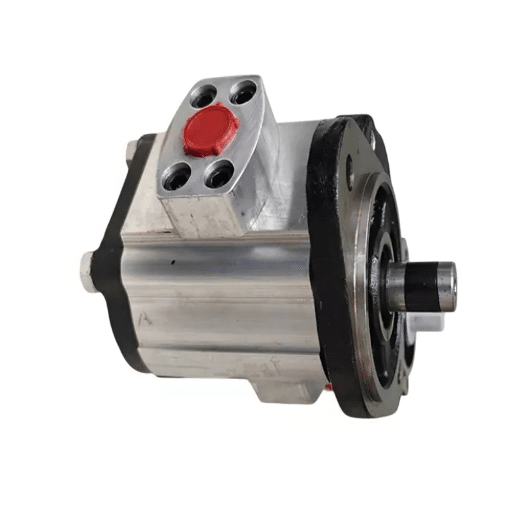
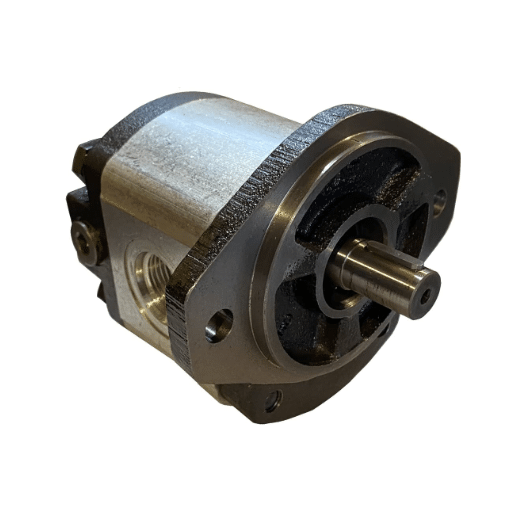
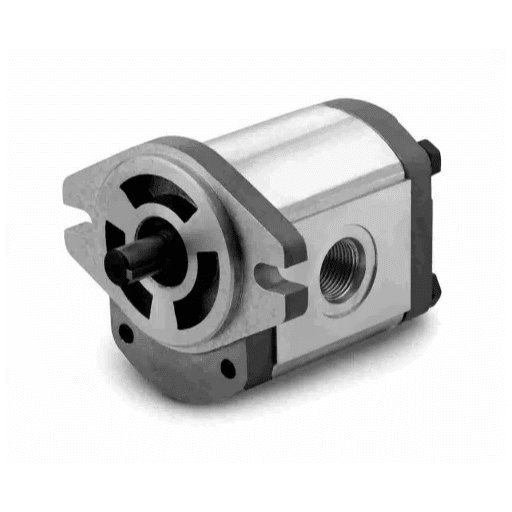
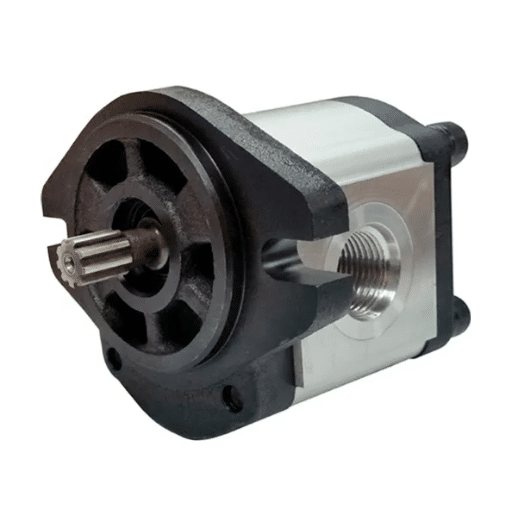
To understand how a 2 stage hydraulic pump works, start with its dual-displacement design. A 2 stage hydraulic pump is a single pump unit that contains two pumping stages of different displacements inside one housing. It is also called a two-stage pump, HI/LO pump, two-speed pump, or log splitter pump. Need more information about 2 Stage Hydraulic Pump? You can read our 2 Stage Hydraulic Pump Complete Guide.
The pump alternates between two distinct operating modes:
- Stage 1, High flow, low pressure: A large-displacement gear set moves a high volume of hydraulic fluid quickly when the load is light.
- Stage 2, Low flow, high pressure: A small-displacement gear set delivers much higher pressure when the actuator meets resistance.
This dual-mode design solves a common fluid power problem. Most hydraulic systems need speed during the approach phase and force during the work phase. A single-stage pump forces designers to choose one or the other, or to oversize the power unit. A two-stage gear pump delivers both from one compact unit.
Quick definition: A 2 stage hydraulic pump combines a high-flow gear set and a high-pressure gear set in one housing, automatically switching between them with an unloader valve as system load changes.
The Two Operating Stages Explained
Stage 1: High Flow, Low Pressure Mode
When a hydraulic cylinder first starts moving, it usually has little resistance to overcome. The ram on a log splitter, for example, moves quickly through open air before the wedge touches the wood.
In this phase, the pump’s large-displacement stage dominates. It draws hydraulic fluid from the reservoir and pushes a high volume through the outlet port. Because the load is light, system pressure stays low, often below 650 PSI. You can learn how pump displacement calculation connects flow rate to gear set size in our separate guide.
Typical Stage 1 performance for a 16 GPM two-stage gear pump at 3,600 RPM is approximately 12 GPM at 650 PSI or less. This high flow rate gives the actuator rapid extension or retraction.
The large stage does most of the work during this phase. The small stage also contributes flow, so both gear sets can operate together during low-pressure movement.
Stage 2: Low Flow, High Pressure Mode
Once the actuator meets resistance, the story changes. The log splitter wedge contacts the log. The hydraulic press platen touches the workpiece. The dump trailer bed begins to lift its load.
System pressure rises sharply. At a preset threshold, usually around 650 PSI from the factory, the pump switches modes. The small-displacement stage now drives the load. Because its displacement is smaller, it produces less flow but can generate much higher pressure, commonly up to 3,000 PSI.
For the same 16 GPM pump, Stage 2 might deliver only 3–4 GPM, but at the pressure needed to split wood, press metal, or lift heavy material.
This automatic shift is the core of the two stage hydraulic pump working principle. The system only uses high pressure when it is actually needed.
Want a visual breakdown? See our diagram guide to 2 stage hydraulic pumps for a labeled cross-section of the internal flow paths.
How Does a 2 Stage Hydraulic Pump Switch Between Stages?

The transition between Stage 1 and Stage 2 is automatic, but it depends on a precise interaction between valves and gear sets. Here is how it works.
The Role of the Unloader Valve
The unloader valve is the control center of the two-stage pump. It senses system pressure and decides when to unload the large stage.
When system pressure is below the transition threshold, the unloader valve stays closed. Both stages deliver flow to the outlet.
When pressure reaches the preset transition point, the unloader valve opens. It redirects flow from the large-displacement stage back to the reservoir or pump inlet. This removes the large stage from the pressure-generating circuit.
The small stage continues to supply high-pressure flow to the system. The motor now only needs to drive the small stage against high pressure, which reduces power demand and heat generation.
The Role of Check Valves
Check valves prevent backflow and isolate the two stages during switching.
During Stage 1, check valves allow both stages to combine their output into a common outlet line. During Stage 2, they prevent high-pressure fluid in the outlet line from flowing backward into the unloaded large stage.
Without check valves, the high-pressure side could push fluid back through the large stage. That would waste energy and prevent the pump from building pressure.
What Happens When the Load Is Removed
When the actuator finishes its work stroke, the system pressure drops. The unloader valve senses this drop and closes. The large stage re-engages, and the pump returns to high-flow mode.
This is why the ram on a log splitter retracts quickly after a split. The pressure has fallen, so both stages contribute to the flow again. The cycle repeats automatically for the next log.
Example cycle: A 16 GPM two-stage log splitter pump runs both stages at low pressure for fast approach. At ~650 PSI, the unloader opens and the large stage bypasses to tank. The small stage continues at ~3 GPM and up to 3,000 PSI to complete the split.
Key Components Inside a 2 Stage Hydraulic Pump
Understanding the parts helps explain why two-stage pumps are both efficient and reliable.
- Inlet port: Draws hydraulic fluid from the reservoir into the pump.
- Outlet port: Delivers pressurized fluid to the system.
- High-flow gear set: Larger displacement stage for rapid low-pressure movement.
- High-pressure gear set: Smaller displacement stage for force-intensive work.
- Unloader valve: Pressure-control valve that switches the pump between stages.
- Check valves: One-way valves that isolate stages and prevent backflow.
- Pressure relief valve: Protects the system from over-pressurization.
- Shaft and bearings: Transfer mechanical power from the engine or motor.
- Shaft seals and housing: Contain fluid and maintain internal pressure.
Why Two Stages? Efficiency and Performance

The main advantage of a two-stage pump is energy management. Instead of driving a single large pump at maximum pressure for the entire cycle, the system only draws high-pressure flow when resistance demands it.
This design delivers four practical benefits:
- Faster cycle times: High flow during the approach phase reduces non-productive movement.
- Lower power demand: The motor works against high pressure only during the work stroke.
- Reduced heat generation: Less wasted energy means cooler hydraulic fluid and longer component life.
- Compact design: One pump replaces the need for two separate pumps or an oversized power unit.
Mini-story: A small equipment builder named Chen was designing a 20-ton log splitter. He first selected a single-stage 16 GPM pump, but the engine stalled under full load because the horsepower demand was too high at constant pressure.
After switching to a two-stage pump with the same nominal flow, the engine handled the load easily. The ram approached quickly and only shifted to high pressure when the wedge met the wood. Cycle time improved, and the engine ran cooler.
Common Applications for 2 Stage Hydraulic Pumps
Two-stage pumps excel wherever equipment alternates between fast movement and forceful work. Common applications include:
- Log splitters: Fast ram approach followed by high-pressure splitting.
- Hydraulic presses: Rapid positioning before pressing force is applied.
- Dump trailers and dump trucks: Quick lift at low load, then controlled pressure.
- Compactors: Fast plate advance and high-force compression.
- Industrial lifts and hoists: Rapid raising with light load, then controlled lowering.
- Filter presses: Fast plate closure and high-pressure clamping.
Two Stage vs Single Stage: When Two Stages Make Sense
Not every hydraulic system needs a two-stage pump. The right choice depends on the operating cycle. If you need a more detailed comparison, you can read our article on Two Stage Hydraulic Pump vs Single Stage.
| Feature | Single-Stage Pump | Two-Stage Pump |
|---|---|---|
| Flow profile | One fixed flow rate | High flow at low pressure, low flow at high pressure |
| Pressure handling | Constant pressure curve | Automatic shift to high pressure under load |
| Best for | Continuous moderate-pressure flow | Cycles with fast approach and forceful work stroke |
| Complexity | Simpler, fewer internal valves | More components, requires proper valve tuning |
| Cost | Lower initial cost | Higher initial cost, but better efficiency for dual-mode cycles |
Choose a single-stage pump when the system needs steady flow at a relatively constant pressure, such as in cooling circuits or lubrication systems.
Choose a two-stage pump when the machine repeatedly cycles between fast movement and high-force work. Log splitters, presses, and compactors are classic examples.
For a deeper comparison of pump technologies, read our gear pump vs piston pump analysis.
What About Variable Displacement Pumps?

Some engineers compare two-stage gear pumps to variable displacement piston pumps. Both can adjust output to match load demand, but they work differently.
A variable displacement pump changes its displacement continuously, often through a swashplate mechanism. It can deliver exactly the flow and pressure needed at any moment, but it is more complex and more expensive.
A two-stage gear pump switches between two fixed modes. It is simpler, more cost-effective, and well-suited to machines with clear speed-then-force cycles. For a full diagnostic workflow, see our HI/LO hydraulic pump troubleshooting guide.
Frequently Asked Questions
What is a 2 stage hydraulic pump?
A 2 stage hydraulic pump is a single pump housing that contains two gear sets of different displacements. It automatically switches between high-flow/low-pressure mode and low-flow/high-pressure mode depending on system load.
How does a 2 stage hydraulic pump switch stages?
System pressure controls the switch. When pressure reaches a preset threshold, typically around 650 PSI, an internal unloader valve opens and redirects flow from the large stage back to the reservoir. The small stage then supplies high-pressure flow.
What is transition pressure in a two-stage pump?
Transition pressure is the system pressure at which the unloader valve activates and switches the pump from high-flow mode to high-pressure mode. Factory settings are commonly around 650 PSI.
Is a two-stage pump the same as a variable displacement pump?
No. A two-stage pump switches between two fixed operating modes. A variable displacement pump can change output continuously. Two-stage gear pumps are simpler and more cost-effective for speed-then-force cycles.
Why are two-stage pumps often used in log splitters?
Log splitters need fast ram movement before the wedge contacts the wood, then high force to split the log. A two-stage pump delivers both without requiring an oversized engine or two separate pumps.
Conclusion
A 2 stage hydraulic pump solves one of the most common challenges in hydraulic system design: delivering both speed and force from a single power unit. By combining a high-flow gear set, a high-pressure gear set, and an automatic unloader valve, the pump switches modes as load conditions change.
Key takeaways:
- Stage 1 delivers high flow at low pressure for fast actuator movement.
- Stage 2 delivers low flow at high pressure for force-intensive work.
- The unloader valve senses system pressure and controls the automatic transition.
- Check valves isolate the stages and prevent backflow.
- Two-stage pumps are ideal for log splitters, presses, compactors, and other speed-then-force cycles.
If you are sourcing, replacing, or specifying a two-stage pump, understanding how a 2 stage hydraulic pump works is the first step toward matching flow rate, pressure rating, transition pressure, and application duty cycle. Contact LOYAL INDUSTRIAL PTE. LTD. for technical specifications, OEM support, or a customized hydraulic system recommendation tailored to your equipment.