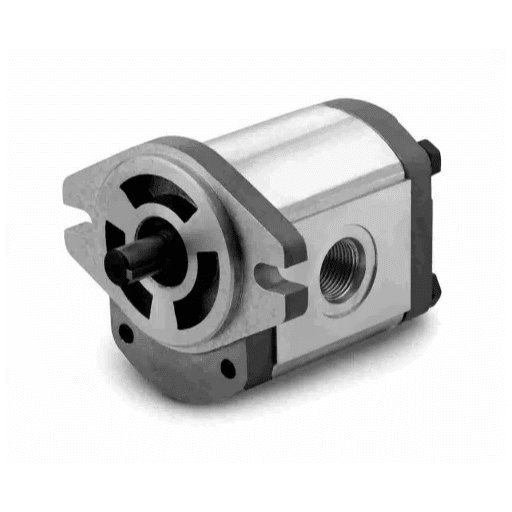
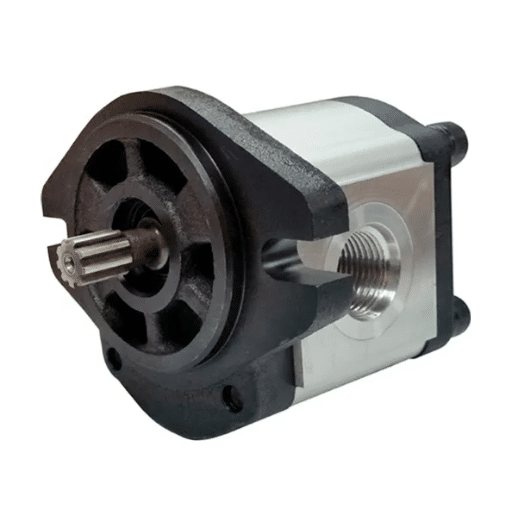
Raj placed an order for a 15 HP motor for the new hydraulic press to serve as a rough estimate, now that the motor cannot be sourced locally. An instance was noted when the motor aged full load for continuous running for two hours only; remember that the motor switch went off instantly. The real requirement for the hydraulic pump was only 11.2 HP at the fluid.
Dating losses and a safety factor increased the motor power at the shaft to nearly 18 HP. The small motor led to a one-week slowdown and the purchase of another motor.
When sizing a motor or engine for a hydraulic pump, there’s a provision in a sense that it’s not a guessing game. An incorrect horsepower rating brings about high temperatures, slow or untimely operation, drastic wear and tear on the components, and this is also synonymous to overworking the system, which wastes a lot of energy. If a credible horsepower calculator is employed for the hydraulic pump and the motor for the same, one will be able to pick the correct power input for the first instance.
The following is a detailed outline of the formulas used by engineers. This article explains concepts of motor power rating, the influence of efficiency in the specification of motors, and the application of such calculations to their practical context in the industry. Whether you will design a new system, replace a motor or assess the specifications by manufacturers, this paper lays a solid technical foundation for proper power fitting.
Need help validating horsepower requirements for your system? Request a technical consultation and our engineering team will verify your pump and motor compatibility.
What Is Hydraulic Horsepower?
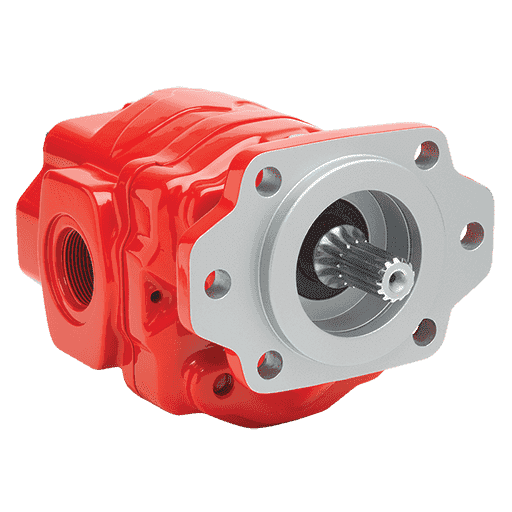
Hydraulic horsepower (HHP) is the power given to the hydraulic fluid by a pump. That is to say, the energy is derived from the mechanical drive to the hydraulic oil. This value is attributed to two factors that is, namely pressure and sheer velocity of the fluid.
Definition and Engineering Context
The hydraulic horsepower (HHP) is the power used in the displacement of liquid by the pump. Pressure is used to establish the amount of pressure applied by the liquid. Aside from pressure, flow rate measures the amount of liquid taken in a constant time. In the same way, such terms divide the total power output of the hydraulic system.
Ensure that you do not confuse these with brake horsepower or even input horsepower. Hydraulic horsepower is the power imparted to the fluid. Brake horsepower is the power that the pump shaft needs to produce. And the input horsepower is the power that the engine or motor needs to provide in order to meet all the losses.
These explanations are important when employing any hydraulic pump horsepower calculation for construction purposes.
Hydraulic HP vs. Brake HP vs. Input HP
| Term | Definition | Location in System |
|---|---|---|
| Hydraulic HP | Power delivered to the fluid | Output of pump internals |
| Brake HP | Power required at pump shaft | Pump input coupling |
| Input HP | Power required at motor shaft | Motor or engine output |
The major difference between Hydraulic Horsepower and Brake Horsepower can be attributed to the changes in the efficiency of the pump. The next biggest change in stage is the efficiency of the drive around the motor, which includes all the losses due to couplings, belts, and the motor itself. A complete system of hydraulic pump horsepower calculation includes every aspect, starting from the motor to the fluid ends.
Need related content on Hydraulic Pump Displacement? Please click to view our guide about Hydraulic Pump Displacement.
The Hydraulic Pump Horsepower Formula
The hydraulic horsepower formula is written in a way that is standard for the industry. It links together the information on pressure, fluid flow, and power, connecting the dots through a multiplicative conversion factor in terms of the mechanical horsepower definition.
Primary Formula (Imperial): HP = (PSI × GPM) / 1714
HP = (Pressure × Flow) / 1714
Where:
- HP = Hydraulic horsepower
- Pressure = System pressure in pounds per square inch (PSI)
- Flow = Flow rate in gallons per minute (GPM)
- 1714 = Unit conversion constant
The figure 1714 appears in the process of conversion between the two units of mechanical power, that is, dimensional or metric horsepower and Imperial or brake horsepower. In systems where the pressure is measured in pounds per square inch and the flow rate in gallons per minute, the conversion factors pass through a series of dimensionless units based on the given criteria.
This, eventually, results in 1714 in the bottom position of the fraction. The figure by itself does not represent any supporter of any particular dynamism. Altogether, it is primarily the mathematical outcome that is connected with the application of Imperial measure, imported into this particular kind of calculation.
Example: A system operating at 2,000 PSI with 10 GPM flow:
HP = (2,000 × 10) / 1714 = 11.67 hydraulic horsepower
Metric Formula: kW = (bar × L/min) / 600
For metric calculations, the formula becomes:
kW = (Pressure × Flow) / 600
Where:
- kW = Hydraulic power in kilowatts
- Pressure = System pressure in bar
- Flow = Flow rate in liters per minute (L/min)
- 600 = Metric conversion constant
Quick Reference Table: PSI × GPM → HP
| GPM → | 1,000 PSI | 1,500 PSI | 2,000 PSI | 2,500 PSI | 3,000 PSI | 4,000 PSI |
|---|---|---|---|---|---|---|
| 5 GPM | 2.92 | 4.38 | 5.83 | 7.29 | 8.75 | 11.67 |
| 10 GPM | 5.83 | 8.75 | 11.67 | 14.59 | 17.50 | 23.34 |
| 15 GPM | 8.75 | 13.12 | 17.50 | 21.88 | 26.25 | 35.01 |
| 20 GPM | 11.67 | 17.50 | 23.34 | 29.17 | 35.01 | 46.67 |
| 25 GPM | 14.59 | 21.88 | 29.17 | 36.46 | 43.76 | 58.34 |
| 30 GPM | 17.50 | 26.25 | 35.01 | 43.76 | 52.51 | 70.01 |
If quick approximations are required, use the following chart. For precise calculations, it is of imperative importance to use the exact formula and efficiencies for the specific design purpose.
How to Calculate Input Horsepower (Accounting for Efficiency)

The hydraulic horsepower is only the first part of the equation. The engine or motor should also supply additional energy to absorb internal pump inefficiencies, static inefficiency, work against mechanical resistance and overcome limitations in drive efficiency.
Overall Pump Efficiency by Type
But the efficiency of pumps finds application in design performance parameters. Within the pump, the mechanical seal and other items produce internal leakages. As fluids and moving parts compress and expand and wear against each other, resistance is also produced which causes the power supplied not to be adequately utilized.
| Pump Type | Overall Efficiency | Notes |
|---|---|---|
| External gear pump | 80–88% | Simple, tolerant to contamination |
| Internal gear pump | 85–92% | Better sealing than external gear |
| Axial piston pump | 90–95% | Highest efficiency, precision construction |
| Vane pump | 85–90% | Smooth flow, moderate efficiency |
| Radial piston pump | 88–93% | High torque at low speed |
These may be considered typical and design values for a newly installed, well-maintained pumping system. On the other hand, pumps having excessive clearances, pumping liquid with the wrong viscosity, or running too far from a design operation point can reduce the efficiency to a very undesirable level. It is cautionary that such designs tend to go for the minimal level of efficiency as given by the lower value of the efficiency range.
Motor and Drive Efficiency Losses
When driven by a load and with the design class taken into account, AC motors are usually from 85% to 95% efficient. Most gasoline engines run only at about 20% to 30% thermal efficiency, and that is more relevant to their rated output in HP. Here the losses due to slippage and friction between pulleys are generally found within the range of 3% to 5%. The coupling efficiency is 0% to 1%.
For many practical industrial applications where the electric motor is coupled directly to the pump, the combined efficiency of pump and motor could be a figure covering a range as broad as 70% – 85%. This is the value of consideration when addressing the motor size.
Safety Margin Recommendations
Always put an additional increase in the margin above the theoretically calculated input power. Continuous overload of motors at full load always leads to overheating and a lower service life. It is the practice that a 15-20 percent tolerance is acceptable in power range of industrial hydraulic systems.
Efficiency-adjusted formula:
Input HP = (PSI × GPM) / (1714 × Overall Efficiency × Safety Margin)
Or, applied sequentially:
- Calculate hydraulic HP = (PSI × GPM) / 1714
- Divide by overall efficiency to get brake HP
- Divide by (1 – safety margin percentage) to get the required input HP
Worked example: A system requires 10 GPM at 2,500 PSI. The pump is a gear pump with 85% overall efficiency. Design calls for a 15% safety margin.
- Hydraulic HP = (2,500 × 10) / 1714 = 14.59 HP
- Brake HP = 14.59 / 0.85 = 17.16 HP
- Input HP with safety margin = 17.16 / 0.85 = 20.19 HP
Specify a 20 HP motor minimum. A 25 HP motor provides additional thermal headroom for continuous operation.
Mr Chen, the service manager of a stamping facility based in Guangdong, maintains the machinery. As of his last energy survey which was conducted in the year 2024, Mr Chen discovered that three of his hydraulic machines were having motors of 30 HP running, whereas the fluid only demanded 22 HP. The former maintenance personnel supplied all the motors to the plant which, were off by two standard sizes just to be on the safe side.
Chen re-evaluated all systems, looking at the measurements of pressure and flow which proved to be correct. He corrected the available data for the pumps’ and engines’ efficiencies and motor capacity. More conspicuously, this modification caused a decline in the energy supply of the three machines, cutting down input power by 18%. As a by-product, it halted any heat overshooting which maintains cooler operating conditions and hence improves the achievable seal life and reduces the amount of the cooling system in place. As already witnessed in the variety of steps taken, the application of the hydraulic pump horsepower, which was theoretically calculated, is further broken down into measurements, creating implicit data deliverable and thereafter illustrating how to bring more field performance.
Step-by-Step Hydraulic Pump Horsepower Calculation

It is the common practice to implement the system in a way that is error-free and ensures that each component and feature has been accurately located in its place. This is system analysis in its simplest form when related to any hydraulic system.
Step 1 — Record System Pressure (PSI)
The first thing to do if you want to find out the maximum pressure of your hydraulic circuit, is simply to measure it as an experiment. Never subtract the relief valve setting or the pressure the system is normally designed to reach against the relief valve. Use the actual system pressure that is in action during normal operating conditions.
If the system under consideration is being built from scratch, then how much gas pressure is required to hold down the given force becomes one of the system specifications. For cylinder-based systems, calculate pressure from force and bore area: PSI = Force / Area.
Step 2 — Measure or Specify Flow Rate (GPM)
The flow rate dictates the speed of movement that is attained by the actuator. To know the actual rate of flow, install a flow meter on the piping connected to the pump. For design work, calculate theoretical flow from pump displacement and RPM: GPM = (Displacement × RPM) / 231.
It is important to note that the actual flow rate is reduced in comparison to the theoretical flow rate as a result of another factor which forms the losses of volumetric efficiency. The volumetric efficiency rating of the pump manufacturers is to be used or use 90% for new gear and piston pumps.
Step 3 — Select Pump Efficiency Factor
Determine an appropriate force-on to produce backflow in conjunction with a particular pump state and age. Check the efficiency calibration chart in the preceding chapter. Go on to the risk side of the spectrum in the case of a safe design. Move to the extreme end of the scale in systems that are specifically designed to optimize energy with the help of controlled power pump maintenance, as could be the required even with all the background tipped in mind.
Step 4 — Calculate Hydraulic HP
Apply the primary formula:
Hydraulic HP = (PSI × GPM) / 1714
Record this value. It represents the theoretical power delivered to the fluid.
Step 5 — Adjust for Efficiency and Safety Margin
Divide hydraulic HP by overall efficiency to get brake HP. Then apply the safety margin:
Required Motor HP = Hydraulic HP / (Efficiency × (1 – Safety Margin))
Round up to the next standard motor size. Standard industrial motor sizes include 5, 7.5, 10, 15, 20, 25, 30, 40, 50, 60, 75, and 100 HP.
Hydraulic Pump Horsepower Reference Table
Sizing of motors in the following table gives the recommended capacity for GPM and PSI for different efficiencies. The values used are based on 85% maximum pump efficiency and a 15% safety factor.
| GPM → | 1,000 PSI | 1,500 PSI | 2,000 PSI | 2,500 PSI | 3,000 PSI |
|---|---|---|---|---|---|
| 5 GPM | 4.0 HP | 6.0 HP | 8.0 HP | 10.0 HP | 12.0 HP |
| 8 GPM | 6.4 HP | 9.6 HP | 12.8 HP | 16.0 HP | 19.2 HP |
| 11 GPM | 8.8 HP | 13.2 HP | 17.6 HP | 22.0 HP | 26.4 HP |
| 16 GPM | 12.8 HP | 19.2 HP | 25.6 HP | 32.0 HP | 38.4 HP |
| 22 GPM | 17.6 HP | 26.4 HP | 35.2 HP | 44.0 HP | 52.8 HP |
| 28 GPM | 22.4 HP | 33.6 HP | 44.8 HP | 56.0 HP | 67.2 HP |
Application-Specific Horsepower Examples

Real machines are subjected to certain conditions. Examples are provided in essay form on how the pump horsepower calculator applies to some popular industries.
Log Splitter Example
A two-stage log splitter pump delivers 16 GPM total flow. The high-pressure stage produces 3 GPM at 2,500 PSI during the split. Using the formula:
Hydraulic HP = (2,500 × 3) / 1714 = 4.37 HP
During the first working stage, for example, only 13 GPM of oil is delivered at 650 PSI in the course of the RAM approach. To explain this, it is that with some machines, the ‘peak’ pull of this kind of new hydraulic unit is deemed to be ‘climactic’. In actuality, this particular job is usually taken on by a 9 to 13 HP petrol engine simply because the continuous power demand is reduced with the two-stage design. For a deeper analysis of log splitter pump sizing, see our guide to hydraulic pump for log splitter equipment selection.
Construction Equipment Example
That for a medium-sized excavator equipment add-on hydraulic circuit, in addition to its main lines, needs to supply 25 GPM at 2,200 PSI for attachment operations. The machine is fitted with a hydraulic pump that pumps 92% of the oil efficiently into the system and is an axially fitting piston pump.
Hydraulic HP = (2,200 × 25) / 1714 = 32.1 HP
Brake HP = 32.1 / 0.92 = 34.9 HP
With a 15% safety margin, required motor HP = 34.9 / 0.85 = 41.1 HP
Specify a 50 HP diesel engine to account for altitude derating and continuous duty cycle.
Industrial Press Example
A stamping press uses a gear pump delivering 5 GPM at 3,000 PSI. The pump operates at 85% efficiency.
Hydraulic HP = (3,000 × 5) / 1714 = 8.75 HP
Brake HP = 8.75 / 0.85 = 10.29 HP
With 15% safety margin: 10.29 / 0.85 = 12.1 HP
A 15 HP electric motor provides adequate power with thermal headroom for continuous press cycles.
Agricultural Machinery Example
A tractor PTO-driven hydraulic system powers a loader attachment. The system demands 12 GPM at 2,000 PSI. The gear pump efficiency is 88%.
Hydraulic HP = (2,000 × 12) / 1714 = 14.0 HP
Brake HP = 14.0 / 0.88 = 15.9 HP
With 15% safety margin: 15.9 / 0.85 = 18.7 HP
The tractor PTO must deliver approximately 20 HP at the rated PTO speed to operate this attachment without stall risk.
Common Calculation Mistakes
When calculating a hydraulic power system, there are times when even seasoned engineers fail. Discovering and solving such miscalculations before it gets to the point where it affects budgets is crucial to stopping failures.
Ignoring Efficiency Losses
The prevalent technical error misconstrues hydraulic horsepower as the size of a motor. Hydraulic horsepower relates to the power at which a liquid is moving through a system. Thus, an enlarger motor is required to provide the mechanical power so as to get the hydraulic power desired. Therefore, one should always divide the hydraulic horsepower rating by the overall efficiency rating when sizing a motor for an application. Omission of this procedure consistently tends to introduce motors of inadequate power augmentation (a problem that makes systems overheat easily).
Using Hydraulic HP Instead of Input HP for Motor Sizing
Another very basic error that pertains to efficiency is the misuse of the three types of horsepower. When an equipment list states “11.7 HP” for a 2,000 PSI, 10 GPM pump, determine if it refers to hydraulic hp or brake hp. The power input of a motor is greater than any other power released. Thus, to output hydraulic horsepower, a motor is sized using input HP values.
Mixing Imperial and Metric Units
The formula in the imperial unit incorporates PSI and GPM multiplied by a constant which is 1714. Equation in the metric unit uses bar and L/min while the multiplier is 600. The use of psi with l/min or bar with gpm will not produce any result, as these two cases are inconsistent. One must always check whether the units are correct before any computation can be done.
Forgetting Safety Margins
Driving an engine at exactly 100% of the load which it is rated for does not leave any voltage imbalance, temperature increase, or possibility of the system getting worn out. Applying a design oversizing of 15% to 20% is common to almost all engineering applications. Engines that work with a sufficient margin run for a longer time and at a lower temperature.
Want to learn more about the 20 GPM Hydraulic Pump? Please check out our guide about the 20 GPM Hydraulic Pump.
From Calculation to Procurement

Reliable data analysis is relevant for making the right decisions concerning the industry. At the end of the correct determination of the value of the power of the installed engine for the hydraulic power pump capacity apparatus, it is necessary to translate it into a certain level, which can be used by suppliers for quoting.
Using HP Data to Specify Pumps
When you want to have applications for pricing from companies that produce hydraulic pumps, you ought to state these power requirements within the technical specification. Also, quote both hydraulic HP and the required input HP. This will enable the seller to verify that the pump efficiency ratings for the pump will fit the motor that you have selected.
Moreover, please acknowledge the specific operating conditions: whether it is used in a bypass or for high duty, the ambient temperature and the ISO viscosity. These increase the proportion of leakage holes that form in the machine and may sometimes necessitate the use of a bigger pump.
What to Request from Manufacturers
A reputable manufacturer should provide:
- Certified performance curves showing flow vs. pressure
- Overall efficiency data across the operating range
- Volumetric and mechanical efficiency breakdowns
- Recommended motor sizes for standard conditions
- Test data validating catalog specifications
Validating Supplier Performance Claims
Investigate efficiency declarations of suppliers based on objective standards. The specified total pumping efficiency, extended to 95%, for example, is up for discussion. In the case of an axial piston pump, losses amounting to 85% efficiency are a sign of parts wear or improper settings. Among the test results that have been made very public, the readers may find such officially provided records as the most acceptable.
Custom equipment possibilities will be offered to the sponsor’s factory during the project. This testing involves inviting OEM’s witnesses and performing factory acceptance tests on the equipment prior to boxing for bad weather and transportation preconditions.
One of the aspects that Maria deals with as a Head of Procurement for the Brazilian manufacturer of agricultural equipment. Last year her department got a hit from the head because they were able to reduce the prices by 20 percent within new hydraulic pumps delivered by a new supplier. Among the other things in the catalog, there were references to the pretty normal efficiency of these machines.
The first batches of pumps were tested by the team of engineers Maria works with. During these tests, it was evidenced that the pumps worked at an efficiency rate 8% below the declared figures. Said pumps had to be driven by bigger motors than were prescribed in the standards, which led to the loss of the electrical classification of the equipment. The fictive ‘saving’ in the cost of pumps with oversized pumps—compared to what the actual power requirements were—would have resulted in thousands of wasted costs in re-engineering of the horizontal pump fluid dynamics and the rigorous certification.
Maria now wants evidence of claims provided by the suppliers as third-party efficiency test reports to every supplier that qualifies to as a vendor. The horsepower calculation of the hydraulic pumps is only as exact as the Quality of data used to compute based on the efficiency.
Need pumps with verified performance data for your equipment line? Request a quotation for ISO-tested hydraulic pumps with certified efficiency ratings and full technical documentation.
FAQ
What is the formula for hydraulic pump horsepower?
The industry-standard formula is HP = (PSI × GPM) / 1714, where PSI is system pressure in pounds per square inch and GPM is flow rate in gallons per minute. For metric units, use kW = (bar × L/min) / 600.
What does 1714 mean in the hydraulic horsepower formula?
1714 is a unit conversion factor. It comes about as a result of expressing one horsepower in foot-pounds per second, 550 foot-pounds multiplied by the imperial units PSI and GPM. In an attempt to force the factor, it has no physical meaning whatsoever; it is just a way of making the equation agree with the specified units.
How do I calculate the motor size for a hydraulic pump?
Determine the hydraulic HP using the formula and then divide it by the overall performance of the pump to find the brake HP. Lastly, one should divide the brake horsepower by (1 – safety margin) to find the input horsepower. It should then be matched to the nearest standard motor rating.
What is the difference between hydraulic horsepower and brake horsepower?
Hydraulic horsepower is the power a fluid system delivers. Brake horsepower is the power that needs to be supplied at the pump shaft. The difference is the effectiveness of the pump. Always, brake horsepower exceeds hydraulic horsepower.
How does pump efficiency affect horsepower requirements?
If an equipment has low efficiency, more work is lost in heat and friction that should have been used in useful work. A pump efficiency of 85%, demands 18% more shaft power, than a 95% efficient pump to produce the same fluid output. Always refer to your pump performance and efficiency curve to obtain the calculation.
Conclusion
For the systems to work properly, the correct hydraulic pump performance should be calculated. The greatest HP which can be delivered by water is calculated by: HP = (PSI × GPM) / 1714. The correct (motor or engine) shall be identified by dividing with an efficiency and applying a safety factor default values.
Key takeaways for your next power calculation:
- Always distinguish hydraulic HP, brake HP, and input HP.
- Apply pump-specific efficiency factors rather than generic estimates.
- Include a 15 to 20 percent safety margin for continuous-duty applications.
- Verify unit consistency before calculating.
- Demand performance test data from suppliers to validate efficiency claims.
The suggestion to use a hydraulic horsepower pump calculator is a very useful one. Because it helps in avoiding common errors such as purchasing pumps that are under capacity for the duty, high temperature damage of a pump system due to wear, or the pump failing prematurely. Take time to measure your actual pressure, determine, and specify the power house with extra reasonable margins. A few calculations will be enough. Long-lasting effects on the reliability and costs involved.
Ready to source hydraulic pumps with verified performance specifications? Contact LOYAL INDUSTRIAL PTE. LTD. for technical documentation, efficiency test data, and customized pump quotations matched to your horsepower requirements.