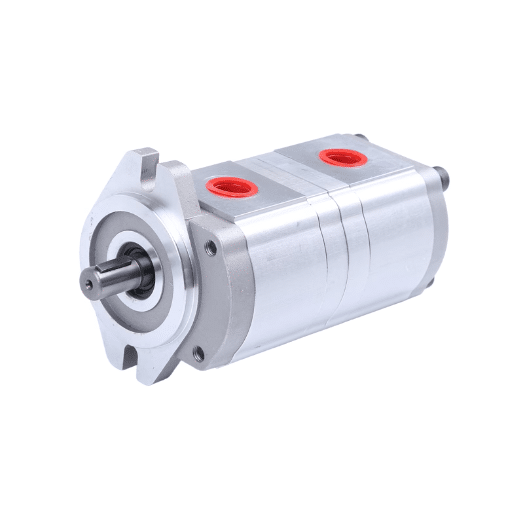
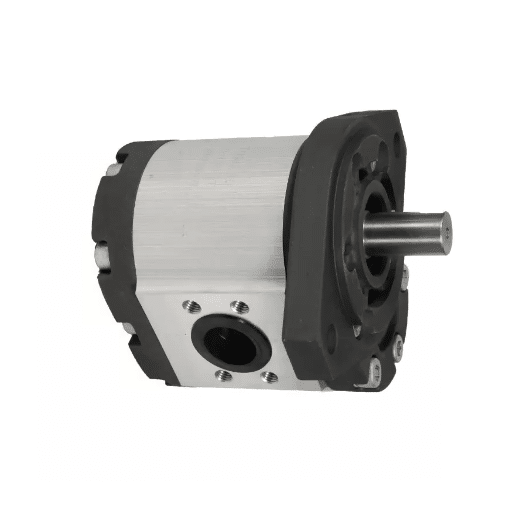
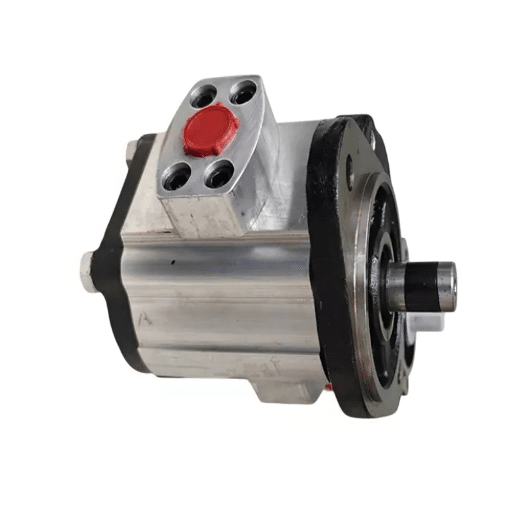
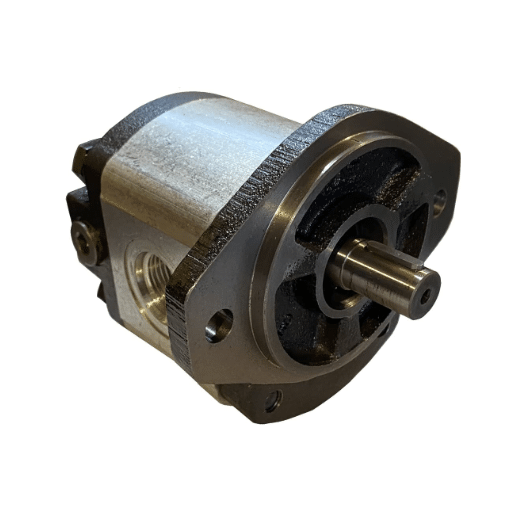
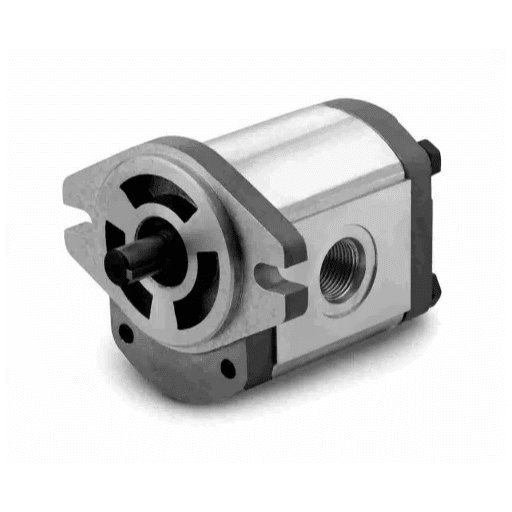
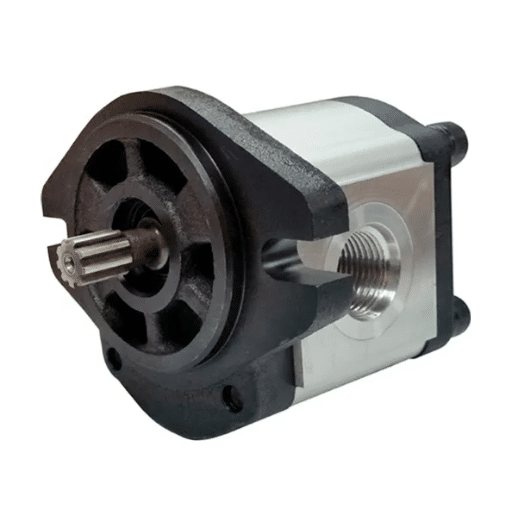
The same 22 GPM hydraulic pump can deliver a 9-second cycle or a 25-second cycle. It can run quietly in a garage or roar through cords of oak in an open field. The difference isn’t the pump. It’s the power source turning it.
Choosing an electric log splitter hydraulic pump, a gas engine, or a tractor PTO means matching RPM, horsepower, duty cycle, and environment to your workload. In this guide, you’ll learn how each power source works, how to size the motor or engine, and which option fits your build.
Need more information about log splitter hydraulic pumps? You can read our complete guide to log splitter hydraulic pumps.
Why Power Source Choice Changes Everything

Flow, Pressure, and RPM Are Linked
A hydraulic pump doesn’t create pressure on its own. It creates flow. Pressure builds when that flow meets resistance from the cylinder and the wood.
The faster the pump spins, the more flow it produces. The more input power it receives, the more pressure it can sustain before stalling.
If the power source can’t maintain pump RPM under load, cycle time stretches, and the ram may stall. If it spins the pump too fast, heat, cavitation, and seal damage follow.
Duty Cycle and Operating Environment
Electric motors are rated by duty cycle. A continuous-duty motor can run for extended periods without overheating. An intermittent-duty motor cannot.
Gas engines tolerate longer runs but need ventilation. PTO systems depend on the tractor’s cooling and available horsepower.
Your environment also matters. Indoor splitting favors electric. Remote or high-volume work favors gas or PTO.
Example: When Sarah built her shop splitter in 2025, she chose a 2 HP electric motor for a 16 GPM pump. It worked well for one cord of seasoned maple on a Saturday. But during a wet spring, she tried to process two cords of green elm in one afternoon. The motor thermal overload tripped twice. She realized her power source was sized for occasional use, not production work.
Want to match the pump before choosing the motor? Read our what size hydraulic pump for log splitter guide first.
Electric Log Splitter Hydraulic Pump (AC Motor)
How AC Electric Motors Drive Hydraulic Pumps
An AC electric motor turns the pump shaft through a direct coupling or a belt. Common options are 115V/230V single-phase motors running at 1,725 or 3,450 RPM. Pump speed is set by pulley ratio or direct coupling.
Two-stage log splitter pumps are usually selected for an input speed between 3,000 and 3,600 RPM. The motor nameplate RPM divided by the pulley ratio must land in that range.
Motor Sizing by Pump GPM
Use this table as a starting point for single-phase AC motors paired with two-stage log splitter pumps:
| Pump GPM | Motor HP | Typical Cylinder | Approx. Tonnage |
|---|---|---|---|
| 11 | 2–3 | 3.5″–4″ | 12–18 |
| 16 | 4–5 | 4″–4.5″ | 18–25 |
| 22 | 5.5–7.5 | 4.5″–5″ | 25–30 |
| 28 | 7.5–10 | 5″–5.5″ | 30+ |
Higher GPM needs more horsepower to maintain pressure at rated flow. If the motor is undersized, the pump will not reach the relief setting and the ram will stall.
Pros and Cons of AC Electric
Pros:
- Quiet operation, roughly 60–70 dB
- No exhaust, suitable for indoor use
- Low maintenance
- Consistent power from grid voltage
- Lower upfront cost than gas
Cons:
- Limited by outlet amperage and motor HP
- 115V circuits cap practical motors around 2 HP
- Less portable
- Peak torque lower than gas engines
AC electric is a strong choice for light to medium homeowner builds, especially in a shop or garage.
12V DC Hydraulic Pump for Log Splitter

How 12V DC Power Units Work
A 12V DC hydraulic power unit combines a small DC motor, pump, reservoir, relief valve, and often a solenoid valve in one assembly. These units are common on dump trailers and small presses.
They can power a log splitter, but they aren’t designed for high-volume production.
Cycle Time and Battery Life Trade-Offs
A typical 12V unit might move 1.5–2.5 GPM. For a 4-inch bore × 24-inch stroke cylinder, that means an extend cycle of 20–35 seconds. The return stroke is faster, but total cycle time is still much longer than gas or AC electric.
Battery life is the main limitation. A deep-cycle battery can handle a short session, but continuous splitting drains it quickly. Many builders connect the unit to a running vehicle through heavy-gauge cables.
When 12V DC Makes Sense
12V DC is practical for occasional mobile splitting, farm use where a vehicle is nearby, or light-duty builds where a full engine is not justified. It is not a substitute for a production machine.
Example: Mike wanted a splitter he could tow behind his ATV to clear fence lines. He used a 12V DC power unit wired to the ATV battery. It split small softwood rounds slowly, but it saved him from carrying a gas can and pull-starting an engine in remote pasture. For his use case, the trade-off was acceptable.
Gas Engine Log Splitter Hydraulic Pump
How Gas Engines Power Log Splitter Pumps
Gas engines drive the pump through a direct Lovejoy coupling or belt. Most consumer and commercial splitters use horizontal shaft engines from Honda, Briggs & Stratton, Kohler, or Loncin. A 2-stage gear pump is bolted directly to the engine shaft or driven through a pulley.
Direct-drive is compact and eliminates belt maintenance. Belt-drive allows pump speed adjustment and absorbs shock loads.
Engine Sizing by Pump GPM
| Pump GPM | Engine HP | Typical Cylinder | Approx. Tonnage |
|---|---|---|---|
| 11 | 5.5–6.5 | 3.5″–4″ | 12–18 |
| 16 | 8–9 | 4″–4.5″ | 18–25 |
| 22 | 11–13 | 4.5″–5″ | 25–30 |
| 28 | 15+ | 5″–6″ | 35+ |
Gas engines deliver higher peak torque and tolerate overload better than electric motors. That is why commercial splitters almost always use gas or PTO power.
Pros and Cons of Gas
Pros:
- High peak horsepower
- Fully portable
- Fast cycle times, often under 10 seconds
- Handles green and hardwood well
Cons:
- Loud, roughly 85–95 dB
- Requires fuel, oil changes, air filter, spark plug maintenance
- Exhaust limits indoor use
- Higher upfront cost
Gas is the default for heavy homeowner, prosumer, and commercial builds.
PTO Hydraulic Pump for Log Splitter

How PTO-Driven Log Splitter Pumps Work
A PTO-driven splitter uses the tractor’s engine to drive the hydraulic pump. Some designs connect the pump directly to the tractor PTO shaft. Others use the tractor’s existing hydraulic remotes. Either way, the tractor provides the power.
PTO-driven pumps are typically gear pumps rated at 11–22 GPM at 540 RPM. Flow is fixed by pump displacement and PTO speed.
540 RPM vs. 1000 RPM PTO Speed Matching
Tractor PTOs come in two standard speeds:
- 540 RPM: 6 splines on a 1-3/8″ shaft. Most common on compact and mid-size tractors.
- 1000 RPM: 20 or 21 splines, often on a larger shaft. Common on larger tractors and high-capacity implements.
The different spline counts are a physical safeguard against mismatched connections. Running a 540-RPM pump at 1000 RPM nearly doubles its speed. That causes excessive flow, overheating, and seal failure. Running a 1000-RPM pump at 540 RPM underperforms and cycles slowly.
If your tractor and pump do not match, use a PTO speed increaser or reducer gearbox rated for your horsepower.
Tractor Flow and Horsepower Requirements
Tractor remotes typically deliver 8–14 GPM. That is enough for small to mid-size cylinders. For faster cycle times, a dedicated PTO pump can deliver 16–22 GPM.
Make sure the tractor has enough PTO horsepower. A 20 GPM pump at 3,000 PSI needs roughly 35 hydraulic horsepower. Count efficiency losses and choose a tractor with headroom.
Pros and Cons of PTO
Pros:
- No separate engine to maintain on the splitter
- Uses existing tractor power
- Strong performance with the right pump
Cons:
- Requires a capable tractor
- Less portable and independent
- PTO speed must match pump requirements
- Tractor must be available
PTO is ideal for property owners who already own a tractor and process large volumes near the machine.
Side-by-Side Power Source Comparison
| Feature | AC Electric | 12V DC | Gas Engine | PTO |
|---|---|---|---|---|
| Power range | 2–10 HP | 0.5–2 HP | 5.5–20+ HP | Depends on tractor |
| Typical tonnage | 12–25 | 5–12 | 20–35+ | 20–35+ |
| Cycle time | 8–15 sec | 20–40 sec | 6–12 sec | 8–15 sec |
| Noise level | Low | Low | High | Moderate |
| Maintenance | Low | Low | High | Moderate |
| Portability | Limited | High | High | Tied to tractor |
| Upfront cost | Low–medium | Low | Medium–high | Low if tractor owned |
| Best use | Shop/garage homeowner | Light mobile use | Heavy/volume work | Tractor owners |
Use this table to narrow the choice based on your workload, location, and budget. If you need a complete sourcing checklist, read our log splitter hydraulic pump kit guide.
Matching the Power Source to Your Build

Small Homeowner Builds (4″ Cylinder, 11–16 GPM)
A 3–5 HP AC electric motor or a 5.5–8 HP gas engine handles this range. Choose electric for quiet shop use. Choose gas for portability and faster cycles.
Heavy Homeowner/Prosumer Builds (4.5″ Cylinder, 16–22 GPM)
A 4–5 HP electric motor can work, but 5.5–7.5 HP is safer. Gas engines in the 9–13 HP range are more common and handle overload better.
Commercial/Tractor Builds (5″+ Cylinder, 22+ GPM)
Gas 11 HP and above, or a PTO setup with a tractor that has adequate flow and horsepower. Electric becomes impractical at this scale due to motor size and supply requirements.
Need help sizing the cylinder too? Our log splitter hydraulic cylinder size guide covers bore, stroke, and tonnage selection.
Common Power Source Mistakes
- Undersized motor: A 2 HP motor on a 22 GPM pump stalls under load.
- PTO speed mismatch: Connecting a 540-RPM pump to a 1000-RPM PTO destroys the pump.
- Ignoring duty cycle: A cheap electric motor rated for intermittent duty overheats in production use.
- 12V for production: DC power units drain batteries and overheat motors during long sessions.
- Wrong pump rotation: Gas engines and motors have fixed rotation directions. The pump must match.
Frequently Asked Questions
Can I run a hydraulic log splitter with an electric motor?
Yes. AC electric motors from 2 HP to 7.5 HP are commonly used on log splitter hydraulic pumps. Match motor HP to pump GPM and ensure the duty cycle fits your workload.
What size electric motor do I need for a 16 GPM log splitter pump?
A 16 GPM two-stage pump typically needs a 4–5 HP electric motor. A 5 HP motor provides a safer margin for green or knotty wood.
How many horsepower is a 22 GPM log splitter pump?
A 22 GPM pump at 3,000 PSI needs roughly 5.5–7.5 HP for electric motors, or 11–13 HP for gas engines, depending on pump efficiency and operating pressure.
Can I use a 12V hydraulic pump on a log splitter?
Yes, but 12V power units are best for light, occasional use. Cycle times are slow, and battery drain is significant during long sessions.
What PTO speed do I need for a log splitter hydraulic pump?
Most log splitter hydraulic pumps are rated for 540 RPM PTO input. Always match the pump’s rated input speed to the tractor PTO speed. Use a gearbox if they differ.
Is a PTO log splitter better than a gas log splitter?
PTO is better if you already own a capable tractor and process wood near it. Gas is better for portability and independent operation.
Can I convert a gas log splitter to electric?
Yes, with the right motor, mounting, and pump rotation match. You will need a motor with similar or greater continuous horsepower at the same pump RPM.
What is the quietest power source for a log splitter?
AC electric motors are the quietest, typically 60–70 dB. 12V DC units are also quiet but limited in power.
Do I need a 540 or 1000 RPM PTO for a log splitter?
Most log splitter pumps use 540 RPM. Larger, high-flow pumps may use 1000 RPM. Always confirm the pump rating.
How long will a 12V battery run a log splitter?
Runtime depends on battery capacity, pump current draw, and duty cycle. A deep-cycle battery may handle 30–60 minutes of intermittent use. Continuous use drains it much faster.
Conclusion
The right power source for your electric log splitter hydraulic pump build depends on more than cost. It depends on where you split, how much you split, and how fast the pump must cycle.
Key takeaways:
- AC electric motors work best for quiet, indoor, light-to-medium homeowner builds.
- 12V DC power units suit occasional mobile use but aren’t production solutions.
- Gas engines deliver the power, portability, and speed that most commercial and heavy homeowner builds need.
- PTO systems are efficient for tractor owners with adequate horsepower and matching PTO speed.
Match the motor or engine to pump GPM, cylinder size, and duty cycle. A mismatch wastes money and creates downtime.
If you need help selecting a motor, engine, or complete power unit for your log splitter hydraulic pump, contact LOYAL INDUSTRIAL PTE. LTD. for technical consultation.