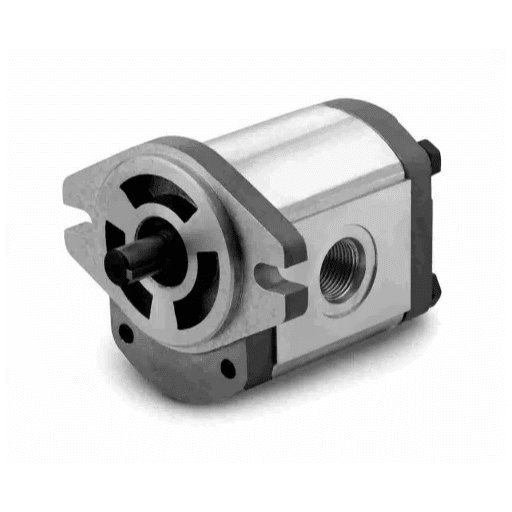
A failing log splitter hydraulic pump kit can turn a three-hour firewood job into a full weekend repair. The right kit does more than move fluid; it determines cycle time, splitting force, and how long your equipment stays in service between maintenance intervals.
If you are sourcing a hydraulic log splitter pump for commercial firewood production, farm maintenance, or rental fleet operations, you need components that match pressure, flow, and displacement requirements precisely. This guide explains how log splitter hydraulic pump kits work, what specifications matter, and how to choose a configuration that delivers stable performance under repeated high-load cycles. Need more information about log splitter hydraulic pumps? You can read our complete guide to log splitter hydraulic pumps.
What Is a Log Splitter Hydraulic Pump Kit?

A log splitter hydraulic pump kit is a pre-matched assembly that supplies pressurized hydraulic fluid to a cylinder, generating the linear force required to split logs. Most kits include a hydraulic pump, reservoir, control valve, hoses or fittings, and sometimes a filter or coupler set. The pump converts mechanical energy from a gas engine or electric motor into fluid power, which the cylinder then converts back into mechanical force.
The efficiency of the entire system depends on pump selection. If the pump displacement is too small, the cylinder moves slowly and productivity drops. If the pump is oversized for the engine, it can cause cavitation, overheating, and premature seal wear. A well-specified log splitter hydraulic pump kit balances flow rate, pressure rating, and engine power for continuous, reliable operation.
Why Kit Integration Matters
Buying individual components without checking compatibility is a common source of field failures. A kit approach ensures that the pump, motor, reservoir, and valve share the same flow range and port configuration. It also reduces the chance of mismatched fittings, incorrect reservoir sizing, or undersized return lines that can introduce air into the system.
For industrial equipment manufacturers and maintenance teams, kits reduce sourcing complexity. Instead of validating every part separately, procurement teams can select one tested configuration. This is especially valuable for OEMs that produce log splitters in batches and need consistent output across every unit.
How a Log Splitter Hydraulic System Works
A log splitter hydraulic system operates on a simple closed-loop principle. The engine drives the pump, which draws fluid from the reservoir and pushes it through the directional control valve. When the operator activates the valve, pressurized fluid enters the cylinder cap end, extending the piston rod and pushing the wedge into the log. Once the split is complete, the valve redirects fluid to the rod end, retracting the cylinder and returning fluid to the reservoir.
System pressure is determined by the load resistance. When the wedge meets the log, pressure rises until it reaches the rated limit of the relief valve. The relief valve protects the pump, cylinder, and hoses from over-pressurization. Matching the pump to the relief valve setting and cylinder bore size is essential for safe, consistent operation.
Key Performance Metrics
Three measurements define log splitter hydraulic pump performance:
- Flow rate (GPM or L/min): Controls how fast the cylinder extends and retracts. Higher flow means shorter cycle time but requires more engine power.
- Pressure rating (PSI or bar): Determines maximum splitting force. Most residential units run at 2,500–3,000 PSI; commercial units may reach 3,500 PSI or higher. These ranges align with fluid power industry standards.
- Displacement (in³/rev or cm³/rev): Defines how much fluid the pump moves per shaft rotation. Displacement must be matched to engine speed and available horsepower.
Understanding these three metrics is the foundation of selecting a hydraulic pump for log splitter applications that will not underperform or overstress the power unit.
Types of Hydraulic Pumps Used in Log Splitters

Most log splitter hydraulic pump kits use one of three pump designs: gear pumps, two-stage piston pumps, or vane pumps. Each has distinct performance characteristics, cost profiles, and maintenance requirements.
Gear Pumps
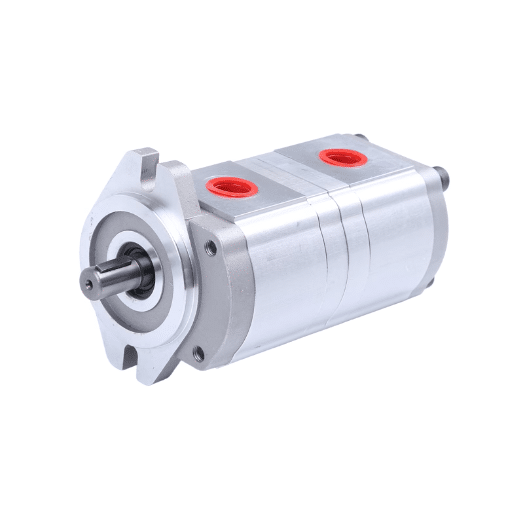
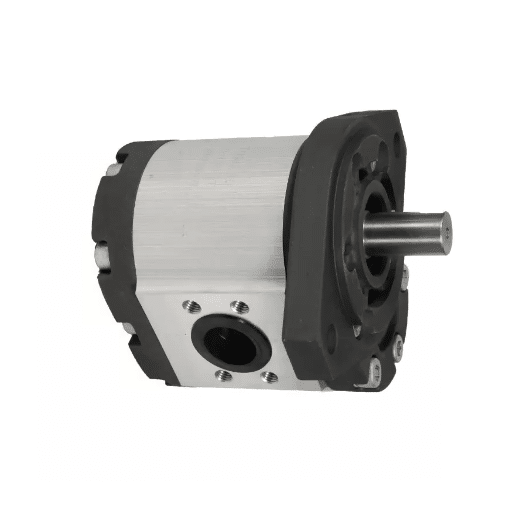
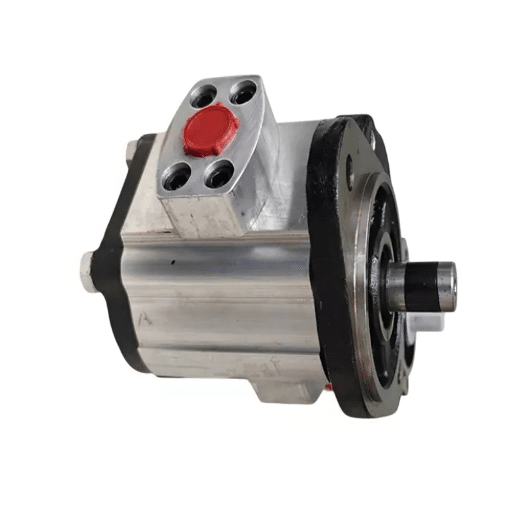
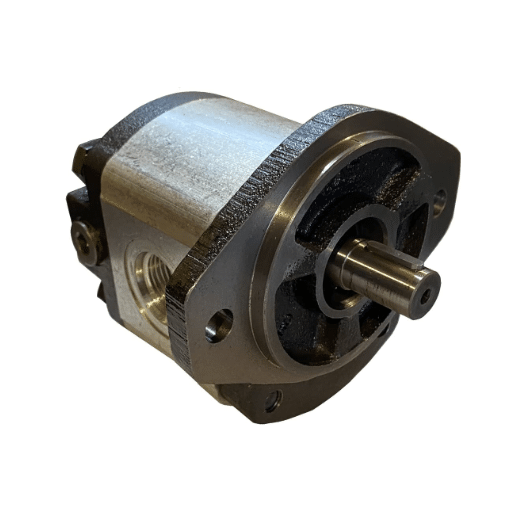
Gear pumps are the most common choice for budget and mid-duty log splitters. They have a simple design with few moving parts, which makes them durable and easy to maintain. A gear pump delivers constant flow regardless of load, so it provides predictable cylinder speed. However, it does not offer the fast no-load speed and slow power stroke of a two-stage pump, which can extend cycle time when the cylinder is not under load.
Gear pumps work well for electric log splitters and smaller gas-powered units where splitting force is moderate and cycle time is less critical. For firewood producers handling softwoods or smaller diameter logs, a gear-driven log splitter pump kit offers a reliable, cost-effective solution.
Two-Stage Piston Pumps
Two-stage piston pumps are the standard for high-performance log splitters. In the first stage, the pump moves a large volume of fluid at low pressure to extend the cylinder quickly. When the wedge contacts the log and resistance rises, the pump switches to a second, smaller displacement stage that delivers high pressure at lower flow. This gives the operator a fast approach and a powerful splitting stroke.
For commercial and rental applications, two-stage wood splitter hydraulic pump kits reduce operator fatigue and increase throughput. The faster no-load speed means less waiting between splits, while the high-pressure second stage ensures the wedge can handle knotty hardwood.
Vane Pumps
Vane pumps are less common in log splitters but appear in some precision or low-noise applications. They provide smooth flow and quiet operation, which can be useful for indoor or residential environments. However, vane pumps are generally more sensitive to contamination and wear than gear or piston designs, so they require cleaner hydraulic fluid and more frequent maintenance.
Log Splitter Pump Type Comparison
| Pump Type | Best For | Cycle Speed | Maintenance | Typical Pressure Range |
|---|---|---|---|---|
| Gear Pump | Electric and light-duty gas splitters | Moderate | Low | 2,000–2,500 PSI |
| Two-Stage Piston Pump | Commercial and rental splitters | Fast no-load, powerful split | Medium | 2,500–3,500 PSI |
| Vane Pump | Low-noise indoor environments | Smooth | Higher | 2,000–3,000 PSI |
The table above summarizes the trade-offs. For most buyers, the decision comes down to gear pump simplicity versus two-stage piston pump productivity. For a full power-source comparison, see our guide on electric vs gas vs PTO log splitter hydraulic pump.
Selecting the Right Log Splitter Hydraulic Pump Kit
Choosing the right log splitter hydraulic pump kit requires matching the pump to engine power, cylinder size, and expected workload. A kit that is poorly matched will either produce sluggish performance or overload the engine. For detailed worked examples, see our guide on what size hydraulic pump for a log splitter.
Match Pump Displacement to Engine Horsepower
The pump must not demand more power than the engine can provide at operating speed. As a general guideline, one hydraulic horsepower is required for every 1,000 PSI of pressure at 1 GPM of flow. A 5-horsepower engine can therefore support approximately 5 GPM at 1,000 PSI, or a lower flow rate at higher pressure.
For two-stage pumps, the critical check is the high-pressure stage. The engine must be able to sustain the pump at maximum pressure rating. If the engine is undersized, the pump will bog down under load, causing slow splitting and potential overheating.
Match Flow Rate to Cylinder Size
Cylinder bore and rod diameter determine how much fluid the cylinder needs to move through a full stroke. A larger cylinder generates more force but requires more fluid volume, which means either a higher-flow pump or a longer cycle time. The relationship is direct: doubling the cylinder volume without increasing pump flow doubles the cycle time.
For most commercial log splitter hydraulic pump kits, a 16 GPM first-stage flow with a 4–5 GPM second-stage flow is common. When paired with a 4-inch bore cylinder and a 24-inch stroke, this produces a practical balance of speed and force for firewood operations. You can estimate pump flow requirements for a given cylinder using standard hydraulic capacity references.
Consider the Reservoir and Cooling Capacity
The reservoir is not just a storage tank; it also dissipates heat and allows air to separate from the fluid. A reservoir that is too small will cause the hydraulic oil to overheat during extended use, degrading seals and shortening pump life. A common rule is to size the reservoir at least three to five times the pump’s flow rate per minute. For a 16 GPM pump, a minimum 5-gallon reservoir is recommended, with 8–10 gallons preferred for commercial use.
Select Compatible Valves and Fittings
The directional control valve must handle the system’s maximum flow and pressure. A valve with a built-in relief valve simplifies assembly, but the relief setting must match the pump and cylinder limits. Hoses and fittings must be rated above the maximum operating pressure, and port sizes must match the pump outlet and cylinder ports to avoid flow restrictions.
To make the best choice, please read our article on the best hydraulic pump for a log splitter.
Common Mistakes When Installing a Log Splitter Pump Kit

Even a high-quality log splitter hydraulic pump kit can fail if installed incorrectly. Most problems stem from contamination, misalignment, or incorrect plumbing.
Contamination and Dirty Fluid
Hydraulic pumps are precision components. Particles in the fluid can score pump housings, clog valves, and damage cylinder seals. Always flush the reservoir and hoses before filling the system, and use a quality hydraulic filter if the kit includes one. The first fill should be clean ISO 32 or ISO 46 hydraulic oil rated for the operating temperature range.
Pump Shaft Misalignment
On gas-engine log splitters, the pump is often mounted directly to the engine using a Lovejoy coupling or a keyed shaft. Misalignment between the engine crankshaft and pump shaft causes vibration, bearing wear, and coupling failure. The pump should be mounted on a rigid plate with the shaft centered within the coupling manufacturer’s tolerance.
Air in the System
Air trapped in the hydraulic lines causes spongy operation, noise, and reduced force. After installation, run the pump at low speed with the cylinder fully extended and retracted several times to purge air from the lines. Check the reservoir level and top off fluid as the system fills the cylinder and hoses.
Maintenance Tips for Long-Term Reliability
Regular maintenance extends the service life of a log splitter hydraulic pump kit and reduces unexpected downtime. Most issues can be prevented with simple inspection and fluid management.
Monitor Hydraulic Fluid Condition
Hydraulic fluid degrades over time due to heat, moisture, and contamination. Check the fluid level before each use and inspect the color and clarity monthly. Dark, cloudy, or burnt-smelling fluid indicates it is time for a change. Follow the pump manufacturer’s recommended oil grade and change interval.
Inspect Hoses and Fittings
High-pressure hoses wear from flexing, abrasion, and exposure to weather. Inspect hoses for cracks, bulges, or leaks at the fittings. Replace any hose that shows damage, and always use fittings rated above the system’s maximum pressure. Proper hose routing that avoids sharp bends reduces fatigue failure.
Keep the Reservoir Clean
Dirt and moisture entering the reservoir can contaminate the entire system. Keep the filler cap sealed and clean the area around it before opening. If the kit does not include a breather filter, consider adding one to prevent airborne particles from entering the tank during normal operation.
For replacement guidance, see our log splitter hydraulic pump replacement & compatibility guide.
Applications and Use Cases
Log splitter hydraulic pump kits are used across a range of equipment beyond firewood processors. Understanding these applications helps buyers and distributors select the right configuration.
Residential Firewood Splitters
Homeowners and small landowners typically use electric or small gas-powered splitters. These units prioritize lower cost and lighter weight over high speed. A compact gear pump kit with a small reservoir is usually sufficient for seasonal use. Consumer-focused reviews from publications like Wood Magazine can help buyers compare rated splitting force and cycle times.
Commercial Firewood Operations
Commercial producers split hundreds of cords per season. They require fast cycle times and high reliability. Two-stage piston pump kits with larger reservoirs and reinforced hoses are the standard for this segment. Reduced downtime and consistent force directly affect productivity and profit margins.
Rental and Construction Equipment
Some skid steer and tractor-mounted splitters use the vehicle’s hydraulic system or a dedicated power take-off (PTO) pump. These applications require robust kits rated for continuous duty and exposure to outdoor conditions. Enclosed pumps and protected reservoirs improve durability in rental fleets.
What to Look for in a Log Splitter Hydraulic Pump Kit Supplier

Not all hydraulic pump kits are built to the same standard. Procurement teams and equipment manufacturers should evaluate suppliers on quality control, technical support, and supply capability.
Verified Quality Control
Look for suppliers that perform pressure testing, leak testing, and performance validation before shipment. A log splitter hydraulic pump kit that has been tested as an assembly is less likely to fail in the field than one assembled from untested individual parts.
Technical Support and Documentation
Clear documentation matters for installation and troubleshooting. Suppliers should provide pump curves, wiring or plumbing diagrams, and torque specifications. Engineering support for pump selection and cylinder matching reduces the risk of ordering the wrong kit.
Consistent Supply and Replacement Parts
For OEMs and rental companies, long-term parts availability is as important as the initial purchase. Choose a supplier with a track record of consistent production and spare parts support. Fast access to replacement seals, couplings, and pumps minimizes downtime when maintenance is needed.
Frequently Asked Questions
What size hydraulic pump do I need for a log splitter?
Pump size depends on engine horsepower, cylinder bore, and desired cycle time. A light-duty electric splitter may use a 3–5 GPM gear pump, while a commercial gas-powered unit often uses a 11–16 GPM two-stage pump. Match the pump displacement to the engine’s power curve to avoid bogging down under load.
How much PSI does a log splitter hydraulic pump need?
Most residential log splitters operate between 2,500 and 3,000 PSI. Commercial units may run up to 3,500 PSI to generate higher splitting force. The cylinder bore and relief valve setting must be matched to the pump’s pressure rating for safe operation.
Can I use a two-stage pump on any log splitter?
A two-stage pump requires enough engine power to support both the fast low-pressure stage and the slower high-pressure stage. It also needs a reservoir large enough to handle the increased flow. If the engine is undersized, a two-stage pump will not deliver its full benefit.
What type of hydraulic oil should I use in a log splitter?
Use clean ISO 32 or ISO 46 hydraulic oil rated for the operating temperature range. Avoid motor oil or other lubricants not formulated for hydraulic systems, as they can shorten seal life and reduce pump efficiency.
Why is my log splitter hydraulic pump overheating?
Overheating is usually caused by a reservoir that is too small, low fluid level, blocked filters, or continuous operation beyond the duty cycle. Check fluid level, clean or replace filters, and ensure the reservoir has enough capacity for the pump flow.
Conclusion
A well-specified log splitter hydraulic pump kit is the difference between reliable firewood production and constant field repairs. The right kit matches pump type, flow rate, pressure rating, and reservoir capacity to the engine and cylinder it will serve. Gear pumps suit light-duty residential work, while two-stage piston pumps deliver the speed and force that commercial operators need.
Focus on quality control, proper installation, and regular maintenance to maximize service life. Check fluid condition, inspect hoses, and keep the system clean to prevent the failures that interrupt production. For industrial equipment manufacturers, distributors, and maintenance teams, sourcing from a supplier with tested assemblies and strong technical support reduces risk and improves long-term reliability.
If you need help selecting a log splitter hydraulic pump kit for your equipment, contact our engineering team for a customized recommendation.