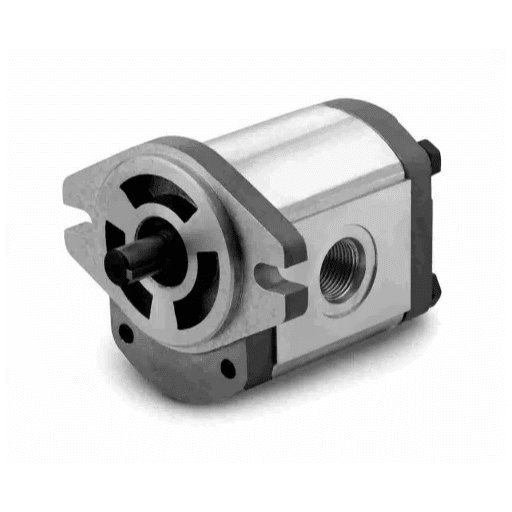
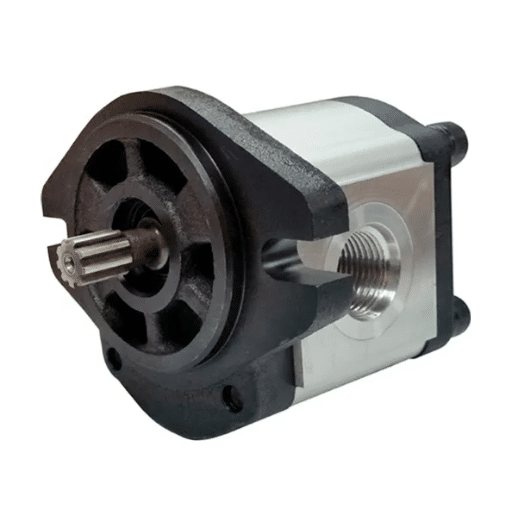
Marcus bought a 22 GPM hydraulic pump for his homemade log splitter because the listing promised “maximum speed.” Two weekends later, his 8 HP engine stalled every time the wedge bit into a seasoned oak round. The pump moved oil fast, but his power unit could not sustain the pressure stage. He had the wrong pump for his engine, and he had the receipts to prove it.
That story repeats across job sites and farmyards every firewood season. The best hydraulic pump for a log splitter is not the one with the highest flow rate or the lowest price. It is the pump that matches your engine, cylinder, valve, and application. Get the match right, and the splitter runs faster, cooler, and longer. Get it wrong, and you shorten pump life, waste fuel, and fight stalling.
In this guide, you will learn how log splitter hydraulic pumps work, why two-stage pumps dominate the market, which specifications matter, and how to size a pump for your actual equipment. We will also cover common failures and what to look for when sourcing from a hydraulic pump supplier. By the end, you will be able to select a pump with confidence.
Need more information about log splitter hydraulic pumps? You can read our complete guide to log splitter hydraulic pumps.
How a Log Splitter Hydraulic System Works

A log splitter converts mechanical energy from an engine into hydraulic force that pushes a wedge through wood. The pump is the component that turns that mechanical rotation into pressurized oil flow. Without the right pump, the rest of the system cannot perform efficiently.
The typical system includes four main parts:
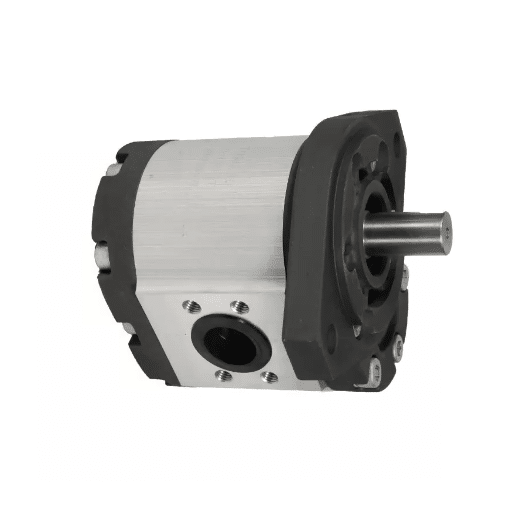
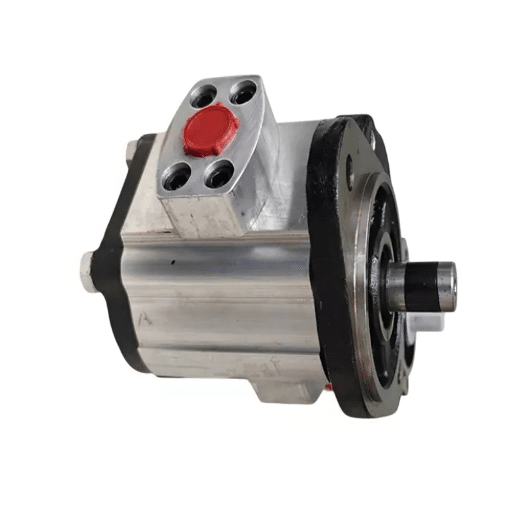
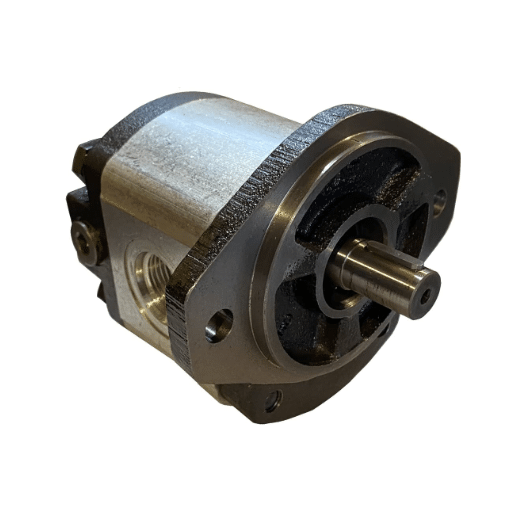
- Hydraulic pump: Draws oil from the reservoir and delivers pressurized flow to the cylinder.
- Hydraulic cylinder: Converts fluid pressure into linear force that drives the wedge.
- Directional control valve: Directs oil to extend or retract the cylinder and controls return flow.
- Reservoir and filtration: Stores oil, dissipates heat, and removes contaminants before they reach the pump.
When the engine runs, the pump generates flow. The valve routes that flow to the cylinder, producing splitting force. The size of the pump determines how quickly the cylinder moves and how much pressure the system can build. Larger pumps move more oil, but they also demand more engine power. This is why pump selection must be system-wide, not pump-only.
Two-Stage vs Single-Stage Hydraulic Pump for Log Splitters
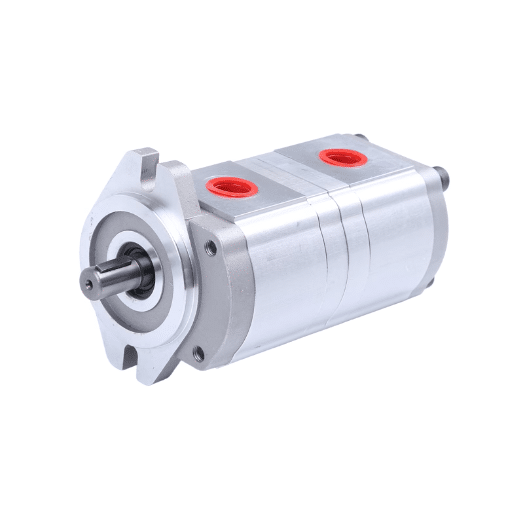
Most log splitters use a two-stage, or hi/lo, hydraulic pump. This design contains two gear sets inside one housing plus an internal bypass valve. The pump runs in high-flow, low-pressure mode when the ram moves without resistance, then automatically shifts to low-flow, high-pressure mode when the wedge meets the log. If you want to understand why two-stage pumps dominate this application, read our article on 2-stage hydraulic pump for log splitter performance.
The transition usually happens around 500–800 PSI. Below that threshold, a large volume of oil moves quickly, giving you fast approach and retract speeds. Once pressure rises, the large stage bypasses internally, and a smaller gear set takes over to build the force needed for splitting. The result is faster cycle times without requiring a massive engine.
A single-stage pump delivers a constant flow regardless of load. These pumps are simpler and less expensive, but they cannot match the efficiency of a two-stage design for log splitting. If you want fast ram travel and adequate splitting force from a small engine, a single-stage pump will force you to choose one or the other.
| Pump Type | Best For | Key Advantage | Main Limitation |
|---|---|---|---|
| Two-stage (hi/lo) | Residential, farm, and commercial log splitters | Fast cycle times with smaller engines | Slightly higher cost and more complex internals |
| Single-stage | Light homeowner use, occasional splitting | Lower initial cost, simpler maintenance | Slower operation or reduced force without a larger engine |
For most buyers, the best hydraulic pump for a log splitter is a two-stage gear pump. It balances speed and power in a way that single-stage pumps cannot match without significant engine upgrades.
Key Specifications for Log Splitter Pumps

When comparing pumps, focus on specifications that directly affect system performance and compatibility. Marketing claims matter less than measurable data.
Flow Rate (GPM)
Flow rate, measured in gallons per minute (GPM), determines how fast the cylinder moves. Higher GPM means faster cycle times but also higher engine demand. Common log splitter pumps range from 11 GPM to 22 GPM, with some commercial units exceeding 28 GPM.
Pressure Rating (PSI)
Pressure determines splitting force. Most residential log splitters operate at approximately 3,000 PSI. Heavy-duty and commercial units may use pumps rated to 4,000 PSI. The pump, cylinder, valve, and hoses must all share the same maximum pressure rating to operate safely.
Rotational Speed (RPM)
Pump output depends on engine speed. Log splitter pumps are typically rated at 3,600 RPM, matching common small gas engines. Operating significantly above or below the rated RPM changes actual flow and pressure performance.
Shaft and Mounting Compatibility
Most residential pumps use a 1/2-inch diameter keyed shaft with a 1/8-inch keyway. Larger pumps, especially 22 GPM models, may use a 5/8-inch shaft. Verify rotation direction, bolt pattern, and shaft length before ordering.
Port Sizes and Fittings
Common inlet ports are 1 inch, often barbed or threaded. Outlet ports are typically 1/2-inch NPT on smaller pumps and 3/4-inch NPT on larger units. Match these to your hoses and valve to avoid adapters that create flow restrictions.
Material and Durability
Look for aluminum housings with cast steel end plates, hardened gears, and quality shaft seals. These features handle the pressure cycles and thermal loads common in log splitter operation. Industrial-grade construction supports longer service intervals and fewer field failures.
Request a technical specification sheet for the exact pump models you are comparing. Spec sheets remove guesswork and help you verify pressure ratings, port sizes, and shaft dimensions before purchase.
How to Size a Hydraulic Pump for Your Log Splitter
Sizing starts with the engine and ends with the cylinder. A pump that looks correct on paper can still underperform if the rest of the system is mismatched.
Match Pump to Engine Horsepower
Use the hydraulic horsepower formula as a baseline:
HP = (GPM × PSI) ÷ (1,714 × pump efficiency)
Pump efficiency typically ranges from 0.80 to 0.90 for gear pumps. At 3,000 PSI, a 16 GPM pump demands approximately 28 theoretical horsepower. However, a two-stage pump spends most of its cycle in low-pressure mode, so it can run with a much smaller engine than the formula suggests for full-load conditions.
Practical engine pairings:
- 11–13 GPM pump: 5.5 to 8 HP
- 16 GPM pump: 8 to 12 HP
- 22 GPM pump: 12 to 15+ HP
- 28+ GPM pump: 15+ HP with proper reservoir cooling
Match Pump to Cylinder Bore
Cylinder force depends on pressure and bore area. A 4-inch bore cylinder at 3,000 PSI produces approximately 37,700 lbs of force. A 5-inch bore cylinder at the same pressure produces approximately 58,900 lbs. Larger cylinders need more oil to move at the same speed, so higher GPM becomes more important as bore size increases.
Calculate Cycle Time
Cycle time depends on cylinder volume and pump flow. A higher GPM pump reduces cycle time, but only if the engine can sustain it. Faster cycles also generate more heat, which increases reservoir and cooling requirements.
Reservoir and Valve Sizing
A larger reservoir dissipates heat and allows contaminants to settle. A common rule of thumb is a reservoir capacity of at least one to three times the pump flow per minute. The valve must also handle the pump flow without excessive pressure drop. A 25 GPM auto-control detent valve, for example, pairs well with a 16 GPM pump.
For a deeper explanation of pump sizing math, see our guide on what size hydraulic pump you need for specific splitter configurations.
Recommended Hydraulic Pump Sizes by Application
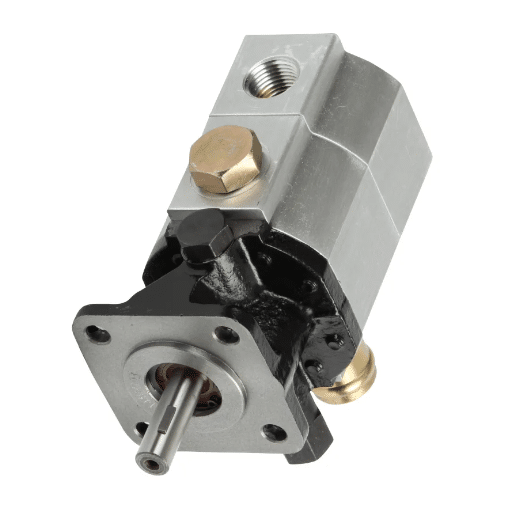
The right pump depends on how often you split, what wood you process, and how fast you need the cycle to be.
Residential / Homeowner Use
For occasional firewood processing with a 20- to 25-ton splitter, a 13 GPM two-stage pump at 3,000 PSI with a 5.5 to 8 HP engine is usually sufficient. It handles softwoods and medium hardwoods without overloading a small engine.
Farm / Small Commercial Use
For frequent use and mixed hardwood, a 16 GPM two-stage pump at 3,000 PSI paired with an 8 to 12 HP engine offers a strong balance of speed and power. This is the most common upgrade path for operators who outgrow a basic residential splitter.
Commercial / High-Volume Processing
For production firewood operations, a 22 GPM or larger two-stage pump at 3,000 to 4,000 PSI with a 12 to 15+ HP engine delivers cycle times of approximately 8 seconds or less. These systems require larger reservoirs, adequate cooling, and reinforced cylinders.
| Application | Recommended GPM | Typical Pressure | Engine HP |
|---|---|---|---|
| Residential | 11–13 GPM | 3,000 PSI | 5.5–8 HP |
| Farm / small commercial | 16 GPM | 3,000 PSI | 8–12 HP |
| Commercial / high-volume | 22+ GPM | 3,000–4,000 PSI | 12+ HP |
When Acme Firewood upgraded from a 13 GPM pump to a 16 GPM pump on their 35-ton splitter, their cycle time dropped by nearly 25 percent. They also added a larger reservoir to manage the additional heat. The upgrade paid for itself in one busy season because they could process more cords per hour without buying a new engine.
Common Log Splitter Pump Problems and Prevention
Even the best hydraulic pump for a log splitter will fail prematurely if the system is neglected. Here are the most common issues and how to prevent them.
Slow Cycle or Weak Ram
Low hydraulic fluid, a clogged suction strainer, air in the system, or a worn two-stage pump can all reduce performance. Check fluid level on level ground, clean or replace the strainer, and bleed air by cycling the ram without a load.
Overheating
High pressure without adequate cooling, low fluid level, or contaminated oil forces the pump to run hot. Verify reservoir size, keep fluid clean, and inspect cooling fins for debris.
Cavitation and Excessive Noise
Cavitation occurs when the pump cannot pull enough oil from the reservoir, often because the inlet line is too small, restricted, or drawing air. Use the correct inlet hose diameter and keep the reservoir full.
Seal Leaks and External Weep
Worn shaft seals or cracked housing gaskets allow oil leaks. Replace seals at the first sign of seepage before contamination enters the pump.
Maintenance Checklist
- Check hydraulic fluid level before each use.
- Inspect hoses and fittings for leaks or cracks.
- Change hydraulic fluid every 50 to 150 operating hours.
- Clean or replace the suction strainer during fluid changes.
- Verify relief valve setting with a pressure gauge annually.
For replacement guidance, see our log splitter hydraulic pump replacement & compatibility guide.
What to Look for When Sourcing a Hydraulic Pump

When you are ready to buy, the supplier matters as much as the pump model. A low price means little if the pump fails after one season or if technical support is unavailable.
Quality Control and Testing
Look for suppliers that perform pressure testing, flow verification, and dimensional inspection before shipment. Documented quality control reduces the risk of receiving a pump that does not match specifications.
OEM and Customization Capability
If you manufacture log splitters or build custom machines, choose a supplier that supports OEM production. Custom shaft lengths, port configurations, and mounting patterns can simplify assembly and improve reliability.
Export-Ready Reliability
Global buyers need consistent packaging, documentation, and logistics support. Suppliers with export experience understand how to protect pumps during long-distance shipping and customs handling.
Technical Support
Pump selection involves more than matching part numbers. A supplier with engineering support can help you size the pump, valve, and cylinder as an integrated system rather than selling a standalone component.
If you need a complete sourcing checklist, read our log splitter hydraulic pump kit guide.
Contact us for an industrial solution consultation if you need help matching a hydraulic pump to your log splitter design or replacement project.
Conclusion
The best hydraulic pump for a log splitter is the one that matches your engine power, cylinder size, valve capacity, and application intensity. Two-stage pumps remain the standard for good reason: they deliver fast approach speeds under low load and high pressure when the wedge meets resistance. For most homeowners, 11–13 GPM is enough. For farm and small commercial use, 16 GPM hits the sweet spot. For high-volume operations, 22 GPM and above provide the cycle times needed for production work.
Key takeaways:
- Match pump flow and pressure to your engine, not just your cylinder.
- Two-stage pumps outperform single-stage pumps for most log splitter applications.
- GPM determines speed; PSI determines force; both must align with the rest of the system.
- Proper reservoir size and regular maintenance prevent overheating and cavitation.
- Source from a supplier with testing, OEM capability, and engineering support.
If you are sourcing hydraulic pumps for log splitters, replacement units, or OEM production, start with a clear specification. Get customized hydraulic system recommendations from our engineering team and receive pump options matched to your exact requirements.