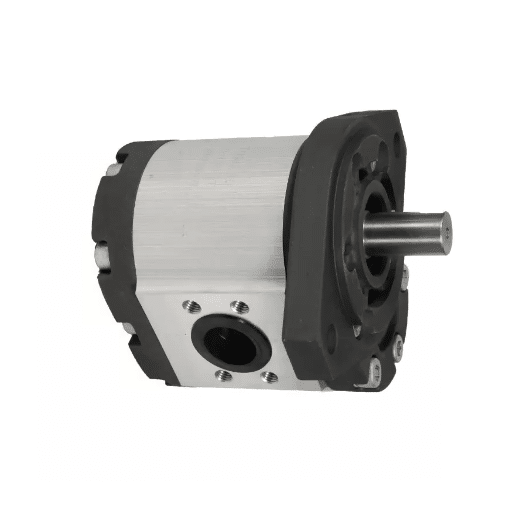
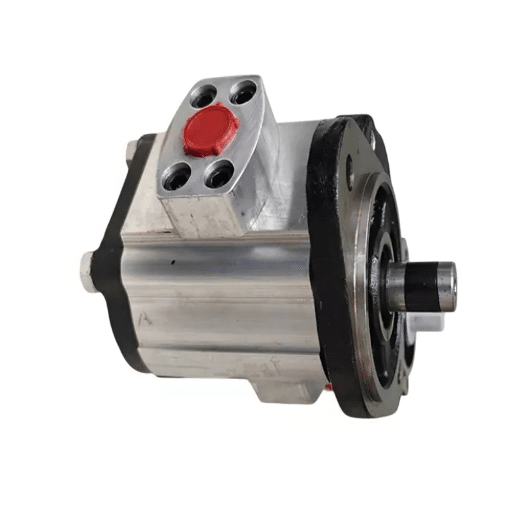
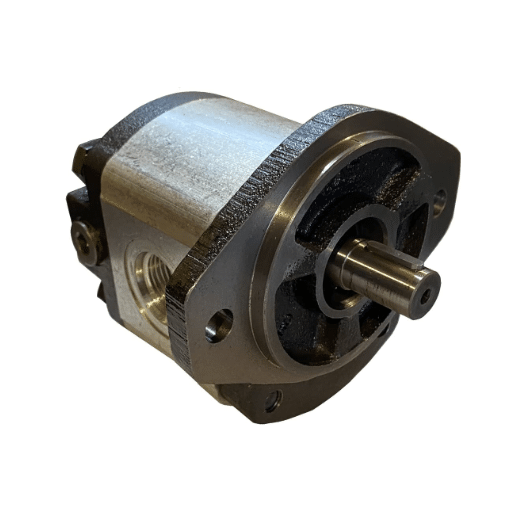
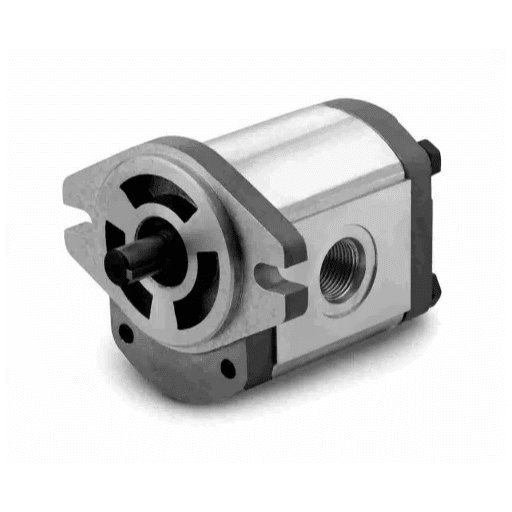
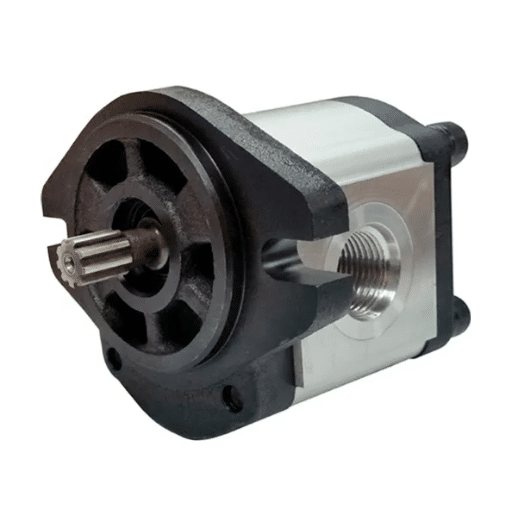
Mike thought a bigger pump would always mean faster splitting. He installed a 22 GPM two-stage pump on his 6.5 HP homebuilt log splitter and expected commercial speed. Instead, the engine bogged down every time the ram met the wood. The pump was starved for power, the cycle time barely improved, and the machine overheated within an hour. His problem was not pump quality. It was pump sizing.
If you are asking what size hydraulic pump for a log splitter is right for your build or replacement, the answer depends on three things: engine horsepower, cylinder bore, and how fast you need the ram to move. For most residential splitters, a 16 GPM two-stage pump rated at 3,000 PSI, paired with an 8+ HP gas engine, delivers the best balance of force and cycle speed. This guide breaks down the sizing logic, the formulas, and the common mistakes that waste money and machine life.
You will learn how GPM, PSI, and horsepower work together, how to match pump size to cylinder tonnage, and when to choose 11 GPM, 16 GPM, 22 GPM, or 28 GPM. We will also cover replacement sizing versus new-build sizing, power source limits, and the hidden system components that determine real-world performance. Need more information about log splitter hydraulic pump? You can read our log splitter hydraulic pump guide.
Need a pump recommendation for your splitter line or OEM build? Contact our engineering team for a customized hydraulic system recommendation.
Quick Answer: What Size Hydraulic Pump Do You Need?

Use this table to select a pump based on your application, engine size, and expected cycle time.
| Application | Pump Size | Engine HP | Typical Tonnage | Cycle Time |
|---|---|---|---|---|
| Light residential / occasional use | 11–13 GPM | 5.5–7.5 HP | 10–16 tons | 12–20 seconds |
| Standard homeowner / prosumer | 16 GPM | 8+ HP | 20–25 tons | 10–15 seconds |
| Heavy home / farm / high volume | 22 GPM | 9–13 HP | 25–35 tons | 8–12 seconds |
| Commercial / processor-fed | 28+ GPM | 14+ HP | 30+ tons | Sub-10 seconds |
The 16 GPM two-stage pump is the most common recommendation because it matches the engine power, cylinder size, and valve flow found on standard 20–25 ton splitters. Moving to 22 GPM or 28 GPM only makes sense if the engine, cylinder, valve, hoses, and reservoir can handle the higher flow.
How Log Splitter Pump Sizing Works
A log splitter hydraulic pump does not work alone. It is part of a system that includes the engine, pump, control valve, cylinder, reservoir, and hoses. Changing one part without checking the others creates imbalance.
GPM Controls Cycle Speed, Not Force
GPM, or gallons per minute, measures how much hydraulic fluid the pump moves. Higher GPM means the cylinder extends and retracts faster. It does not create more splitting force. A 28 GPM pump on a small engine will cycle quickly only until load hits. Then it stalls because the engine cannot maintain pressure and flow together.
PSI Controls Splitting Force
PSI, or pounds per square inch, is system pressure. The pump produces flow. The load and the relief valve determine pressure. When the ram contacts the log, pressure rises until the wood splits or the relief valve opens. Most log splitter pumps operate at 3,000 PSI with intermittent ratings up to 4,000 PSI.
Splitting force comes from pressure acting on the cylinder bore area. The formula is:
Force (lbf) = Pressure (PSI) × Piston Area (in²)
For a 4-inch bore cylinder at 3,000 PSI:
- Area = 4² × 0.7854 = 12.57 in²
- Force = 3,000 × 12.57 = 37,710 lbf, or about 18.9 tons
This is why a 4-inch bore cylinder at 3,000 PSI is common on 20-ton class splitters.
Engine Horsepower Must Match Hydraulic Horsepower
Hydraulic horsepower describes the power needed to move fluid at a given pressure. The formula is:
HP = (GPM × PSI) ÷ 1714
At full flow and full pressure, a 16 GPM pump at 3,000 PSI needs:
- HP = (16 × 3,000) ÷ 1714 = 28 HP
That number alarms many builders. In practice, a two-stage pump spends most of its time in the high-flow, low-pressure stage. It only shifts to high-pressure, low-flow mode when the ram meets resistance. This is why an 8–11 HP engine can run a 16 GPM pump in real log splitting cycles. The engine does not see full pressure and full flow at the same time.
If you need to determine Hydraulic Pump Horsepower, please click on our article to learn how to calculate hydraulic pump horsepower.
Common Log Splitter Pump Sizes Explained

11–13 GPM Pumps
These pumps suit light residential splitters and smaller engines. A 13 GPM pump on a 6.5 HP engine handles occasional firewood duty without overloading the power source. Cycle times run 12–20 seconds, which is acceptable for weekend use. They are also common as OEM replacement pumps on entry-level machines.
16 GPM Pumps
The 16 GPM two-stage pump is the sweet spot for most homeowners. It pairs with 8+ HP engines, supports 20–25 ton cylinders, and delivers 10–15 second cycle times. Many 16 GPM pumps split flow into roughly 12–13 GPM at low pressure for fast approach and 3–4 GPM at high pressure for splitting force. ToolTuffDirect lists its 16 GPM pump as delivering 13 GPM at 650 PSI and 3 GPM at 2,500 PSI, with a maximum intermittent pressure of 4,000 PSI.
If you are sourcing pumps for a product line, the 16 GPM size is the most versatile volume seller. It covers the largest share of residential and light commercial demand.
22 GPM Pumps
A 22 GPM pump suits heavy home, farm, or light commercial use. It needs 9–13 HP and a cylinder/valve combination sized for the higher flow. Cycle times drop to 8–12 seconds. The trade-off is more heat, a larger reservoir, and hoses that can handle the increased return flow. Return flow on a double-acting cylinder is higher than pump output because the rod displaces less fluid on the retract side.
For a dedicated side-by-side comparison, read our article on 11 GPM vs 16 GPM vs 22 GPM log splitter pump.
28 GPM and Larger Pumps
Commercial processor-fed splitters use 28+ GPM pumps for sub-10-second cycles. These setups need 14+ HP engines, upgraded control valves, larger inlet plumbing, and reservoirs sized at 2–3 times pump GPM. A 28 GPM pump on an undersized engine will not reach rated performance and will overheat the oil.
Matching Pump Size to Cylinder and Tonnage
Cylinder bore determines splitting force. Pump GPM determines how fast that force moves. The two must match. For more detail on cylinder sizing, see our log splitter hydraulic cylinder size guide.
Cylinder Bore and Force at 3,000 PSI
| Cylinder Bore | Piston Area | Force at 3,000 PSI | Tonnage |
|---|---|---|---|
| 3.5 in | 9.62 in² | 28,860 lbf | 14.4 tons |
| 4 in | 12.57 in² | 37,710 lbf | 18.9 tons |
| 4.5 in | 15.90 in² | 47,700 lbf | 23.9 tons |
| 5 in | 19.64 in² | 58,920 lbf | 29.5 tons |
| 6 in | 28.27 in² | 84,810 lbf | 42.4 tons |
A 25-ton splitter typically uses a 4.5-inch bore cylinder at 3,000 PSI. A 30-ton splitter moves to a 5-inch bore. These numbers are theoretical and assume the relief valve holds 3,000 PSI and the pump maintains pressure without dropping below the transition point.
Cycle Time Calculation
To estimate cycle time, calculate cylinder volume and divide by pump flow.
Cylinder volume (gallons) = Area (in²) × Stroke (in) ÷ 231
For a 4-inch bore, 24-inch stroke cylinder:
- Volume = 12.57 × 24 ÷ 231 = 1.31 gallons
With a 16 GPM pump, extension time is:
- Time = 1.31 ÷ 16 × 60 = 4.9 seconds
Retraction is faster because the rod reduces the area the fluid acts on. Real-world cycle times are longer due to hose friction, valve restriction, and the time spent in the high-pressure stage. This is why published cycle times for 16 GPM systems usually fall in the 10–15 second range, not the pure theoretical 5 seconds.
Two-Stage vs. Single-Stage Pumps

Almost every modern log splitter uses a two-stage, or hi-lo, pump. The first stage moves a large volume of oil at low pressure for fast ram travel. When resistance rises above the transition pressure, usually 400–900 PSI and commonly around 600–650 PSI, the pump shifts to a smaller high-pressure stage.
This design is efficient because the engine does not waste power moving high volumes against high pressure. The ram approaches the log quickly, then applies splitting force at lower flow. A single-stage pump delivers one flow rate at all pressures. It is simpler and cheaper, but slower and less efficient for log splitting. Single-stage pumps work only on light-duty or specialized builds where cycle speed is not critical.
If you want to understand why two-stage pumps dominate this application, read our article on 2-stage hydraulic pump for log splitter performance.
Power Source Considerations
Gas Engines
Gas engines are the standard power source for portable log splitters. They spin the pump at approximately 3,600 RPM through a direct-drive coupler. Match engine HP to pump GPM using the guidelines in the quick-answer table. A 16 GPM pump needs at least 8 HP. A 22 GPM pump needs 9–13 HP. Undersized engines cause bogging, overheating, and premature pump wear.
AC Electric Motors
Electric motors work well for light-to-mid duty splitters. They run at fixed speeds, typically 1,725 or 3,450 RPM, and produce consistent torque. Motor sizing follows the same HP logic as gas engines, but electric motors handle intermittent load better than small gas engines. They are quieter and require less maintenance, but they limit portability and peak power.
PTO-Driven Pumps
PTO-driven pumps connect to a tractor power take-off shaft. The critical detail is speed. Most tractor PTOs run at 540 RPM, while direct-drive log splitter pumps are rated at 3,600 RPM. Flow drops proportionally with RPM. A pump rated 16 GPM at 3,600 RPM delivers only about 2.4 GPM at 540 RPM unless it has a large displacement designed for PTO speed. Always verify PTO pump displacement and tractor flow capacity before selecting this option.
12V DC Hydraulic Pumps
12V DC pumps are low-flow units for occasional light use. They suit small electric splitters or remote trailer-mounted systems where engine power is not available. They are not a substitute for gas or AC-powered pumps on production splitters.
For a full power-source comparison, see our guide on electric vs gas vs PTO log splitter hydraulic pump.
Common Sizing Mistakes
Even experienced builders make these errors:
- Oversizing GPM without enough engine HP. A 22 GPM pump on a 6.5 HP engine will not perform to spec.
- Undersizing the hydraulic reservoir. A reservoir smaller than the pump GPM causes overheating and cavitation.
- Using restricted hoses or valves. A 16 GPM pump needs hoses and a valve rated for at least 16 GPM.
- Ignoring return flow. Retracting a double-acting cylinder sends more oil back to the tank than the pump delivers.
- Setting relief pressure too high. Running above 3,000 PSI continuously strains seals, hoses, and the pump.
- Mismatched shaft rotation. A clockwise pump on a counterclockwise engine will not work.
Sarah runs procurement for a firewood equipment distributor. Last season she switched to a lower-cost 16 GPM pump that looked identical on paper. The shaft diameter was slightly smaller, and the mounting bolts did not align. Her assembly line lost two days of production. Now she verifies every dimensional spec before placing volume orders. For buyers managing multiple SKUs, standardizing on one tested pump family reduces compatibility risk and simplifies spare parts inventory.
Replacement vs. New-Build Sizing

Sizing logic changes depending on whether you are replacing an existing pump or designing a new system.
Replacement sizing means matching the original pump specifications. Verify:
- Rated GPM at 3,600 RPM
- Maximum pressure rating
- Shaft diameter and rotation direction
- Inlet and outlet port sizes
- Mounting bolt pattern
- Transition pressure, if two-stage
New-build sizing means selecting the pump after you know the engine HP and cylinder bore. Size the pump to the engine first, then confirm the cylinder and valve can use the flow. This approach prevents the mismatch that caused Mike’s overheating problem.
Frequently Asked Questions
What size hydraulic pump do I need for a log splitter?
For most residential 20–25 ton splitters, choose a 16 GPM two-stage pump rated at 3,000 PSI with an 8+ HP engine. Use 11–13 GPM for lighter splitters with 5.5–7.5 HP engines, and 22–28 GPM for heavy-duty or commercial machines.
Is 11 GPM or 16 GPM better for a log splitter?
16 GPM is better for most homeowners because it balances speed and force. An 11 GPM pump is acceptable for light, occasional use but produces slower cycle times. If your engine can support it, 16 GPM is the more productive choice.
How much horsepower does a 16 GPM log splitter pump need?
A 16 GPM two-stage pump needs at least 8 HP in real-world log splitting. The theoretical full-load hydraulic horsepower is much higher, but two-stage operation means the engine rarely sees full pressure and full flow at the same time.
What PSI should a log splitter pump be?
Most log splitter pumps operate at 3,000 PSI with intermittent ratings up to 4,000 PSI. The relief valve should be set to match the cylinder and pump rating, typically 3,000 PSI for standard systems.
Can I use a single-stage pump on a log splitter?
Yes, but it is usually slower and less efficient. Single-stage pumps work for light-duty builds where cycle speed is not a priority. Two-stage pumps are the industrial standard for log splitters.
What size cylinder do I need for a 25-ton log splitter?
A 4.5-inch bore cylinder at 3,000 PSI produces approximately 23.9 tons of force. With a 4-inch bore, you reach about 18.9 tons. For a true 25-ton rating, use a 4.5-inch or larger bore cylinder.
How do I calculate log splitter cycle time?
Calculate cylinder volume in gallons using Area × Stroke ÷ 231, then divide by pump GPM and multiply by 60 for seconds. Real-world cycle times are longer due to system restrictions and high-pressure stage operation.
What happens if my pump is too big for my engine?
The engine will bog down under load, the pump will overheat, and cycle times will not improve. In extreme cases, the engine stalls or the pump cavitates from lack of power. Match pump GPM to available engine HP.
Conclusion
What size hydraulic pump for a log splitter is right for your application depends on matching the pump, engine, cylinder, and hydraulic accessories as one system. For most residential splitters, a 16 GPM two-stage pump at 3,000 PSI paired with an 8+ HP engine is the correct size. It delivers the cycle speed, splitting force, and engine compatibility that 20–25 ton splitters need.
If you are building heavy-duty farm or commercial equipment, step up to 22 GPM or 28 GPM. Make sure the engine, valve, hoses, and reservoir can support the higher flow. If you are replacing a pump, match the original GPM, pressure, shaft, ports, and rotation to avoid installation problems.
Choosing the right pump size reduces downtime, extends component life, and keeps operating costs under control. At LOYAL INDUSTRIAL PTE. LTD., we supply standardized hydraulic pumps and OEM pump kits for log splitter manufacturers, distributors, and equipment builders worldwide. Contact our engineering team for a customized hydraulic system recommendation based on your exact specifications.