Ask two process engineers whether a plunger or a diaphragm pump handles more pressure, and you will get opposite answers. Both will be confident. Both are sometimes right.
The disagreement is not really about pumps. It is about which of two unrelated products each engineer pictures when they hear “diaphragm pump.” One is thinking of the air-operated transfer pump on the plant floor. The other is thinking of the precision metering head on a chemical injection skid. They share a word and almost nothing else, and most comparison articles compare one to a plunger pump without saying which.
This plunger pump vs diaphragm pump guide fixes that. You will learn the design difference that drives every trade-off, see a quantified comparison across both diaphragm families, and finish with a selection rule for a real fluid and duty. For background, our plunger pump complete guide covers the mechanism and applications.
What Is the Difference Between a Plunger Pump and a Diaphragm Pump?
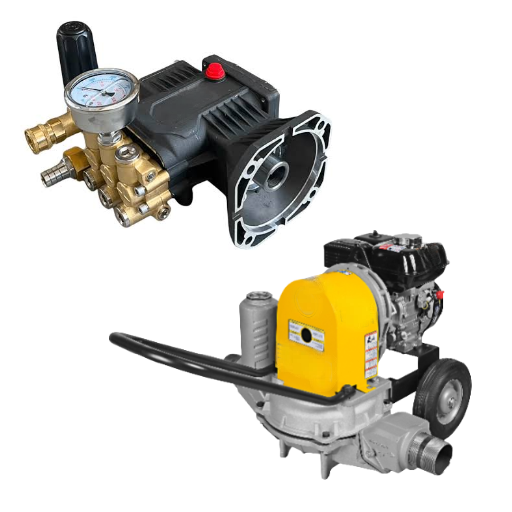
The difference is the seal. A plunger pump moves a solid plunger through a dynamic seal, where the packing slides against the plunger and relies on a controlled leak path. A diaphragm pump moves a flexible membrane clamped at its edge, so it uses a static seal and the fluid is fully contained.
Both are reciprocating positive-displacement pumps that draw fluid through an inlet check valve and eject it through a discharge valve on the same two-stroke cycle. The mechanism is not what separates them. The way the fluid boundary is closed is.
How Each Pump Seals: Dynamic vs Static Seal, and Why It Decides Everything Else
In a plunger pump, packing rings sit in a stuffing box and are compressed by a gland nut against a precision-ground plunger. The seal is wetted by the process fluid and wears as the plunger strokes. A slight controlled drip is the correct running state, not a fault, because the packing needs lubrication from the fluid.
In a diaphragm pump, a PTFE, elastomer, or stainless membrane is clamped between flanges and flexes without sliding contact against any moving part. There is no packed gland and therefore no leak path to atmosphere. LEWA describes this head as hermetically sealed: the fluid cannot escape.
That one change cascades through every specification below. A static seal removes the leak path, so toxic fluids become viable. It removes packing friction, so there is no gland to adjust. It removes the fluid from the drive, so abrasives stop being a problem.
It also introduces a new wear part. The diaphragm flexes a finite number of times before it fatigues, so replacing it becomes a scheduled event. This is the core bargain: the plunger accepts a controlled leak to gain pressure, the diaphragm a flex-life limit to gain containment.
Terminology note. In hydraulic fluid power, “plunger pump” is sometimes used loosely for a piston-type hydraulic pump that circulates oil in a closed circuit. This guide covers the other meaning: the process plunger pump used for water and process fluids. For the oil-circulating family, see our guide to hydraulic axial piston pumps.
If you already know which family you need, our engineers can confirm the match against your fluid and pressure. Request a technical specification sheet, and we will size it before you order.
First, Disambiguate: Why a Diaphragm Pump vs Plunger Pump Comparison Goes Wrong
Before comparing anything, separate the category. Search results for this topic mix two machines that behave nothing alike.
Air-operated double diaphragm (AODD) transfer pumps. Compressed air, typically 2 to 8 bar, drives two diaphragms on a common shaft, with a spool valve alternating the air and ball checks rectifying the flow. They self-prime from dry, tolerate running dry, pass suspended solids, and have no electrics at the pump end. Their working ceiling is around 125 psi, or 8.6 bar. That is transfer pressure, not process pressure. Debem documents the supply range and dry lift; Wilden covers the air-exchange cycle.
Diaphragm metering pumps. Motor-driven precision dosing devices in two sub-types. A mechanical diaphragm pump drives the membrane through a linkage and tops out around 10 to 16 bar; the Pulsafeeder Pulsa GLM is rated to 175 psi, about 12 bar, at plus or minus 2 percent of set point. A hydraulic diaphragm pump drives the membrane with oil pushed by a plunger, reaching 350 to 1,200 bar across LEWA’s M-series and 120 MPa at Nikkiso.
| Family | Drive | Pressure band | What it is for |
|---|---|---|---|
| AODD transfer pump | Compressed air | 2 to 8 bar | Moving fluids, sludge, slurries; self-priming, dry-run |
| Mechanical diaphragm metering | Motor and mechanical linkage | 10 to 16 bar | Low-pressure precision dosing |
| Hydraulic diaphragm metering | Motor, plunger, oil, diaphragm | 350 to 1,200 bar | High-pressure precision dosing of hazardous fluid |
| Plunger pump, process duty | Motor, crankshaft, plunger | To 4,000 bar | Extreme-pressure process duty, clean fluid |
Read the table, and the contradiction dissolves. AODD versus plunger is transfer versus process. Mechanical diaphragm versus plunger is containment versus pressure. Hydraulic diaphragm versus plunger is containment versus simplicity at similar pressure.
A wastewater plant learned this the expensive way. The maintenance team replaced a failed metering pump with a cheap AODD unit because it self-primed, handled grit, and carried the word “diaphragm.” Flow varied with air pressure and polymer viscosity, and the unit was pulled in a month.
Plunger Pump vs Diaphragm Pump: Head-to-Head Comparison
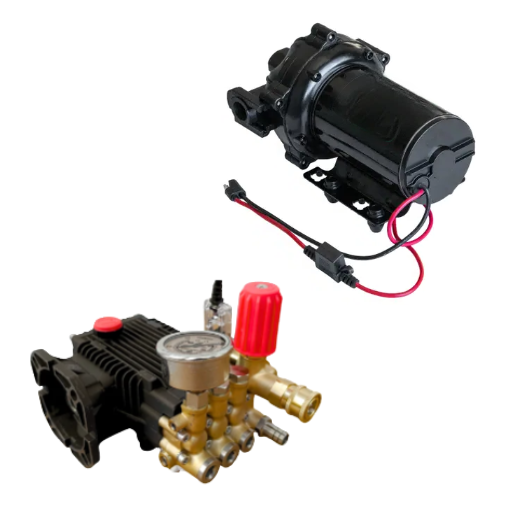
Here is the quantified grid no competing page publishes. The hydraulic diaphragm column matters, because omitting it forces a false binary.
| Criterion | Plunger (process) | AODD transfer | Mechanical diaphragm metering | Hydraulic diaphragm metering |
|---|---|---|---|---|
| Seal type | Dynamic packing | Static, clamped | Static, clamped | Static, clamped, oil-driven |
| Seal wetted by fluid | Yes | No | No | No |
| Leak path to atmosphere | Controlled drip, normal | None | None | None, hermetic |
| Typical pressure | 100 to 10,000 psi; to 4,000 bar | 2 to 8 bar supply; 125 psi max | 10 to 16 bar | 350 to 1,200 bar |
| Flow per head | To 9 m³/h | To roughly 950 lpm | Dosing to process scale | To 19 m³/h |
| Metering accuracy | High when new, drifts with packing wear | Not a metering device | ±1 to 2% | ±1% class |
| Temperature | -70 to +400 °C | Limited by elastomer | Roughly 0 to 45 °C | ~150 °C PTFE ceiling |
| Viscosity | To 1,500,000 mPa·s | Moderate to high | To 100,000 mPa·s | To 100,000 mPa·s |
| Self-priming | No, flooded suction required | Yes, from dry | Requires primed suction | Requires primed suction |
| Dry-run | No | Yes | No | No |
| Solids and abrasives | Poor without flush and hard plungers | Good, passes solids | Good, diaphragm isolates drive | Good, diaphragm isolates drive |
| Primary wear part | Packing, plunger, valves | Diaphragm, air valve, ball checks | Diaphragm | Diaphragm, monitored |
| Failure mode | Gradual: leakage, falling pressure | Gradual: flow loss | Gradual or step: fatigue | Step: rupture, detected |
| Pulsation | High (triplex ~6 pulses/rev) | High | Low to moderate | Low to moderate |
| Cost direction | Moderate to high; cheap consumables, recurring labor | Low | Low to moderate | High |
| Best duty | Extreme pressure, clean fluid, high viscosity | Transfer, dewatering, sludge | Low-pressure precision dosing | High-pressure dosing, hazardous fluid |
The one-line read: the plunger wins on pressure in process duty, viscosity, temperature, and simplicity. The diaphragm wins on containment, solids handling, and self-priming. The hydraulic diaphragm wins where you need both.
Pressure Capability, and the Counterintuitive Answer
This is where the received wisdom breaks down, and where most articles get it wrong.
In process duty, plungers own the top of the range. Process plunger pumps run from about 100 to 10,000 psi, reach 4,000 bar in industrial service according to Kamat, and go far beyond that in waterjet intensifiers. No diaphragm competes there. AODD sits at 8 bar; mechanical diaphragm metering at 10 to 16 bar.
In metering duty, the ranking inverts. LEWA’s hydraulic diaphragm heads reach 1,200 bar, while its own K-series plunger metering heads top out at 500 bar. Nikkiso independently rates diaphragm heads to 120 MPa. The diaphragm is not the low-pressure option in this class; it is the higher-pressure one.
The explanation is mechanical. A hydraulic diaphragm pump is a plunger pump: the plunger drives oil instead of process fluid, and the oil deflects a membrane. It inherits the plunger’s pressure capability while moving the seal to a static membrane. Put an oil column between the plunger and the fluid, and the diaphragm catches up while keeping its seal.
Scope matters. The inversion applies to metering-class heads, not triplex process pumps. A 4,000 bar process plunger and a 1,200 bar metering head are different product classes, and treating them as one is the error that follows.
An amine injection skid shows why the distinction pays. The original specification called for a plunger metering pump at 180 bar because “plungers handle pressure.” It did, but the packed gland introduced a leak path onto a hazardous chemical, and the drip rate drew an inspection finding. A hydraulic diaphragm head reached the same pressure with no gland at all.
Priming, Dry-Run, and Installation Reality
AODD pumps self-prime from dry, lift fluid from about 6 m dry or 9.5 m wetted, and tolerate running dry indefinitely. That is why they are the default for sumps, drums, and dewatering.
Process plunger pumps are the opposite. They are not self-priming and must never run dry. Most designs need flooded suction or a booster, commonly a positive inlet pressure around 60 to 70 psi, and NPSH must be satisfied with correctly sized suction piping.
Several comparison pages claim that both plunger and diaphragm pumps self-prime. That holds for small sprayer pumps and AODD units, and fails for process plunger pumps. Specify one as if it will lift fluid, and it fails in the first week.
Abrasives, Solids, Viscosity, and Temperature
Abrasives and solids go to the diaphragm. LEWA recommends diaphragm heads for critical, abrasive, toxic, or flammable fluids. AODD passes suspended solids outright. A plunger’s packing and plunger are eroded by solids unless you specify hardened or ceramic plungers, reduce speed, and add stuffing-box flushing.
Viscosity goes to the plunger by an order of magnitude. LEWA’s K-series handles up to 1,500,000 mPa·s against 100,000 mPa·s for its M-series diaphragms. For heavy polymers, that gap decides the selection.
Temperature also goes to the plunger. The K-series runs from -70 to +400 °C. PTFE diaphragms have a ceiling around 150 °C, and stainless diaphragms extend the range at the cost of flow.
The fluid usually decides before the pressure does. Hazardous, abrasive, or solids-laden fluid puts you among the diaphragm types. Clean, hot, or viscous fluid puts you on a plunger.
Metering Accuracy, and Why It Drifts
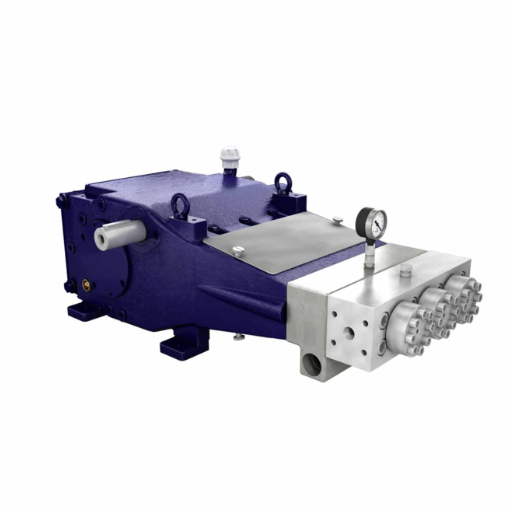
Both families quote impressive numbers. Diaphragm metering typically holds plus or minus 1 to 2 percent of set point, and API 675 injection pumps are specified at plus or minus 1 percent steady-state over a 10:1 turndown range, a figure API 675 pump makers publish. Plunger metering is comparable or better when new.
What matters in service is drift, not the datasheet figure.
A plunger’s packing wears, and delivered volume falls away from the calibrated value. Accuracy is restored by repacking and recalibrating. The decline is gradual, visible in the drip rate, and correctable in the field.
A diaphragm’s displacement is set by a clamped membrane, so it does not drift with seal wear. But a fatiguing diaphragm fails as a step change, which is why rupture detection exists.
For tight accuracy on clean fluid, either architecture works; choose based on pressure and containment. For abrasive dosing, the diaphragm wins on wear alone.
Maintenance, Consumables, and Total Cost of Ownership
A plunger pump is labor-heavy but forgiving. Packing and seals are replaced on a schedule, the gland is adjustable, plungers are inspected for scoring, and valves and seats are serviced. Consumables are inexpensive, and minor leakage is managed rather than treated as a shutdown. Our plunger pump maintenance guide sets out the program.
A diaphragm pump is less frequent but less forgiving. The diaphragm is a scheduled wear part limited by flex life, so intervals come from the OEM manual for your model. A rupture on hazardous duty is a containment event, not a drip.
Weigh the TCO as consumable cost times frequency, plus labor, plus downtime risk. Published cost claims here conflict and are mostly unsourced, so treat “cheaper over life” as a hypothesis to test against your own maintenance records.
When to Choose a Plunger Pump vs a Diaphragm Pump
Choose a plunger pump when pressure is high in process duty, the fluid is clean and non-hazardous, viscosity or temperature is high, and field serviceability matters more than containment.
Choose a diaphragm pump when the fluid is toxic, corrosive, flammable, abrasive, or must be fully contained, when solids are present, when self-priming and dry-run tolerance are required, or when pressure is low.
Choose a hydraulic diaphragm when you need plunger-class pressure and a hermetic seal at once. It resolves the false binary.
Work the decision in this order: fluid hazard and solids, then pressure band, then duty cycle, then accuracy. Done in that sequence, most wrong answers disappear before price enters the conversation.
For metering duty, the fastest practical method is the one ProMinent publishes: plot capacity in l/h against back pressure in bar, then read off the family covering that intersection. Low capacity at low pressure is mechanical diaphragm territory. High pressure at any capacity pushes you to a plunger or hydraulic diaphragm, and containment decides which.
A blasting contractor hit the reverse case. A triplex plunger pump was specified for a low-flow additive injection point because the site already trusted plunger pumps at 8,000 psi. Pressure was never the problem.
The packing drip was unacceptable on the additive, and low-flow accuracy drifted between repacks. A diaphragm metering pump was right for a duty that never needed extreme pressure. The pattern generalizes across plunger pump applications.
Still choosing within the reciprocating family? Our plunger pump vs piston pump comparison covers the seal-location trade-off. If pressure dominates, the high-pressure plunger pump guide works through the design ladder above 1,000 psi.
Sourcing: Specifying the Right Pump
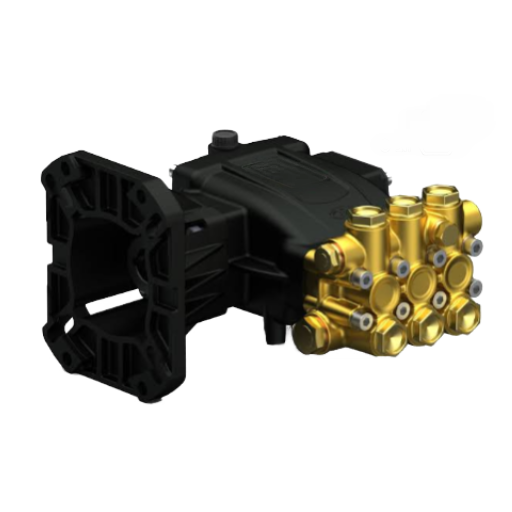
The RFQ data set that produces a correct quote the first time is short but specific: fluid and chemistry, flow, back pressure in bar, temperature, viscosity, solids content, duty cycle, required accuracy, inlet conditions including flooded suction, containment requirement, required standard such as API 675 for metering or API 674 for process duty, materials, and mounting.
When swapping architectures, never substitute on a matching footprint. Verify liquid-end construction, diaphragm type and material, pressure rating, valve and seat type, port positions, and drive. A datasheet maximum and a rated continuous duty point are different numbers, and vendors do not always say which they are quoting.
Our plunger pump manufacturers and sourcing guide sets out the full vetting framework, including how to verify port positions and mounting dimensions against your existing installation.
Frequently Asked Questions
Which is better, a plunger pump or a diaphragm pump?
Neither, universally. Plungers suit high-pressure, high-viscosity, high-temperature duty with clean fluid. Diaphragms suit hazardous, abrasive, or solids-laden fluids where containment matters more.
What is the maximum pressure of a diaphragm pump?
It depends on the family. AODD transfer pumps reach about 125 psi. Mechanical diaphragm metering pumps reach 10 to 16 bar. Hydraulic diaphragm metering pumps reach 350 to 1,200 bar.
Are diaphragm pumps self-priming?
AODD pumps are self-priming from dry, with a lift of around 6 m. Diaphragm metering pumps generally need a primed suction. Process plunger pumps are not self-priming at all.
Can a plunger pump run dry?
No. Running a process plunger pump dry destroys the packing and can score the plunger. AODD pumps tolerate dry running; most other designs do not.
Which is better for chemical dosing, a plunger pump or a diaphragm pump?
For hazardous or corrosive chemicals, a diaphragm metering pump is usually correct because it has no gland leak path. For high-pressure dosing of a clean, benign fluid, a plunger metering pump is simpler and equally accurate.
Is a plunger pump leak-free?
No. Plunger packing is designed to weep slightly. A small controlled drip is normal and should not be eliminated by over-tightening the gland.
What is a hydraulic diaphragm pump?
A metering pump in which a plunger drives oil that deflects a diaphragm. It combines plunger-class pressure with a hermetic seal, and it is why the “plungers always win on pressure” rule fails in metering duty.
Conclusion
The plunger pump vs diaphragm pump decision comes down to one mechanical fact: whether the seal slides against a moving plunger or stays static behind a clamped membrane. That explains the leak path, the abrasives tolerance, the priming behavior, and the maintenance model.
The plunger owns extreme process pressure, viscosity, temperature, and simplicity. The diaphragm owns containment, solids, and self-priming. The hydraulic diaphragm owns the overlap, reaching metering pressures that exceed plunger metering heads while keeping the fluid sealed.
Fix the duty classification before you look at a price tag, and the architecture usually selects itself.
To turn this comparison into a specification, contact LOYAL INDUSTRIAL PTE. LTD. for a technical specification sheet, an OEM quotation, or a recommendation on your plunger pump vs. diaphragm pump decision. Our engineers will review your fluid, pressure, and duty cycle and confirm the family before you order.