You park the car, lock the door, and then hear it: a faint buzzing from under the hood. By the next morning, the battery is dead, and the ABS warning light is glowing on the dash. It’s a scenario that plays out in driveways across the country, and it almost always means one thing: an ABS pump running after the key is off.
Here’s the good news. In most cases, the pump itself is not the problem. The ABS pump running when the car is off is usually a power-control failure, not a pump failure. A stuck relay, a shorted module, or a leaking accumulator keeps the pump motor energized when it should be silent.
This guide explains why the ABS pump runs continuously after shutdown, what is normal versus what is a fault, how to diagnose the condition step by step, and the cheapest fix for each root cause. You’ll learn how to protect your battery, avoid an unnecessary replacement, and get the braking system back to reliable operation.
For a full list of pump-related warning signs, see our article on common ABS pump failure symptoms.
Is It Normal for the ABS Pump to Run After Key-Off?

Yes, briefly. A short run after shutdown is normal priming on many vehicles. On accumulator-equipped systems, especially Toyota and Lexus hybrids, the brake actuator releases or builds pressure for a few seconds after you switch off the engine. One Toyota owner described it as a quick “ta-ta-ta-ta” sound from the actuator, and it lasts about two to five seconds.
That brief run is the hydraulic control unit (HCU) doing its job. It is bleeding down stored pressure or topping off the accumulator so the system is ready for the next start. It is not a fault, and it does not drain the battery.
Continuous running is different. If the ABS pump keeps running for thirty seconds, a minute, or all night, or if it cycles on and off repeatedly with the key removed, that is a fault. The pump motor is being held in an energized state, and it will keep drawing current until the battery dies or the motor burns out.
The ABS Pump Is a Precision Hydraulic Pump
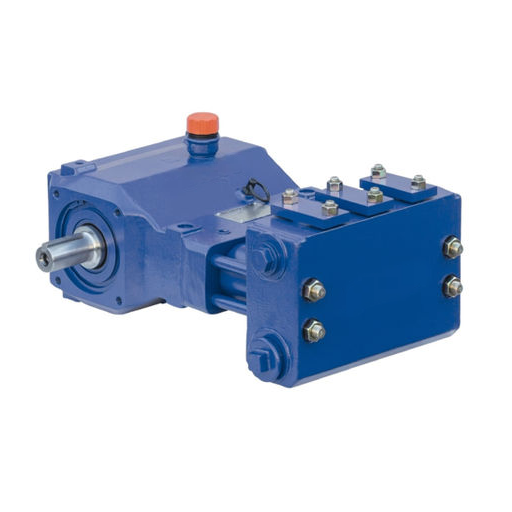
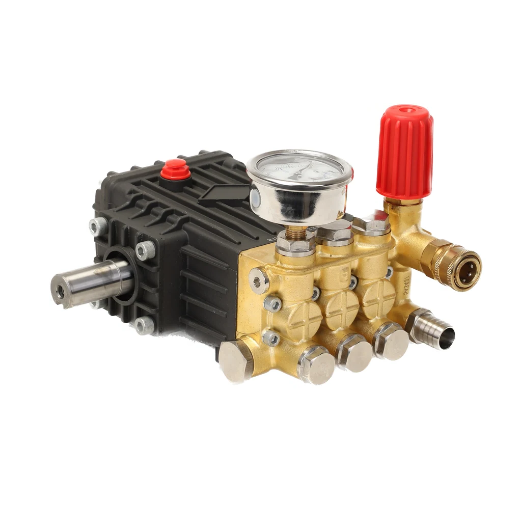
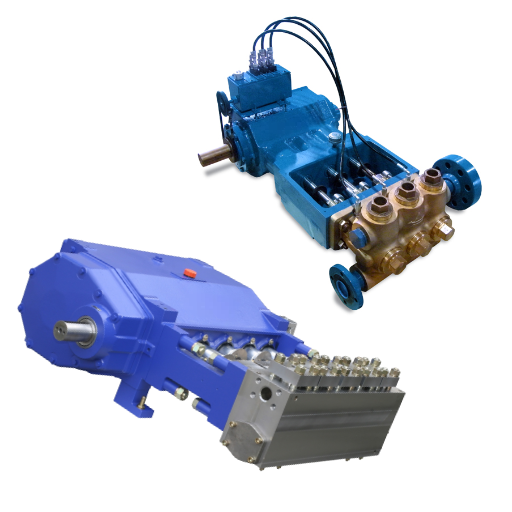
Understanding what is running helps explain why this condition matters. The ABS pump is not a simple electric motor bolted to the frame. It is a cam-driven reciprocating piston pump, the same positive-displacement principle used in industrial hydraulic systems, with check valves and, on many designs, a small accumulator. It sits inside the hydraulic control unit and generates the pressure the anti-lock, traction, and stability systems use to modulate brake force.
When that pump runs continuously, it is doing real hydraulic work with no load relief. That stresses the motor, heats the brake fluid, and shortens the life of the pump assembly. Catching the fault early matters.
If you want a deeper look at the system architecture, our complete guide to the ABS hydraulic unit walks through the motor, valve block, and control electronics.
Why Does the ABS Pump Keep Running When the Car Is Off?
The pump motor has a constant power feed in many designs. The ABS control module manages that power internally, turning the motor on and off through a relay or a bank of power transistors. When any part of that control path fails, the motor can stay energized with the ignition off.
Four root causes cover the vast majority of cases.
Failed ABS Control Module
The most common cause is a failed control module, sometimes called the EBCM, CAB, or pump controller. The module contains power transistors, MOSFETs, that switch the pump motor. When one of these shorts internally, it “seizes on” and drives the pump constantly. A known failure part is the Vishay MOSFET SUB75N06-08, which fails in this exact way on several Ford and BMW modules.
The module also carries the internal pump relay on many vehicles. If that relay welds closed, the pump runs with the key out. This is why the standard repair for a continuously running pump is module replacement or rebuild rather than a new pump.
Stuck or Welded ABS Pump Relay
Some designs use an external relay on or near the ABS unit. When the relay contacts weld shut, the pump motor stays powered. The relay is a small, inexpensive part, and replacing it is one of the cheapest fixes on this list.
A stuck relay has a distinctive signature. You hear the pump run for a few seconds, stop, then run again, because the contacts arc and weld intermittently. The relay may even click audibly with the key off.
Accumulator Pressure Leak
On pressure-charged systems, the pump maintains pressure in an accumulator. If the accumulator leaks internally, or a valve seat wears, the pump runs constantly to compensate for the lost pressure. The motor spins, but the pressure never reaches the cut-off point, so the pressure switch never tells it to stop.
This is the hydraulic-side cause. It is often misdiagnosed as a module failure because the symptom looks identical. The pump is working correctly; the system it feeds is not holding pressure.
Wiring, Ground, and Connector Faults
Corrosion and water intrusion are silent contributors. A corroded ground wire raises resistance and damages the module. Water in a fuse box shorts relay terminals. A leaking battery can coat the ABS connector in electrolyte, which is exactly what triggered a Dodge recall years ago.
These faults are cheap to fix if you find them, and expensive if you do not. A poor ground can destroy a brand-new replacement module within days, which is why the diagnostic sequence below starts with the simple checks.
Known Recalls You Should Check First
Before any repair, check whether your vehicle is under a recall. Hyundai recalled about 88,000 vehicles, including 2006 Sonatas and 2006 to 2011 Azeras, because water could enter the always-powered ABS module and cause a short, even with the car parked. The remedy was a relay that switches off ABS power at key-off. A later recall, NHTSA 21V160000, covered 2015 to 2016 Genesis and 2017 to 2020 Genesis G80 models with an ABS module short-circuit risk.
For the operational decision, our guide to whether you can drive with a bad ABS pump separates safety-critical faults from schedule-it repairs.
Symptoms: What You Will Notice (and the Battery Drain)

The symptoms of an ABS pump running after key-off are hard to miss, and they get worse the longer the fault stays.
- Audible pump noise with the key off. The buzzing or whirring from under the hood, often paired with relay clicks, is the first sign.
- Dead battery overnight. A pump motor can draw several amps. Against a normal parasitic draw of 20 to 50 milliamps, that is a hundred times higher, and it will flatten a healthy battery by morning.
- ABS or brake warning lights. The module often sets a fault code and lights the ABS, traction, or stability warning as the pump fails its self-test.
- Pump motor overheating. A motor that runs for hours overheats and burns out, turning a control fault into a genuine pump replacement.
The battery drain is the symptom most owners notice first, because it is the one that strands them. A related and equally common report is a pump that cycles with the key off and kills the battery over a few days instead of overnight. Both point to the same control-circuit fault.
If the noise is your main symptom, our guide to ABS pump noise symptoms breaks down what each sound pattern indicates.
How to Diagnose an ABS Pump That Runs Continuously
Diagnosis is about isolating where the power is leaking. Work through this sequence in order, because the cheapest checks come first and often solve the problem.
Step 1: Confirm Normal vs. Abnormal Operation
Time the pump. Park the car, switch off the ignition, and listen. If the pump runs for two to five seconds and stops, that is normal priming. If it runs for thirty seconds or more, or cycles repeatedly, you have a fault and can proceed.
Step 2: Pull the ABS Fuse Immediately
The single most important interim step is to pull the ABS fuse from the fuse box, typically a 40 to 60 amp fuse. This removes power from the pump motor and stops the drain at once.
Pulling the fuse does not affect conventional braking. The ABS, traction, and stability functions will be disabled, but the base hydraulic brakes work normally. This gives you time to diagnose without a dead battery or a burned-out motor.
Step 3: Measure the Parasitic Drain
Reconnect the battery and measure the key-off current draw with a digital multimeter in series with the negative battery cable. Normal parasitic draw is 20 to 50 milliamps. A draw above 100 milliamps indicates a drain.
Pull fuses one by one until the draw drops. When the number falls back to normal, you have found the circuit. If it is the ABS fuse, you have confirmed the pump circuit is the culprit.
Step 4: Test the ABS Relay
Locate the ABS relay and test it with the multimeter. Check for continuity between the control terminal and battery voltage with the key off. Any continuity where there should be none means the relay is stuck closed and needs replacement.
You can also check the relay by substitution. Install a known-good relay of the same part number and see if the pump stops.
Step 5: Isolate the Module
With the ABS fuse removed, disconnect the connector at the ABS module or hydraulic unit. If the pump stops when you disconnect the module, the fault is in the module or its wiring. If the pump keeps running, the relay or a short to battery is holding it on.
This single test separates the two most common causes and tells you where to spend money.
Step 6: Read ABS Codes With an ABS-Capable Scanner
A generic OBD-II scanner will not read ABS module codes on most vehicles. You need an ABS-capable scan tool. Look for codes like C1269, motor relay circuit short to battery, C0252, EBCM motor relay circuit, C1218, pump motor circuit, and C1253, pump motor relay failure.
The stored code narrows the diagnosis considerably. If you see a code plus a continuously running pump, the control circuit is confirmed as the fault area. Our guide to ABS pump failure DTC codes explains the full code family and what each one means in practice.
If these steps sound involved, they are within reach of a competent DIYer with a multimeter and a scan tool. For a deeper walkthrough of the electrical checks, see our step-by-step guide to testing the ABS hydraulic unit.
How to Fix an ABS Pump Running After Key Off

The fix depends on the root cause, and the costs vary by an order of magnitude. Work from cheapest to most expensive, and only replace what the diagnosis confirms.
Relay Replacement
A stuck relay is the best-case repair. The part costs $5 to $25, and a shop will install it for about $50 to $120 total. On many vehicles, the relay is a standard part; a GP Sorensen MR120 runs about $14.
One Dodge owner found his pump relay welded shut after a night of running, which killed the battery. A new relay restored normal operation for less than the cost of a tank of fuel.
Wiring and Ground Repair
Corrosion on the EBCM ground wire is a notorious GM issue. Cleaning the frame-rail ground to bare metal and coating it with dielectric grease fixes the C1218 pump motor circuit code more than half the time, for zero dollars in parts.
The same logic applies to any corroded connector or damaged wire. Fix the connection, clear the code, and the pump stops.
ABS Module Rebuild vs. Replacement
If the module is the fault, you have two realistic options. A mail-in rebuild service replaces the failed MOSFETs or relay and returns the unit ready to install, typically for $150 to $250. That’s often 80 percent cheaper than a new module, which runs $800 to $2,000 or more installed.
Here is a real example. A 2002 Chevrolet Tahoe owner had a pump that ran continuously after shutdown and drained the battery every night. The dealer quoted about $1,100 for a new ABS module.
A remanufactured module solved it for around $150. The pump itself was fine all along.
Hydraulic-Side Repair
If the cause is an accumulator leak or a failed pressure switch, replacing the accumulator, the pressure switch, or the valve block resolves the run condition. These repairs are less common but far cheaper than a full module replacement, and they are the correct fix when the pump is healthy.
When You Need a Full Replacement
If the motor is burned out from prolonged running, or the hydraulic unit is physically damaged, a full ABS pump assembly or HCU replacement is required. That is the expensive path, and correct diagnosis should have avoided it. Our ABS pump replacement guide covers the full procedure, and the repair vs. replace decision helps you weigh the cost, and the question of whether an ABS pump can be repaired addresses the rebuild options in more depth.
Cost Comparison: Repair vs. Replacement
| Fix | Parts Cost | Installed Cost | Notes |
|---|---|---|---|
| ABS relay replacement | $5–$25 | $50–$120 | Cheapest fix; check relay first |
| Wiring / ground repair | $0–$50 | $50–$200 | Cleaning a corroded EBCM ground often costs $0 |
| Pressure switch / accumulator | $30–$120 | $150–$400 | Hydraulic-side cause; correct fix when pump is healthy |
| ABS module rebuild (mail-in) | $150–$250 | + labor if shipped | Often 80% cheaper than new; retains vehicle data |
| New ABS module | $300–$800 (part) | $800–$2,000+ | Dealer pricing can exceed $2,000 on some vehicles |
| Full pump / HCU assembly | $300–$1,200 (part) | $700–$1,500+ | Only needed if the motor burned out or the HCU is damaged |
ABS Pump Replacement and Sourcing Considerations

When replacement is the right call, sourcing matters as much as the repair itself. The ABS pump and module market splits into three tiers.
OEM modules are the exact factory part. They are the most reliable and the most expensive. Remanufactured modules are rebuilt to specification, tested, and typically retain the original vehicle data, which avoids programming issues. Aftermarket units vary widely in quality, so vet the supplier carefully.
Warranty and core-return rules differ by supplier. A reman unit usually requires a core deposit and a warranty period. Verify the return policy before you buy, because an incompatible module is worse than no module.
For fleet buyers, consistency is the priority. A commercial vehicle down for a failed ABS pump costs money every hour it sits. Our OEM vs. aftermarket comparison lays out the reliability and warranty trade-offs, and if you are sourcing replacements in volume, our ABS pump replacement cost by vehicle type gives realistic budget anchors across makes.
For bulk ABS hydraulic pump sourcing and commercial supply, you can contact our engineering team for specification support and factory-direct pricing.
Safety: Is It Safe to Drive With the ABS Pump Running?
The short answer is to fix it before you rely on the vehicle. Here is the practical breakdown.
With the ABS fuse pulled, conventional hydraulic braking works normally. You have full brake pedal force in a normal stop. What you lose is the anti-lock function, so in a hard stop on wet or slippery pavement, the wheels can lock, and the vehicle can skid. The traction and stability systems are also off.
Drive cautiously and only as needed to reach a shop. Avoid wet, loose, or icy surfaces.
There is one situation that demands immediate attention. If both the ABS warning light and the red brake warning light are on at the same time, stop driving. That combination can indicate a loss of hydraulic pressure or a more serious brake system fault.
Also be aware that a continuously running pump is a fire risk in rare cases. The Hyundai and Dodge recalls existed because a shorted, always-powered ABS module could overheat. That is why the interim fuse pull matters and why you should not leave the vehicle parked with the pump running.
Commercial vehicles add another layer. Federal regulations require ABS to be operational on most heavy trucks and trailers, and a disabled ABS is an inspection item. A fleet manager who ignores a continuously running ABS pump is risking downtime at the next roadside inspection.
Key Takeaways
An ABS pump running after the key is off is a control fault, not a pump fault, in the majority of cases.
- A brief two-to-five second run after shutdown is normal priming, especially on accumulator-equipped vehicles.
- Continuous or repeated running with the key off is a fault that will drain the battery and burn out the motor.
- Pull the ABS fuse immediately to stop the drain; conventional braking still works.
- Diagnose in order: time the run, check the fuse, measure parasitic draw, test the relay, isolate the module, read the codes.
- The cheapest fixes, relay and ground, come first. Module rebuild beats new in most cases.
- Check for recalls before you pay for any repair.
The pattern is consistent across makes. A stuck relay or a shorted module keeps a healthy pump running, and most owners pay for a pump or module replacement they never needed. A systematic diagnosis protects the budget, and the right sourcing decision keeps the vehicle on the road.
If you are a technician, fleet manager, or buyer working through an ABS hydraulic pump failure, and you need specification support or replacement sourcing, our engineers can help. Contact us for a technical consultation and a factory-direct quote on ABS hydraulic components.