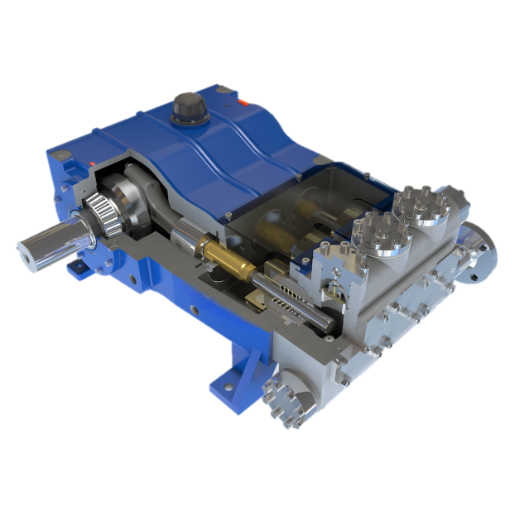
When Ines took over maintenance at a pipe-coating plant, she inherited three triplex pumps rated for intermittent cleaning duty and a production line that ran 24 hours a day. The packings failed in weeks, not months. Nothing was defective. The pumps were doing a job they had never been rated for.
That pattern explains most plunger pump problems. The industry doesn’t choose the pump family. The duty point does: pressure, flow, fluid, and how long the machine runs between stops.
Most “plunger pump applications” pages are catalog bullet lists. They name industries but skip the pressure band, duty cycle, materials, and standards that decide whether a plunger pump is actually the right choice.
This guide maps the applications of plunger pumps across eight industry groups, with the numbers that matter. It also says plainly when a centrifugal, diaphragm, or piston pump is the better call. For the pump’s construction and working principle, start with our plunger pump complete guide.
Here’s what we will cover:
- a direct answer to what a plunger pump is used for
- a comparison matrix by industry
- sector notes on pressure, flow, duty, and materials
- a six-question selection framework
- the application mistakes we see most often
If you already have a duty point and need a second opinion, request an application review. Our engineers will check the pump type against it.
What Is a Plunger Pump Used For?
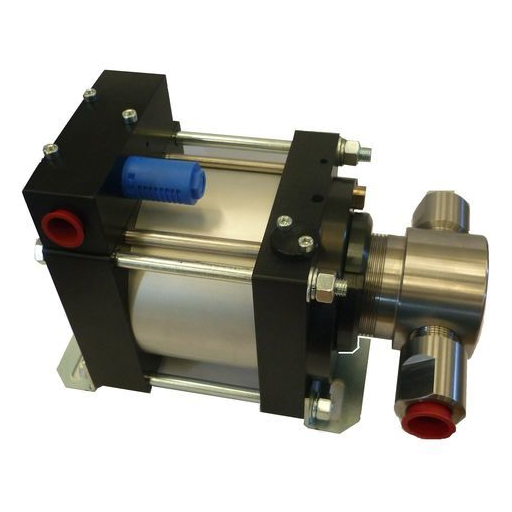
A plunger pump is used where a process needs high pressure at a controlled flow: pressure washing and waterjet cutting, reverse osmosis and desalination, chemical injection, oil and gas service, food homogenization, mining, boiler feed, and hydrostatic testing. Its stationary seal and positive displacement handle abrasive, viscous, and hazardous fluids better than most centrifugal pumps.
Where plunger pumps are used in industry:
- High-pressure cleaning, hydro-blasting, and waterjet cutting
- Reverse osmosis, desalination, and water treatment
- Chemical injection, metering, and dosing
- Oil and gas water or CO₂ injection, well service, and produced-water disposal
- Food, beverage, and pharmaceutical homogenization and hygienic duties
- Mining, metals, steel descaling, and abrasive handling
- Power generation, boiler feed, and hydrostatic testing
- Agriculture, firefighting, and municipal jetting
These plunger pump uses share one requirement: the duty point has to match the pump’s rating.
Three properties explain the fit. The high-pressure seal stays stationary while the plunger slides through it, so the sealing surface does not wear against a moving cylinder wall. Positive displacement delivers a nearly fixed volume per stroke, which makes flow predictable. And the fluid end can be built from abrasion- and corrosion-resistant materials without changing the basic architecture.
Plunger Pump Applications at a Glance
The matrix below summarizes typical duties across the main plunger pump industries. Treat every band as a starting point for specification, not an industry-wide guarantee.
| Industry group | Typical applications | Typical pressure band | Typical duty | Why a plunger pump fits |
|---|---|---|---|---|
| Cleaning and surface prep | Pressure washing, hydro-blasting, sewer jetting, descaling, waterjet | 70–6,900 bar (1,000–100,000 psi), depending on tier | Often intermittent; continuous on process lines | Very high pressure from a compact fluid end; abrasion-tolerant plungers and seats |
| Water treatment and RO | Seawater and brackish RO feed, boosters, dosing, energy recovery | 15–80 bar (220–1,160 psi) | Continuous | Near-constant flow at pressure; flow adjusts precisely with speed |
| Chemical injection | Biocides, scale and corrosion inhibitors, methanol, glycol, pH control | Up to 1,000+ bar, depending on fluid end | Continuous or batch | Accurate displacement per stroke; API 675 metering options |
| Oil and gas | Water, seawater, CO₂, and polymer injection; well service; hydrostatic testing | 140–180 bar typical injection; 5,000–20,000 psi well service | Continuous injection; intermittent service | API 674 designs for high pressure with abrasive or corrosive fluids |
| Food and beverage | Homogenization, CIP/SIP, filling, viscous transfer | 50–1,200 bar, some models to ~1,500 bar | Batch or continuous | Sanitary fluid ends with clean-in-place compatibility |
| Mining and metals | Hydraulic mining, dust suppression, slurry transfer, steel descaling | 300–500 bar descaling; higher in specialty systems | Heavy continuous | Abrasion tolerance with hardened fluid ends and ceramic plungers |
| Power and heavy industry | Boiler feed, oxygen scavenging, soot blowing, hydrostatic testing | Up to 700 bar for test duties | Continuous or test cycles | High pressure at low-to-moderate flow; precise chemical injection |
| Agriculture, fire, municipal | Fertigation, spraying, misting, foam firefighting, sewer jetting | 10–150 bar typical | Intermittent | Dosing accuracy and pressure where a centrifugal pump falls short |
Bands are typical, model-dependent, and must be verified against the pump datasheet. A pump rated to 5,000 psi is not automatically rated to run at 5,000 psi continuously.
To understand the general classification of plunger pumps, please read our article on types of plunger pumps.
Cleaning, Surface Preparation & Waterjet Cutting
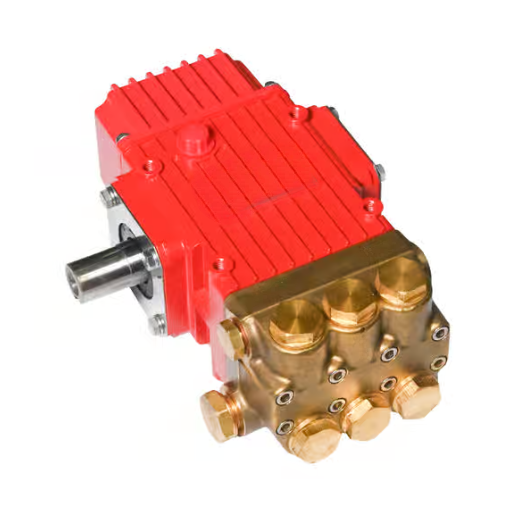
Cleaning is the largest and most visible group of high-pressure plunger pump applications. It is also where duty-cycle mistakes concentrate, because the same pump family spans a car wash and a waterjet cutting table.
Pressure Washing and Vehicle Cleaning
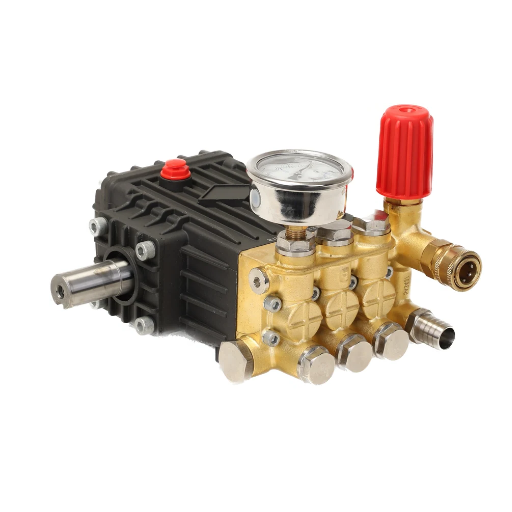
A plunger pump for pressure washing typically runs at 1,000–3,000 psi (70–210 bar) in light-duty and car-wash service. Commercial surface cleaning moves to 3,000–5,000 psi (210–345 bar), with flows around 2–10 gpm (8–38 L/min). Industrial units can exceed 20 gpm (76 L/min) at similar pressures.
Direct-drive pressure-washer pumps can run at higher shaft speeds than process pumps. That’s acceptable for short, intermittent work. It’s not a license to run the same unit around the clock.
Hydro-Blasting, Sewer Jetting, and Descaling
Industrial surface preparation and sewer jetting commonly run at 5,000–20,000 psi (345–1,380 bar). Steel descaling sits lower, typically around 300–500 bar, because the goal is to break the scale without cutting the base metal. Specialty water-hydraulic systems go higher.
Abrasives change the material specification. Most triplex plunger pump applications in this range use ceramic plungers and carbide seats. Ceramic resists scoring, tungsten carbide holds a sealing edge, and hardened fluid ends tolerate the particles that pass through. Valve design matters as much as pump pressure: a valve that cannot seat cleanly will lose flow before the plunger wears out.
Hydrodemolition and Waterjet Cutting
Hydrodemolition removes concrete at 10,000–40,000 psi (690–2,760 bar). Waterjet cutting reaches 40,000–100,000 psi (2,700–6,900 bar). In pure waterjet work, the operating pressure is often around 3,000–4,000 bar; abrasive waterjet runs roughly 3,000–6,000 bar.
Most ultrahigh-pressure systems use an intensifier. A large-diameter oil-side plunger drives a small-diameter water-side plunger, and pressure multiplies with the area ratio, commonly 20:1 to 40:1. The plunger pump is still doing the work; it is simply driving a second, smaller plunger.
Back at Ines’s plant, the fix was not a higher-pressure pump. The team moved to a continuous-rated unit with ceramic plungers and carbide seats, and packing life returned to the expected range. A cleaning rating is a duty statement, not just a pressure statement.
Water Treatment: Reverse Osmosis & Desalination
Reverse osmosis is one of the most demanding continuous-duty plunger pump applications. A membrane train needs stable feed pressure for thousands of hours. Flow has to stay within a narrow band, or recovery and water quality drift.
Typical pressures:
- Seawater RO: 55–80 bar (800–1,160 psi), with design margins often to 85 bar
- Brackish water RO: 15–30 bar (220–435 psi)
- General industrial RO: 20–60 bar (290–870 psi)
Seawater is corrosive, so wetted materials matter as much as pressure. Duplex 2205, 904L, titanium, and copper-nickel alloys appear in seawater service; 316L is common in brackish and process water.
Energy-recovery devices reduce the power drawn by the high-pressure stage. A quintuplex configuration smooths the pulsation a triplex leaves behind. The trade-off is two more plungers, valves, and packing sets to service. Our comparison of triplex vs quintuplex plunger pumps covers that decision.
Here’s the nuance most application pages skip. Large seawater RO plants often use multistage centrifugal high-pressure pumps, not plunger pumps. Centrifugal machines win on very high flow because efficiency and maintenance cost favor them at that scale. Plunger pumps serve smaller trains, booster stages, energy-recovery circuits, and chemical dosing, where precise flow at high pressure matters more than raw volume.
Process engineer Tomas saw both approaches on the same coastline. A 120 m³/day train used a quintuplex plunger pump at about 65 bar. The neighboring 20,000 m³/day plant used a multistage centrifugal unit.
Neither choice was wrong. The duty points were different.
Chemical Injection, Metering & Dosing
Chemical injection is a precise, high-pressure group of plunger pump applications. It covers biocides, scale and corrosion inhibitors, catalysts, methanol and glycol, pH control chemicals, and polymer injection. Flows range from a few milliliters per minute to hundreds of liters per hour. Discharge pressures can reach 1,000 bar or more, depending on the fluid end and the injection point.
Plunger metering pumps are valued for one reason: displacement per stroke is mechanically fixed. Change the stroke length or speed and the dose changes predictably. Simplex and duplex configurations suit low flows with tight accuracy, and API 675 covers controlled-volume metering pumps for process service.
There’s a leak-path caveat. A packed plunger has a controlled leak path by design. That’s fine for many water-treatment chemicals. It’s not acceptable for toxic, ultra-pure, or slurry fluids. In those cases, a diaphragm pump is often the safer choice.
Priya, a dosing lead at a municipal water plant, ran a scale inhibitor at 12 L/h and 160 bar. The existing diaphragm pump worked, but its delivered dose drifted as backpressure changed. A simplex plunger metering pump with API 675 controls held the dose within about 1% across the operating range.
When the plant later added a hazardous additive, it kept a diaphragm skid for that line. Containment mattered more than the last point of accuracy. Both decisions were correct for their duty.
Oil & Gas
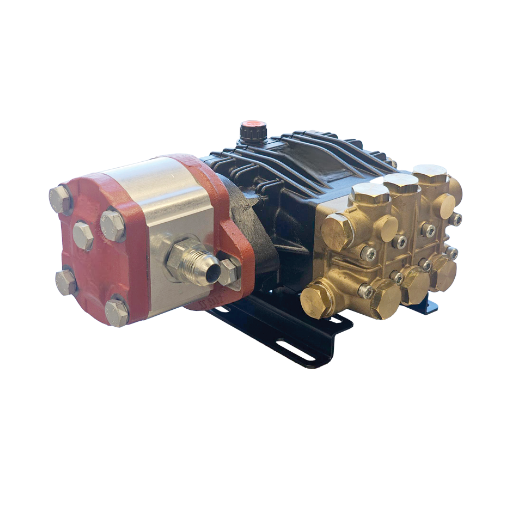
Oil and gas is another major group of plunger pump applications, spanning the whole chain:
- Upstream: water and seawater injection, CO₂ injection, polymer flooding, well service, cementing, and fracturing
- Midstream: produced-water disposal, pipeline hydrostatic testing, and methanol or glycol injection
- Downstream: chemical injection, catalyst dosing, and high-pressure washdown
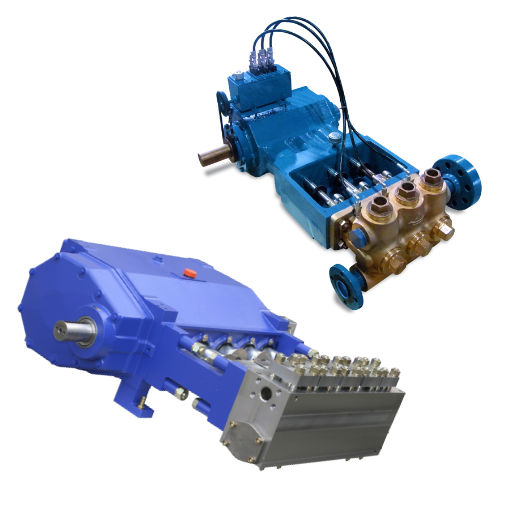
API 674 triplex and quintuplex units are the standard workhorses for process injection. Typical water-injection projects run around 140–180 bar, while cited API 674 pump ratings extend to roughly 900–1,100 bar, depending on the model and fluid end. Well-service duties are a different class, commonly 5,000–20,000 psi (345–1,380 bar).
Material selection is driven by the fluid, not the pump catalog. Produced water brings abrasives and salts. Sour service brings H₂S, which demands hardness control and the right metallurgy. CO₂ injection brings corrosion and phase behavior.
Remote locations add a maintenance penalty. Service access and spare-parts logistics belong in the specification.
One terminology note: “plunger lift” is an artificial-lift technique for gas wells, not a plunger pump. The two share a word and nothing else.
Food, Beverage & Pharmaceutical
Food and pharmaceutical duties split into two groups: high-pressure processing and hygienic transfer.
High-pressure homogenization is the classic plunger application. Many products run at roughly 50–500 bar; production homogenizers commonly operate at 200–1,200 bar, and some models reach about 1,500 bar. Other duties include CIP and SIP circuits, viscous transfer, filling and dosing, spray-drying feed, and high-pressure washdown.
Sanitary design is the specification driver, not pressure alone. Fluid ends are usually 316L or duplex stainless with tri-clamp connections and minimal dead volume. Depending on the market, equipment may need to meet 3-A, EHEDG, FDA, and EC 1935/2004 requirements for food contact. Ceramic plungers may need USP Class VI documentation for pharmaceutical use.
One risk deserves a direct mention: a packed plunger can retain product behind the packing, which creates a recontamination risk after CIP or SIP. When the product is sterile or highly allergenic, a hygienic diaphragm or another contained design may be the better engineering choice. Pressure capability does not settle a hygiene question.
Mining, Metals, Power & Heavy Industry
Mining and metals include the heaviest industrial plunger pump applications. These duties are defined by abrasion and continuity. Hydraulic mining, dust suppression, slurry transfer, de-mucking, ground aeration, and tunnel shield support all punish valves and plungers. Steel descaling typically runs at 300–500 bar. Forging presses, rolling-mill bearing relief, and water-hydraulic systems can go far higher, with specialty systems cited at 3,500–4,000 bar.
Power generation uses plunger pumps for boiler feed, high-pressure steam-drum injection, oxygen scavenging, and soot blowing. In heavy industry, hydrostatic testing is a major application. Pipelines, pressure vessels, valves, and castings are commonly tested up to 700 bar (10,000 psi). Some multiplex units are rated to 20,000 psig.
These test cycles are not continuous. Still, they demand repeatable pressure and a pump that can hold a point without drift.
Abrasion and temperature drive the material set. Specify ceramic or coated plungers, carbide seats, hardened fluid ends, and packings matched to the fluid rather than the default.
Duty cycle still governs the frame and drive. A pump that passes a pressure test is not necessarily built to run at that pressure for a full shift. Our plunger pump sizing guide walks through the flow, speed, power, and inlet checks that keep the duty point inside the pump’s envelope.
Agriculture, Firefighting & Municipal Services
Agriculture and municipal duties are lower pressure but less forgiving on chemical compatibility and intermittent operation. Applications include irrigation, crop spraying, fertigation, misting, dust suppression, aquaculture net cleaning, foam firefighting systems, sewer and drain jetting, and street washing.
Typical pressures sit around 10–150 bar (145–2,175 psi), with jetting at the upper end and spraying or fertigation lower. Intermittent duty is normal, so the pump and drive should be selected for starts and stops rather than continuous operation. Seal materials must match the chemical being dosed, because fertilizer and pesticide concentrates attack the wrong elastomer quickly.
The candid crossover: high-volume, low-pressure irrigation is usually centrifugal territory. A centrifugal pump moves large volumes efficiently and costs less to maintain at that duty. A plunger pump wins when the job needs pressure-specific jetting, precise chemical dosing, or both.
How to Choose a Plunger Pump by Application?
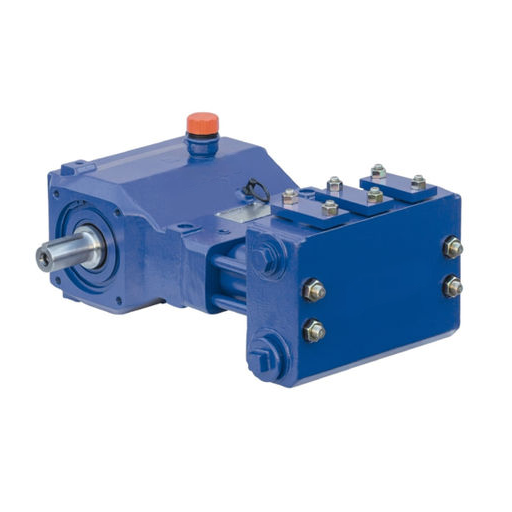
Six questions settle most application decisions before a model is chosen.
| Question | What to establish |
|---|---|
| What pressure does the duty require? | Continuous and peak pressure, in psi and bar |
| What flow is needed, with headroom? | Required flow plus 10–20% for wear and future demand |
| What is the fluid? | Clean, abrasive, viscous, corrosive, hazardous, or food-contact |
| What is the duty cycle? | Intermittent or continuous; the ratings are not interchangeable |
| Which standards apply? | API 674 or 675, 3-A, EHEDG, FDA, EC 1935/2004, ATEX where relevant |
| What are the inlet conditions? | Flooded suction or a booster; many designs need 60–70 psi positive inlet, so verify NPSH |
Choose a plunger pump when:
- Pressure is high, and flow is low to moderate
- The fluid is abrasive, viscous, or requires precise metering
- Flow must stay nearly constant as pressure changes
- The fluid end can be built in a material that suits the fluid
Choose something else when:
- Flow is high, and pressure is low, where a centrifugal pump is more efficient
- The fluid must be fully contained with no packing leak path, where a diaphragm pump is safer
- The duty is a clean, low-pressure transfer better served by a gear or vane pump
- The pressure is moderate, and the duty suits a piston pump’s architecture
The deciding variable is the duty point, not the industry label. Two plants in the same sector can justify different pump families.
Common Application Mistakes
Most application failures trace back to a short list:
- Buying an intermittent-rated cleaning pump for continuous process duty. Packings and plungers fail early, and the warranty usually excludes the duty.
- Specifying pressure only. Flow, inlet conditions, and drive power decide whether the pump can actually deliver that pressure.
- Ignoring abrasives and viscosity. The right pressure with the wrong materials still produces short service life.
- Assuming the pump is self-priming. A starved inlet causes cavitation and damages the fluid end.
- Using a plunger where a centrifugal or diaphragm pump is correct. High-flow, low-pressure duty and leak-sensitive fluids are the usual crossovers.
- Skipping the standard. API 674, API 675, and sanitary certifications are specification requirements on regulated duties, not marketing labels.
- Undersizing the motor. Slip and efficiency mean the shaft power is higher than a simple pressure-times-flow estimate suggests.
Frequently Asked Questions
What is a plunger pump used for?
High-pressure cleaning, waterjet cutting, reverse osmosis, chemical injection, oil and gas service, food homogenization, mining, boiler feed, and hydrostatic testing. It suits high pressure at controlled flow, especially with abrasive or viscous fluids.
Where are plunger pumps used in industry?
The main plunger pump applications are cleaning and surface preparation, water treatment, chemical processing, oil and gas, food and pharmaceutical, mining and metals, power generation, and agriculture or municipal services.
What pressure do plunger pumps produce?
Typical industrial plunger pumps run from about 100 to 10,000 psi (7–690 bar). Specialty waterjet systems reach 40,000–100,000 psi (2,700–6,900 bar), and industrial high-pressure models commonly cover 1,000–4,000 bar.
Are plunger pumps used for reverse osmosis and desalination?
Yes. A plunger pump for reverse osmosis typically runs at 55–80 bar in seawater service and 15–30 bar in brackish service. Plunger pumps suit smaller trains, boosters, energy recovery, and dosing; very large SWRO plants often use multistage centrifugal pumps instead.
Can plunger pumps handle slurries and abrasives?
Yes, with the right specification: ceramic or coated plungers, tungsten carbide seats, hardened fluid ends, and valves designed for solids. Abrasion tolerance is a materials decision, not a pressure rating.
Are plunger pumps used in food processing?
Yes. Homogenization, CIP/SIP, filling, and viscous transfer are common. Food-contact duty requires sanitary fluid ends and may require 3-A, EHEDG, FDA, or EC 1935/2004 compliance.
What is the difference between API 674 and API 675?
API 674 covers reciprocating positive-displacement pumps for process service. API 675 covers controlled-volume metering pumps. The first is about process pumping, the second about precise dosing.
When should I choose a centrifugal or diaphragm pump instead?
Choose centrifugal for high flow at low pressure. Choose diaphragm when the fluid must be fully contained with no packing leak path, such as toxic or ultra-pure chemicals.
Are plunger pumps self-priming?
Generally no. Most require flooded suction or a booster, commonly around 60–70 psi positive inlet pressure on industrial units.
What materials should I specify for corrosive fluids?
316L for mild corrosion, duplex 2205 or 904L for seawater and chlorides, titanium for aggressive chloride service, and PTFE, FKM, or EPDM packings matched to the chemical. Confirm the exact grade against the fluid.
Conclusion
Plunger pump applications span eight industry groups, but the pattern is consistent. Plunger pumps win where pressure is high, flow is precise, or the fluid is abrasive or viscous. They lose where flow is high and pressure is low, or where a packing leak path is unacceptable.
The industry label is a starting point. The duty point decides. Pressure, flow, fluid, duty cycle, standards, and inlet conditions are the six inputs that turn a broad application list into a specification you can defend.
LOYAL INDUSTRIAL PTE. LTD. supplies multiple pump families, so the recommendation follows the duty rather than a single product line.
If you are specifying a new unit, request a technical specification sheet or an OEM quotation from our application team. Send the pressure, flow, fluid, and duty cycle. We will confirm whether a plunger pump is the right architecture before you commit to a model.