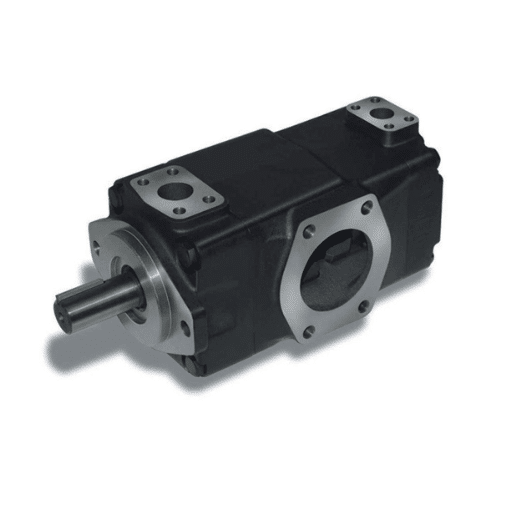
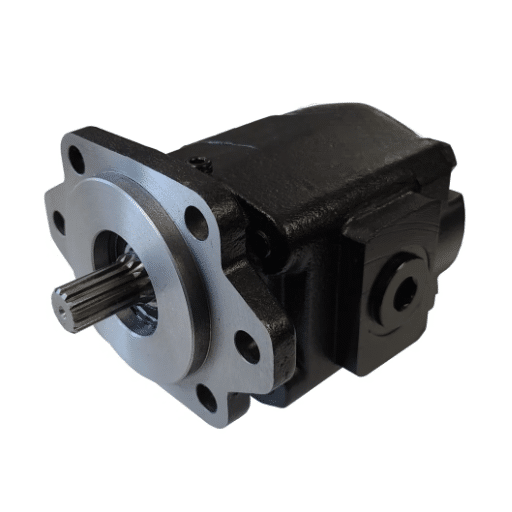
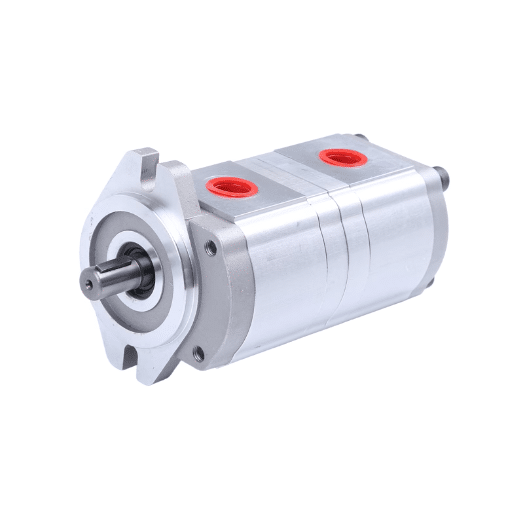
A fleet manager in Ohio received three quotes for the same repair. The compact van estimate was $780. The heavy-duty box truck estimate was $3,400. Same symptom. Very different numbers.
If you’re budgeting for an ABS pump replacement, ABS pump replacement cost by vehicle type is the central question. This guide gives concrete cost ranges for every major vehicle class. You’ll learn why prices shift, how parts tiers affect each category, and where hidden costs appear.
Replacement costs vary because the ABS hydraulic control unit (HCU) differs across vehicle classes. A small passenger car may use a simple pump motor and valve body. For a deeper explanation of how these components work, see our ABS hydraulic unit guide. A luxury SUV or commercial truck may combine the HCU, electronic control unit (ECU), and stability control into one sealed assembly. That integration raises parts cost and often requires dealer-level programming after installation.
For the broader replacement decision framework, see our complete ABS pump replacement guide.
What Drives ABS Pump Replacement Cost by Vehicle Type?

Five variables explain most of the price gap between a $600 passenger-car repair and a $5,000 commercial-truck repair.
Vehicle Class and System Complexity
Larger vehicles need larger hydraulic components, which is one reason ABS pump replacement cost by vehicle type climbs from economy cars to heavy-duty trucks. A compact economy car uses a simple pump and compact valve body. A full-size truck needs a higher-flow HCU to manage greater brake-fluid volume and pressure.
Many newer vehicles also combine the ABS pump with electronic stability control (ESC), traction control, and brake assist. That integration raises parts cost and diagnostic complexity.
Parts Tier Selection
The same vehicle class can produce very different quotes. Your choice between OEM dealer, OES equivalent, remanufactured, or aftermarket units can shift the total bill by 30-50%.
Labor Hours and Regional Labor Rates
Labor time is measured in flat-rate hours. An economy car may take 2-3 hours. A luxury vehicle with limited HCU access may take 4-6 hours. Commercial trucks often require 4-8 hours. Routing, cab configuration, and system bleeding add time.
Shop labor rates range from $80 per hour at independent shops to $200+ per hour at premium dealerships. Urban rates are typically 20-40% higher than rural ones.
Programming and Coding Requirements
Many modern ABS modules must be coded to the vehicle after installation. Some manufacturers allow independent shops with the right scan tool to complete this step. Others require dealer software. Examples include Mercedes Star Diagnosis and BMW ISTA.
Programming can add 100−300 to the bill. It’s more common on European, luxury, and newer vehicles.
Commercial vs. Passenger Vehicle Differences
Commercial vehicles add fleet-specific factors. These include 24-volt electrical systems, trailer ABS integration, FMCSA compliance documentation, and higher-duty hydraulic components. The parts are not interchangeable with passenger-car units.
ABS Pump Replacement Cost by Vehicle Type: Overview by Vehicle Class
The table below summarizes typical ABS pump replacement cost by vehicle type, including parts and labor, for each major vehicle class. These ranges reflect North American market conditions in 2026 and assume professional installation.
| Vehicle Class | Parts Cost | Labor Cost | Total Cost Range | Typical Labor Hours |
|---|---|---|---|---|
| Compact / economy car | 300−650 | 150−400 | 450−1,050 | 2-3 |
| Midsize sedan / hatchback | 400−800 | 200−450 | 600−1,250 | 2-4 |
| SUV / light truck | 550−1,100 | 250−550 | 800−1,650 | 3-5 |
| Luxury / European vehicle | 900−1,800 | 350−700 | 1,250−2,500+ | 4-6 |
| Hybrid / electric vehicle | 700−1,500 | 250−600 | 950−2,100 | 3-5 |
| Class 3-6 commercial truck | 1,100−2,500 | 400−900 | 1,500−3,400 | 4-7 |
| Class 7-8 heavy-duty truck | 1,800−4,000 | 500−1,200 | 2,3000−5,200+ | 5-8 |
For a more detailed breakdown of parts, labor, and procedure, see our ABS pump replacement cost and procedure guide.
Compact and Economy Cars
Economy cars use the simplest ABS hydraulic units. Replacement parts are widely available. Labor access is usually straightforward.
Total costs typically fall between 450 and 1,050. A 2017 Honda Civic, for example, commonly ranges from 580 to 900. The final price depends on parts tier and regional labor rates.
Midsize Sedans and Hatchbacks
Midsize vehicles add slightly more complexity. The HCU is often mounted close to the master cylinder or firewall.
Expect total costs between 600 and 1,250. A 2015 Toyota Camry typically falls in the 650−1,100 range.
SUVs and Light Trucks
SUVs and light trucks require higher-capacity hydraulic units. Engine-bay packaging can also be tighter.
Total costs usually range from 800 to 1,650. A 2016 Ford F-150 commonly runs 850−1,500. Dealer programming is often required, which pushes the price toward the higher end.
Luxury and European Vehicles
Luxury brands combine advanced stability systems, integrated ECUs, and proprietary diagnostic procedures. Total costs generally start around 1,250 and can exceed 2,500.
A 2019 BMW 3 Series often costs 1,800−2,800. Dynamic stability control (DSC) module coding is required. A 2020 Mercedes GLC can reach 2,000−3,200 due to Star Diagnosis programming.
Hybrid and Electric Vehicles
Hybrid and electric vehicles often combine braking with regenerative braking systems or electro-hydraulic boosters. This integration raises both parts and diagnostic costs.
Total replacement costs typically range from 950 to 2,100. A Tesla Model 3 with an integrated iBooster assembly, for example, may cost 1,400−2,300.
Commercial Trucks and Fleets
Class 3-8 trucks use heavy-duty ABS HCUs. These units are designed for continuous operation and trailer integration.
Total costs range from 1,500 to 3,400 for medium-duty vehicles. Heavy-duty applications can reach 2,300−5,200 or more. Fleet operators can often reduce per-unit costs through bulk sourcing, OES parts, and core return programs.
If you are deciding between tiers, our comparison of OEM vs. aftermarket ABS pump options explains warranty, fitment, and reliability differences.
ABS Pump Replacement Cost by Popular Makes and Models

Vehicle-specific examples help turn abstract ranges into realistic budgets. The figures below include parts, labor, and typical diagnostic or programming fees where applicable.
| Make / Model | Vehicle Class | Typical Total Cost | Notes |
|---|---|---|---|
| Honda Civic (2016-2021) | Compact car | 580−900 | Simple access; reman options widely available |
| Toyota Camry (2015-2020) | Midsize sedan | 650−1,100 | Moderate labor; module near master cylinder |
| Ford F-150 (2015-2020) | Full-size truck | 850−1,500 | Dealer programming often required |
| Chevrolet Silverado 1500 (2014-2019) | Full-size truck | 700−1,300 | Check for EBCM recall before replacement |
| Jeep Grand Cherokee (2014-2020) | SUV | 1,000−1,700 | HCU and module often integrated |
| BMW 3 Series (2016-2020) | Luxury sedan | 1,800−2,800 | DSC coding required; dealer or specialist scan tool |
| Mercedes-Benz GLC (2017-2021) | Luxury SUV | 2,000−3,200 | Star Diagnosis programming typical |
| Audi A4 (2016-2020) | Luxury sedan | 1,700−2,600 | Integrated stability functions |
| Subaru Outback (2015-2020) | Wagon / crossover | 750−1,350 | AWD integration can add diagnostic time |
| Volkswagen Jetta (2015-2020) | Compact sedan | 650−1,150 | VCDS or dealer coding may be needed |
| Tesla Model 3 (2017-2021) | Electric vehicle | 1,400−2,300 | Integrated with iBooster |
| Freightliner M2 (Class 6) | Medium-duty truck | 1,800−3,200 | 24-volt system; trailer ABS integration |
These examples show why ABS pump replacement cost by vehicle type depends heavily on make and model. Two vehicles in the same category can differ by $500 or more based on electronic integration and programming requirements.
Parts Tier Pricing and ABS Pump Replacement Cost by Vehicle Type
The parts tier you choose has a direct impact on ABS module replacement cost by vehicle. The table below shows how each tier typically prices across vehicle classes.
| Parts Tier | Economy Car | SUV / Light Truck | Luxury Car | Commercial Truck |
|---|---|---|---|---|
| OEM dealer unit | 600−1,000 | 900−1,400 | 1,400−2,400 | 2,000−4,000+ |
| OES equivalent | 450−750 | 700−1,100 | 1,100−1,800 | 1,500−2,800 |
| Premium remanufactured | 300−550 | 500−850 | 900−1,400 | 1,200−2,200 |
| Economy aftermarket | 250−450 | 400−700 | 700−1,100 | 1,000−1,800 |
| Used / salvage | 150−350 | 250−500 | 400−800 | 600−1,200 |
OEM Dealer Units
OEM dealer units offer guaranteed fitment, full warranty, and factory programming support. They are the most expensive option. For a fleet that cannot tolerate downtime or comebacks, OEM may be the safest choice.
OES Equivalent Units
Original Equipment Supplier (OES) units are made by the same manufacturers that supply the vehicle factory. They are sold under the supplier brand rather than the vehicle brand.
They typically cost 20-35% less than dealer OEM parts while maintaining similar quality.
Premium Remanufactured Units
Remanufactured HCUs are rebuilt to meet original specifications. They often include replaced pump motors, solenoids, and seals. They can reduce cost by 30-50% compared with OEM.
Reliability depends on the rebuilder. Supplier qualification matters. For fleet buyers, remanufactured units with a solid core return program can significantly reduce lifecycle cost.
Economy Aftermarket and Used Units
Economy aftermarket and used units offer the lowest upfront cost. They also carry higher fitment and reliability risk.
They are sometimes viable for older vehicles with limited parts availability. However, they are generally not recommended for safety-critical brake systems unless sourced from a qualified supplier.
Labor Cost and Time Estimates by Vehicle Type

Labor is the second-largest component of ABS hydraulic pump replacement cost. The table below shows standard labor hours and estimated labor cost by vehicle class. It uses a 100−150 per hour blended rate.
| Vehicle Class | Labor Hours | Labor Cost Range |
|---|---|---|
| Economy car | 2-3 | 200−450 |
| Midsize sedan | 2-4 | 250−600 |
| SUV / light truck | 3-5 | 350−750 |
| Luxury / European | 4-6 | 500−900 |
| Hybrid / EV | 3-5 | 350−750 |
| Class 3-6 commercial truck | 4-7 | 500−1,050 |
| Class 7-8 heavy-duty truck | 5-8 | 650−1,200 |
Labor time includes diagnosis, removal and replacement of the HCU, brake bleeding, and post-installation testing. It does not always include programming or diagnostic software fees. For a deeper look at how labor is calculated, see our article on ABS pump replacement labor cost and time estimates.
Hidden Costs That Vary by Vehicle Type
The quoted price for the ABS pump assembly is rarely the final invoice when calculating ABS pump replacement cost by vehicle type. Several additional costs appear more often on certain vehicle types.
Diagnostic Scan Fees
Before replacing the HCU, a technician should confirm the failure with a scan tool. Diagnostic fees typically range from 80 to 150. Complex integrated systems on luxury or hybrid vehicles may require longer diagnostic time.
Brake Fluid Replacement
Most shops recommend replacing brake fluid during HCU replacement. This is especially true if the old fluid is contaminated. This adds 50−120 depending on vehicle type and fluid specification.
Module Coding and Initialization
Coding fees range from 100 to 300. They’re more common on European, luxury, and newer domestic vehicles. Some independent shops can perform coding with aftermarket scan tools. Certain manufacturers still require dealer equipment.
Brake Bleeding Procedures
Standard manual bleeding is included in most labor estimates. Automated or scan-tool bleeding is required on many modern vehicles. It may add 50−150.
Core Return and Shipping
Remanufactured and some OEM units carry a core charge, typically 50−300. Returning the old unit refunds the charge. Shipping cores back adds cost for remote or international buyers.
How to Reduce ABS Pump Replacement Cost Without Sacrificing Reliability
Controlling ABS pump replacement cost by vehicle type starts with accurate diagnosis. Many ABS warning lights are caused by wheel speed sensors, wiring faults, or contaminated brake fluid. These problems do not require a new HCU.
Replacing a 40-sensor is very different from replacing a 1,200-hydraulic unit. For guidance on confirming the fault, review common ABS pump failure symptoms before authorizing major work.
Once the HCU is confirmed as the problem, three strategies can reduce cost without compromising safety.
First, compare parts tiers for your specific vehicle class. A premium remanufactured unit may offer the same reliability as OEM at 30-50% lower cost. This is especially true for older vehicles.
Second, get multiple quotes by shop type. Independent specialists and fleet service centers often charge less than dealerships. They must still have the correct diagnostic and programming tools for your vehicle.
Third, consider whether repair is an option. Some electronic module failures can be repaired or rebuilt for 200−600. That is far less than full replacement. For a decision framework, see our guide on ABS pump repair vs. replacement.
Fleet and Commercial Vehicle Cost Planning
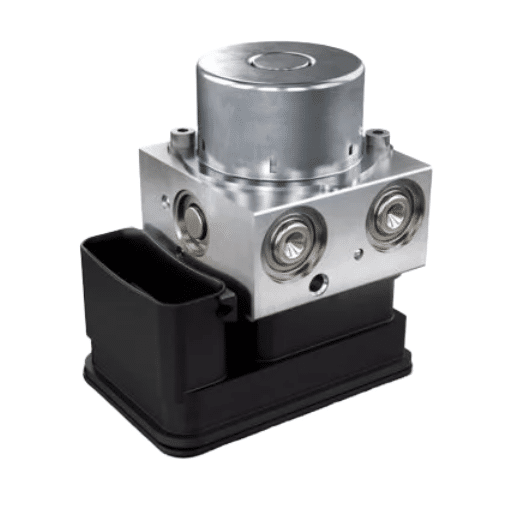
Fleet managers face a different commercial vehicle ABS pump replacement cost structure than individual vehicle owners. Multi-vehicle operations can reduce per-unit cost through bulk purchasing, standardized parts tiers, and core return programs.
A regional delivery fleet with four Class 6 trucks might budget $8,400 for four ABS pump replacements at dealer rates. By sourcing OES or premium remanufactured units, that same fleet could reduce the total by $2,000-$2,500. Bundling the work during scheduled maintenance also lowers downtime.
Documenting each replacement helps with future budgeting. Record the VIN, mileage, parts tier, and warranty terms. For fleets operating across multiple regions, working with a supplier that offers consistent specification and export-ready logistics reduces variability in both cost and delivery time.
For a dedicated look at fleet replacement, read our guide to ABS pump replacement for commercial trucks and fleets.
Frequently Asked Questions
What is the average ABS pump replacement cost for a car?
The average ABS pump replacement cost by vehicle type for a passenger car in 2026 ranges from 600 to 1,500. Compact economy cars typically fall at the lower end. Luxury sedans and hybrids can exceed $2,000.
Why do trucks cost more for ABS pump replacement?
Trucks require higher-capacity hydraulic units and longer labor times. Some also use 24-volt electrical integration. Commercial vehicles need components that meet heavier-duty cycle requirements and trailer ABS compatibility.
Are luxury cars more expensive to replace ABS pumps?
Yes. Luxury and European vehicles often integrate ABS with stability control, traction control, and brake assist. They also frequently require manufacturer-specific diagnostic software for coding after installation.
Does ABS pump replacement cost include programming?
Not always. Some estimates include coding. Others list it as a separate line item. Ask your shop whether programming is included, especially for European, luxury, or newer vehicles.
Can aftermarket ABS pumps reduce replacement cost?
Aftermarket and OES units can reduce cost by 20-50% compared with dealer OEM parts. The key is choosing a reputable supplier with verified specifications and warranty support.
How much does ABS pump replacement cost for a BMW?
A BMW 3 Series ABS pump replacement typically costs 1,800−2,800. The higher cost reflects integrated DSC functions and required module coding.
Is it cheaper to repair or replace an ABS pump?
Repair or rebuild can be cheaper when only the electronic module has failed. Typical repair costs range from 200 to 600. Hydraulic damage usually requires full replacement.
What is the cheapest vehicle type for ABS pump replacement?
Compact economy cars generally have the lowest replacement costs. They typically run 450−1,050 because their ABS hydraulic units are simpler and more widely available.
Conclusion
ABS pump replacement cost by vehicle type ranges widely. The component, labor, and programming requirements change with each vehicle class. A compact economy car may cost $600−$1,050. A heavy-duty commercial truck can exceed $5,000.
The biggest cost drivers are system complexity, parts tier, labor hours, and dealer-level programming. For repair shops, fleet managers, and parts buyers, the best way to control cost is simple. Confirm the diagnosis first. Choose the right parts tier. Then compare quotes from shops with the correct diagnostic equipment.
Accurate specification matching and quality sourcing prevent repeat failures. They also keep long-term ownership cost under control.
If you are sourcing ABS hydraulic units for passenger vehicles or commercial fleets, contact our team to confirm your exact ABS pump replacement cost by vehicle type or request a fleet quotation. For the complete replacement decision framework, return to our complete ABS pump replacement guide.