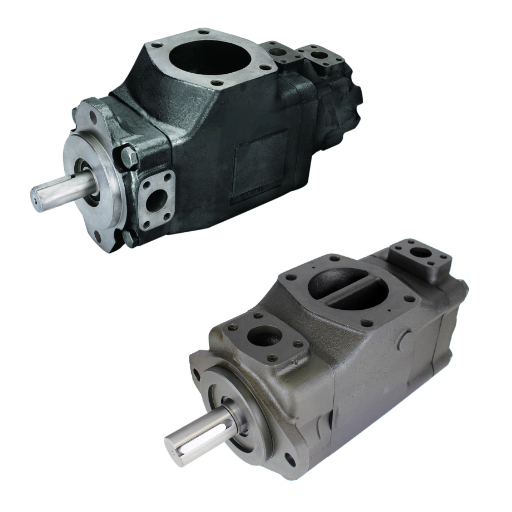
A water-flood team ordered three triplex plunger pumps for a produced-water injection project, sized for the flow but not for the flow ripple. When the pumps came online, the injection line vibrated hard enough to fatigue a pipe support, and the operators had to add large dampening vessels to hold steady pressure. A single quintuplex of comparable horsepower would have cut their flow variation from roughly 23 percent to about 7 percent from the start.
If you’re weighing triplex vs quintuplex plunger pumps, you’ve probably noticed that most comparison pages are short, qualitative, and number-free. They say the quintuplex is “smoother” without saying by how much. That’s a problem, because the decision between three plungers and five is measurable, and the numbers usually settle it.
This guide delivers the numbers. You will see how plunger count drives flow variation, why a quintuplex moves more volume per unit size, how pulsation affects dampener sizing, and a selection rule you can apply to a real duty. For the wider context, the plunger pump complete guide covers the mechanism, configurations, and applications end to end. LOYAL INDUSTRIAL PTE. LTD. supplies multiple reciprocating pump families, so the goal here is a neutral engineering comparison, not a pitch for one configuration.
If you already know your duty point and want to confirm the right frame, you can request a technical specification sheet and skip to the selection section.
What Is the Difference Between a Triplex and a Quintuplex Plunger Pump?
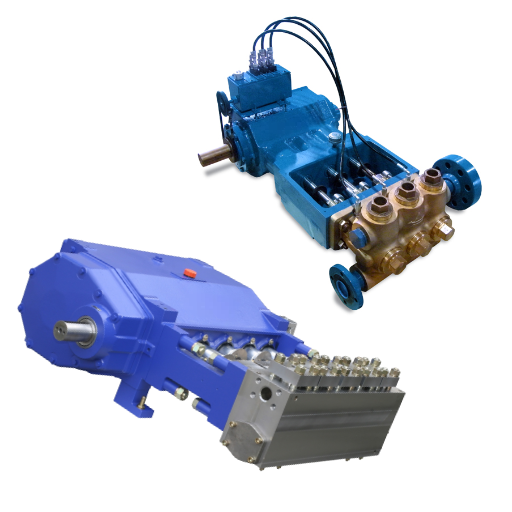
The difference is the number of plungers on the crankshaft. A triplex has three plungers phased 120 degrees apart; a quintuplex has five plungers phased 72 degrees apart. Everything else that separates them, including flow smoothness, vibration, flow capacity, cost, and complexity, follows from that one construction change.
Both are single-acting multiplex reciprocating pumps. The architecture is identical. The plunger still reciprocates through a stationary seal, the pump still creates flow rather than pressure, and the fluid end still relies on inlet and discharge check valves. Only the count of plungers and the crankshaft geometry that times them change. The full classification of these configurations is covered in types of plunger pumps.
Triplex vs Quintuplex Plunger Pump: Head-to-Head Comparison
The table below consolidates the comparison into one grid so you can read it like a specification sheet rather than a paragraph.
| Criterion | Triplex Plunger Pump | Quintuplex Plunger Pump |
|---|---|---|
| Number of plungers | 3 | 5 |
| Plunger phase angle | 120 degrees | 72 degrees |
| Flow variation (total, from mean) | ~23 percent (+6 / -17) | ~7 percent (+2 / -5) |
| Pulsation, vibration, noise | Higher | Lower |
| Flow capacity (same size and speed) | Baseline | Roughly 67 percent more displacement |
| Practical power band | Up to ~400 kW (cavitation-limited) | ~530 to 800 kW |
| Pressure ripple at high pressure | Higher | Lower at comparable conditions |
| Footprint and weight | Compact and lighter at equal pressure | Larger per unit, but one unit can replace two or three |
| Design complexity | Simpler; may use splash lubrication | More complex; multi-bearing crankshaft, spray-oil lubrication |
| Service points (valves, packing sets) | 3 sets | 5 sets |
| Cost (upfront and maintenance) | Lower | Higher |
| Best-duty fit | Intermittent, mobile, budget and space sensitive | Continuous, high flow, high precision |
Read across the rows, and the pattern is clear. The quintuplex wins on flow smoothness, vibration, and large-flow capacity. The triplex wins on simplicity, footprint, and cost.
Why Cylinder Count Drives Pulsation
A reciprocating pump does not create pressure. It creates flow, and pressure is the system’s resistance to that flow. Each plunger delivers one pulse per revolution as it advances, so the total discharge is the sum of overlapping plunger pulses that rise and fall as the crankshaft turns.
Two governing principles follow from that. Flow ripple falls when the plunger count is odd, and it falls further when the count rises.
A triplex fires its three plungers every 120 degrees, so the summed flow has a deeper valley between pulses. A quintuplex fires every 72 degrees, so the pulses overlap more tightly and the summed flow stays closer to the mean. That is the entire mechanical reason a quintuplex runs smoother.
The stroke-by-stroke cycle of a single plunger is explained in how a plunger pump works.
Flow Variation by Number of Plungers
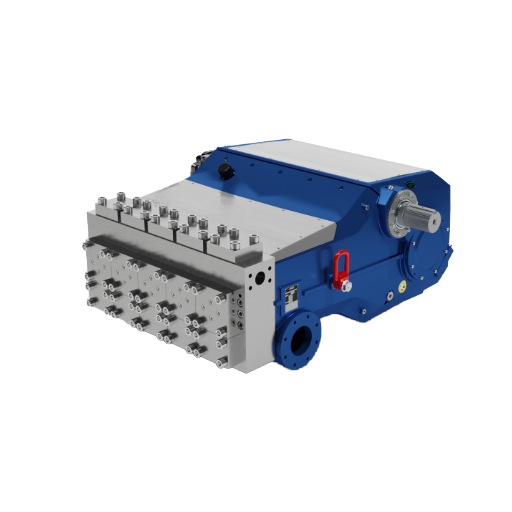
The classic reference for this is the flow-variation table in Karassik’s Pump Handbook, which ranks capacity variation against the number of plungers. Cameron Hydraulic Data reports the same pattern, listing a triplex at 23.0 percent total variation and a quintuplex at 7.1 percent.
| Pump type | Plungers | Above mean | Below mean | Total variation | Phase angle |
|---|---|---|---|---|---|
| Duplex | 2 | 24 percent | 22 percent | 46 percent | 180 degrees |
| Triplex | 3 | 6 percent | 17 percent | 23 percent | 120 degrees |
| Quadruplex | 4 | 11 percent | 22 percent | 33 percent | 90 degrees |
| Quintuplex | 5 | 2 percent | 5 percent | 7 percent | 72 degrees |
| Sextuplex | 6 | 5 percent | 9 percent | 14 percent | 60 degrees |
| Septuplex | 7 | 1 percent | 3 percent | 4 percent | 51.5 degrees |
The teaching point is the odd-versus-even effect. A triplex varies 23 percent, while a quadruplex with one more plunger varies 33 percent. A quintuplex varies 7 percent, while a sextuplex varies 14 percent.
Adding a plunger does not automatically smooth the flow. Adding the right plunger count does. That is why triplex and quintuplex dominate the market while quadruplex and sextuplex are rare.
You can request a technical specification sheet to see how these variation figures are verified on a specific pump before you specify one.
Flow Capacity and Power: Why a Quintuplex Moves More Volume
Flow from a plunger pump is proportional to plunger area, the number of plungers, the drive speed, and the stroke length, expressed as displacement equals area times plunger count times revolutions per minute times stroke. Hold size and speed constant, and a quintuplex displaces roughly two-thirds more than a triplex because it has two additional plungers doing the same work per revolution.
There is a second reason the quintuplex exists at the high-flow end. A reciprocating pump’s cylinder volume is limited by cavitation, the point at which the plunger cannot fill the chamber before it reverses. In practice, that caps a triplex at roughly 400 kW. Quintuplex designs reach 530 to 800 kW, which is why large-flow duty such as oilfield water flooding and high-rate reverse osmosis leans toward five plungers.
That gives the quintuplex a genuine economy of scale. The team at a coastal desalination plant, planning an expansion, first drafted three triplex feed pumps for the added flow. A single large quintuplex replaced all three, matched the flow, reduced the installed footprint, and held continuous duty with fewer rotating assemblies to maintain. The upfront cost was higher; the installed count was one.
Both configurations control flow by speed, not by bypass, and both run over a 10 to 100 percent speed range with a variable frequency drive.
Pressure Ripple, Dampener Sizing, and the Resonance Caveat
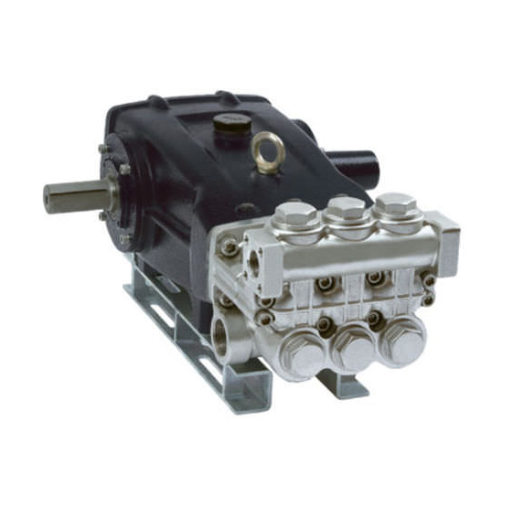
Flow variation becomes a problem when the system resistance turns it into pressure ripple, and pressure ripple is what fatigues piping, seals, and instrumentation. This is where the quintuplex pulls further ahead at high pressure.
A published study of pulsation-dampener designs for plunger pumps found that quadruplex, quintuplex, and sextuplex pumps produce lower pressure ripple than a comparable triplex at pressures of roughly 7,500 psi and above. At 60,000 psi, the same work showed a triplex producing on the order of 2,777 psi of ripple, against roughly 841 psi for a quadruplex. The gap widens as pressure climbs.
Pulsation control ties directly to plunger count through the plunger-pass frequency, which is the plunger count multiplied by the drive speed. A dampener should be tuned so its natural frequency sits about 30 percent below the dominant plunger-pass frequency, and it should be installed as close to the pump flange as possible, ideally within about five main-line diameters. Close coupling matters more than raw dampener volume; a large vessel mounted far from the pump does less than a smaller one mounted tight.
One honest caveat belongs here, and most comparison content omits it. A pump with more plungers does not automatically produce lower pressure pulsation. Acoustic resonances in the discharge piping, when they coincide with the pump’s operating speed, can invert the ranking, and variable-speed pumps are especially exposed because they sweep through speeds where a resonance may sit. The flow-variation advantage of a quintuplex is real, but it has to be checked against the actual piping system rather than assumed.
Service, Maintenance, and Cost: Three Plungers vs Five
The quintuplex carries five valve assemblies and five packing sets against the triplex’s three. That is more consumables per pump, and it is the honest cost side of the comparison. What offsets it is smoother, lower-vibration operation, which reduces the dynamic loads that wear valves, seats, and packing, and can lengthen service intervals enough to matter on continuous duty.
The design work also differs. A quintuplex often needs a crankshaft with multiple main bearings and pressure-fed or spray lubrication, where a simpler triplex may use splash lubrication. That added machining and assembly precision is the source of the higher unit price. The good news is parts commonality: many quintuplex designs carry over triplex valves, plungers, and packing, which keeps the spares inventory economical even though the unit costs more.
That is why the comparison belongs on total cost of ownership, not purchase price. The drivers are packing and valve life, service frequency, spare-part cost, and the value of lost production during downtime.
On intermittent duty, the triplex almost always wins on cost. On continuous, high-flow duty, the quintuplex premium tends to pay back through longer intervals and fewer external dampening components.
When to Choose a Triplex vs a Quintuplex Plunger Pump
The selection follows the duty cycle first. Fix the duty point, then choose the simplest configuration that meets it.
Choose a triplex plunger pump when you need:
- Intermittent or mobile operation
- Small to medium flow at the pressure you require
- A compact, lighter unit or a space-limited skid
- Lower upfront cost and simple maintenance
- Flow smoothness that is not critical, such as many cleaning and jetting duties
Choose a quintuplex plunger pump when you need:
- Continuous, 24/7 operation
- Large flow that would otherwise need two or three triplex pumps
- Low vibration and long fluid-end component life
- Stable pressure for precise injection, waterjet, or reverse osmosis feed
- One large pump instead of several smaller ones
The rule of thumb many operators use is straightforward. Intermittent, space-sensitive, and cost-driven duty favors the triplex. Continuous, high-flow, smooth-flow-critical duty favors the quintuplex.
There is a real overlap band in between, and it should be resolved on flow, pressure, duty hours, and fluid rather than on cylinder count alone.
Sourcing a Triplex or Quintuplex Plunger Pump
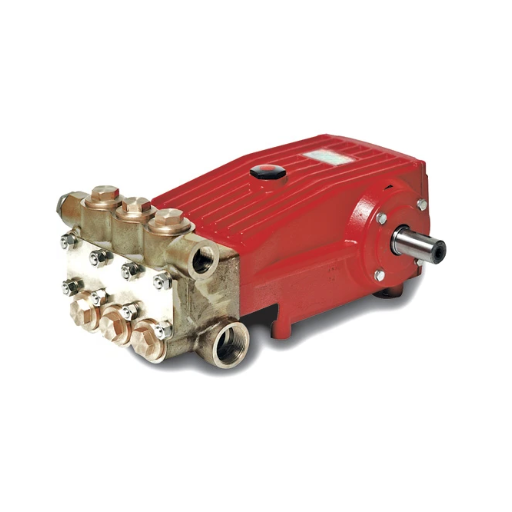
A complete request for quotation removes most of the ambiguity. The data set that matters includes fluid and chemistry, required flow, discharge pressure, fluid temperature, abrasiveness or solids content, duty cycle in hours per day, drive type, available inlet pressure or flooded suction, required standard where the duty calls for one, materials, and mounting.
When you compare pumps across suppliers, confirm the points that a matching flow and pressure number can hide. Check the plunger diameter and stroke, the crankshaft throw arrangement, the valve and seat type, the bearing and lubrication design, the rotational speed, and the flange dimensions. A pump that fits the footprint but differs on those points will run, but it will not deliver the duty you specified.
Note also that cylinder count is a different axis from single-acting versus double-acting, and that the colloquial hydraulic plunger pump, which is a different family, is distinguished from the process plunger pump in the discussion of hydraulic axial piston pumps.
Frequently Asked Questions
Which is better, a triplex or a quintuplex plunger pump?
Neither is universally better. A triplex is simpler, more compact, and cheaper, which suits intermittent, space-sensitive, and cost-driven duty. A quintuplex delivers smoother flow, lower vibration, and higher flow capacity, which suits continuous, high-flow, high-precision duty.
What is a quintuplex plunger pump?
A quintuplex plunger pump has five plungers on a common crankshaft, phased 72 degrees apart. The five overlapping pulses reduce total flow variation to roughly 7 percent, compared with about 23 percent for a triplex.
Why do quintuplex pumps have less pulsation than triplex pumps?
Because five plungers phased 72 degrees apart overlap their pulses more tightly than three plungers phased 120 degrees apart. The more tightly the pulses overlap, the closer the summed flow stays to the mean, which lowers both flow variation and the pressure ripple it drives.
Do more plungers always mean less pulsation?
No. Flow variation improves with an odd plunger count and a higher count, but pressure pulsation also depends on acoustic resonances in the piping that can coincide with pump speed. A higher-plunger pump can produce higher pressure pulsation in a poorly matched system.
Is a quintuplex worth the extra cost?
On continuous, high-flow duty, often yes. The smoother output reduces vibration and wear, can extend service intervals, and lets one large unit replace several smaller ones. On intermittent or cost-sensitive duty, a triplex usually offers better value.
Triplex vs quintuplex for reverse osmosis?
Large, continuous reverse-osmosis and desalination feed typically favors the quintuplex for flow capacity and stable pressure. Smaller reverse-osmosis systems are often well served by a triplex.
Triplex vs quintuplex for waterjet cutting?
High-pressure cutting benefits from the quintuplex’s lower pressure ripple, which reduces wear on downstream components. Many systems also use an intensifier circuit, which is covered under high-pressure plunger pumps.
What does quintuplex mean?
Quintuplex means five, and in pump terminology it means five plungers or cylinders on one crankshaft. It follows the same naming pattern as simplex, duplex, and triplex.
Conclusion
The triplex vs quintuplex plunger pump decision is a flow-smoothness and capacity decision, and both are set by plunger count. Three plungers phased 120 degrees apart produce about 23 percent flow variation. Five plungers phased 72 degrees apart cut that to about 7 percent, move more volume per unit size, and run with less vibration. The cost is a more complex, more expensive pump with two extra service points.
Fix the duty point first. For intermittent, space-sensitive duty, the triplex is the simpler and more economical choice. For continuous, high-flow, high-precision duty, the quintuplex earns its premium through smoother output, longer component life, and the ability to replace several smaller pumps with one. Then check the piping, because the pulsation advantage is real but has to be confirmed against the actual system rather than assumed.
To turn this comparison into a specification, contact LOYAL INDUSTRIAL PTE. LTD. for a technical specification sheet, an OEM quotation, or an industrial solution consultation on your triplex vs. quintuplex plunger pump decision.