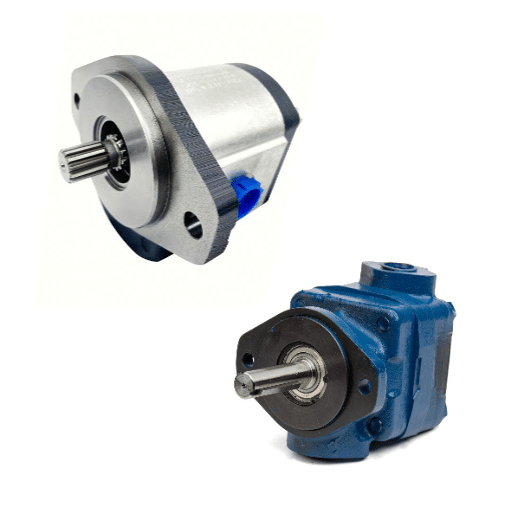
Daniel ran procurement for a mid-size equipment maker, and in 2024 he did what every buyer is trained to do: he found the lowest quote. The new hydraulic gear pump manufacturer came in 22 percent under his incumbent, and the first container arrived on schedule.
Six months later, the returns told a different story. Warranty claims on that pump family had climbed to 9 percent, and two customers had already lost production time to premature failures. The unit price was lower. The total cost was higher, and Daniel spent the next two quarters defending the decision.
That gap between unit price and true cost is the whole problem with gear pump sourcing. The market is full of listings, and most describe trading companies, not factories. Buyers rarely get an objective way to tell them apart before money changes hands.
This guide fixes that. You will learn how a hydraulic gear pump manufacturer differs from a supplier. You will see which certifications and quality checks actually matter, how to benchmark MOQs and lead times, and how to match a replacement pump by nameplate before you commit. For the full family overview, first start with our complete guide to hydraulic gear pumps.
Need a baseline quote to compare against? Request a technical specification sheet and see factory-direct pricing for your duty cycle.
What Does a Hydraulic Gear Pump Manufacturer Actually Do?

A hydraulic gear pump manufacturer designs and builds the pump, rather than reselling someone else’s. That means owning the machining, the assembly, and the test bench. A supplier may only own the sales desk.
The distinction decides everything downstream. It determines whether you can get a custom displacement, a validated test report, and a straight answer about material grades. It also determines who absorbs the cost when a batch underperforms.
Manufacturing Scope: Gears, Housings, Shafts, and Bearing Plates
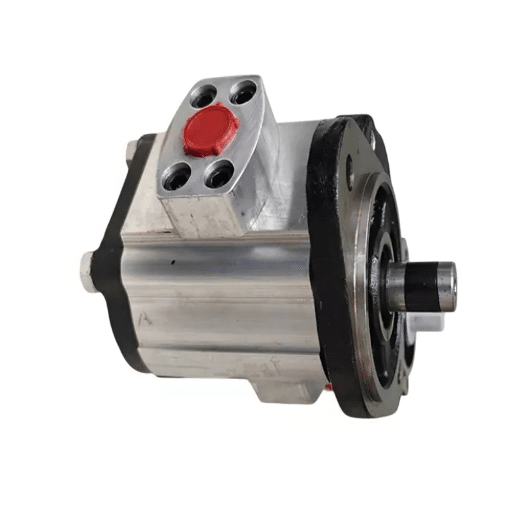
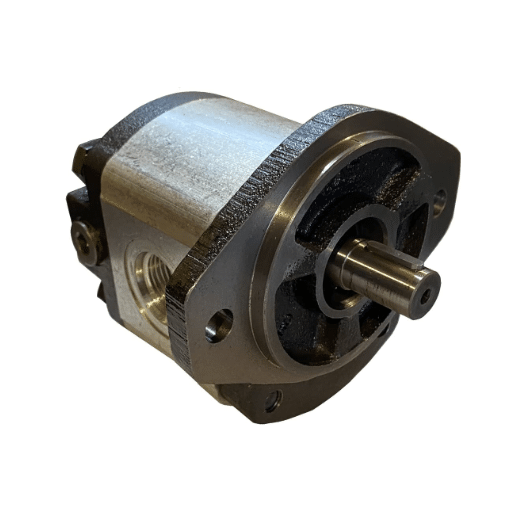
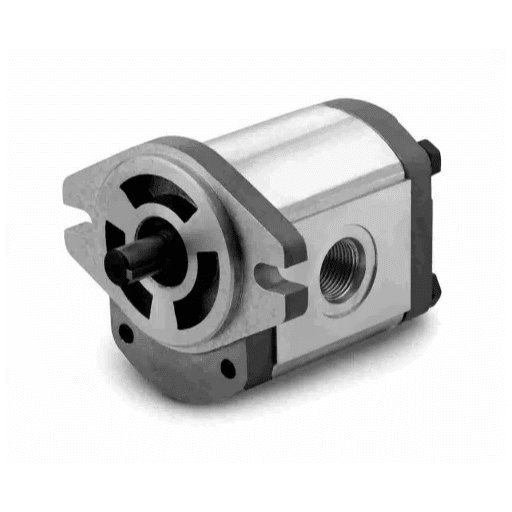
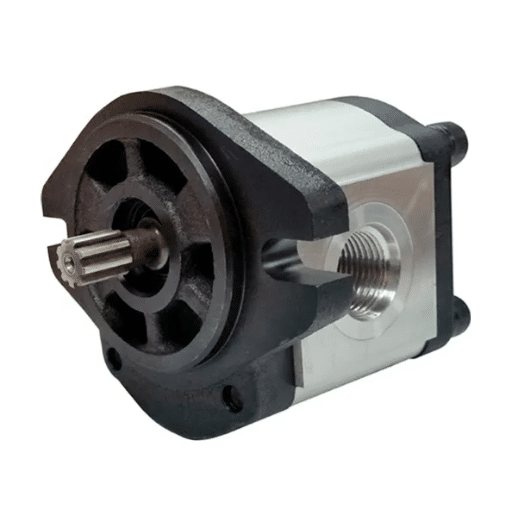
A gear pump is a small set of precisely matched parts. Two meshing gears sit in a machined housing, supported by bearing plates and driven by a shaft. Displacement comes from the trapped volume between the gear teeth and the housing wall.
The critical surfaces are the gear end faces, the housing bores, and the side plates. Tolerances on those surfaces sit around 0.01 mm. A manufacturer that machines them in-house controls that tolerance directly. One that buys finished components and assembles them does not.
The geometry of those two meshing gears decides the pump’s behavior. Our comparison of internal vs. external gear pumps explains why the external layout dominates mobile hydraulics.
In-House Machining vs. Assembly-Only Operations
Ask a prospective manufacturer three questions. Do you machine the gears and housings on site? Do you heat-treat and grind in-house or through a qualified partner? How do you verify the gear tooth profile?
A real factory answers these with equipment names and process steps. An assembly-only operation, or a pure trading company, tends to answer with assurances and catalogs. For the full working-principle background behind these components, see our external gear pump guide.
Why the Manufacturer vs. Trading Company Distinction Matters
Trading companies aren’t automatically bad. Some provide real value in logistics and consolidation. The risk is when a buyer pays factory-direct prices for trading-company capability, or expects engineering support that does not exist.
The practical test is simple. Request a dimensional drawing for a standard model and a test report for the last production batch. A manufacturer produces both quickly. A middleman forwards a generic catalog PDF.
Types of Hydraulic Gear Pump Suppliers
Not every hydraulic gear pump supplier belongs in the same category. Each type has a different cost structure, capability ceiling, and risk profile.
| Supplier type | Capability | Typical MOQ | Lead time | Best for | Main risk |
|---|---|---|---|---|---|
| Factory-direct OEM manufacturer | Full machining, assembly, testing, customization | 1 to 100+ pcs | 15 to 30 days | OEM programs, private label, volume | Requires vetting upfront |
| Trading company / export agent | Sourcing, consolidation, documentation | 1 to 50 pcs | Variable, 20 to 60 days | Small mixed orders | Limited technical support, hidden margin |
| Brand distributor | Genuine branded units, stock | Per unit | 24 to 48 hrs or stock-dependent | Emergency replacement | Premium pricing |
| Aftermarket / interchange supplier | Compatible replacements | 1 to 10 pcs | Days to weeks | Legacy equipment | Fit and quality vary widely |
The category you need depends on the job. An emergency breakdown often justifies a brand distributor’s premium. Production programs and long-run OEM work almost always favor a factory-direct manufacturer. A hydraulic gear pump manufacturer that also stocks fast-moving models gives you both options.
How to Verify a Hydraulic Gear Pump Manufacturer Before You Send an RFQ

Most sourcing mistakes happen before the first purchase order. Buyers skip verification because it slows the process. Then they pay for it during the warranty period. A short checklist prevents that.
Certifications That Matter
ISO 9001 is the baseline quality-management certificate, and you should ask to see it rather than take a logo on a website as proof. It confirms a documented process, but it doesn’t confirm hydraulic performance.
For hydraulic performance, manufacturers test against standards such as ISO 4409. That standard defines how to measure pressure, flow, and efficiency. Ask whether the factory runs pressure cycling and leak testing on every unit or on samples only. For regulated markets, confirm CE marking and any customer-specific approvals.
A supplier audit goes further than document review. Hire a third-party inspection firm for the first production run, or visit the plant yourself, and watch the test bench operate. A cast iron gear pump supplier that welcomes an unannounced audit is usually telling the truth about its process.
Three-Stage Quality Control
A credible manufacturer controls quality at three points, not one. Incoming inspection checks material certifications, steel grade, and hardness. In-process inspection verifies dimensions during machining, ideally with coordinate measuring equipment. Final inspection runs pressure cycling, leak testing, and flow validation before crating.
Ask how each stage is documented. A factory that records this data can trace a failure back to a batch. One that doesn’t is guessing.
Good QC protects the pump on day one. Good maintenance protects it afterward, and the two together decide whether you reach the rated service life. Our gear pump maintenance guide covers the oil, cleanliness, and inspection schedule that keeps a validated pump performing.
Specifications You Must Confirm
Before you request a quote, fix your requirements on paper. A complete gear pump specification covers:
- Displacement, in cc/rev or in³/rev
- Continuous and peak pressure rating
- Rated and maximum speed
- Shaft type: splined, keyed, or plain
- Mounting flange standard
- Port type and orientation
- Rotation direction
Get the shaft, flange, and port standards right early, because those decide whether the pump physically fits. Our guide to SAE mounting and port standards covers the conventions in detail. Send the full list with your RFQ so every supplier quotes the same pump.
If displacement is still open, work it out before you ask for prices. Use the flow and power math in our gear pump sizing guide. A vague displacement invites a vague quote.
OEM, Private Label, and Custom Gear Pump Manufacturing
Customization is where a factory-direct manufacturer separates itself from a distributor. A distributor can only sell what it stocks. A hydraulic gear pump manufacturer can build to your drawing, including a full private label gear pump with your branding on the housing.
Common customization levers include displacement, shaft and spline configuration, port location, housing material, rotation direction, and branding. Private-label programs add your part number and logo to the housing, plus your own packaging.
The workflow is predictable. It starts with requirement analysis and a design review, moves to a prototype or sample, then to approval, then to production. Expect tooling or non-recurring engineering costs on genuinely new designs, and plan for a sample approval gate.
An OEM hydraulic gear pump built to your drawing is a different product from a catalog unit with a sticker on it. The price reflects that.
If you resell rather than manufacture, ask about a distributor program. Tiered pricing, regional exclusivity, and catalog support are standard terms. A gear pump factory-direct relationship usually beats buying through a local importer on margin and lead time.
Building an OEM or private-label gear pump program? Contact our engineering team with your specifications and target volumes for a custom quotation.
MOQ, Pricing, and Lead Times From a Hydraulic Gear Pump Manufacturer

Buyers often treat MOQ and lead time as surprises. They should be inputs to your planning. The ranges below reflect normal practice across the gear pump supply market.
| Order type | Typical MOQ | Typical lead time |
|---|---|---|
| In-stock standard model | 1 pc | 24 to 48 hrs |
| Standard production run | 1 to 50 pcs | 15 to 30 days |
| Custom or OEM configuration | 50 to 100+ pcs | 8 to 12 weeks |
| Major brand-name factory order | Per unit | 12 to 26 weeks |
Two patterns stand out. First, custom work always extends the timeline, because a new build needs a sample loop. Second, stock availability, not manufacturing speed, is what rescues an emergency.
Why Price Alone Misleads
Entry-level gear pumps start around 16 dollars per unit, while specialized or premium replacement units run past 700 dollars. That range reflects real differences in materials, tolerances, and testing, not just markup.
A pump that fails at 3,000 hours costs more than its price. It costs the downtime, the labor, and the customer’s confidence. Judge a hydraulic gear pump wholesale quote on total cost of ownership, not the per-unit number.
Manufacturer Interchange: Finding a Compatible Pump
Replacement buyers face a different question than OEM buyers. You are not choosing a design from scratch. You are matching an existing installation, often on equipment that predates your tenure.
Start at the nameplate. It carries the model code, displacement, and often the mounting standard. Decode it before you talk to anyone.
Common interchange families in the gear pump market include Marzocchi (ALP, GHP, GHM series), Parker (PGP series), Rexroth (AZPF, AZPN), Yuken, and Casappa (PLP, KP30). Shimadzu (SGP) and the widely copied CBNA and CBN style bodies are also common. Many suppliers build compatible replacements for these families.
Interchange is safe when four things match: displacement, pressure rating, mounting flange, and shaft. Rotation direction and port orientation must also match or be adjustable. It is not safe when the housing is a stressed structural element, or when the original pump is obsolete and no published drawing exists.
Get the shaft, flange, and port right, and a compatible pump performs like the original. Get them wrong, and you will be returning units.
The 10-Point Hydraulic Gear Pump Supplier Scorecard
Use this scorecard to compare suppliers on evidence rather than impressions. Weight the criteria to your own priorities, but score every supplier on all ten before you decide.
- In-house machining capability. Confirmed equipment for gears, housings, and shafts.
- Documented three-stage QC. Incoming, in-process, and final inspection records.
- Performance testing. Pressure cycling and leak testing to a recognized standard.
- Material traceability. Steel grade and hardness certificates on request.
- Customization range. Displacement, shaft, ports, rotation, and branding.
- On-time delivery rate. Target 95 percent or better.
- Response time. Target under 3 hours for technical questions.
- Reorder rate. A rate above 25 percent signals repeat satisfaction.
- After-sales support. Spare parts, warranty terms, and reachable engineers.
- Total cost of ownership. Unit price plus failure risk plus downtime.
Operational KPIs Beat Certificates Alone
A certificate proves a process exists. It does not prove the process runs well. Ask for the operating numbers behind it.
On-time delivery above 95 percent, a reorder rate above 25 percent, and a technical response time under 3 hours are reasonable benchmarks. A supplier that tracks and shares these is running a managed operation. One that cannot produce them is running on hope.
Red Flags in Gear Pump Sourcing
Several warning signs recur in failed sourcing projects. A price 30 percent or more below the market usually signals counterfeit, refurbished, or substandard parts. A refusal to provide a Certificate of Origin or test reports is a hard stop.
Other red flags include a broker posing as a factory, vague model-code decoding, and export packaging that looks improvised. Priya, a sourcing engineer, once visited a supplier’s “factory” and found a warehouse with a single test bench and no machining floor. The company was a trader, and the quoted lead time had already slipped twice.
Working With a China Hydraulic Gear Pump Manufacturer
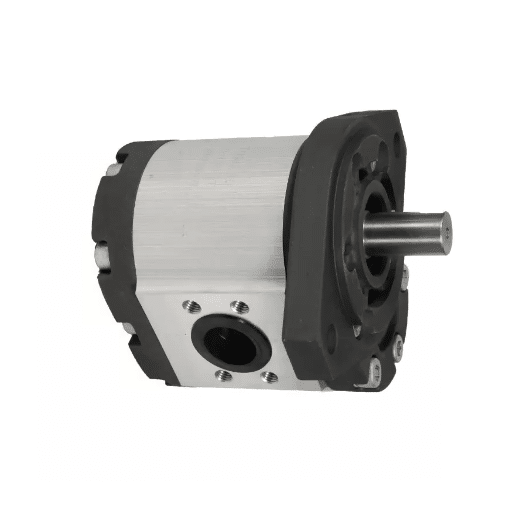
China supplies a large share of the global gear pump market for a reason. It combines deep component supply chains, competitive labor, and dense industrial clusters. For buyers, the advantage is factory-direct pricing and fast customization.
The clusters differ in character. The Yangtze River Delta, around Suzhou, Wuxi, and Hangzhou, hosts precision hydraulic manufacturers near Shanghai’s port. The Pearl River Delta, around Guangzhou and Dongguan, competes on volume and price. The Bohai Rim and Shandong, including Fuxin, lean toward heavy-industry capability and stricter process control.
For context, the dedicated hydraulic gear pump market was valued at roughly 2.19 billion dollars in 2026. Forecasts put annual growth between about 3.6 percent and 6.9 percent. Gear pumps remain the highest-volume hydraulic pump family by unit count.
Sourcing well from any region comes down to verification, not geography. Check the documentation. Order a sample. Validate the fit before scaling.
Frequently Asked Questions
What is the difference between a hydraulic gear pump manufacturer and a supplier?
A manufacturer designs and produces the pump, owning the machining, assembly, and testing. A supplier or trading company resells pumps made by others. Manufacturers typically offer customization and traceable test data; suppliers usually do not.
How do I verify a hydraulic gear pump manufacturer’s quality control?
Request the ISO 9001 certificate, then ask for evidence of three-stage QC: incoming material checks, in-process dimensional inspection, and final pressure and leak testing. Ask for a test report from the most recent production batch, not a sample-only report.
What is a typical MOQ for hydraulic gear pumps?
Standard stock models often ship from 1 piece. Standard production runs range from 1 to 50 pieces. Custom and OEM configurations typically start at 50 to 100 pieces because of tooling and setup costs.
How long does a custom hydraulic gear pump order take?
Custom and OEM orders generally run 8 to 12 weeks, including design review and sample approval. Standard production takes 15 to 30 days. In-stock units can ship within 24 to 48 hours.
Can a manufacturer produce private-label gear pumps?
Yes. A factory-direct manufacturer can apply your part number, logo, and packaging to a gear pump built to your specification, provided volumes justify the setup. Ask about tooling costs and minimum quantities before committing.
How do I find a compatible replacement gear pump?
Read the nameplate for model code, displacement, and mounting standard, then match displacement, pressure rating, flange, shaft, rotation, and ports. Cross-reference families such as Marzocchi, Parker, Rexroth, Yuken, and CBNA or CBN style bodies, and confirm before ordering.
Are Chinese hydraulic gear pump manufacturers reliable?
Many are, and China supplies a large share of the global market. Reliability depends on the individual factory. Verify in-house machining, documented QC, test reports, and delivery performance rather than assuming quality from the country of origin.
What should I send for an accurate gear pump quote?
Send displacement, continuous and peak pressure, rated speed, shaft type, mounting flange, port type, rotation direction, fluid type, and operating temperature. Include a photo of the existing nameplate for replacement requests.
Choosing a Hydraulic Gear Pump Manufacturer: The Bottom Line
Sourcing a gear pump is a verification exercise, not a price comparison. The buyers who succeed treat it that way from the first inquiry.
- Confirm the manufacturer, not the listing. Ask who machines the gears, housings, and shafts, and request drawings and test reports.
- Verify quality with evidence. ISO 9001 is the baseline; three-stage QC and performance testing are what protect your uptime.
- Benchmark MOQ and lead time early. Match the order type to your schedule, and keep stock availability in mind for emergencies.
- Match replacement pumps by nameplate. Displacement, pressure, flange, shaft, rotation, and ports must line up.
- Judge on total cost of ownership. A cheap pump that fails early is the most expensive option you can buy.
That was Daniel’s lesson. The lowest quote cost more than the pump, because nobody verified what sat behind it. Choosing a hydraulic gear pump manufacturer is not about finding a better price. It is about running a better process.
For the complete gear pump family overview, including types, specifications, and selection, start with our complete guide to hydraulic gear pumps.
Ready to source with confidence? Request a technical specification sheet or a factory-direct quotation from LOYAL INDUSTRIAL. Our engineers will confirm the right gear pump for your duty cycle and supply tested units with global export support. Contact us to start.