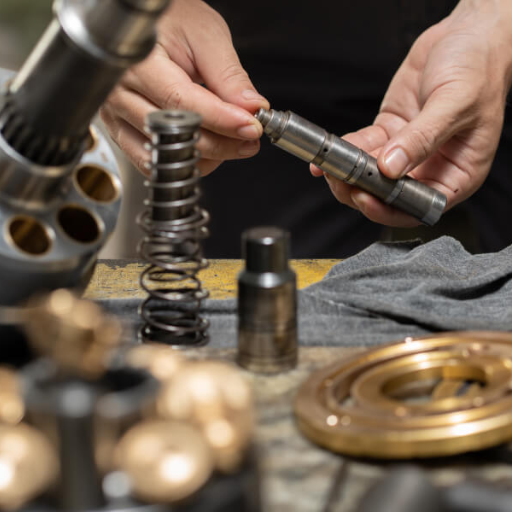
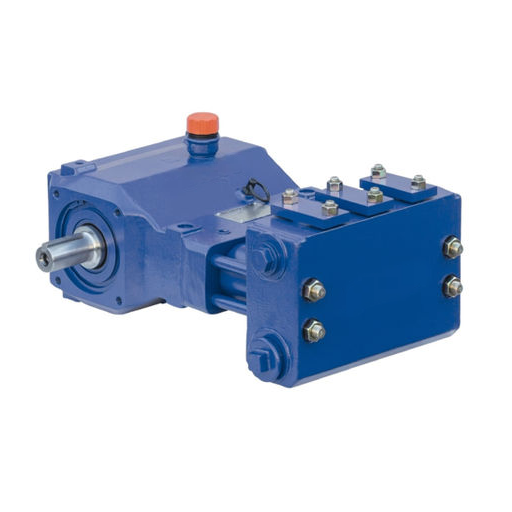
Ray supervises maintenance for a fleet of 14 excavators. When the auxiliary gear pump on machine 7 started lifting a grapple slowly, his team pulled the unit, measured flow, and found it had lost about 18 percent of its rating at 3,100 hours. They ordered a replacement, bolted it on, and put the machine back to work. Six months later, the new pump showed the same symptoms.
The failed pump was never the real problem. A clogged reservoir breather had been pulling dust into the reservoir since the machine was new, so the replacement pump was wearing out on the same dirty oil.
That’s the lesson behind gear pump maintenance, and it’s one most fleets learn the expensive way. A gear pump is the most forgiving pump in fluid power. It tolerates contamination better than a piston or vane design. But forgiving isn’t immune. Roughly 70 to 80 percent of hydraulic pump failures trace back to contaminated fluid or skipped service intervals, not to mechanical fatigue.
This guide gives you the full picture for single-stage gear pumps. You get an hour-based maintenance schedule, the oil and cleanliness specifications that actually extend life, measured wear limits you can check with hand tools, and a rebuild-versus-replace framework so you spend money on the right part. For the full family overview, first start with our complete guide to hydraulic gear pumps.
Running a two-stage or HI/LO pump instead? The unloader valve and transition-pressure checks are different. See our two-stage hydraulic pump maintenance guide. This article covers the single-stage external and internal gear pump family.
How Often Should You Maintain a Gear Pump?

The short answer: check a gear pump daily, service the oil on an hour count, and plan a full inspection annually. Preventive maintenance for a gear pump follows a tiered schedule, and the right interval depends on duty, not on the calendar.
Use the matrix below as a baseline, then halve the intervals in dusty, hot, or continuous-load service.
| Interval | What to do |
|---|---|
| Daily or pre-shift (every 5 to 10 hours) | Check reservoir level with the system cool and cylinders retracted; inspect pump, hoses, and fittings for leaks; listen for whine, grinding, or knocking; feel the pump casing temperature; compare cycle speed to normal |
| Weekly (about 50 hours) | Inspect the suction strainer or inlet filter; check pump mounting-bolt torque and coupling alignment; wipe cylinder rods before retracting; check the breather for clogging or moisture |
| Monthly (about 160 hours) | Inspect the shaft seal for weeping; check hydraulic oil color, clarity, and odor; look at the return filter element for metal particles; verify system pressure against the baseline |
| Six-month (500 to 1,000 hours) | Change the hydraulic oil and all filters; clean the suction strainer and reservoir; inspect seals and gaskets; measure pump case temperature and flow against baseline |
| Annual (about 2,000 hours) | Full teardown inspection: measure clearances, inspect gear teeth and side plates, replace the shaft seal, O-rings, and gaskets, and run a performance check |
Two distinctions matter here. An inspection interval is when you look; a replacement interval is when you act. You inspect the shaft seal every month, but you replace it on the annual cycle or sooner if it weeps. Keeping those apart prevents both over-servicing and surprise failures.
Hydraulic Oil and Cleanliness: The Number One Life Factor
If you change only one thing about your gear pump maintenance program, make it fluid cleanliness. Every clearance inside a gear pump is measured in hundredths of a millimeter. Contamination that looks harmless to the eye is abrasive at that scale.
Choosing the Right Oil
Most industrial and mobile gear pump circuits run ISO VG 32 to 46 anti-wear (AW) hydraulic oil. Viscosity should land in the 10 to 68 cSt range at operating temperature, and you select within that band by climate. A colder climate favors VG 32; a hot, high-duty environment favors VG 46.
Never mix oil brands or fluid types. Mineral, synthetic, and water-based fluids have different additive packages, and mixing them degrades the film strength that protects your gear teeth.
Oil Change Intervals
Gear pumps follow a predictable oil change sequence:
- Break-in change: after roughly the first 100 hours, or within the first month. This flushes the wear particles generated during run-in.
- Routine change: every 500 operating hours, with 2,000 hours as an absolute maximum.
- Severe duty: every 300 to 400 hours in dusty, hot, or continuous-load service.
Change the oil immediately, regardless of hours, if it turns dark or black, turns milky (water ingress), turns foamy, or carries a burnt smell. Those are not cosmetic issues. They are active damage.
ISO 4406 Cleanliness Targets
ISO 4406 is the standard that rates fluid cleanliness with a three-number code. The three numbers report particle counts at 4, 6, and 14 microns. A lower number means cleaner fluid.
For mobile gear-pump systems, target 18/16/13 or better. Here’s the catch: new oil straight from a bulk drum often arrives at 21/19/16, which is dirtier than your target. Filter new oil before it enters the reservoir, or you’re adding contamination with every top-up.
Protect the system with 10 to 25 micron return filtration and keep the suction strainer clean. A 100 to 200 mesh suction strainer is typical.
Reading Fluid Condition
| Appearance | Likely cause | Action |
|---|---|---|
| Dark or black | Oxidation, overheating, normal age | Change oil and filters; check operating temperature |
| Milky or cloudy | Water or moisture ingress | Find the water source; change oil; check the breather |
| Foamy or bubbly | Air entrainment, low level, wrong oil | Check level and suction line; replace with correct oil |
| Metal particles or sheen | Internal wear, gear or bearing damage | Change oil; inspect pump clearances immediately |
| Thick or foul-smelling | Contamination or fluid breakdown | Flush and refill; investigate the contamination source |
Need a compatible seal kit or replacement pump? Our engineering team can match displacement, mounting, and rotation to your machine. Request a specification sheet and get the right part the first time.
Seal and Shaft Inspection
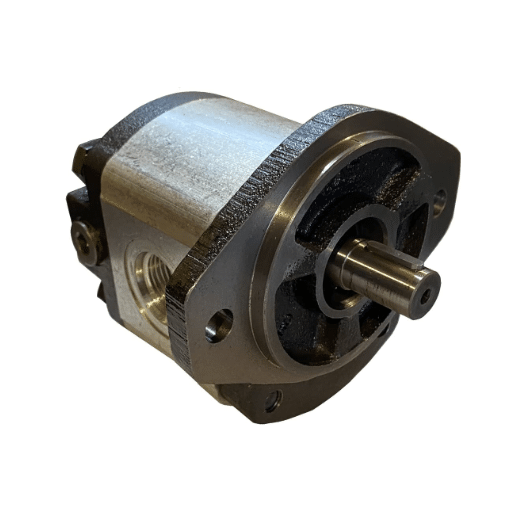
Seals are the wear part most likely to fail first, and also the easiest to monitor. A shaft seal is a leading indicator: it tells you about alignment, heat, and pressure long before the pump loses flow.
Inspect the shaft seal monthly, or about every 160 hours. A healthy lip seal may show a faint film of oil. Continuous weeping beyond a few drops per hour signals degradation, and you should plan a seal change within one to two months.
On the annual cycle, near 2,000 hours, replace the shaft seal along with all O-rings and gaskets as preventive maintenance. Seal service life generally runs 1.5 to 2 years, which is why the calendar and the hour meter usually agree.
Premature seal failure rarely comes from the seal itself. The common causes are:
- Coupling misalignment, which loads the shaft and distorts the seal lip.
- Vibration, from a worn coupling or loose mounting bolts.
- Overpressure, when a relief valve is set too high or stuck.
- Overheating, which hardens the elastomer and cracks it.
Check alignment and mounting torque at every weekly service. Keeping coaxiality within about 0.1 mm removes most of the load that kills seals.
Measuring Wear: Clearances and Wear Indicators
You don’t need a lab to judge gear pump wear. You need a flow reading, a temperature reading, and a set of feeler gauges. This is the part of gear pump troubleshooting that separates a decision from a guess.
Internal leakage, called slip, is what robs a worn pump of performance. About 90 percent of a gear pump’s internal leakage passes through the clearance between the gear end face and the side plate. That single clearance is the wear point that matters most.
Wear Indicators
| Indicator | Healthy | Investigate | Act |
|---|---|---|---|
| Flow at rated speed and pressure | Within 5% of baseline | 10 to 15% below baseline | 20% or more below baseline |
| Pressure holding | Holds under load | Slow to build | Falls off after warm-up |
| Noise | Steady low hum | Occasional rattle | Grinding, knocking, or squeal |
| Case temperature | Below 60°C (140°F) | 60 to 77°C (140 to 170°F) | Above 77°C (170°F) |
| Motor current | At baseline | Trending up | Clearly higher at same duty |
| External leaks | None | Shaft-seal film | Active weeping or drips |
Wear Clearances
The following values are reference points from OEM manuals and pump-repair literature. Confirm the exact limits against your specific pump’s manual before scrapping or reusing parts.
| Measurement | Typical new value | Replace threshold |
|---|---|---|
| Gear end-face (axial) clearance | 0.015 to 0.04 mm | Above 0.08 mm |
| Tooth-tip (radial) clearance | 0.13 to 0.16 mm general; 0.03 to 0.05 mm in some designs | Above 0.10 mm |
| Bearing radial play | Under 0.05 mm | Above 0.10 mm |
| Gear backlash (meshing) | 0.03 to 0.05 mm | Above 0.1 mm |
| Shaft journal / seal seat wear | Under 0.02 mm | Above 0.02 mm groove |
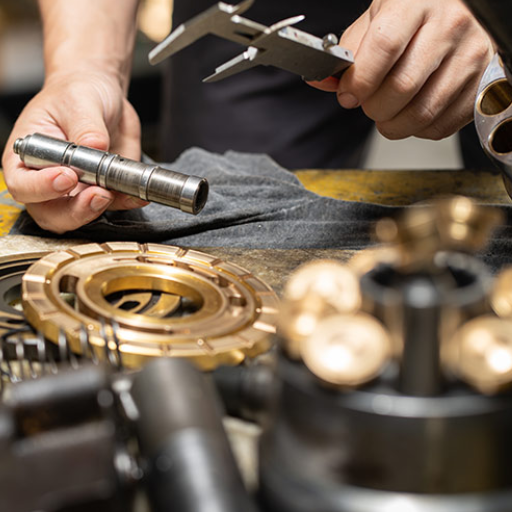
Measure end-face clearance with a feeler gauge, bearing play with a dial indicator, and gear backlash with a micrometer. A shallow scratch on a side plate can be polished out. A deep scratch or a local depression beyond about 0.03 mm usually means the plate is finished.
Seeing two or more “act” readings in that table? A rebuild may be more economical than you expect. Talk to an engineer about seal kits and rebuilt pump options before you buy new.
External vs Internal Gear Pump Maintenance

External and internal gear pumps share the same cleanliness rules, but their wear points differ. Knowing which design you have tells you where to look first.
External gear pumps use two meshing gears and are the most common design in mobile and industrial circuits. Their primary wear areas are the side plates (or floating plates) and the gear end faces, exactly as the clearance table above describes. Housing material changes the care needed. Cast-iron bodies carry higher pressure and stand up to shock and contamination. Aluminium bodies are lighter and cheaper but tolerate less abuse, so keep the filtration tight on aluminium units.
Internal gear pumps and gerotor designs add an inner rotor, a ring gear, and a crescent seal. They run quieter and handle higher-viscosity fluid than external units, which suits lubrication and transfer duty. Their extra wear points are the crescent seal and the ring-gear interface, so inspect those surfaces at the annual teardown. For a full design breakdown, see our internal vs external gear pump comparison.
The practical takeaway: the oil and cleanliness program is identical, and the inspection focus shifts to the crescent and ring gear on internal units.
How Long Do Hydraulic Gear Pumps Last?
A well-maintained hydraulic gear pump typically lasts 5,000 to 10,000 hours in normal duty, and up to about 15,000 hours in clean, properly filtered systems. The same pump neglected in a dirty environment may not reach 5,000 hours.
| Duty and care | Expected service life |
|---|---|
| Clean system, on-schedule maintenance | 10,000 to 15,000 hours |
| Normal industrial or mobile duty | 5,000 to 10,000 hours |
| Severe duty or dirty environment | 2,000 to 5,000 hours |
| Neglected, contaminated system | Under 2,000 hours |
The gap between those rows is almost entirely a maintenance story. Fluid cleanliness, correct viscosity, and honest filter intervals do more for pump life than any single component upgrade. That’s why the schedule and the oil specification come before everything else in this guide.
For full maintenance schedules and diagnostic tables, see our hydraulic gear pump troubleshooting guides.
Rebuild vs Replace: Cost and Decision Framework

When a gear pump reaches the end of its clean-service life, the decision is rarely “new pump or nothing.” A factory rebuild typically costs 30 to 50 percent less than a new pump and can often be done in 2 to 5 hours on site.
Rebuild When
- Flow loss is 15 to 20 percent, but pressure and housing are sound.
- The shaft seal weeps while pressure and flow remain good.
- You hear bearing noise or feel rough rotation with shaft play.
- Side plates show only minor scoring that can be polished.
- A factory-matched repair kit is available, and the housing is intact.
Replace When
- The housing is cracked, or the bores are deeply scored.
- Shaft damage exceeds tolerance, since shaft replacement approaches the cost of a new pump.
- The model is obsolete, and kits are unavailable.
- Repeated rebuilds exceed the cost of one new unit.
- The pump has run 10 or more years with recurring failures.
One caution repeated across the repair literature: use factory-matched kits. Generic aftermarket kits fit poorly, which causes gear noise, seal leakage, reduced flow, and premature bearing wear. A cheap kit that fails early is not a saving.
A Word on Sourcing
When replacement is the answer, matching the pump correctly matters as much as the maintenance that follows. You need the right displacement, pressure rating, shaft type, mounting flange, port type, and rotation direction. For the sizing side of that decision, our hydraulic gear pump sizing guide walks through the math. LOYAL INDUSTRIAL supplies tested, factory-direct gear pumps and seal kits with global export support, so you can replace a failed unit without overpaying a premium brand.
Gear Pump Maintenance FAQ
How often should you change the oil in a hydraulic gear pump?
Change the oil after the first 100 hours of break-in, then every 500 operating hours, with 2,000 hours as a maximum. Shorten to 300 to 400 hours in dusty, hot, or continuous-load service. Change immediately if the oil turns dark, milky, or burnt-smelling.
What oil do you use in a hydraulic gear pump?
Most systems use ISO VG 32 to 46 anti-wear hydraulic oil, with viscosity between 10 and 68 cSt at operating temperature. Choose by climate: VG 32 for cooler conditions, VG 46 for hot, high-duty service. Never mix oil brands or fluid types.
How do you check a gear pump for wear?
Measure flow at rated speed and pressure and compare it to baseline. A 10 to 15 percent drop means investigate; 20 percent or more means rebuild. Confirm with a feeler gauge at the gear end face and a dial indicator on bearing play.
What clearance is too much for a gear pump?
Gear end-face clearance above 0.08 mm, bearing radial play above 0.10 mm, or gear backlash above 0.1 mm generally indicates the pump is due for rebuild or replacement. Always confirm the limit against your specific pump manual.
Why is my gear pump overheating?
Common causes are a clogged suction strainer, low fluid level, worn internal components creating friction, or contaminated oil. Check the inlet path and fluid condition first, then inspect clearances. Casing temperature should stay below 60°C (140°F).
When should a gear pump be rebuilt instead of replaced?
Rebuild when the housing, bores, and shaft are sound and a factory-matched kit is available. Replace when the housing is cracked, the bores are deeply scored, the shaft is out of tolerance, or the model is obsolete and kits are gone.
How often should gear pump seals be replaced?
Inspect the shaft seal monthly, or about every 160 hours. Replace the shaft seal, O-rings, and gaskets proactively on the annual cycle near 2,000 hours, or sooner if the seal weeps more than a few drops per hour.
Gear Pump Maintenance: The Habit That Pays for Itself
Gear pump maintenance comes down to a short list, and every item on it is cheap compared to a pump replacement.
- Follow the hours, not the calendar. Daily checks, 500-hour oil changes, and an annual teardown inspection form the backbone of the schedule.
- Treat cleanliness as the top priority. Target ISO 4406 18/16/13 or better, filter new oil before use, and change oil the moment it looks wrong.
- Watch the shaft seal. It is an early warning for alignment, heat, and pressure problems.
- Measure instead of guessing. A flow reading and a feeler gauge turn a vague “it feels weak” into a rebuild-or-replace decision.
- Fix the cause, not just the pump. Contamination and starvation kill replacements too. Clean the system before you install the new unit.
If you take one thing from Ray’s story, make it this: the replacement pump failed for the same reason the original did, because nobody fixed the air. Maintenance is a system habit, not a part number.
Ready to act on what you found? Whether you need a specification sheet, a matching seal kit, or a factory-direct replacement pump, contact LOYAL INDUSTRIAL for an industrial solution consultation. Send us your nameplate data and duty details, and our engineers will recommend the right gear pump for the job.
For the complete gear pump family overview, including types, specifications, and selection, start with our complete guide to hydraulic gear pumps.