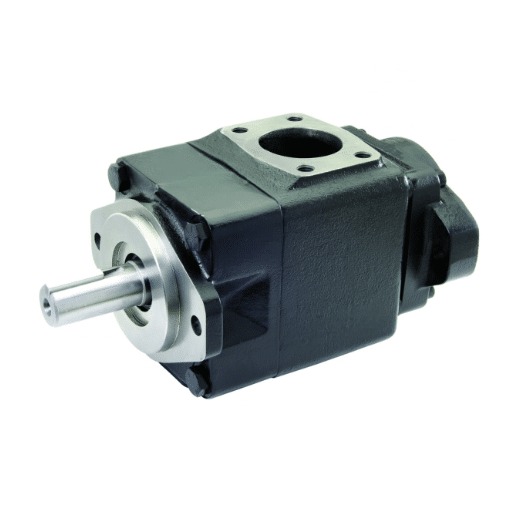
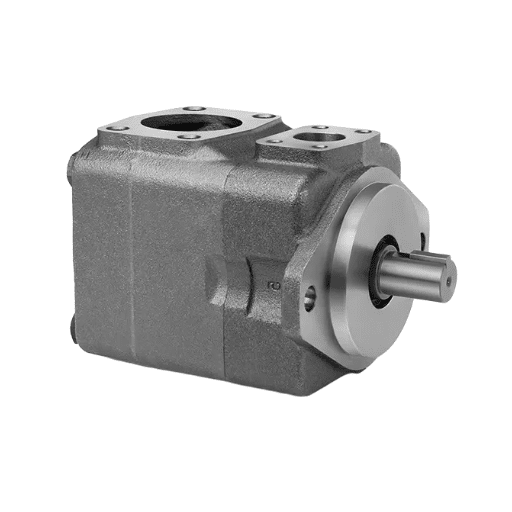
Dave had already split three cords of oak that Saturday morning when his log splitter started making a high-pitched whine at the wedge. He ignored it. Twenty minutes later, the pump housing was too hot to touch and the ram moved at half speed. The rebuild bill was $340, and he missed the rest of the firewood season.
That single skipped maintenance interval cost him more than a decade of filter changes. Two-stage hydraulic pumps aren’t complicated, but they do have specific wear points that single-stage pumps don’t. If you miss the unloader valve, check valve, and transition-pressure checks, you’re not really maintaining the pump — you’re just topping off the oil.
This guide gives you a complete 2 stage hydraulic pump maintenance program for two-stage — also called HI/LO — hydraulic pumps. You’ll get an hour-based schedule, fluid recommendations, ISO 4406 cleanliness targets, and a clear list of failure signs. Whether you’re running one log splitter or maintaining a fleet of mobile hydraulic power units, these practices will extend pump life and cut emergency repairs.
New to two-stage pumps? Start with our complete 2 stage hydraulic pump guide for working principle and selection basics.
What Makes 2 Stage Hydraulic Pump Maintenance Different?
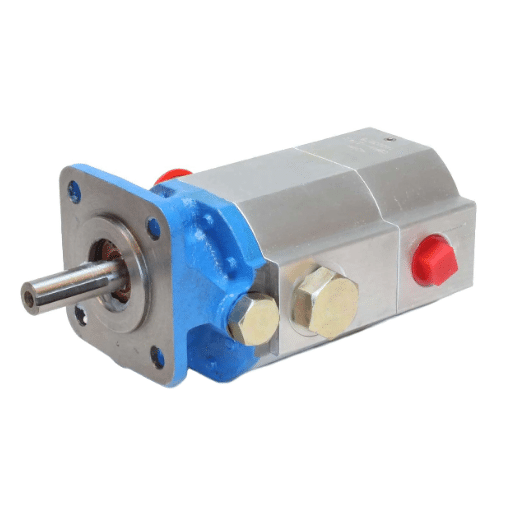
A two-stage pump is essentially two gear pumps in one housing. The large high-flow stage moves the cylinder fast during the approach stroke. When pressure climbs to the preset transition point — commonly around 650 PSI — an unloader valve redirects flow to the smaller high-pressure stage for force-intensive work. A check valve keeps the two stages from fighting each other.
That design gives you speed and force from a compact unit. It also creates maintenance responsibilities that single-stage pumps don’t have.
Extra Failure Points to Watch
The unloader valve can stick open, closed, or anywhere in between. If it sticks open, the pump stays in high-flow mode and the cylinder stalls under load. If it sticks closed, the pump never shifts out of low-flow mode and cycle times balloon.
The check valve seat can be scored by contaminated fluid, causing slow high-pressure build-up or overheating. Both gear sets share the same oil, so contamination hits twice as many wear surfaces. Transition pressure drift changes when the pump shifts. Spring fatigue or debris usually causes it, and drift can overload the engine or motor.
A single stuck unloader can force hot oil to recirculate continuously. Temperature rises, oil oxidizes faster, seals harden, and bearing life drops. That’s why 2 stage hydraulic pump maintenance isn’t generic hydraulic care — it’s contamination prevention plus scheduled wear monitoring of the components that make the two-stage design work.
Want to understand the internals? Our 2 stage hydraulic pump diagram explained article shows the unloader, check valve, and flow paths.
Hour-Based 2 Stage Hydraulic Pump Maintenance Schedule
The best maintenance program matches task frequency to how fast each component wears. Below is a tiered 2 stage hydraulic pump maintenance schedule you can use for seasonal equipment like log splitters or continuous mobile hydraulic systems.
New to log splitter pumps? Our log splitter hydraulic pump selection guide covers sizing and selection before you build a maintenance plan.
Daily / Pre-Shift (Every 5–10 Operating Hours)
- Check the reservoir level with the system cool and cylinders retracted. A hot reading gives a false high.
- Inspect the pump body, hoses, and fittings for active leaks or seepage.
- Listen during a full cycle. You should hear a clean transition from a fast approach to a slower force stroke. A grinding, knocking, or cavitation whine at the shift point means something is wrong.
- Feel the pump casing after a few cycles — it generally shouldn’t exceed 60°C (140°F).
- Observe cylinder speed and make sure the transition is smooth, not delayed or absent.
Weekly / Every 50 Hours
- Inspect the suction strainer or inlet filter for debris. A restricted inlet causes cavitation that damages gear teeth and bearings.
- Check pump mounting bolt torque and coupling alignment. Even small misalignments reduce bearing life dramatically.
- Wipe down hydraulic cylinder rods with a clean cloth before retracting them. Dirt on the rod gets pulled past the wiper seal and becomes particulate contamination in the oil.
- Inspect the reservoir breather cap for clogging or moisture ingress, especially in humid or dusty environments.
Monthly / Every 100–250 Hours
- Verify transition pressure with a calibrated gauge installed at the pump outlet or a test port. Factory preset is commonly ~650 PSI, with a typical adjustment range of 400–900 PSI. Drift outside this range indicates spring fatigue or contamination.
- Pull and inspect the return filter element for metallic particles — that’s an early warning of internal wear.
- Check oil color, clarity, and odor.
- Examine the shaft seal for leakage; a small drip today can become a pump failure next season.
Annually / Every 300–1,000 Hours
- Change the hydraulic oil and all filters, including return, suction, and breather elements.
- Flush the reservoir and clean the suction strainer. A clogged strainer restricts inlet flow and causes cavitation.
- Inspect the unloader valve and check valve for contamination, scoring, or worn seats.
- Verify the relief valve cracking pressure with a calibrated gauge.
- Replace worn O-rings and seals before they fail in service.
Biennial / Every 2,000+ Hours
- Replace all high-pressure hoses regardless of visible condition. Rubber degrades from heat cycling inside the liner.
- Evaluate the pump for rebuild or replacement based on pressure output, case drain flow, and noise levels.
- Proactively replace the shaft seal and O-ring sets.
- At this hour count, internal gear and bearing wear should drive the decision, not just external leakage.
Maintenance Matrix at a Glance
| Interval | Key Tasks | Estimated Time |
|---|---|---|
| Daily / 5–10 hrs | Check oil level, inspect leaks, listen at shift point, check casing temp, observe cycle speed | 5 min |
| Weekly / 50 hrs | Inspect suction strainer, check mounting/coupling alignment, wipe cylinder rods, inspect breather | 15 min |
| Monthly / 100–250 hrs | Verify transition pressure, inspect return filter, check oil condition, examine shaft seal | 30 min |
| Annually / 300–1,000 hrs | Change oil and filters, flush reservoir, inspect unloader/check valve, verify relief pressure | 3–4 hrs |
| Biennial / 2,000+ hrs | Replace hoses, evaluate rebuild/replace, replace shaft seal and O-rings | 4–8 hrs |
This hour-based schedule is your foundation. The next layer is fluid management, because clean oil is what makes every other maintenance task worth doing.
Need help sizing or selecting a replacement? Our hydraulic pump sizing guide walks through matching GPM, PSI, and horsepower.
Hydraulic Fluid Management for Two-Stage Pumps

Oil in a two-stage pump does more than transmit power. It lubricates two sets of gears and bearings, cools the unloader and check valve, and protects precision seats from wear. Get the fluid wrong and you’re shortening the life of every moving part at once.
Recommended Fluid Type
- Most two-stage hydraulic pumps — especially log splitter pumps — run best on ISO VG 32–46 AW (Anti-Wear) hydraulic oil. AW32 is common in cooler climates. AW46 is typical for general shop or warmer outdoor use. The exact viscosity depends on ambient temperature and manufacturer specs, so always check the pump manual first.
- Never mix mineral oil with synthetic fluid or water-based hydraulic fluid. Incompatible chemistries create sludge, emulsions, and seal damage that a simple oil change won’t fix.
Oil Change Intervals
- Plan a break-in oil change at roughly 50 hours to flush manufacturing contaminants and initial wear particles.
- After a break-in, normal-duty equipment typically needs oil changes every 500–1,000 hours or annually, whichever comes first.
- Severe-duty or dusty environments shorten that to 300–500 hours.
- Change oil immediately if it looks milky, smells burnt, turns dark and opaque, or foams in the reservoir.
ISO 4406 Cleanliness Targets
- ISO 4406 reports contamination as a three-number code such as 18/16/13. The numbers represent particle counts per milliliter at ≥4 µm, ≥6 µm, and ≥14 µm. For mobile gear-pump systems, target 18/16/13 or better.
- New oil from bulk drums often arrives at 21/19/16, which is too dirty for sensitive unloader and check valve seats. Filter new oil before adding it to the reservoir.
- Use 10–25 micron return filtration to protect the unloader and check valve. The suction strainer is usually coarser — around 100 mesh — and protects the pump from large debris. The return filter is your main defense against the fine particles that cause valve sticking and seat scoring.
Fluid Condition Decoder
| Appearance / Smell | Likely Cause | Action |
|---|---|---|
| Clear amber to light gold | Normal | Continue scheduled monitoring |
| Dark brown or black | Oxidation, overheating | Change oil and filters; check temperature |
| Milky or gray | Water contamination | Drain, flush, refill; find water entry point |
| Foamy | Air entrainment, low oil, wrong additive | Check level, inspect breather, verify fluid type |
| Burnt smell | Overheating or severe oxidation | Change immediately; inspect pump and relief valve |
| Metallic particles on filter | Internal wear | Inspect pump; consider rebuild or replacement |
Maria runs a commercial firewood operation in Pennsylvania with ten log splitters. She switched from annual oil changes to 500-hour filter changes plus quarterly oil sampling. Within two seasons, her hydraulic downtime dropped by roughly 40% and pump replacements fell from three per year to one.
The lab reports showed her which machines needed shorter intervals and which ones could safely run longer. Clean oil didn’t just save parts — it gave her predictable maintenance budgeting.
For a full diagnostic workflow, see our HI/LO hydraulic pump troubleshooting guide.
Two-Stage Pump Specific Maintenance Tasks

General hydraulic maintenance keeps the system alive. These tasks keep a two-stage pump performing the way it was designed to.
Unloader Valve Inspection
- The unloader valve is usually under a cap on the inlet side of the pump, with a slotted adjustment screw inside. During annual service, remove the cap and inspect the spring and seat for scoring, debris, or varnish buildup.
- Clean with lint-free wipes and fresh hydraulic fluid — never use shop rags that leave fibers behind. Verify transition pressure with a gauge under load, then re-torque the cap to the manufacturer’s spec to prevent external leakage.
- If transition pressure has drifted, adjust it following the procedure in our 2 stage hydraulic pump adjustment guide. Turn the screw in small increments and retest after each change.
Check Valve Inspection
- The check valve isolates the low-pressure stage when the unloader shifts. Remove it during annual service and inspect the seat and poppet for contamination or wear marks.
- A leaking check valve lets high-pressure oil back into the low-pressure stage, causing slow force build-up and extra heat. If the seat is scored or the poppet doesn’t seat cleanly, replace the valve assembly or cartridge.
Shaft Seal and Bearing Care
- A leaking shaft seal is easy to spot — oil weeps from the drive shaft area. Misalignment and vibration are the leading causes, so check coupling alignment and mounting bolt torque before blaming the seal.
- If the seal is worn but the pump still produces rated pressure and flow, a seal kit is often the cheapest fix. If the shaft has grooving or bearing play, the pump needs deeper repair.
Transition Pressure Verification
- This is the single most overlooked two-stage pump check. Install a calibrated 0–5,000 PSI gauge at the pump outlet or a high-pressure test port. Load the cylinder slowly and note the pressure when you hear or feel the pump shift.
- Compare it to the factory preset — commonly ~650 PSI — and to your application’s needs. Light-duty splitters may run as low as 500 PSI. Heavy-duty setups with ample engine power may run up to ~900 PSI. Drift indicates the unloader spring is fatigued or contaminated.
Signs Your 2 Stage Pump Needs Maintenance
Early symptoms are cheaper than emergency repairs. Use this table as a quick diagnostic reference.
| Symptom | Likely Cause | Action |
|---|---|---|
| Pump runs hot / overheats | Unloader stuck, low fluid, blocked strainer, dirty oil | Inspect unloader; change oil and filters; check inlet |
| Slow approach stroke | Low fluid, suction restriction, worn high-flow stage | Check level and strainer; measure flow |
| Weak splitting or pressing force | Transition pressure too low, worn high-pressure stage, relief valve leakage | Verify transition and relief pressure |
| Pump won’t shift to high pressure | Unloader stuck open, check valve leak, transition set above relief | Clean or replace valves; adjust transition pressure |
| Excessive noise at shift point | Cavitation, air in oil, worn bearings | Bleed system; check inlet; inspect pump |
| External leakage at shaft or cap | Worn seal, loose fasteners, overpressure | Replace seal; torque fasteners; verify relief setting |
Rebuild vs. Replace: When Maintenance Is Not Enough

Sometimes the right maintenance decision is to stop maintaining and start replacing.
Rebuild Indicators
- Consider a rebuild when the failure is limited and the rest of the pump is healthy. External seal leaks with otherwise good pressure and flow are classic rebuild candidates.
- Minor unloader seat scoring is also repairable if an OEM valve kit is available. Pumps with fewer than 5,000 hours and early-caught contamination often respond well to a rebuild.
Replace Indicators
- Replace the pump when internal wear causes pressure to drop after warm-up, when gear housing or bearing damage is present, or when the rebuild kit is unavailable.
- A good rule of thumb: replace when repair cost exceeds 50% of a new unit, or when you’ve had two recurring failures after maintenance. Repeated failures are usually a sign that contamination or misalignment is still destroying the pump.
Typical Economics
For small log splitters, two-stage pumps, seal kits typically run 30–60 and replacement pumps range from 150–400. That narrow gap means replacement is often the better value for pumps with unknown internal wear. For industrial two-stage gear pumps, OEM rebuild kits are frequently cost-effective compared to a new unit, especially when the housing and gears are still within spec. Compare two-stage hydraulic gear pump specifications before ordering a replacement to ensure shaft, port, and mounting compatibility.
A Minnesota operator learned this the hard way. He tried to save money by running ISO VG 46 hydraulic oil through a sub-zero winter. The thick oil caused cavitation on cold starts that damaged the high-flow stage gears within one season. A 35 oil change with the right winter viscosity would have prevented a 260 pump replacement.
Frequently Asked Questions
How often should you change hydraulic oil in a log splitter?
For typical seasonal use, change hydraulic oil every 100 hours or annually, whichever comes first. Commercial or dusty conditions may need 300–500-hour intervals. Always perform a break-in change around 50 hours on a new pump.
What hydraulic oil should I use in a 2 stage pump?
Use ISO VG 32–46 AW hydraulic oil, matching the viscosity to your climate and manufacturer specification. AW32 for cold conditions, AW46 for general/warmer use. Do not mix fluid types.
How long does a hydraulic gear pump last?
Gear pumps typically last 5,000–10,000 hours in normal duty and up to ~15,000 hours in very clean systems. Contamination, overheating, and cavitation are the main factors that shorten life.
How do I know if my 2 stage pump is failing?
Watch for overheating, slow approach stroke, weak force, failure to shift to high pressure, excessive noise at the shift point, and external leakage. These symptoms map directly to unloader, check valve, gear, or seal wear.
Can you rebuild a two-stage hydraulic pump?
Yes, if the damage is limited to seals, O-rings, or a replaceable valve cartridge. Full gear or bearing damage usually makes replacement more economical, especially for small log splitter pumps.
Why does my 2 stage hydraulic pump overheat?
Common causes include a stuck unloader valve, low fluid level, blocked suction strainer, dirty oil, or a relief valve set too low. Overheating accelerates oil breakdown and seal failure, so address it immediately.
What is the best filtration for a two-stage or HI/LO pump?
Use a 10–25 micron return filter to protect unloader and check valve seats, plus a suction strainer to block large debris. Keep the breather filter clean so airborne contamination doesn’t enter the reservoir. This applies equally to 2 stage hydraulic pump maintenance and HI/LO hydraulic pump maintenance routines.
How do you clean a hydraulic pump inlet strainer?
Remove the strainer, drain residual oil, and clean it with fresh hydraulic fluid or a compatible solvent. Blow it dry with low-pressure air, inspect for damage, and reinstall. Never reuse a torn or corroded strainer.
Should I verify transition pressure during maintenance?
Yes. Verify transition pressure at least monthly on heavily used equipment and annually on seasonal equipment. Drift is an early indicator of unloader wear or contamination.
When should I replace vs. rebuild a two-stage pump?
Rebuild when the failure is external, minor, and the pump has low hours. Replace when internal wear causes pressure loss, bearings are damaged, repair cost exceeds 50% of replacement, or failures keep recurring.
Conclusion
2 stage hydraulic pump maintenance comes down to two principles: keep the oil clean, and monitor the components that make the two-stage design work. The unloader valve, check valve, dual gear sets, and shaft seal all share the same oil. When contamination builds up, every one of those components wears faster than it should.
Follow the hour-based schedule: daily checks for leaks and noise, weekly strainer and coupling checks, monthly transition pressure verification, annual oil and filter service, and biennial hose and seal replacement. Use ISO VG 32–46 AW oil, target ISO 4406 cleanliness of 18/16/13 or better, and act on early symptoms before they turn into pump failures.
If you need replacement seals, valve kits, or a compatible two-stage pump, LOYAL INDUSTRIAL PTE. LTD. can supply tested components matched to your system specs. Contact us for a technical specification sheet or a replacement pump recommendation.