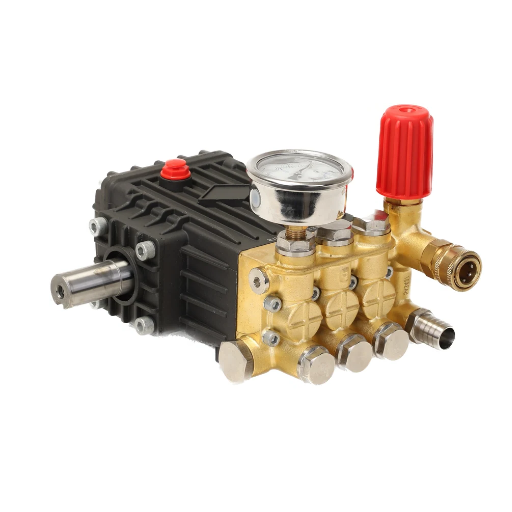
A replacement pump bolted straight onto the existing baseplate. The coupling lined up. The flange matched the drawing. Everything looked interchangeable until the first job, when discharge pressure at the required flow came in short.
The plunger diameter was different. Same footprint, different pump.
Ravi, a procurement engineer at a blasting-equipment assembler, approved that order on a photograph and a bolt pattern. His team lost a week of commissioning and a customer’s first contract. The pump was not defective. The sourcing was.
Most plunger pump manufacturers and suppliers look identical on a listing page. Many are trading companies. Some are assemblers who buy castings and manifolds and bolt them together. A smaller number machine the power end, control the fluid end, and pressure-test every unit.
That matters because plunger pump suppliers are not interchangeable, even when their catalogues look alike. The difference shows up in the fluid end, in the test record, and in whether parts arrive in year two.
This guide shows you how to tell them apart. You will see what a real factory builds, which certificates prove something, the eight interface points that decide interchangeability, and the RFQ data set that gets a correct quote first time. For the engineering background behind these checks, the complete guide to plunger pumps covers the mechanism, the fluid end, and the duty ratings.
One scope note. This covers process plunger pumps: triplex and quintuplex machines with packed plungers and high-pressure fluid ends. It does not cover hydraulic axial or radial piston pumps. For those, start with hydraulic axial piston pumps.
Sourcing a specific duty? Send the fluid, flow, discharge pressure and duty cycle to our engineers for a matched specification and quotation. Request a technical specification sheet.
What a Plunger Pump Manufacturer Actually Builds
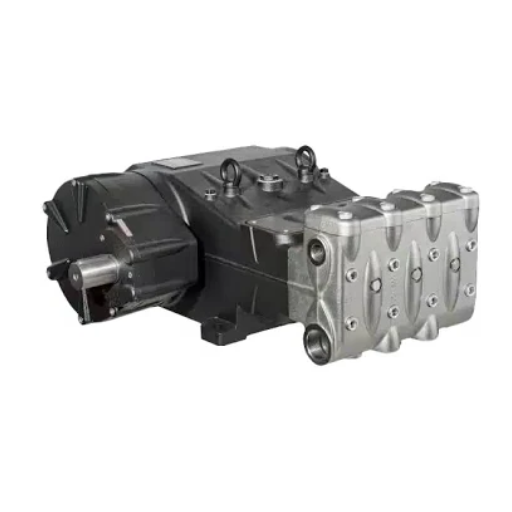
A plunger pump splits into two halves, and most suppliers are strong in one and weak in the other.
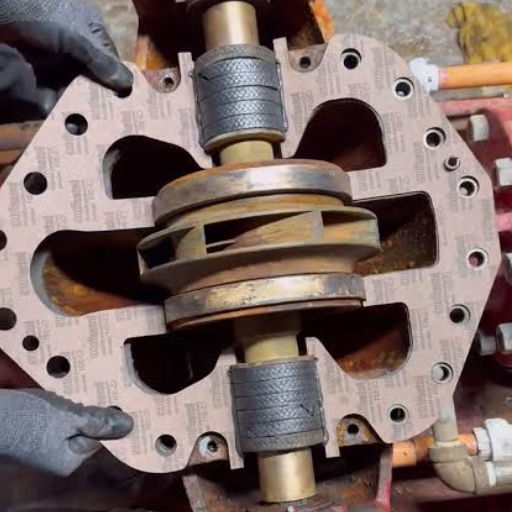
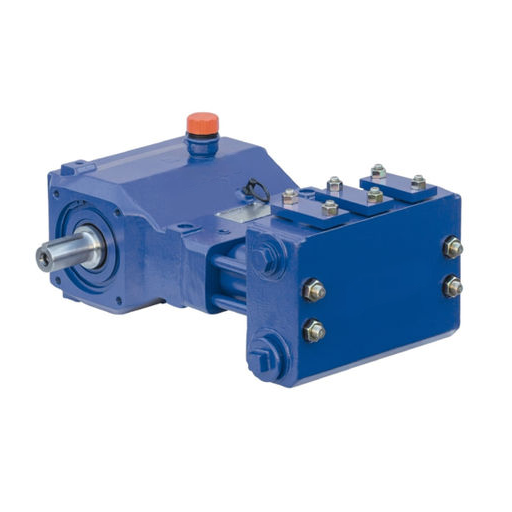
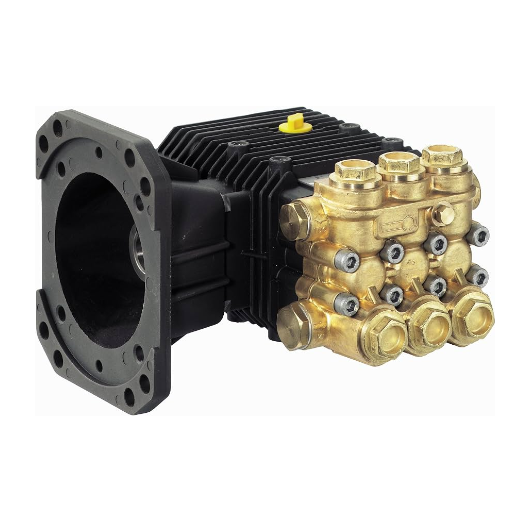
The power end converts rotary drive into reciprocation: crankcase, crankshaft, connecting rods, crossheads, bearings, and lubrication. The fluid end carries the manifold, plungers, packing, valves, and seats. It touches your process fluid.
The power end decides how long the pump runs. The fluid end decides whether it survives your chemistry and pressure. Ask which of these are machined in-house:
| Component | Why in-house control matters |
|---|---|
| Crankshaft and connecting rods | Bearing fit and stroke accuracy drive vibration and life |
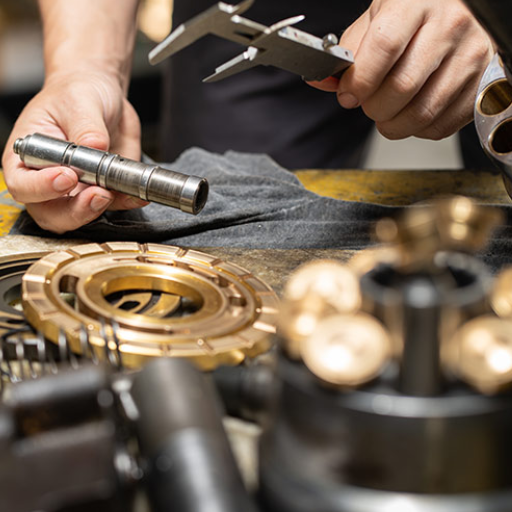
| Plunger | Diameter tolerance and surface finish set packing life |
| Manifold and fluid-end block | Material grade and passage finish resist corrosion |
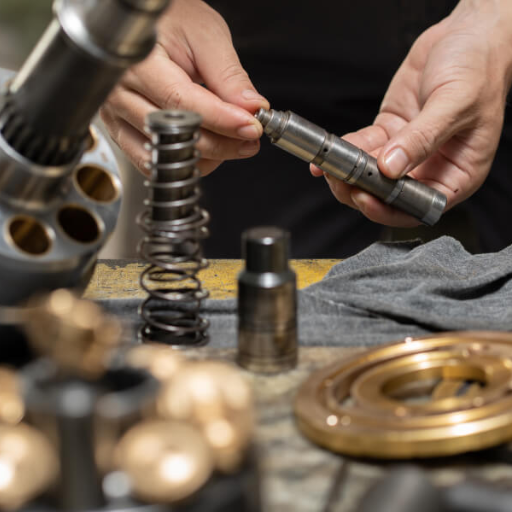
| Valve bodies, seats and cages | Seat angle and hardness decide volumetric efficiency |
Bearings, seals, fasteners, motors and instruments are normally bought in. Buying in the manifold, plunger and valve set and calling the result a manufactured pump is not.
Three business models sell under the same “manufacturer” label. A factory-direct manufacturer machines both ends and tests each unit. An assembler buys finished subassemblies and performs final build. A trading company owns no plant and controls neither lead time nor quality.
None is automatically wrong. The error is paying factory-direct prices against trading-company capability.
How Plunger Pump Manufacturers Differ by Tier
Search for plunger pump manufacturers, and you get a flat list that hides four different tiers.
| Tier | Typical capability | Verify first |
|---|---|---|
| Branded Western OEMs | Full engineering, published curves, global service | Lead time, price premium |
| API 674 process and oilfield builders | Standards-based design, material traceability | API licence, material certs |
| High-pressure cleaning clusters | High-volume triplex, 100 to 1,500 bar | Duty rating, consumable supply |
| Metering specialists | Controlled-volume design to API 675 | Accuracy data, API 675 evidence |
A mid-size cleaning-pump factory might run five production lines and ship roughly 200,000 units a year while offering minimum orders of one piece. A process builder might supply a quintuplex fluid end with full traceability for a sour-service skid. Neither is better. They answer different buyers.
The tier tells you which question to lead with. A triplex plunger pump manufacturer serving blasting contractors will answer questions about ceramic plunger life and consumable pricing. An API 674 builder will answer questions about material certification and seat hardness.
Industrial pumps were valued at roughly USD 47.4 billion in 2025, and positive-displacement pumps in the Middle East alone are forecast to grow at about 6% a year through 2033.
Plunger Pump Suppliers: Four Types and What Each One Risks
Supplier type shapes risk more than country of origin does.
| Supplier type | Capability | Typical MOQ | Best for | Main risk |
|---|---|---|---|---|
| Factory-direct OEM | Machining, assembly, test, custom work | 1 to 20 pcs | Long-term programs, custom fluid ends | Capacity limits on unusual orders |
| Trading company | Sourcing and logistics only | Flexible | Small mixed orders, rare models | No control over quality or schedule |
| Authorized distributor | Brand product, local stock, warranty | 1 pc | Critical duty, warranty-sensitive plant | Price premium, little customization |
| Aftermarket / interchange | Reverse-engineered replacements | 1 pc | Mature equipment, cost-driven maintenance | Interchange claims that do not hold |
Published “top manufacturers” lists are directories with a ranking algorithm behind them. They reward paid placement, not engineering. A useful entry names a specific capability, a plant address, and a test bench. A listing with none is a logo.
Certifications: What Plunger Pump Manufacturers Must Prove
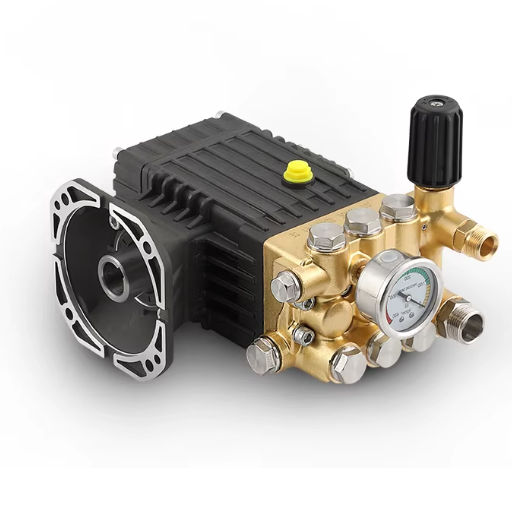
The useful question is not whether a supplier holds a certificate, but whether it covers the plant that will make your pump.
ISO 9001:2015 confirms a documented quality system exists. It does not confirm your pump met a performance target. A factory can hold valid ISO 9001 and still ship a manifold with the wrong heat number.
Three standards get conflated constantly, and quoting the wrong one either overprices the order or leaves the duty uncovered.
API 674 covers reciprocating positive-displacement pumps for petroleum, chemical, and gas service. Flow is set externally, usually by variable speed. Its scope points to API 675 for controlled-volume pumps and API 676 for rotary pumps. A family built to 674 usually documents stainless hydraulic ends and leakage recovery.
API 675 covers controlled-volume metering pumps, where precision flow control is the purpose. API Q1 is a quality management system standard, not a pump design standard.
If your duty is bulk high-pressure transfer, specify 674. If it is dosing, specify 675. If your end user requires an oil-and-gas QMS, ask for Q1 and check the licence on the API register rather than accepting a PDF.
The fluid end is where corrosion and abrasion failures start. Request mill certificates for the manifold, with heat numbers traceable to the delivered unit. Add the plunger material and coating spec, valve and seat grade and hardness, and packing compound limits. Then verify rather than file: positive material identification at goods-in takes minutes and catches substituted grades before installation.
Specifications to Lock and the Interchange Claim Trap
Four parameters cause most rework.
Flow and the rating that matters. Every pump has an intermittent and a continuous rating, and they differ. Cleaning pumps are usually rated intermittent; reverse-osmosis feed and injection run continuously. Specify the continuous rating at your duty point in writing. If the datasheet gives only a peak figure, the pump is not qualified.
Plunger diameter and stroke. Flow scales with plunger area, stroke, and crank speed. A pump with the same footprint but a smaller plunger delivers less flow at the same speed, and raising speed adds wear and pulsation. Record both numbers from the nameplate. The sizing method is how to size a plunger pump.
Materials and inlet conditions. Seawater and mild acids typically call for 316L wetted parts. Strong acids may need Hastelloy or PTFE-lined components. Abrasive slurries need ceramic or carbide wear parts. As noted, plunger pumps are not self-priming, and many designs need a flooded suction with roughly 60 to 70 psi available.
Cylinder count and drive. Triplex is the default for high pressure. Quintuplex smooths flow for high-flow, lower-pressure duty, as the triplex vs quintuplex comparison explains. Specify the drive rather than letting the supplier assume it.
The Eight-Point Interface Check
“100% interchangeable” is the most common unverified claim in this market. On a reciprocating pump, a matching footprint proves almost nothing.
| Interface point | Compare | A mismatch causes |
|---|---|---|
| Mounting and bolt pattern | Hole centres, bolt size, footprint | Will not bolt down, or bolts under shear |
| Shaft and coupling | Diameter, key or spline, length, pilot | Misalignment, bearing failure |
| Rotation direction | Crank rotation from the drive end | Runs backwards, lubrication fails |
| Plunger diameter | Measured, not nominal model number | Flow changes at the same crank speed |
| Stroke length | Crank throw or published stroke | Flow and pulsation change, dampener sizing wrong |
| Valve and seat type | Seat angle, cage style, retention | Lower volumetric efficiency, early wear |
| Fluid-end porting | Port size, thread or flange, position | Piping will not connect, or flow restricted |
| Crankcase lubrication | Oil capacity, splash or forced | Reduced life, lubrication failure under load |
For port and flange dimensions, the reference on SAE mounting and port standards removes most guesswork.
The rule is simple: compare nameplate data and the manual, not the photograph. If the supplier cannot produce a dimensioned drawing with plunger diameter and stroke marked, the interchange claim is unverified.
The RFQ Data Set and Acceptance Testing
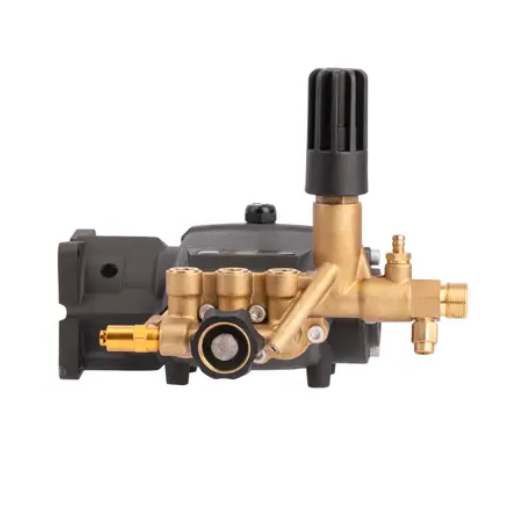
Most wrong quotes trace to an incomplete request. The supplier quotes what you sent, and what you sent was not the duty. Send all of the following:
- Fluid and chemistry, including concentration, solids, and abrasiveness
- Required flow at the duty point, in L/min or gpm
- Required discharge pressure, in bar or psi
- Fluid temperature range, minimum and maximum
- Duty cycle: continuous, intermittent, or hours per day
- Drive preference: direct, belt, gear reducer, engine, air, or hydraulic
- Available inlet pressure, and whether flooded suction is guaranteed
- Required standard: API 674, API 675, or general duty
- Materials of construction, or the chemistry that determines them
- Mounting orientation, port positions, and envelope constraints
- Destination country and any certification required for import
- Annual volume and first-order quantity, so pricing tiers are realistic
Add photographs of the nameplate and port faces. A model code alone is often insufficient because manufacturers revise suffixes without changing the base code.
“Every unit is tested” is universal and nearly meaningless. What matters is which test, at what pressure, for how long, and what record you receive.
Put the protocol in the purchase order. It should name a hydrostatic test at a stated multiple of design pressure, with a defined hold period. It should also require a performance test at three points against the curve, a calculated volumetric efficiency, and a verified relief valve setting.
Then ask for a per-unit record with the serial number, test pressures, measured values, and inspector name. Check the serial number against it at your dock.
OEM Plunger Pump Programs, Cost Structure and Lead Times
For equipment builders and distributors, customization is usually the reason to leave a brand.
A capable manufacturer can adapt manifold material or passage geometry, plunger diameter and stroke within crankcase limits, port size and position, mounting, drive arrangement, and paint or labelling. Crankcase architecture and the number of throws are tooling decisions, not configuration choices.
This is where a custom plunger pump manufacturer separates from a catalogue seller. Catalogue sellers quote a model number. Custom builders quote a drawing, and the drawing is what you approve.
Expect a tooling charge when a change touches castings, forgings, or fixturing, and none when it touches porting or bracketry. Run the approval sequence in order: drawing sign-off, first article, bench test, limited run, volume. Skipping first article is how a program inherits a tolerance problem it cannot diagnose.
A private-label agreement should settle four things in writing: who owns the drawings, who carries the warranty, what happens to tooling if the relationship ends, and how spares reach your customers.
That last point carries more weight than it looks. A plunger pump is a consumables commitment: packing sets, plungers, valves, and seats recur on a schedule set by your fluid and duty. The packing and seal replacement procedure is straightforward, but only if the parts exist.
Factory-direct supply removes intermediary margin. It saves on unit price and customization speed. It does not save on lead time, warranty exposure, documentation, or the engineering hours spent qualifying the supplier.
A branded pump buys a published curve, a service network, and an enforceable warranty. Factory-direct wins on standard-duty, high-volume programs. Branded supply often wins on unplanned shutdown risk.
| Order type | Typical MOQ | Typical lead time |
|---|---|---|
| Stock standard model | 1 pc | 24 to 48 hours to dispatch |
| Standard production | 1 to 20 pcs, by item | 2 to 10 days stated by some factories; 15 to 30 days is more typical |
| Custom OEM | 5 to 50 pcs | 8 to 12 weeks |
| Branded factory order | 1 pc | 12 to 26 weeks on non-stock items |
These ranges are drawn from published supplier listings reviewed in October 2026 and from the lead-time benchmarks used across our pump-family sourcing guides. They are orientation figures, not quotations. Confirm MOQ and lead time per line item.
Price follows pressure class and fluid-end material more than anything else. In listings reviewed in October 2026, standard cleaning and industrial triplex pumps commonly appeared in the low thousands of US dollars per unit, and an 800 bar class industrial unit commonly appeared in the four-thousand range. A China plunger pump manufacturer selling factory-direct typically lands below a branded equivalent for the same specification, because the gap is the intermediary chain, not a different casting.
Two cautions. A two- to ten-day lead time is plausible for a catalogue pump and implausible for a custom fluid end. And listed prices exclude freight, duties, inspection, and commissioning, so build a landed cost first.
How to Vet a Plunger Pump Manufacturer
Score each item from 1 to 5 and weight what matches your risk. A total below 30 out of 50 is a warning, not a disqualification.
- Manufacturing scope. Can they name which components they machine in-house?
- Test evidence. Will they supply a serial-numbered test record?
- Material traceability. Can they supply mill certificates with heat numbers?
- Standards fit. Do they know 674 from 675 from Q1 for your duty?
- Consumables pipeline. Can they commit to packing, plunger, and valve supply?
- Duty rating honesty. Will they state a continuous rating in writing?
- Customization. Can they change porting or materials without a new platform?
- Documentation. Do they provide drawings with plunger diameter and stroke?
- Commercial clarity. Are MOQ, lead time, Incoterms, and warranty stated plainly?
- Responsiveness. Do technical questions reach an engineer, not a sales assistant?
Past performance predicts future delivery. Ask for on-time delivery rate, reorder rate, and average response time. Useful benchmarks are 95% on-time or better and technical response under three hours.
Tomas, a maintenance manager running three blasting skids, skipped that last step. He bought the lowest-priced triplex pump on a marketplace listing and saved roughly 30% on unit cost. Fourteen months later, the packing sets and plungers were unavailable, and a pump with thousands of hours left in the crankcase was scrapped instead of rebuilt. The savings covered one rebuild, not two.
Buy one unit before committing to volume. Run it at your duty point, measure stuffing-box leakage, record pressure stability, then tear down the fluid end.
Red flags: a price far below the market band with no reason given, refusal of a Certificate of Origin, no test bench, a template test record, vague model numbering, or silence on consumables after the sale.
Frequently Asked Questions
What is the difference between a plunger pump manufacturer and a supplier?
A manufacturer machines and assembles the pump and controls the fluid end. A supplier may be a trading company that sources from a factory and adds margin. Ask which components are machined in-house and request a dimensioned drawing before treating a supplier as a manufacturer.
How do I verify a plunger pump is interchangeable with my existing unit?
Compare eight points: mounting pattern, shaft and coupling, rotation direction, plunger diameter, stroke length, valve and seat type, porting, and crankcase lubrication. A matching footprint alone is not evidence, because plunger diameter and stroke determine flow.
What certifications should a plunger pump manufacturer have?
ISO 9001:2015 is the baseline. API 674 applies to reciprocating pumps in process service, API 675 to metering pumps, and API Q1 to oil and gas quality management. Verify each on the issuing body’s register rather than accepting a certificate PDF.
What is a typical MOQ for a plunger pump?
Standard catalogue models are commonly available from one piece. Custom fluid ends and private-label programs typically start between five and fifty pieces, depending on tooling. Confirm MOQ per line item, because it often varies within one supplier’s range.
Are Chinese plunger pump manufacturers reliable?
Quality varies widely within any country. The useful filter is evidence, not origin: per-unit test records, mill certificates, a verifiable certification, and a sample bench-tested against your duty. Factories serving API 674 and API Q1 markets typically hold tighter tolerances than catalogue cleaning-pump producers.
What test report should come with a plunger pump?
Ask for a serial-numbered record. It should cover hydrostatic test pressure and hold period, performance at three points against the curve, volumetric efficiency, relief valve setting, and inspector name. A generic datasheet is not a test record.
Conclusion
Sourcing a plunger pump is an evidence exercise, not a price comparison. Plunger pump manufacturers who look identical on a listing page separate fast once you ask for a dimensioned drawing, a serial-numbered test record, and a consumables commitment.
Five rules carry most of the value. Distinguish a manufacturer from a trading company by asking what is machined in-house. Verify fluid-end material certificates and per-unit test records rather than filing a certificate PDF.
Confirm the continuous rating at your duty point, not the peak figure. Check interchange by the full eight-point interface, never the footprint. And judge the purchase on consumables and total cost, not unit price.
Elena, a plant engineer at a desalination facility, applied the second rule after a failure. Her replacement pump had been specified from an intermittent cleaning rating and ran continuously for eleven weeks before the packing failed. The next order carried a written continuous rating and a per-unit test record. That pump is still in service.
Do those five things, and the shortfall appears during quotation review, where it is cheap, instead of on the first job, where it is not.
Ready to compare against a specification? Send your fluid, flow, pressure, temperature and duty cycle, and our engineers will return a matched configuration, a drawing with plunger diameter and stroke, and a quotation with lead time. Request OEM plunger pump specification and quotation.
If you are still choosing the configuration rather than the supplier, the types of plunger pumps and plunger pump applications by industry guides start from the duty instead of the catalogue.