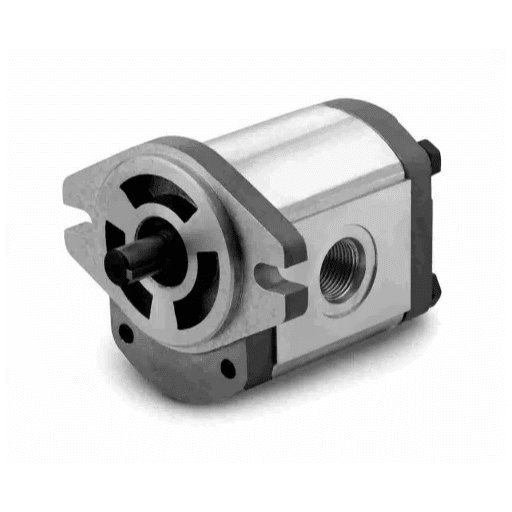
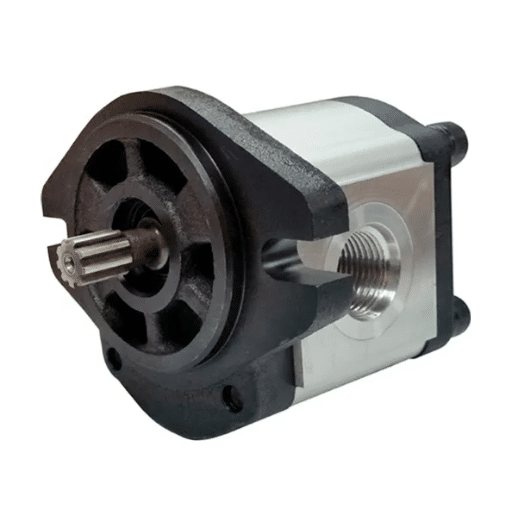
Choosing between a two stage hydraulic pump vs single stage is one of the most common decisions equipment builders face. A fabricator named Ken once built a 25-ton log splitter with a single-stage 22 GPM pump because it was the cheapest option on his supplier’s shelf. The ram moved fast enough during the approach, but when the wedge bit into a dense oak round, the 13 HP engine stalled. He swapped in a 16 GPM two-stage pump rated for the same peak pressure. The splitter now cycles faster, the 8 HP engine never stalls, and Ken stopped overspending on fuel.
That single hardware change captures the whole point of the two stage hydraulic pump vs single stage decision. One pump type is not universally better. The right choice depends on how your system cycles, what pressure and flow it actually needs, and what you are willing to spend upfront versus over the life of the machine.
In this article, we compare both pump types side by side. You will learn how each one works, where the efficiency differences come from, what the real cost trade-offs look like, and how to decide which pump fits your application.
Need help matching a pump to your equipment? Contact our engineers for a customized hydraulic system recommendation.
What Is the Difference Between a 2 Stage Hydraulic Pump vs Single Stage?

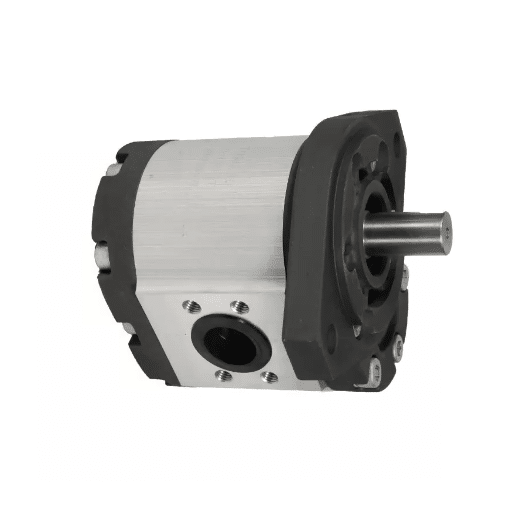
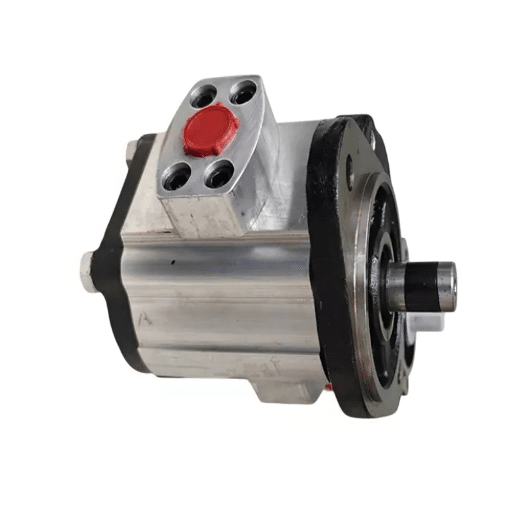
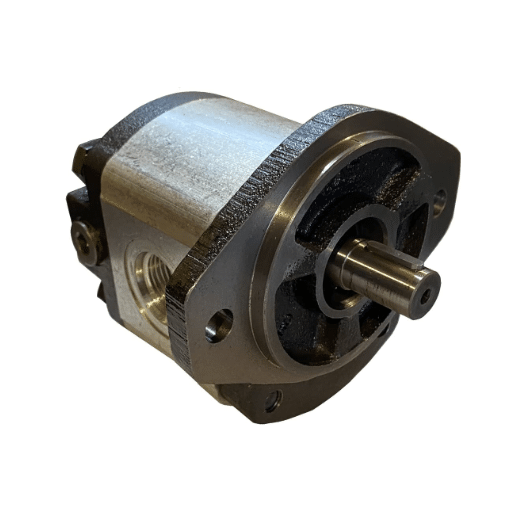
A single-stage hydraulic pump has one fixed-displacement pumping element. It delivers the same displacement per revolution regardless of system load. Pressure rises when the actuator meets resistance, but the flow rate stays tied to pump speed and displacement. This fixed output is the main characteristic that separates a single stage vs two stage hydraulic pump.
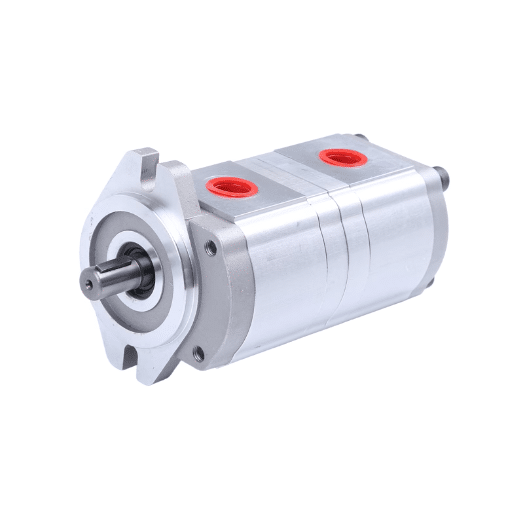
A two-stage hydraulic pump, also called a HI/LO pump or two-speed pump, contains two pumping stages inside one housing. A large-displacement stage moves a high volume of fluid at low pressure. A small-displacement stage takes over when pressure rises. An internal unloader valve switches between the two stages automatically.
Quick definition: In a two stage hydraulic pump vs single stage comparison, the single-stage pump offers one fixed flow/pressure profile, while the two-stage pump automatically alternates between high-flow/low-pressure and low-flow/high-pressure modes.
For a deeper look at the internal mechanics of the two-stage design, see our guide on how a 2 stage hydraulic pump works.
How Each Pump Type Works
Single-Stage Pump Operation
A single-stage pump draws fluid from the reservoir and pushes it through the outlet at a fixed rate. If the pump displaces 0.45 cubic inches per revolution and runs at 3,600 RPM, it delivers roughly 7 GPM regardless of load.
When the actuator moves freely, system pressure stays low and flow is high. When resistance builds, pressure climbs. Because flow does not drop automatically, the motor must work against full flow at rising pressure. This is why a single-stage pump sized for both fast movement and high force often demands a much larger engine.
Single-stage pumps are simple, reliable, and cost-effective for steady-state circuits. They are the standard choice for cooling systems, lubrication circuits, and simple hydraulic tools.
Two-Stage Pump Operation
A two-stage pump starts in the same way. Both stages deliver flow together during the light-load approach. Once system pressure reaches the preset transition point, usually around 650 PSI from the factory, the unloader valve opens. Flow from the large stage bypasses back to the reservoir or inlet. Only the small stage continues to pressurize the system.
This switch is the core of the two stage hydraulic pump working principle. The system gets speed when it is not working hard, and force only when resistance demands it.
Need more information about the 2 Stage Hydraulic Pump? You can read our 2 Stage Hydraulic Pump Complete Guide.
Side-by-Side Comparison
| Feature | Single-Stage Hydraulic Pump | Two-Stage Hydraulic Pump |
|---|---|---|
| Internal design | One fixed-displacement pumping element | Two stages of different displacements in one housing |
| Flow profile | Fixed flow at all pressures | High flow below transition pressure; low flow above it |
| Typical pressure | 3,000 PSI rated; 3,600 PSI peak (gear pumps) | Up to 3,000 PSI max working pressure |
| Efficiency | High at steady load; wastes energy when load varies | High in speed-then-force cycles; only high pressure when needed |
| Horsepower demand | High for combined speed and force | Lower because large stage unloads at high pressure |
| Initial cost | Lower | 20–50% higher for comparable flow ratings |
| Maintenance | Simpler; fewer failure points | More complex; unloader and check valves require attention |
| Best applications | Cooling, lubrication, constant-flow machinery | Log splitters, presses, compactors, lifts, clamps |
This table answers the basic two stage hydraulic pump vs single stage question. The next sections explain why these differences matter in real systems.
Performance and Efficiency: A Worked Example

The fastest way to understand the practical difference in 2 stage vs single stage hydraulic pump efficiency is to compare horsepower requirements for the same job. Efficiency here is not about the pump alone. It is about how much power the entire system consumes to produce useful work.
The standard hydraulic horsepower formula is:
HP = (GPM × PSI) / (1714 × Efficiency)
Assume 85% pump efficiency for both examples.
Scenario A: Single-Stage Pump
A 16 GPM single-stage gear pump running at 3,000 PSI demands:
HP = (16 × 3000) / (1714 × 0.85) = 32.9 HP
That is the continuous input power required whenever the system reaches full pressure. Even during the fast approach phase, the pump still displaces 16 GPM. Some of that flow must dump across the relief valve once the cylinder cannot accept it, which wastes energy and generates heat.
Scenario B: Two-Stage Pump
A 16 GPM two-stage pump might deliver 12 GPM at 650 PSI during the approach, then switch to 4 GPM at 3,000 PSI during the work stroke.
- Stage 1 HP = (12 × 650) / (1714 × 0.85) = 5.4 HP
- Stage 2 HP = (4 × 3000) / (1714 × 0.85) = 8.2 HP
The motor only needs to supply roughly 8.2 HP at peak. In practice, builders often size the motor slightly above this to account for losses and margin, but the difference is dramatic. The single-stage pump demands roughly four times the input power for the same peak pressure capability.
This is why a two-stage pump can run on a smaller engine or motor without stalling.
Cycle Time Impact
The efficiency advantage is not just about horsepower. It is also about cycle time.
A single-stage pump sized for 3,000 PSI work must be small enough that the motor can sustain it. That means slower approach and retract speeds. A two-stage pump gives you the large stage for fast approach, the small stage for high-force work, and the large stage again for fast retract once pressure drops.
Mini-story: A small equipment OEM named Rivera Manufacturing built a hydraulic press with a single-stage 11 GPM pump. The press could generate 30 tons of force, but the ram took 12 seconds to reach the workpiece. After switching to a two-stage 16 GPM pump, the approach time dropped to 4 seconds. Total cycle time improved by nearly 30%, and the operator could run more parts per hour without upgrading the motor.
Cost Comparison: Purchase Price vs Total Cost of Ownership
A complete two stage hydraulic pump vs single stage cost comparison must look beyond the purchase price.
Upfront Cost
Single-stage pumps are generally cheaper because they have fewer internal components. A basic single-stage gear pump for industrial use typically starts around $350 and can exceed $1,100 depending on flow rating, brand, and port configuration.
Two-stage pumps cost more because they contain two gear sets, an unloader valve, and check valves. Economy log-splitter-style two-stage pumps start around $150, while name-brand units rated for continuous industrial duty can run $300–$535 or more.
At first glance, the two-stage pump may appear cheaper in the log-splitter market. That is because those units are often produced in high volumes with simpler housings. Industrial two-stage pumps with SAE mounts, higher pressure ratings, and longer duty cycles usually carry a clear premium.
Operating and Maintenance Cost
The real comparison should include the total cost of ownership:
- Energy cost: A two-stage pump reduces fuel or electricity use in cyclic applications because the motor does not work against full flow at high pressure.
- Cooling cost: Less wasted energy means less heat, which can mean a smaller oil cooler or reservoir.
- Engine cost: Smaller engines or motors cost less and weigh less.
- Maintenance cost: Two-stage pumps have more components, so maintenance is more involved. Unloader valves can stick, check valves can leak, and transition pressure may drift over time.
For a machine that cycles hundreds of times per day, the energy and productivity savings often recover the higher purchase price. For a machine that runs continuously at one pressure, a single-stage pump is usually the more economical choice.
When to Choose a Single-Stage Pump

A single-stage pump is the practical choice in the two stage hydraulic pump vs single stage debate when the system runs at a steady load. Choose a single-stage pump when:
- The system needs a constant flow at moderate pressure.
- The duty cycle is steady rather than start-and-stop.
- Capital cost is the primary constraint.
- Simplicity and reliability matter more than cycle speed.
Typical applications include cooling circuits, lubrication systems, simple hydraulic tools, and light machinery where the actuator does not alternate between fast movement and heavy force.
When to Choose a Two-Stage Pump
The two stage hydraulic pump advantages become clear in applications that cycle between speed and force. Choose a two-stage pump when:
- The machine cycles between fast approach and high-force work.
- You want to avoid oversizing the engine or motor.
- Cycle time directly affects productivity.
- The system needs a higher peak pressure than a similarly sized single-stage pump can deliver comfortably.
Classic applications include log splitters, hydraulic presses, compactors, dump trailers, lift tables, and clamping systems.
The main two stage hydraulic pump advantages are faster cycle times, lower required motor horsepower, reduced heat generation, and the ability to generate high pressure from a compact power unit. These benefits matter most when the machine spends part of each cycle moving quickly and another part working against resistance.
Mini-story: An agricultural equipment builder named Patel designed a mobile lift for service trucks. He initially selected a single-stage pump because it was familiar. During field testing, the battery-powered 12V DC motor overheated during the long approach stroke. By switching to a two-stage pump, the ram raised quickly under light load and only shifted to high pressure when lifting the full platform. Motor current dropped, battery life improved, and the control box stopped throwing thermal faults.
What About Variable Displacement Piston Pumps?
The two stage hydraulic pump vs single stage comparison is not complete without mentioning a third option. The two stage vs variable displacement pump decision often comes up when engineers want more efficiency than a fixed-displacement gear pump can provide.
A variable displacement pump adjusts its output continuously through a swashplate mechanism. It can deliver exactly the flow and pressure the system needs at any moment. This makes it more efficient than either fixed-displacement option in applications with highly variable loads.
However, variable displacement pumps cost 2–3 times more than fixed gear pumps and require cleaner oil, finer filtration, and more specialized maintenance. They are common in excavators, injection molding machines, and large industrial presses where energy savings justify the investment.
For most speed-then-force cycles in smaller equipment, a two-stage gear pump offers a better balance of cost and performance. For continuous variable-load duty, a variable displacement piston pump may be worth the premium. Read our gear pump vs piston pump analysis for a deeper comparison of these technologies.
Decision Matrix: Which Pump Is Right for Your System?
This hydraulic pump comparison matrix matches application, duty cycle, and budget to the most suitable pump type.
| Application | Duty Cycle | Budget Priority | Recommended Pump |
|---|---|---|---|
| Cooling / lubrication circuit | Continuous low pressure | Low cost | Single-stage |
| Light machinery with steady load | Moderate, constant | Low cost | Single-stage |
| Log splitter | Fast approach + high-force stroke | Balanced cost/performance | Two-stage |
| Hydraulic press | Fast approach + pressing cycle | Long-term efficiency | Two-stage or variable displacement |
| Mobile lift / dump trailer | Intermittent speed-then-force | Compact power unit | Two-stage |
| High-duty excavator / injection molding | Highly variable loads | Lowest long-term energy cost | Variable displacement piston |
Use this matrix as a starting point, then confirm the decision with actual horsepower and cycle-time calculations. For help matching flow and pressure to your engine, see our hydraulic pump sizing guide.
Common Mistakes When Choosing Between Pump Types

Even after reading a two stage hydraulic pump vs single stage comparison, buyers can still make expensive errors. Here are the most common mistakes and how to avoid them.
Oversizing a Single-Stage Pump
Some builders install a larger single-stage pump, hoping to get both speed and force. The result is often an oversized motor, frequent relief valve bypassing, and excessive heat. A two-stage pump solves this problem without the oversized power unit.
Using a Two-Stage Pump for Continuous High-Pressure Duty
Two-stage pumps excel in cyclic applications. If the pump runs continuously at high pressure, the small stage carries the entire load, the large stage stays unloaded, and the cost premium is wasted. A single-stage pump or variable displacement pump is usually the better fit.
Ignoring Filtration and Oil Cleanliness
Both pump types suffer from contaminated oil, but two-stage pumps have more valves that can stick or leak. Follow the manufacturer’s filtration recommendation, typically 25 microns or better, and change the oil at the recommended interval. For many electric two-stage power units, that means an oil change every 300 hours.
Neglecting Horsepower Calculations
Never select a pump based on GPM or PSI alone. Run the HP formula for the actual flow and pressure at each stage. This single calculation often reveals whether a two-stage pump will save money or add unnecessary complexity.
Frequently Asked Questions
Is a two-stage pump better than a single-stage pump?
Not always. A two-stage pump is better for applications that alternate between fast movement and high-force work. A single-stage pump is better for constant-flow, moderate-pressure systems where simplicity and low cost matter more. The best choice depends on the duty cycle, not the pump type alone.
Can a single-stage pump replace a two-stage pump?
Yes, but only if the application does not need the speed-then-force cycle. Replacing a two-stage pump with a single-stage pump often requires a larger motor and produces slower cycle times. In many cases, the reverse question is more relevant for builders upgrading older equipment.
Why are two-stage pumps used in log splitters?
Log splitters need fast ram movement before the wedge contacts the wood, then high force to split the log. A two-stage pump delivers both from one compact unit without requiring an oversized engine. This is one of the clearest two stage hydraulic pump advantages for outdoor power equipment.
How much more does a two-stage pump cost?
Economy two-stage log-splitter pumps can cost less than comparable industrial single-stage pumps because of high production volume. Industrial two-stage pumps typically cost 20–50% more than single-stage units with similar ratings.
Do two-stage pumps need special maintenance?
Two-stage pumps require attention to the unloader valve, check valves, and transition pressure setting. Oil cleanliness is critical. Maintenance is not difficult, but it is more involved than for a single-stage pump.
When should I choose a variable displacement pump instead?
Choose a variable displacement piston pump when the load varies continuously, energy efficiency is the top priority, and the budget allows for higher upfront cost. For simple speed-then-force cycles, a two-stage gear pump is usually more cost-effective. The two stage vs variable displacement pump decision usually comes down to whether the extra efficiency justifies the extra complexity and price.
What is the transition pressure in a two-stage pump?
Transition pressure is the system pressure at which the unloader valve switches the pump from high-flow mode to high-pressure mode. Factory settings are commonly around 650 PSI.
Conclusion
The two stage hydraulic pump vs single stage decision comes down to duty cycle, power requirements, and total cost of ownership. A single-stage pump is the right tool for steady, moderate-pressure flow. A two-stage pump is the right tool when a machine repeatedly cycles between fast approach and forceful work. A variable displacement piston pump becomes the better choice only when loads are highly variable and energy savings justify the premium.
Before making a final selection, run the hydraulic horsepower formula for your actual flow and pressure points. Compare the required motor size, expected cycle time, and maintenance burden. The pump that looks cheaper on the price list is not always the pump that costs less over the life of the machine.
If you need help selecting, sizing, or sourcing the right pump for your equipment, contact LOYAL INDUSTRIAL PTE. LTD. for technical specifications, OEM support, or a customized hydraulic system recommendation tailored to your application.