Derek Hollister ran a landscaping fleet in central Florida with six dump trailers ranging from 7,000 to 14,000 pounds. Every trailer had a different pump. Two used 1.6 kW single-acting units. One had a 2.0 kW double-acting power pack. Three others carried random pumps from previous owners. His parts room held eight different seal kits, four motor brushes, and three incompatible remote controls. When a pump failed on a Friday afternoon, his mechanic spent two hours figuring out which parts fit before discovering the supplier had discontinued that model. Derek’s parts inventory alone cost more than standardizing the entire fleet would have.
If you operate dump trailers for construction, landscaping, agriculture, or waste hauling, you have faced the same problem. A hydraulic pump for a dump trailer selection looks simple on the surface: match voltage, bolt it on, and connect the battery. Underneath, four interdependent systems must work together: pump flow, cylinder displacement, reservoir volume, and electrical capacity. Get one wrong and the others follow. A mismatch between any two components produces slow lift, overheating, premature seal failure, or complete system shutdown.
This guide covers hydraulic pump for dump trailer selection from a system engineering perspective. You will learn how 12V DC power units differ from PTO-driven systems, how to choose between single-acting and double-acting pumps, the exact sizing formulas for flow rate and reservoir volume, electrical requirements that prevent melted wiring, and how fleet operators can standardize across mixed trailer fleets. By the end, you will have a specification framework that prevents the Friday-afternoon parts hunt Derek Hollister endured.
For the complete dump truck hydraulic system that often powers these trailers, see our dump truck hydraulic pump system guide.
What Is a Hydraulic Pump for Dump Trailer Systems?

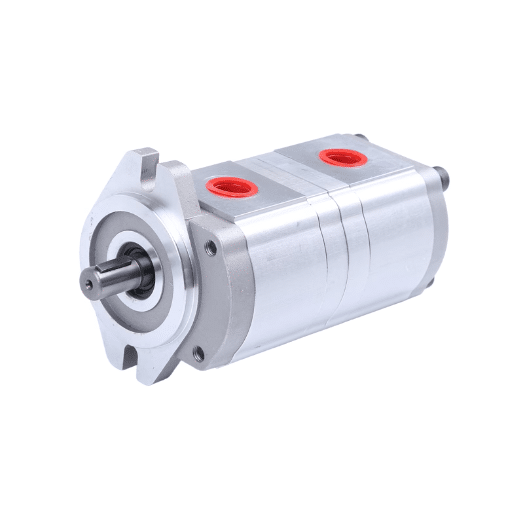
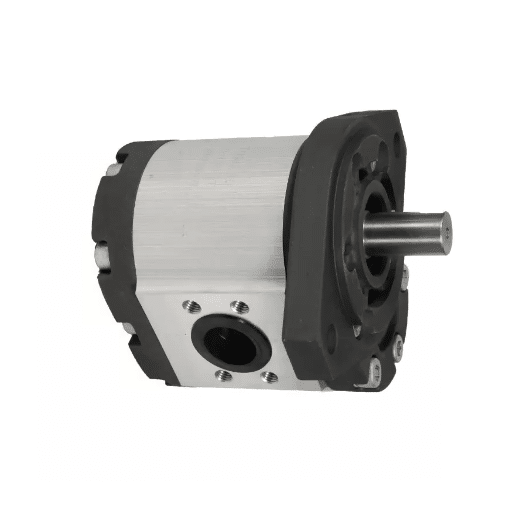
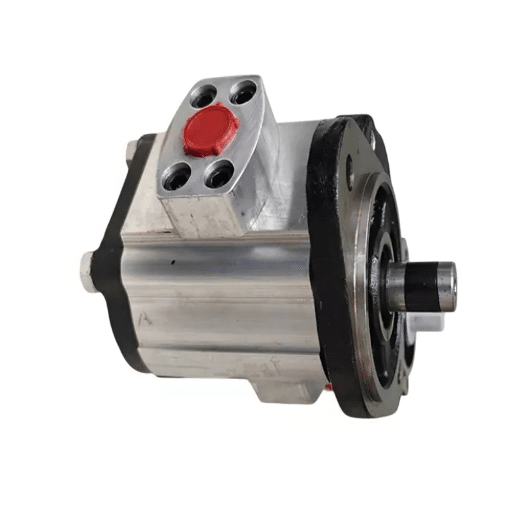
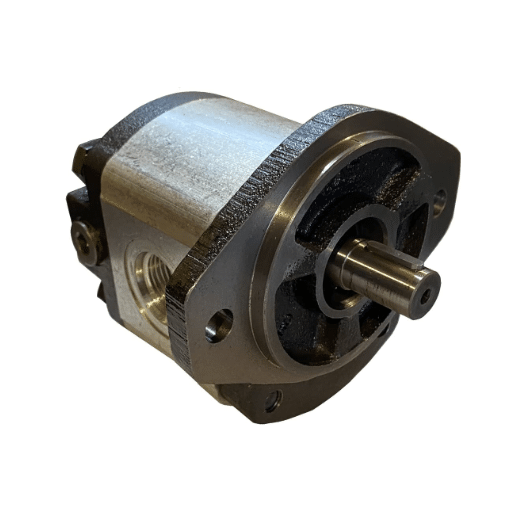
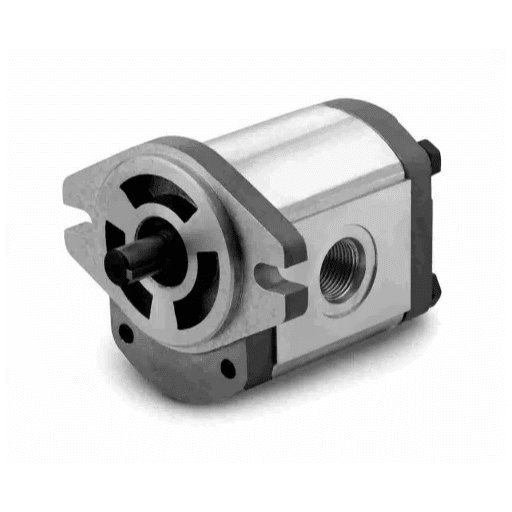
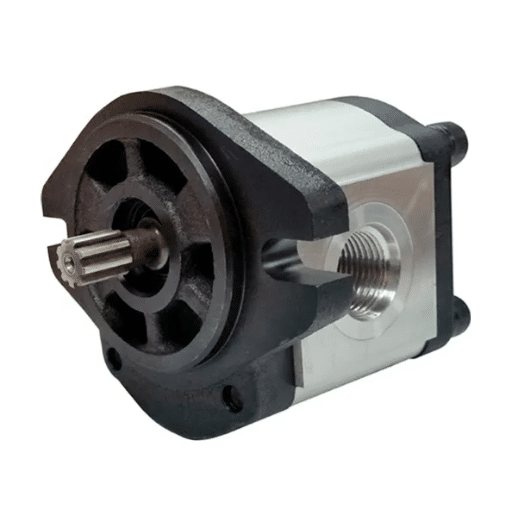
A hydraulic pump for dump trailer use is a self-contained 12V DC power unit that combines an electric motor, positive displacement pump, fluid reservoir, and directional control valve. It converts electrical energy from the trailer battery into hydraulic pressure that extends the lift cylinder and raises the trailer bed. These units are commonly called hydraulic power packs or dump trailer hydraulic power units because they integrate every element needed for the lift cycle into one assembly.
A 12 volt hydraulic pump dump trailer configuration is the standard for trailers under 14,000 pounds GVWR. The integrated design eliminates the need for a separate PTO, engine-driven pump, or external power source.
The motor spins the pump at roughly 2,500 to 2,850 RPM. The pump draws hydraulic fluid from the reservoir and pushes it through the control valve into the cylinder. When the operator releases the remote button, the valve blocks flow and the cylinder holds position. For gravity-down systems, a solenoid opens a return path. For power-down systems, the valve reverses flow direction. This integrated design matters because every component is sized for the others. A higher-flow pump with a small reservoir starves the inlet. A high-pressure pump with a weak motor stalls the windings.
For standard single-axle and tandem-axle dump trailers under 14,000 pounds GVWR, the 12V DC power unit is the practical standard. PTO-driven pumps attach to the tow vehicle transmission and deliver higher flow, but they require a compatible transmission and PTO unit. Gas engine power units are standalone options for remote job sites without vehicle electrical access.
For a deep dive into wet kit selection, see our dump truck wet kit configuration guide.
Single-Acting vs Double-Acting: Which Does Your Trailer Need
The first specification decision for a hydraulic pump for dump trailer use is the action type. Get this wrong and the trailer either will not lower properly or you will pay for complexity you do not need.
Single-Acting (Power Up / Gravity Down)
A single-acting pump delivers pressurized fluid to lift the bed. Lowering is controlled by gravity. The operator opens a solenoid valve and the weight of the bed pushes oil back to the reservoir.
Single-acting systems are simpler, less expensive, and easier to maintain. They have fewer hoses, fewer seals, and one less solenoid. They are the correct choice for standard front-mount telescopic cylinders where the trailer frame geometry ensures free descent. The limitation is control. Gravity descent slows in cold weather when oil viscosity rises. It is less predictable with sticky loads such as wet clay or hot asphalt. And it offers no powered retraction for scissor hoists or side-dump configurations.
Double-Acting (Power Up / Power Down)
A double-acting pump delivers pressurized fluid to both sides of the cylinder. It powers the lift and the descent. This gives faster, more controlled lowering. It handles sticky loads without hesitation. And it is required for scissor hoists and side-dump configurations where gravity alone cannot retract the cylinder.
The trade-off is cost and complexity. Double-acting pumps require additional hoses, a more complex valve, and typically draw more electrical current. For most standard dump trailers with front-mount cylinders, single-acting is the correct choice. For scissor hoists, roll-off containers, and trailers that must lower precisely, double-acting is necessary.
Single Acting vs Double Acting Dump Trailer Pump: Decision Matrix
| Trailer Configuration | Recommended Action | Reason |
|---|---|---|
| Standard front-mount telescopic | Single-acting | Gravity descent works with frame geometry |
| Scissor hoist / underbody | Double-acting | Requires powered retraction |
| Side-dump trailer | Double-acting | Gravity cannot retract horizontally |
| Roll-off container | Double-acting | Requires controlled powered lowering |
| Livestock / equipment trailer with hoist | Single-acting | Simplicity and lower cost |
| Trailer operating in cold climates | Double-acting | Compensates for high oil viscosity |
Need help selecting the right action type for your trailer? Contact our engineering team for a direct-fit compatibility check and specification sheet.
Dump Trailer Hydraulic Pump Sizing: Formulas and Tables

Sizing a hydraulic pump for dump trailer use requires matching four variables: cylinder bore, stroke length, target lift time, and reservoir volume. Most buyers skip this step and guess. The result is a pump that is either too weak to lift the rated load or too large for the electrical system.
Cylinder Displacement Calculation
First, calculate how much hydraulic fluid the cylinder requires per cycle. For a single-acting cylinder, use the formula:
Fluid Volume (gallons) = 0.0034 × Bore Diameter² (inches) × Stroke Length (inches)
Example: A 3-inch bore cylinder with a 24-inch stroke requires 0.0034 × 9 × 24 = 0.734 gallons per lift cycle.
For double-acting cylinders, the retraction side uses less fluid because the rod occupies space. The return volume is approximately 60 to 70 percent of the extension volume. Size the reservoir for the larger of the two volumes.
The Flow Formula: GPM Required for Target Lift Time
Next, determine the pump flow rate needed to achieve your target lift time. Use the formula:
Flow (GPM) = Cylinder Volume (gallons) ÷ Target Lift Time (minutes) × 1.2
The 1.2 multiplier accounts for system losses and ensures the pump does not run at maximum capacity continuously. Example: For a 0.734-gallon cylinder and a 30-second (0.5-minute) target lift time: 0.734 ÷ 0.5 × 1.2 = 1.76 GPM. A 2.0 GPM pump meets this requirement.
Reservoir Volume Sizing
The reservoir must hold enough fluid to fill the cylinder, allow for thermal expansion, and maintain sufficient fluid above the suction inlet. The sizing rule is:
Reservoir Capacity = 2.5× to 3× Cylinder Displacement (single-acting)
Reservoir Capacity = 4× Cylinder Displacement (double-acting)
Example: A single-acting cylinder requiring 0.734 gallons needs a reservoir of at least 1.84 to 2.2 gallons. A double-acting cylinder with the same bore needs 2.94 gallons minimum. Operating with a reservoir smaller than these values causes the pump to pull air, overheat, and cavitate.
Sizing Table by Trailer Capacity
| Trailer Capacity | Cylinder Bore | Stroke | Cylinder Volume | Required Flow (30 sec lift) | Min Reservoir (Single) | Motor Power |
|---|---|---|---|---|---|---|
| 5,000 – 7,000 lb | 2.5 in | 18 in | 0.38 gal | 0.9 GPM | 1.0 gal | 1.2 – 1.6 kW |
| 7,000 – 10,000 lb | 3.0 in | 24 in | 0.73 gal | 1.8 GPM | 1.8 gal | 1.6 – 2.0 kW |
| 10,000 – 12,000 lb | 3.5 in | 24 in | 1.00 gal | 2.4 GPM | 2.5 gal | 2.0 – 2.5 kW |
| 12,000 – 14,000 lb | 4.0 in | 30 in | 1.63 gal | 3.9 GPM | 4.1 gal | 2.5 – 3.0 kW |
| 14,000+ lb | 4.5 in | 36 in | 2.48 gal | 6.0 GPM | 6.2 gal | 3.0 – 4.0 kW |
Electrical Requirements and Wiring

Electrical failure is the second most common cause of dump trailer pump problems, after contamination. A dump trailer hydraulic power unit draws significant current, and undersized wiring is a fire hazard.
Battery Capacity and Amperage Draw
A 12V DC hydraulic pump draws 100 to 180 amps during operation, depending on motor size and load. A 1.6 kW motor at 12 volts draws approximately 133 amps. A 2.5 kW motor draws approximately 208 amps. Most pumps have a duty cycle of 2 to 3 minutes of continuous operation followed by a cooldown period. The battery must be able to deliver this current without dropping below 10.5 volts, at which point the motor stalls.
Minimum battery recommendations: 200 amp-hour deep-cycle battery for single-axle trailers; dual battery setup or 300+ amp-hour battery for tandem-axle trailers over 10,000 pounds. Standard automotive starting batteries are not designed for deep discharge and will fail prematurely when used for hydraulic pump duty.
Wire Gauge Selection by Pump Distance
Use the following table to select the wire gauge based on the amperage draw and distance from the battery to the pump.
| Amperage Draw | Distance 0-6 ft | Distance 6-12 ft | Distance 12-20 ft |
|---|---|---|---|
| 100 – 120A | 6 AWG | 4 AWG | 2 AWG |
| 120 – 150A | 4 AWG | 2 AWG | 1/0 AWG |
| 150 – 180A | 2 AWG | 1/0 AWG | 2/0 AWG |
| 180 – 250A | 1/0 AWG | 2/0 AWG | 3/0 AWG |
Always use copper wire, not aluminum. Aluminum has higher resistance and requires a larger gauge for the same current capacity. Use welding cable or fine-strand battery cable, not solid-core wire, for flexibility and vibration resistance.
Step-by-Step Wiring Procedure
- Mount the pump power unit securely to the trailer frame using vibration-dampening bushings.
- Run the positive wire directly from the battery positive terminal to the pump motor positive terminal through a circuit breaker or fuse rated at 150 to 200 percent of the motor’s rated amperage.
- Run the negative wire directly from the battery negative terminal to the pump motor negative terminal. Do not ground to the trailer frame.
- Install a dedicated ground bus if the trailer has multiple electrical accessories.
- Connect the remote control pendant to the solenoid terminals according to the manufacturer’s wiring diagram.
- Test the circuit with no load first. Verify the motor spins freely and the solenoid clicks.
- Load test by lifting a partial load and monitoring battery voltage. If the voltage drops below 11 volts under load, the battery or wiring is undersized.
Remote Control Installation
Most dump trailer hydraulic power units use a corded remote pendant with a 15 to 20 foot cable. Mount the remote plug in a weatherproof location protected from road spray. Some units offer wireless remotes. Wireless systems add convenience but require battery maintenance in the remote transmitter and are susceptible to interference on crowded job sites.
Installation and Mounting
Proper installation of a dump trailer hydraulic pump affects pump life as much as specification selection.
Pump and Reservoir Placement
Mount the power unit on the trailer frame rail or tongue with the reservoir upright. The suction inlet must remain submerged at all times, including when the trailer is tilted on uneven ground. Mount the unit below the cylinder inlet to allow gravity priming. Leave 2 inches of clearance around the motor for airflow and cooling.
Hose Routing and Protection
Route hydraulic hoses away from exhaust pipes, sharp edges, and moving suspension components. Use hose clamps at 18-inch intervals. Install hose sleeves or spiral wrap in areas where abrasion is likely. The hose between the pump and cylinder is the most common leak point. Use SAE 100R2 or 100R17 hose rated for at least 3,000 PSI working pressure.
Weight Distribution Considerations
A 12V hydraulic power unit with a 3-gallon reservoir weighs 35 to 50 pounds. Mounting it on the trailer tongue adds to tongue weight. For trailers already near the maximum tongue weight limit, consider mounting the unit on the main frame rail behind the coupler or on the trailer side rail.
Initial Fill and Bleeding Procedure
Fill the reservoir with clean ISO 46 or ISO 68 hydraulic oil to the midpoint of the sight glass. Cycle the pump in short bursts with no load. Check for leaks at all fittings. Add fluid as the system fills. For single-acting systems, gravity usually bleeds air automatically. For double-acting systems, crack the cylinder bleed fitting at the highest point and cycle the pump slowly until clear fluid flows with no bubbles.
For all-in-one pump and motor assemblies, see our dump truck hydraulic power unit guide.
Connecting Trailer Hydraulics to Dump Truck Systems
Fleet operators who run both dump trucks and dump trailers face a decision: use standalone 12V trailer pumps or connect trailer hydraulics to the truck’s PTO-driven system.
When to Use a Standalone Trailer Pump vs. a Truck PTO
Standalone 12V pumps are the right choice when trailers are towed by different vehicles, when the tow vehicle lacks a compatible PTO, or when the trailer must operate independently at the job site. Truck PTO connections make sense for dedicated fleet operations where the same truck always tows the same trailer and the truck has a properly sized PTO and pump.
A truck PTO-driven pump typically delivers 10 to 20 GPM at 2,500 PSI. A trailer cylinder requiring 2 GPM can run easily from the truck system. The connection requires quick-disconnect hydraulic couplers rated for the system pressure, a pressure relief valve set below the trailer cylinder’s maximum rating, and a flow control valve to prevent the trailer cylinder from moving too fast.
Quick-Connect Hydraulic Couplers
Use ISO 7241-A or ISO 7241-B quick couplers rated for at least 3,000 PSI. Match the coupler series on the truck and trailer. Mixing series prevents connection and can damage coupler seals. Install a dust cap on both halves when disconnected to prevent contamination.
Fleet Standardization Strategies
Brandon Chen ran a construction fleet in North Carolina with four dump trucks and six dump trailers. He standardized all trailers on 2.0 kW double-acting power units with identical bolt patterns, hose lengths, and remote controls. When a pump failed, any spare unit from the parts room fit any trailer. His parts inventory dropped from twelve different seal kits to two. Downtime per failure dropped from four hours to forty-five minutes. The standardization investment paid for itself in the first year through reduced parts costs and faster repairs.
For fleet operators mixing truck PTO and standalone trailer pumps, the key is maintaining hydraulic isolation. Never connect a 12V trailer pump into a running truck PTO system. The pressure differential can damage the 12V pump and create a safety hazard.
Hydraulic Pump for Dump Trailer Troubleshooting: Common Failures

The following table provides a quick diagnostic reference for the most common hydraulic pump failures in dump trailers. For a full diagnostic workflow, see our dump truck hydraulic pump troubleshooting guide.
| Symptom | Likely Cause | Field Test | Fix |
|---|---|---|---|
| Motor runs, bed won’t lift | Low fluid / air in system | Check sight glass, listen for cavitation | Fill and bleed system |
| Slow or weak lifting | Undersized pump or low battery | Check battery voltage under load, verify GPM rating | Upgrade pump or battery |
| Pump won’t run at all | Blown fuse / bad connection | Test voltage at pump terminals | Replace fuse, check ground |
| Fluid leaking from reservoir | Overfilled / cracked reservoir | Inspect for cracks, verify fill level | Repair or replace reservoir |
| Overheating / thermal shutdown | Excessive duty cycle / low fluid | Check duty cycle timer, inspect fluid level | Allow cooldown, add fluid |
| Bed drifts down when raised | Worn cylinder seals | Check for external leaks at cylinder | Replace cylinder seals |
| Pump makes grinding noise | Cavitation from low fluid | Check reservoir level, inspect suction strainer | Fill reservoir, clean strainer |
Cost Guide and Sourcing
Understanding the cost structure helps you evaluate whether to repair, replace, or upgrade a hydraulic pump for dump trailer use.
12V DC Power Unit Price Ranges
| Component | Aftermarket Price | OEM Price |
|---|---|---|
| 1.6 kW single-acting power unit | 280–450 | 500–750 |
| 2.0 kW single-acting power unit | 350–550 | 600–900 |
| 2.0 kW double-acting power unit | 400–650 | 700–1,000 |
| 2.5 kW double-acting power unit | 500–800 | 850–1,200 |
| Replacement pump motor only | 120–220 | 250–400 |
| Seal kit | 25–75 | 60–120 |
Complete Pump-and-Cylinder Kit Costs
A complete dump trailer hydraulic cylinder and pump kit, including the power unit, cylinder, hoses, and remote control, costs 600 to 1,400 for aftermarket kits and 1,200 to 2,500 for OEM kits. Aftermarket kits from established manufacturers such as KTI, Monarch, and Bucher offer acceptable quality for most applications. OEM kits from trailer manufacturers ensure an exact fit but command a premium.
Fleet Procurement Considerations
Fleet operators purchasing five or more units should negotiate volume pricing. Typical bulk discounts range from 10 to 20 percent for orders of five to ten units and 20 to 30 percent for orders above ten units. Standardizing on one or two pump models maximizes bulk discount leverage and minimizes spare parts inventory.
Frequently Asked Questions
What size hydraulic pump do I need for a dump trailer?
Match the pump flow rate to your cylinder displacement and target lift time. A 7,000-pound trailer with a 3-inch bore, 24-inch stroke cylinder needs approximately 1.8 GPM for a 30-second lift. Use the sizing table in this guide for quick reference.
How does a hydraulic pump work on a dump trailer?
A 12V DC motor spins a positive displacement pump that draws hydraulic fluid from a reservoir and pushes it through a control valve into the lift cylinder. Pressurized fluid extends the cylinder, raising the trailer bed. Releasing the remote button stops the flow and holds the cylinder position.
Why is my dump trailer pump not working?
Check the battery voltage first. A fully charged battery should read 12.6 volts or higher. Test the fuse and circuit breaker. Verify the ground connection is clean and tight. If the motor runs but the bed does not lift, check the fluid level and bleed the system.
How many amps does a dump trailer hydraulic pump draw?
A 1.6 kW pump draws approximately 133 amps. A 2.0 kW pump draws approximately 167 amps. A 2.5 kW pump draws approximately 208 amps. These are peak draws during loaded lifting. No-load current is approximately 40 to 60 percent of peak.
What size battery do I need for a dump trailer pump?
Use a 200 amp-hour deep-cycle battery minimum for single-axle trailers. Tandem-axle trailers over 10,000 pounds require 300 amp-hours or a dual battery setup. Standard automotive starting batteries are not suitable for hydraulic pump duty.
Conclusion
Selecting a hydraulic pump for dump trailer use requires treating the power unit as a system, not a collection of parts. The pump flow rate, cylinder displacement, reservoir volume, and electrical capacity are interdependent. Change one without adjusting the others and the system fails.
Start with the cylinder displacement calculation. Size the pump flow for your target lift time. Size the reservoir at 2.5 to 3 times the cylinder volume. Size the electrical system for the actual amperage draw with properly gauged copper wire and a deep-cycle battery. Choose single-acting for standard front-mount telescopic cylinders and double-acting for scissor hoists or side-dump configurations.
For fleet operators, standardization across the trailer fleet pays for itself through reduced parts inventory, faster repairs, and interchangeable spares. For mixed truck-and-trailer operations, understand when standalone 12V pumps are necessary and when truck PTO systems can power trailer hydraulics safely.
Need a hydraulic pump specification review or fleet standardization consultation? Contact LOYAL INDUSTRIAL for factory-direct hydraulic power units, compatibility verification, and technical support for your dump trailer fleet.