A Florida landscaping fleet lost $12,000 in a single day when one hydraulic pump failure cascaded into missed contracts. The root cause was visible in the fluid three weeks earlier. The technician who had serviced the truck noticed the oil had turned milky.
He topped it off and sent the driver back to work. No one checked for water ingress.
That story repeats daily in maintenance bays around the world. Research shows that 75% to 80% of all hydraulic system failures originate from fluid contamination — particulate, water, or air. Most of those failures are preventable with a structured diagnostic approach and a $15 filter change.
This guide delivers a field-proven 5-step diagnostic flowchart for dump truck hydraulic pump troubleshooting and dump truck hydraulic system troubleshooting. You will learn how to isolate pump failures from cylinder, valve, and PTO problems using quantified pressure tests, fluid condition decoding, and repair-vs-replace economics. Whether your dump truck hydraulic pump is not working at all or simply underperforming, the protocols in this article apply directly to your equipment.
Want to understand the full system before diagnosing it? Read our dump truck hydraulic pump complete system guide for component-level architecture.
What Is Dump Truck Hydraulic Pump Troubleshooting?

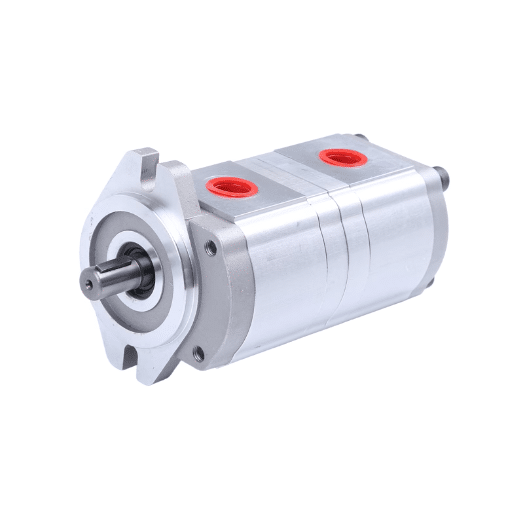
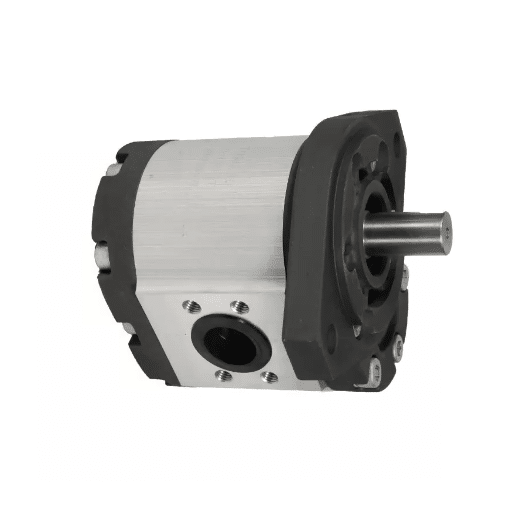
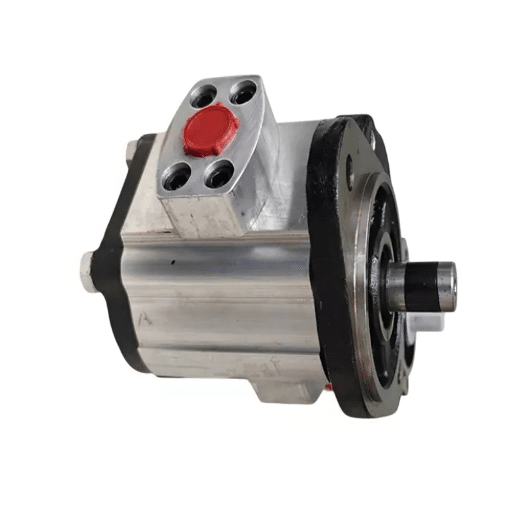
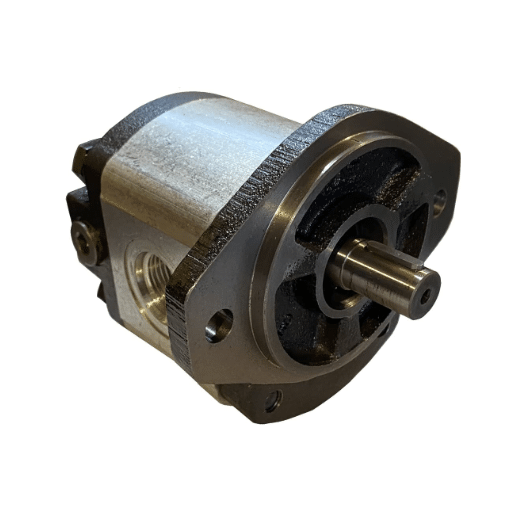
Dump truck hydraulic pump troubleshooting is the systematic process of identifying why a hydraulic pump fails to generate rated pressure or flow in a dump truck tipping system. It involves observing symptoms, isolating components, performing field tests with pressure gauges and vacuum meters, and matching findings to specific failure modes. Effective troubleshooting separates true pump wear from upstream causes like clogged filters, air ingestion, electrical faults, or valve malfunction.
Unlike general hydraulic system diagnosis, dump truck pump troubleshooting must account for two distinct system architectures. PTO-driven engine pumps face engagement, driveline, and contamination issues. Electric-over-hydraulic units suffer from battery, ground, and controller failures that mimic pump problems. A technician who understands both paths cuts diagnostic time from hours to minutes. For a complete fleet maintenance schedule, see our dump truck hydraulic system maintenance guide.
The 5-Step Diagnostic Flowchart
Every effective troubleshooting session follows the same sequence. Skipping steps leads to unnecessary pump replacements.
Step 1: Observe and Record
Document the exact symptom, the load condition when it occurred, the ambient temperature, and any recent maintenance. A bed that lifts slowly when empty but stalls under load tells a different story than one that is slow under all conditions. Photograph the fluid condition through the reservoir sight glass before touching anything.
Step 2: Check the Basics (Zero-Cost Checks)
These checks take less than five minutes and eliminate 40% of misdiagnoses.
- Fluid level: Check with the bed fully lowered and the system depressurized
- Fluid color and odor: Reference the decoder table in the Fluid Condition section below
- Filter restriction indicator: Many systems have a pop-up or differential gauge
- PTO engagement: Confirm the PTO switch light and listen for hydraulic loading
- Battery voltage (EOH systems): 12V systems need 11.5V minimum under load; 24V systems need 23V
Step 3: Isolate the Circuit
Use a pressure gauge to determine whether the pump, cylinder, or valve is the limiting factor.
- Pump output test: Install a gauge at the pump outlet port. Compare to the manufacturer’s spec.
- Cylinder drift test: Raise the bed, stop hydraulic input, and measure descent over 10 minutes.
- Valve test: Use the manual override and test the solenoid coil magnetism with a steel screwdriver.
Step 4: Quantify the Fault
| Measurement | Normal Range | Action Threshold |
|---|---|---|
| Pump outlet pressure | Per OEM spec (typically 1,800-2,500 PSI) | Below 70% of spec = internal wear |
| Pump inlet vacuum | 0-3 in. Hg | Above 5 in. Hg = cavitation risk |
| System temperature | 120-160 degrees Fahrenheit | Above 180 degrees Fahrenheit = thermal damage |
| Cylinder drift (10 min) | 0-2 inches | Above 4 inches = internal seal bypass |
| Battery under load (EOH) | 11.5V+ (12V) / 23V+ (24V) | Below 10.5V / 21V = electrical fault |
Step 5: Root Cause Confirmation
Match your quantified findings to the failure mode matrix in the symptom sections below. If contamination is the root cause, plan a complete system flush before installing any replacement pump. Installing a new pump into contaminated fluid destroys it within hours.
Symptom 1: Weak or Slow Lifting
Slow lifting is the most common complaint in dump truck hydraulic pump troubleshooting. The bed rises, but it takes twice as long as usual, or it stalls completely under a full load.
Likely Causes (Ranked by Probability)
- Clogged suction strainer: Starves the pump inlet, causing cavitation and reduced output
- Internal pump wear: Loss of volumetric efficiency; gears or pistons no longer seal properly
- Relief valve bypassing: Set too low or stuck partially open; pressure escapes to tank
- Internal cylinder leakage: Oil bypasses the piston seal, reducing effective force
- Air in system: Compressible air bubbles absorb pump output instead of transferring it to the cylinder
- Low fluid level: Insufficient oil to fill the cylinder and maintain pressure
Field Test: Pump Output vs Cylinder Leak Isolation
Install a pressure gauge at the pump outlet. Run the lift cycle with a rated load.
- If pressure reads within 15% of OEM spec but lift is still slow: the pump is not the problem. Perform a cylinder drift test.
- If pressure reads below 70% of OEM spec: internal pump wear is likely. Verify inlet conditions first.
- If pressure spikes to relief valve setting then drops: the relief valve is bypassing or incorrectly set.
Never raise the relief valve pressure setting to compensate for a weak pump. This overheats the system, blows hoses, and accelerates cylinder seal failure. For hands-on repair procedures after diagnosis, see our dump truck hydraulic pump repair guide.
A Midwest fleet technician named Diego encountered this exact scenario last winter. A 6-year-old dump truck was lifting slowly under a gravel load. The previous shop had quoted a $3,200 pump replacement. Diego installed a pressure gauge at the pump outlet. The reading was 2,100 PSI — within 5% of the 2,200 PSI spec.
He then performed a cylinder drift test. The bed dropped 6 inches in 10 minutes. The issue was internal dump truck hydraulic cylinder leakage, not pump wear. A $380 seal kit and two hours of labor solved the problem. The $15 pressure gauge saved the fleet nearly $3,000 and three days of downtime. For detailed cylinder selection criteria, see our dump truck hydraulic cylinder guide.
Symptom 2: No Pressure or Pump Won’t Build Pressure

When the dump truck hydraulic pump is not working — running but producing zero usable pressure — the fault is either upstream of the pump (no power reaching it) or catastrophic internal destruction.
PTO-Driven System Checks
- Verify PTO engagement procedure for the specific transmission. Some automated transmissions require neutral, foot brake, and a specific switch sequence.
- Check the PTO confirm switch or solenoid. A failed confirm switch prevents the hydraulic system from enabling even when the PTO is mechanically engaged.
- Listen for hydraulic loading at the PTO. No loading noise often means the pump shaft is sheared or the drive key is missing.
- Inspect the driveline and splines. Worn or misaligned cardan shafts disconnect pump rotation from PTO output.
Electric-Over-Hydraulic System Checks
- Battery voltage under load: A battery that reads 12.6V at rest may drop to 9V when the pump motor draws 150+ amps. Use a load tester.
- Ground cable condition: Corroded or loose ground cables are the leading cause of EOH pump failure. Remove, clean, and torque the ground connection.
- Inline fuse and relay: Check for blown fuses or corroded relay contacts.
- Motor brushes: If applying direct 12V/24V to the motor terminals does not spin the motor, the brushes are worn or the armature is damaged.
- Controller/remote fault: Test the manual override on the pump if equipped. If manual works but remote does not, the controller is suspect.
Field Test: Direct Power Test for EOH Motors
Disconnect the motor leads from the controller. Apply direct battery voltage with jumper cables (observe polarity). If the motor spins freely and draws rated current, the motor is good and the fault is electrical upstream. If the motor does not spin, the motor or pump is seized.
Symptom 3: Abnormal Noise — Cavitation and Aeration
Unusual noise is the hydraulic system’s early warning system. A technician who ignores a whining pump is ignoring a $2,000 replacement bill that could have been avoided with a $12 filter.
Cavitation: High-Pitched Whining or Screaming
Cavitation occurs when the inlet vacuum exceeds approximately 5 inches of mercury for gear pumps. Vapor bubbles form on the suction side and implode inside the pump at localized temperatures reaching 5,000 degrees Fahrenheit. The implosions pit gear teeth, score housing surfaces, and generate the characteristic high-pitched scream.
Immediate action required: Stop operating the moment you hear screaming. Every second of cavitation causes permanent damage.
Common causes of cavitation in dump truck pumps:
- Clogged suction strainer or reservoir breather
- Collapsed or kinked inlet hose
- Low fluid level uncovering the tank outlet
- Operating on a steep incline that shifts fluid away from the pickup
- Wrong fluid viscosity for the ambient temperature
Aeration: Knocking or Banging
Aeration is different from cavitation. Air enters the system through loose fittings, a compromised suction line, or excessive agitation in the reservoir. The fluid appears foamy with visible bubbles. Air is compressible, so the pump produces erratic pressure and the cylinder moves in jerks.
Field Test: Vacuum Gauge at Pump Inlet
Install a vacuum gauge tee’d into the pump inlet line. Run the system at normal operating RPM.
- 0-3 in. Hg: Normal
- 3-5 in. Hg: Marginal; inspect strainer and inlet hose
- Above 5 in. Hg: Critical cavitation risk; stop immediately
Symptom 4: Overheating
Hydraulic fluid that runs too hot thins out, loses lubricating film strength, and accelerates wear across every component. According to industry data, a pump running at or above 180 degrees Fahrenheit suffers accelerated seal hardening and bearing degradation.
Normal vs Dangerous Operating Temperatures
| Temperature Range | Condition | Action |
|---|---|---|
| 120-160 degrees Fahrenheit | Normal operating range | Monitor |
| 160-180 degrees Fahrenheit | Elevated; inspect the cooler and the relief valve | Investigate |
| Above 180 degrees Fahrenheit | Danger zone; thermal damage occurring | Stop and diagnose |
Root Causes of Overheating
- Relief valve stuck open: Constant bypassing of high-pressure oil to the tank generates massive heat. Check the relief valve setting and operation.
- Blocked oil cooler: External coolers clog with dust, debris, or insects. Clean the cooler fins monthly in dusty environments.
- Wrong viscosity: ISO VG 46 is standard for moderate climates. In tropical heat, VG 68 may be necessary. In extreme cold, VG 32 prevents startup drag.
- Continuous operation beyond duty cycle: Many dump truck pumps are rated for intermittent duty. Extended high-RPM operation overheats the fluid.
- Internal pump wear: A worn pump generates excess heat because mechanical efficiency drops and more energy converts to heat instead of hydraulic work.
Field Test: Infrared Temperature Scan
Use an infrared thermometer to measure temperature at these points:
- Pump case: hottest point indicates internal friction
- Reservoir: should be near ambient; much hotter indicates excessive bypass
- Oil cooler inlet vs outlet: minimal delta-T means the cooler is not working
Symptom 5: External and Internal Leaks

Leaks are not just messy. They are diagnostic indicators. Where the oil escapes tells you what is failing.
External Leak Locations and Causes
| Location | Likely Cause | Urgency |
|---|---|---|
| Pump shaft seal | Worn seal; misaligned shaft; excessive case pressure | High — seal replacement needed |
| Pump housing gasket | Loose bolts; gasket fatigue; overtorque | Medium — retorque or replace gasket |
| Hose fittings | Loose connections; cracked hose; wrong thread sealant | High — immediate tightening or replacement |
| Cylinder rod seal | Scored rod; contaminated fluid; worn seal | High — rod surface must be inspected |
| Valve block O-rings | Overpressure event; degraded elastomer | Medium — replace O-ring kit |
Internal Leaks: The Hidden Failure Mode
Internal leaks don’t leave puddles, but they cause the same performance loss as external ones.
- Cylinder piston seal bypass: The bed slowly drifts down after being raised. Perform a drift test: raise the bed fully, stop the pump, and measure descent over 10 minutes. More than 4 inches indicates internal leakage.
- Pump internal slip: The pump runs, but pressure drops under load with no external leak. A flow meter test confirms volumetric efficiency loss.
- Valve spool bypass: The system holds pressure at rest but cannot maintain it under load. The spool is not sealing properly in its bore.
Symptom 6: Bed Stuck Up or Won’t Lower
When the dump truck bed won’t stay up, hydraulic issues aren’t the only concern — a bed that rises but refuses to come down is equally disabling. The pump is typically not the problem. The fault lies in the control or return path.
- Down solenoid failure (EOH): Test coil magnetism with a steel screwdriver. No magnetic pull means the coil is open-circuit.
- Stuck spool valve: Debris or varnish locks the spool in the raised position. Use the manual override to free it.
- Broken control linkage: The cab lever or cable is disconnected from the valve spool.
- Faulty check valve or restrictor: The return line is blocked.
- Quick-coupler disconnect: Some systems use quick-connects that separate when the bed is raised.
For PTO-driven systems with pneumatic controls, check the air supply to the valve block. A failed limit valve or low air pressure prevents the spool from shifting to the lower position.
Fluid Condition Decoder
Fluid analysis is the fastest zero-cost diagnostic tool in your arsenal. The color, smell, and appearance of hydraulic oil tell you what is happening inside the system.
Fluid Appearance Diagnostic Matrix
| Appearance | Likely Cause | Required Action |
|---|---|---|
| Clear amber / light straw | Normal; recently changed | Continue monitoring |
| Dark brown / black | Oxidation from overheating; internal wear generating carbon | Change fluid; inspect pump internals for scoring |
| Metallic particles / glitter | Internal component breakdown (gear teeth, bearings, cylinder walls) | Immediate shutdown; filter system; inspect pump and cylinder |
| Milky / cloudy | Water contamination from condensation, cracked reservoir, or pressure washer ingress | Find and seal ingress point; change fluid; inspect all seals |
| Foamy with visible bubbles | Air ingestion through suction leaks or low fluid level | Check suction line fittings; verify fluid level; inspect reservoir breather |
| Thick / gelatinous | Mixed fluid types; severe oxidation polymerization | Complete system flush; identify and remove wrong fluid source |
ISO 4406 Cleanliness for Dump Truck Gear Pumps
ISO 4406:1999 quantifies particulate contamination using a three-number code representing particle counts per milliliter at 4, 6, and 14 microns. Maintaining target cleanliness extends component life by 200% to 300%.
- Target for gear pumps: 18/16/13
- Filter rating: 25 micron nominal for systems under 200 bar; 10 micron absolute above 200 bar
- New oil misconception: Fluid straight from the manufacturer’s drum often arrives at 21/19/16 or worse. Filter new oil through a 10-micron filter before filling the system.
Electric-Over-Hydraulic vs PTO: Different Diagnostic Paths
Dump truck hydraulic pump troubleshooting diverges significantly depending on whether the system is engine-driven or electrically powered.
EOH-Specific Failure Modes
Electric-over-hydraulic units add an electrical layer that PTO systems don’t have. When an EOH pump fails to operate, rule out electricity before condemning the hydraulic side.
- Battery voltage sag: A weak battery reads normal at rest, but collapses under the 150-300 amp motor load. Use a carbon pile load tester, not just a multimeter.
- Ground path resistance: Corrosion between the ground cable and the frame creates a voltage drop. Clean to bare metal and apply dielectric grease.
- Fuse fatigue: Blade fuses develop micro-cracks that open under vibration. Replace with marine-grade or circuit breaker protection.
- Controller logic faults: Remote units with RF or Bluetooth controllers can lose pairing. Test the manual override on the pump before replacing components.
- Motor brush wear: Brushes wear down over 500-1,000 hours of operation. Disassemble the motor cap and measure brush length against the minimum spec stamped on the brush.
PTO-Specific Failure Modes
- Engagement sequence: Automated transmissions require precise sequences. A driver who skips a step appears to have a pump failure.
- Air pressure (pneumatic PTOs): Verify 80-120 PSI at the PTO solenoid. Low shop air pressure prevents engagement.
- Driveline alignment: Misaligned cardan shafts cause spline wear and pump shaft seal leakage.
- Pump overspeed: The PTO ratio must match the pump’s maximum RPM. A PTO that drives the pump at 3,500 RPM when it is rated for 2,500 RPM causes cavitation and bearing failure.
Need help selecting the right PTO pump for your transmission? Our dump truck PTO hydraulic pump installation guide covers ratio matching and mounting procedures.
Dump Truck Hydraulic Pump Repair vs Replace: The Economic Decision

Technicians often replace pumps that could be repaired and repair pumps that should be replaced. A simple cost framework eliminates the guesswork in any dump truck hydraulic pump repair decision.
Cost Benchmark Matrix
| Failure Scenario | Repair Cost | Replacement Cost | Recommendation |
|---|---|---|---|
| External seal or hose leak | $150-500 | — | Repair |
| Early cavitation with minimal pitting | $300-800 | — | Repair + fix root cause |
| Internal wear (pressure below 70% spec) | $800-2,500 rebuild | $2,000-3,500 new | Evaluate pump age and hours |
| Complete seizure or fractured gears | — | $2,500-4,500 | Replace |
| Second failure within 12 months | — | Replace + system flush | Replace + investigate contamination source |
The 50% Rule
Industry convention states that if estimated repair costs exceed 50% of a new aftermarket pump, replacement is the better investment. This rule assumes the new pump carries a warranty and the root cause has been fixed.
Fleet-Scale Economics
The true cost of a pump failure extends far beyond the repair invoice. Element Fleet Management data places commercial vehicle downtime at 448 to 760 per day. Emergency repairs cost 2 to 5 times more than scheduled maintenance. A proactive monitoring program delivers a 5x to 8x return on investment.
A 12-truck commercial landscaping fleet implemented 90-day hydraulic inspections and fluid sampling. Breakdowns dropped 54% — from 4.6 per month to 2.1 per month. Average repair cost per incident fell 60%. Scheduled pump replacements averaged $400 versus $1,200-plus for emergency repairs plus a lost workday.
Field Tool Kit for Hydraulic Diagnosis
A technician equipped with the right tools diagnoses faster and avoids callbacks.
| Tool | Purpose | Specification |
|---|---|---|
| Pressure gauge | Measure pump output and system pressure | 0-5,000 PSI, glycerin-filled, 1/4-inch NPT |
| Flow meter | Confirm pump volumetric efficiency | Inline turbine or gear type, rated for system GPM |
| Vacuum gauge | Detect inlet restriction and cavitation risk | 0-30 in. Hg, installed at pump inlet |
| Infrared thermometer | Identify overheating components | Non-contact, laser-guided |
| Multimeter | Test EOH electrical systems | DC voltage, resistance, amp clamp |
| Steel screwdriver | Test solenoid coil magnetism | Standard flat-head |
| Clean sample bottles | Collect fluid for visual analysis and lab testing | Amber glass or HDPE, 4-ounce |
| Flashlight and inspection mirror | Visual inspection of hoses, fittings, and hidden leaks | LED, extendable mirror |
Frequently Asked Questions
Why is my dump truck hydraulic pump whining?
A high-pitched whine almost always indicates cavitation. Check the suction strainer, inlet hose condition, fluid level, and reservoir breather. Use a vacuum gauge at the pump inlet. Readings above 5 in. Hg confirm inlet restriction. Stop the operation immediately to prevent permanent pump damage.
What should the dump truck hydraulic pump pressure be?
Most dump truck gear pumps operate at 1,800 to 2,500 PSI, depending on the system design and cylinder bore. Check the equipment nameplate or operator manual for the exact specification. Pressure should read within 15% of the rated value at normal engine RPM with a rated load.
How do I know if my hydraulic pump or cylinder is bad?
Install a pressure gauge at the pump outlet. If pressure is within spec but lift is still weak, the cylinder has internal leakage. Perform a drift test: raise the bed, stop the pump, and measure descent. More than 4 inches in 10 minutes indicates a failed piston seal.
Why does my dump truck bed slowly lower after lifting?
Slow drift after lifting indicates an internal cylinder leak or a faulty check valve. The piston seal is allowing oil to bypass from the rod side to the base side. Less commonly, a worn check valve in the control valve block fails to hold pressure.
Can I drive my dump truck with a leaking hydraulic pump?
You can drive to a service facility if the leak is minor and the pump still builds pressure. Never operate the dump cycle with a known leak. A sudden loss of pressure can cause the bed to drop unexpectedly. Carry absorbent material to comply with environmental regulations.
Conclusion
Dump truck hydraulic pump troubleshooting is not guesswork. It is a structured process that starts with observation, verifies the basics, isolates the component, quantifies the fault, and confirms the root cause before any wrench turns.
The data is clear: 75% to 80% of pump failures originate from contaminated fluid. A technician who checks the reservoir sight glass before touching a fitting, who installs a $30 pressure gauge before quoting a $3,000 pump, and who understands the difference between cavitation and aeration will diagnose faster and spend less.
The economic case is equally clear. A $15 filter change prevents a $3,500 replacement. A 90-day inspection program cuts breakdowns by more than half. Fleet managers who treat hydraulic fluid cleanliness as a maintenance priority — not an afterthought — eliminate the single largest source of pump failure.
Need replacement pumps or technical support for your fleet? Contact LOYAL INDUSTRIAL PTE. LTD. for OEM-compatible hydraulic pumps, seal kits, and application-specific troubleshooting guidance. Our engineering team supports PTO-driven and electric-over-hydraulic systems for dump trucks, trailers, and vocational equipment worldwide.