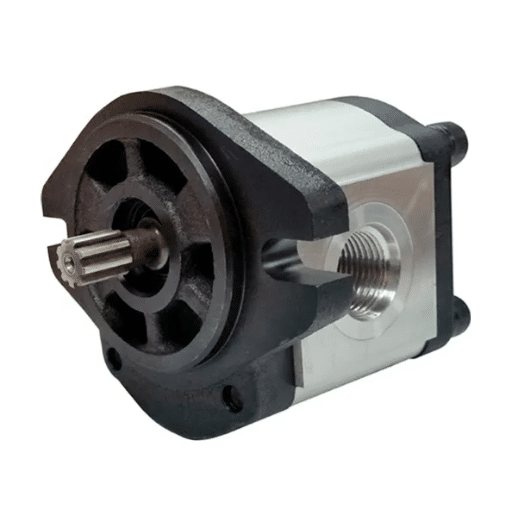
Ravi stared at three separate work orders for the same excavator. The operator reported a high-pitched whine. The infrared gun showed the pump housing 22 degrees hotter than the reservoir. And the boom now crept under load where it used to snap. Three symptoms, one pump, and a maintenance budget that could not survive a wrong guess. His first instinct was to condemn the unit and order a rebuild. His second was to spend thirty minutes with a grease tube and a pressure gauge.
That second instinct is the whole point of axial piston pump troubleshooting, and it saved him roughly $3,000. The whine was aeration from a weeping shaft seal, not internal wear. The heat and the slow boom were the same starvation fault working its way downstream. Ravi fixed a $40 seal and bled the system instead of rebuilding a healthy pump.
This is the reality of axial piston pump troubleshooting. These pumps rarely fail without warning, and each failure mode announces itself through a symptom you can read if you know where to look. The axial piston pump is a precise, high-pressure machine, but its faults are predictable. Most trace back to contamination, fluid starvation, or wear, and most can be isolated in the field before you commit to a teardown.
This guide gives you a start-here diagnostic sequence, symptom-to-cause tables with real pass/fail thresholds, the field tests that separate look-alike faults, and clear rules for when to repair and when to replace. Read the symptom, run the sequence, and let the pump tell you what is wrong. Want to learn more about the axial piston hydraulic pump? Please check out our axial piston hydraulic pump complete guide.
Chasing a fault you cannot pin down? Contact us for a specification review before you order parts you may not need.
Start Here: A 5-Step Diagnostic Sequence

The most expensive troubleshooting mistakes come from skipping steps. Work in this order, and you will find most faults by step four.
Safety first. Lock out and tag out the machine, and relieve all stored hydraulic pressure before loosening a single fitting. A pinhole leak in a pressurized line can inject oil through the skin. Treat every circuit as live until you have proven it is not.
- Check oil level and condition. Low, foamy, dark, or burnt-smelling oil points to starvation, aeration, or overheating. Look for metallic glitter on the reservoir magnet or in the filter.
- Listen before you touch. Characterize the sound. Gravel, whine, clatter, drone, and hiss each point to a different fault, and you lose this evidence the moment you disturb the machine.
- Gauge the pressures. Read the pump outlet pressure, then compare the compensator and relief settings. A healthy system holds a stable differential; a chattering or drifting one does not.
- Measure case drain flow. This is the single best window into internal wear. Note both the volume and whether the stream carries bubbles.
- Compare temperatures. A housing that runs far hotter than the reservoir signals internal leakage past worn clearances.
By the end of step four, you will usually know whether you are dealing with a supply problem, a control problem, or a worn pump. Only then should you open anything.
Cavitation vs Aeration: What’s the Difference?
These two starvation faults produce similar sounds and get confused, yet they have different causes and different fixes. Cavitation is the oil itself vaporizing under suction-side vacuum. Aeration is outside air being drawn into the oil. Mistaking one for the other leads to wasted work, so separate them early. Recognizing hydraulic pump cavitation symptoms early, especially the telltale gravel rattle, keeps a supply problem from turning into a wear problem.
| Factor | Cavitation | Aeration |
|---|---|---|
| What happens | Oil vapor bubbles form and collapse | Free air is sucked into the oil |
| Sound | Gravel or marbles rattling | High-pitched whine or whistle |
| Typical cause | Clogged suction filter, cold viscous oil, small suction line | Leaky shaft seal, loose suction fittings, low reservoir level |
| Grease Test result | No change | Noise drops when seal or joint is greased |
| Case drain bubbles | Not typical | Bubbles visible in the drain stream |
| Fix | Restore inlet supply and oil viscosity | Find and seal the air leak |
Two field tests settle the question fast. The Grease Test targets aeration: with the pump running, smear grease around the shaft seal and each suction joint. If the whine drops, you have found your air leak. The case drain bubble check targets starvation of either kind. Bosch Rexroth’s commissioning procedure is explicit on this point: if the unit grows louder or the drain fluid carries bubbles, the pump is not being supplied with enough fluid.
When the noise matches engine speed exactly, confirm it with the piston pass frequency, f = (n × z)/60, where n is RPM, and z is the number of pistons. A tone at that frequency points to a mechanical or starvation cause inside the pump, not a loose panel or a resonating hose.
Some Symptom-to-Cause Troubleshooting Tables

Most axial piston pump failure symptoms fall into five families. Find the row that matches what you see and hear, then run the first check before you commit to a repair.
Why Is the Pump Noisy?
Axial piston pump noise is the most common complaint, and the character of the sound is your best first clue. Match it before you reach for a tool.
| Sound | Likely Cause | First Check |
|---|---|---|
| Gravel or marbles | Cavitation | Suction filter, inlet vacuum (under 0.8 bar abs), oil viscosity |
| High-pitched whine | Aeration | Grease Test on seal and fittings, reservoir level, case drain bubbles |
| Rhythmic clatter (RPM-matched) | Internal wear | Case drain flow against spec |
| Low drone or hum | Misalignment | Shaft runout (under 0.05 mm), soft foot |
| Honking or hissing | Relief chatter or resonance | Compensator-to-relief gap (about 20 bar) |
A worn set of slippers or a scored valve plate produces the rhythmic clatter. That sound means the internal clearances have opened up, and the case drain test in the next section will confirm it.
Why Is the Pump Losing Pressure?
Pressure loss under load is the second most common symptom, and it splits cleanly between supply faults and wear.
| Symptom Clue | Likely Cause | Field Fix |
|---|---|---|
| No pressure, pump turns | Air in system, low oil, suction leak | Bleed, top off, tighten suction fittings |
| Pressure rises, then drops | Relief valve stuck open or worn valve plate | Clean and adjust relief; run case drain test |
| Low only under load | Internal leakage from a worn block or plate | Case drain flow; plan rebuild or replace |
| Fine cold, weak when hot | Internal slippage from wear | Check volumetric efficiency; replace |
Why Is Your Axial Piston Pump Overheating?
Axial piston pump overheating is usually a symptom of something else, most often internal leakage or a valve stuck in bypass. The temperature is the alarm, not the fault.
| Symptom Clue | Likely Cause | Field Fix |
|---|---|---|
| Housing much hotter than the reservoir | Internal leakage past clearances | Case drain flow; plan rebuild |
| Hot within minutes | Continuous relief or compensator bypass | Check the settings gap and inspect for a stuck valve |
| Hot under load only | Undersized cooler or degraded oil | Service cooler, sample oil, verify viscosity |
| Hot plus foamy oil | Aeration or cavitation | Fix suction supply, clean strainer |
Treat sustained operation above 80 °C (176 °F) as a hard limit. Past that point, seals harden, and oil oxidizes rapidly, which turns one fault into several. If the cooler and settings check out, the heat is almost certainly energy being lost across worn internal surfaces.
Why Is the Pump Running Slow?
Slow actuators across every function point to low flow. Slowness in only one direction or one function usually points away from the pump.
| Symptom Clue | Likely Cause | Field Fix |
|---|---|---|
| Slow in all functions | Low flow from wear or a destroked compensator | Flow test: check compensator |
| Slow only when hot | Internal leakage | Volumetric efficiency test |
| Weak and slow in one direction | Cylinder seal or control valve, not the pump | Isolate the cylinder and valve first |
Why Is the Pump Leaking Externally?
External leaks are the one fault you can see, but the location still tells a story.
| Leak Location | Likely Cause | Field Fix |
|---|---|---|
| Drive shaft | Worn shaft seal or misalignment | Check alignment first, then fit a seal kit |
| End cover or flange | Aged O-rings or overpressure | Replace seals, verify the relief setting |
| Case drain line overflow | Normal leakage versus excess wear | Measure against the OEM spec |
A shaft seal that fails repeatedly is rarely bad. It is usually a misaligned coupling or a soft foot loading the front bearing. Correct the alignment, or the new seal will fail the same way. For a closer look at the axial piston pump internal components, see our guide to axial piston pump parts.
How Do You Test Case Drain Flow?

The case drain flow test measures the internal leakage that escapes past the pump’s clearances and exits through the drain port. Every axial piston pump leaks a small, designed amount to lubricate and cool itself. When the internal surfaces wear, that leakage climbs, so a rising case drain flow is the most direct sign of internal wear you can read without opening the unit.
To run it, route the case drain line through a flow meter or into a timed container, while holding the pump at its rated pressure. Compare the reading to the manufacturer’s specification. As a field rule, flow materially above spec, often beyond roughly 10% of rated flow, signals significant internal wear and a pump that is living on borrowed time. Watch the stream as well: bubbles in the drain fluid confirm the starvation or aeration faults covered earlier.
This test is also the backbone of a good preventive program. Trending case drain flow over time catches wear months before a failure, which is exactly the monitoring discipline covered in our axial piston pump maintenance guide.
Tomas, a fleet technician in Rotterdam, nearly condemned a 90 cc pump on noise alone. The rhythmic clatter sounded like worn slippers. He ran the case drain test before signing the rebuild order, and the flow sat comfortably inside spec. The real fault turned out to be a sticky compensator that was over-stroking the pump. A cleaned valve and a fresh setting put the machine back to work, and the “worn” pump is still running two years later. That is the money this one test saves.
What Do the Pressure and Temperature Benchmarks Tell You?
Keep these thresholds handy. They turn vague symptoms into pass/fail decisions.
| Checkpoint | Healthy Target | What a Miss Means |
|---|---|---|
| Inlet vacuum | Under 0.8 bar absolute | Starvation, clogged suction, or cold thick oil |
| Compensator-to-relief gap | About 20 bar | Settings too close cause chatter and heat |
| Shaft runout | Under 0.05 mm | Misalignment loading the front bearing and seal |
| Sustained temperature | Under 80 °C (176 °F) | Seal and oil damage accelerate past this |
| Case drain flow | Within OEM spec | Excess flow signals internal wear |
| Oil cleanliness | ISO 4406 18/16/13 or better | Contamination accelerates every wear mode |
Cleanliness deserves emphasis because it sits behind so many of these faults. An estimated 70 to 80% of hydraulic failures trace back to contaminated oil. Holding the ISO 4406 cleanliness code at or below target is the cheapest insurance against nearly every row in the tables above.
Which Component Has Actually Failed?
Once the symptoms point to the pump, the failed component determines the repair. Each wear mode has a signature.
Worn valve plate or cylinder block. Pressure loss, excess heat, and high case drain flow together almost always mean the block-to-plate interface has worn. This is the classic high-hour failure.
Worn piston shoes or slippers. A rhythmic, RPM-matched clatter plus metallic debris in the filter points here. Slippers lose their clearance first in dirty oil.
Failed shaft seal. An external leak at the drive shaft, often with aeration whine. Confirm the alignment before blaming the seal itself.
Stuck compensator or load-sense valve. Slow or weak response that a flow and pressure test isolates from the pump body. This one is frequently misdiagnosed as a worn pump.
Should You Repair or Replace the Pump?

The decision comes down to where the wear is, what the oil history looks like, and simple economics.
Repair when the fault is external or localized: a shaft seal leak with otherwise healthy pressure and flow, a sticky compensator, or a relief valve that needs cleaning. If the oil history is clean and the pump is early in its service life, a seal or valve kit is the right call.
Replace or rebuild when internal wear is the cause. A scored block or valve plate, pressure that collapses as the oil warms, or case drain flow well beyond spec all point to a full rebuild or a new unit. Apply the 50 to 65% rule: if the repair cost climbs past roughly half to two-thirds of a new pump, replacement is usually the better value once you factor in downtime and warranty.
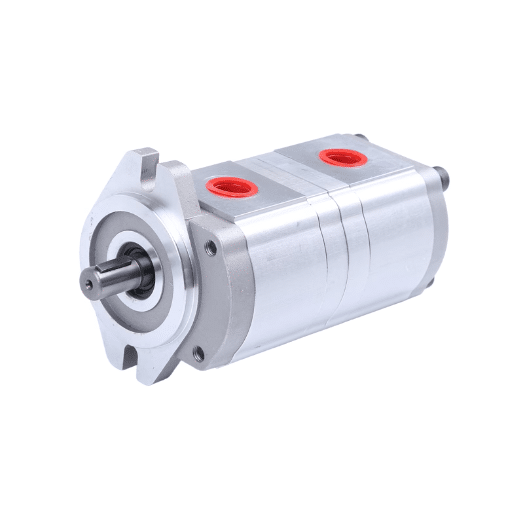
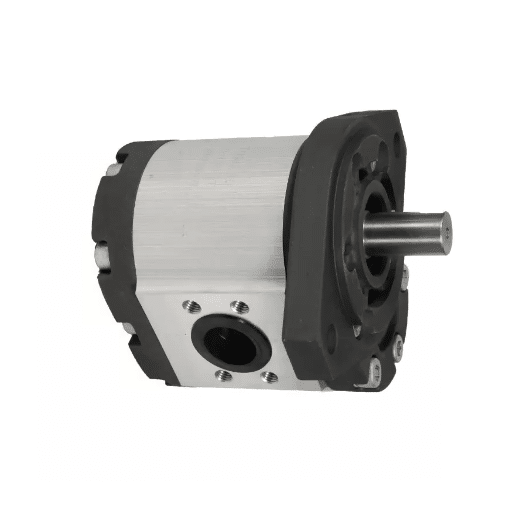
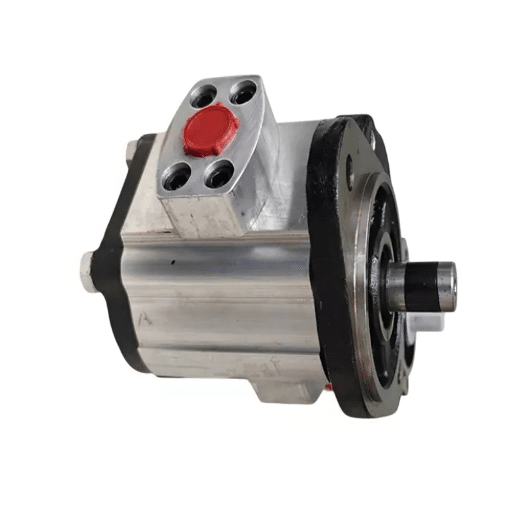
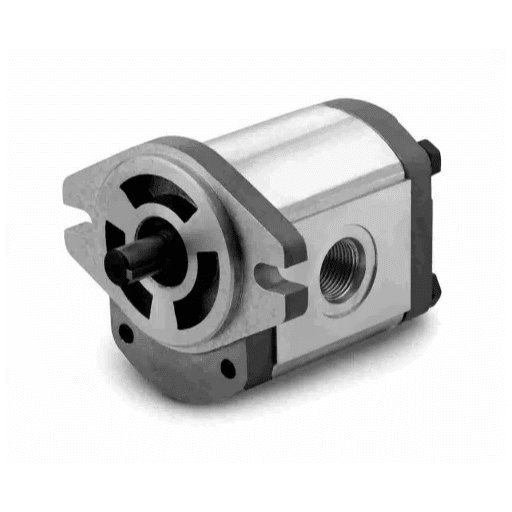
The rebuild-versus-replace cost breakdown in our axial piston pump maintenance guide walks through model-level numbers. When replacement is the answer, our replacement axial piston pumps cover the common Rexroth, Parker, and Kawasaki series with tested, ready-to-install units.
Frequently Asked Questions
Why is my axial piston pump noisy?
Match the sound first. Gravel or marbles means cavitation, a high-pitched whine means aeration, a rhythmic clatter means internal wear, a low drone means misalignment, and hissing points to relief chatter. Each has a different first check.
What does hydraulic pump cavitation sound like?
Cavitation sounds like gravel or marbles rattling inside the pump. It happens when the oil vaporizes under suction vacuum, usually from a clogged suction filter, cold thick oil, or an undersized suction line. Check inlet vacuum and oil condition first.
What is the difference between cavitation and aeration?
Cavitation is the oil itself vaporizing under a vacuum. Aeration is outside air being sucked into the oil through a leak. Use the Grease Test to tell them apart: grease the seal and suction joints, and if the noise drops, the fault is aeration.
How do I test the case drain flow on a piston pump?
Route the case drain line through a flow meter or into a timed container at rated pressure, then compare the reading to the OEM spec. Flow well above spec, often beyond about 10% of rated flow, signals internal wear. Bubbles in the stream indicate starvation or aeration.
Why is my axial piston pump overheating?
Overheating is usually a symptom, not the root fault. A housing far hotter than the reservoir indicates internal leakage, while rapid heat often means a valve stuck in bypass. Treat anything sustained above 80 °C (176 °F) as a hard limit.
Why is my axial piston pump losing pressure under load?
Pressure that falls only under load usually means internal leakage across a worn cylinder block or valve plate. Pressure that rises then drops often means a relief valve stuck open. A case drain flow test separates the two.
How do you know if an axial piston pump is bad?
Combine three signs: a rhythmic RPM-matched clatter, case drain flow above spec, and pressure that fades as the oil warms. Any one is a warning; all three together confirm internal wear that needs a rebuild or replacement.
Can an axial piston pump be rebuilt?
Yes, if the housing and core are sound. Seal and valve kits fix external and control faults cheaply, while worn blocks, plates, and slippers can be replaced during a rebuild. If the repair cost exceeds roughly half to two-thirds of a new pump, replacement is usually the better value.
Conclusion
Effective axial piston pump troubleshooting is not guesswork. It is a sequence: secure the machine, read the oil, listen to the sound, gauge the pressures, and trust the case drain test. Most faults announce themselves through a symptom you can decode, and most trace back to contamination, starvation, or wear caught late.
Keep three habits. Separate cavitation from aeration before you fix the wrong one. Let the case drain flow, not the noise, decide whether a pump is truly worn. And hold your oil cleanliness on target, because it prevents the majority of these faults in the first place.
When the diagnosis points to a worn core or a hard-to-source part, LOYAL INDUSTRIAL PTE. LTD. supplies tested replacement pumps and genuine wear components matched to your system. Request a specification review, and we will help you confirm the fault and the right fix before you spend on parts.