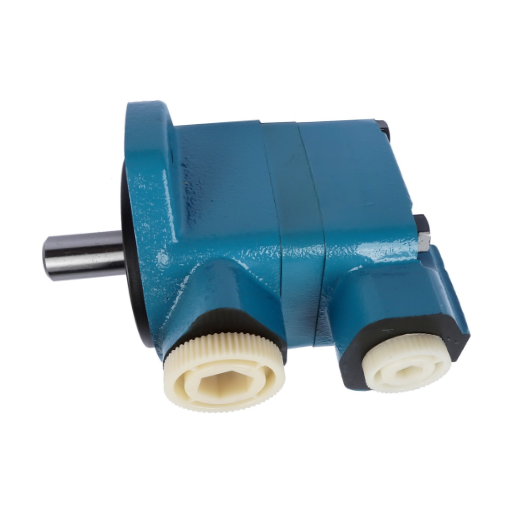
Ask three engineers to name the types of plunger pumps, and you will get three different answers. One sorts them by cylinder count, one by drive, and one by single- or double-acting design. All three are correct, because a plunger pump is classified along several independent axes at the same time.
That ambiguity causes real procurement errors. Buyers compare a “duplex” pump against a “triplex” as if the words measured output, or assume every plunger pump is double-acting because a piston pump can be. A mismatch then shows up as unexpected pulsation, a wrong spare-parts order, or an under-sized drive.
This guide resolves that. It covers the types of plunger pumps along five clean axes: action, cylinder count, drive, valve design, and pressure and service level, with a pulse-amplitude table you can compare configuration for configuration. By the end, you will be able to describe any process plunger pump precisely and select the type that fits your duty.
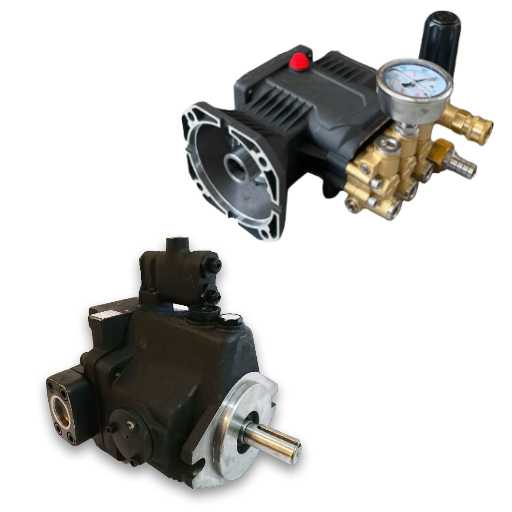
Terminology note: this article covers the process plunger pump used for water, chemicals, and extreme-pressure fluid transfer. The colloquial “hydraulic plunger pump” (a piston-type pump moving oil in a closed circuit) is a different family, covered alongside hydraulic axial piston pumps.
If you want the full definition and mechanism first, the plunger pump complete guide is the best starting point.
What Are the Types of Plunger Pumps?
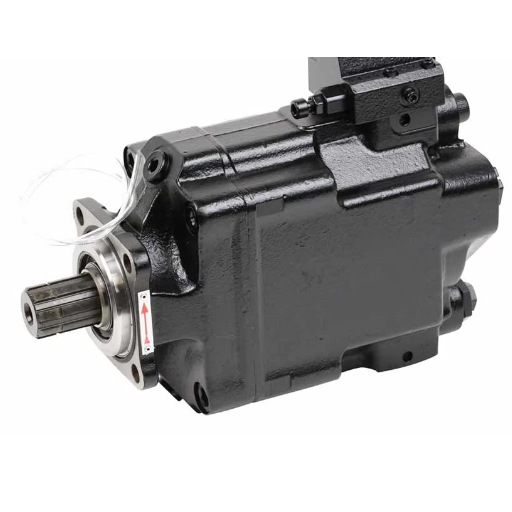
Plunger pump types are classified along five independent axes: single- or double-acting design; cylinder count (simplex, duplex, triplex, quintuplex, or multiplex); drive method (motor, engine, belt, gear, air, or hydraulic); valve design (valved or valveless); and pressure and service level (low to extreme pressure).
No single axis defines a pump on its own. A real unit is a combination, for example, “single-acting, triplex, belt-driven, valved, high-pressure.” Read the five axes the way you read a specification string, and a confusing data sheet becomes straightforward.
- Action: how many discharge strokes per cycle
- Cylinder count: how many plungers share the crankshaft
- Drive: how rotary or fluid power reaches the plunger
- Valve design: how flow is admitted and discharged
- Pressure/service level: what the pump is built and rated for
This article takes each axis in turn and ends with a selection method that ties them together.
By Action: Single-Acting vs Double-Acting Plunger Pumps
The first and most misunderstood axis is action. It describes how often each plunger produces flow, not how many plungers the pump has.
Single-Acting: The Default for Plunger Pumps
A single-acting pump takes suction on one half of the crankshaft revolution and discharges on the other. Each cycle displaces one volume of fluid, so there is one discharge pulse per plunger per revolution.
Almost every process plunger pump is single-acting, and that is not an accident. The stationary seal design at the heart of a plunger pump keeps the fluid end simple and the pressure ceiling high, which is why high-pressure units are built as single-acting triplex machines. Single-acting pumps also usually carry an odd number of plungers, three, five, or seven, because an odd count balances rotation and smooths discharge.
Double-Acting, and the Terminology Trap
A double-acting pump discharges on both the forward and return strokes, giving two power strokes per cycle. This is mostly a piston-pump architecture, where the piston seals against a bore and can push fluid from either face.
Here is the trap: “double-acting” is the action axis, and it is not the same as cylinder count. A pump is not “double-acting because it has two plungers.” It is double-acting because it discharges twice per cycle. Some reference sources describe double-acting plunger arrangements, but for process plunger pumps, treat double-acting as the exception, not the rule. The plunger pump vs piston pump comparison explains why the piston’s moving seal suits double-acting geometry while the plunger’s stationary seal does not.
Mini-story: the naming error. Marcus, a maintenance engineer at a food-processing plant, ordered a replacement “duplex” pump expecting roughly double the flow of his old triplex. It delivered far less. The names describe plunger count, not output: a duplex has two plungers, a triplex has three, and for the same plunger size and speed the triplex moves more fluid. Marcus re-qualified the duty with a simple flow check and swapped to the correct triplex. The lesson cost him one stalled production day, not a redesign.
By Cylinder Count: Simplex, Duplex, Triplex, Quintuplex & Multiplex
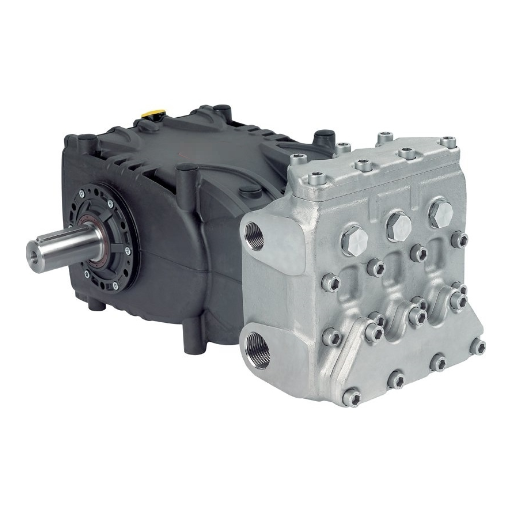
Cylinder count is the axis buyers reach for first, and it drives the single most visible performance difference: flow smoothness. Because each plunger is out of phase with the others, more plungers fill the gaps between discharge strokes. Every configuration here is a positive-displacement reciprocating pump; rotation becomes reciprocation, and each stroke displaces a fixed volume.
Simplex and Duplex
A simplex pump has one plunger (or one pair of opposed plungers driven by a single connecting rod). It produces the most severe pulsation of any configuration, and flow can fall toward zero between strokes. Simplex units suit low-flow, high-pressure duties where a dampener absorbs the ripple.
A duplex pump has two plungers, 180 degrees out of phase. It is smoother than a simplex but still shows high flow variation, so it usually needs pulsation control.
Triplex: The Workhorse
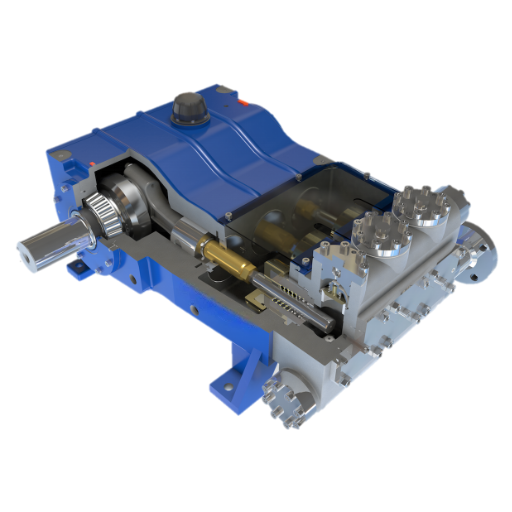
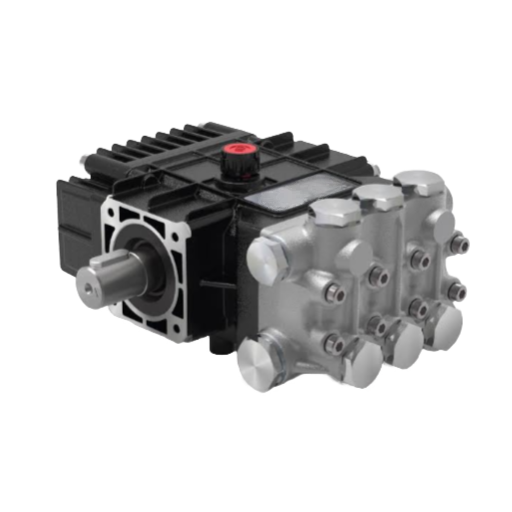
A triplex plunger pump has three plungers phased 120 degrees apart. The pumping strokes overlap, which cuts pulsation sharply and makes the triplex the default for high-pressure work, waterjet feeding, hydro-blasting, descaling, and reverse-osmosis duty. If you are unsure which configuration to specify, a triplex is the safe starting point.
Quintuplex, Septuplex & Multiplex
A quintuplex has five plungers phased 72 degrees apart, and it runs noticeably smoother than a triplex. It is the choice for high-flow, lower-pressure duties: injection, pumpdown, and large RO trains where a steady feed reduces both pulsation and power draw. A septuplex (seven) is smoother still, and “multiplex” is the umbrella term for anything above two plungers. Commercial plunger pumps are mainly simplex, duplex, triplex, and quintuplex.
The trade-off is mechanical, not theoretical. More plungers means more valves, packings, and plunger bores to service, plus more weight and a longer fluid end. Smoothness is bought with service points.
Pulsation and Flow Variation by Configuration
The table below summarizes how configuration affects flow smoothness. The figures are typical for single-acting designs and should be confirmed against your supplier’s data before you finalize a damper. Note that odd plunger counts run smoother and balance better than even counts.
| Configuration | Plungers | Pulses/rev | Amplitude (+/− from mean) | Total flow variation | Phase angle |
|---|---|---|---|---|---|
| Simplex, single-acting | 1 | 1 | ≈ +58% / −100% | ~158% | n/a |
| Duplex, double-acting | 2 (4 effective) | 8 | ≈ +24% / −22% | ~46% | 180° |
| Triplex, single-acting | 3 | 6 | ≈ +6% / −17% | ~23% | 120° |
| Quintuplex, single-acting | 5 | 10 | ≈ +2% / −5% | ~7% | 72° |
| Septuplex, single-acting | 7 | 14 | ≈ +1.2% / −2.6% | n/a | ~51° |
| Nonuplex, single-acting | 9 | 18 | ≈ +0.6% / −1.5% | n/a | ~40° |
The trend is unambiguous: as plunger count rises, flow variation falls, and discharge becomes steadier. That is the entire reason triplex and quintuplex pumps dominate real installations.
Mini-story, smooth flow that paid for itself. Priya, a process engineer at a seawater desalination pilot, specified a quintuplex plunger pump for the RO feed instead of a triplex. The membrane train needed a steady feed pressure, and the five-plunger machine cut flow variation enough that the plant dropped a pulsation dampener from the design. The smoother output also trimmed the energy-recovery unit’s cycling. The quintuplex cost more up front and carried two extra packing sets to service, but the steadier feed paid that back within the first year of operation.
By Drive: Plunger Pump Drive Types Explained
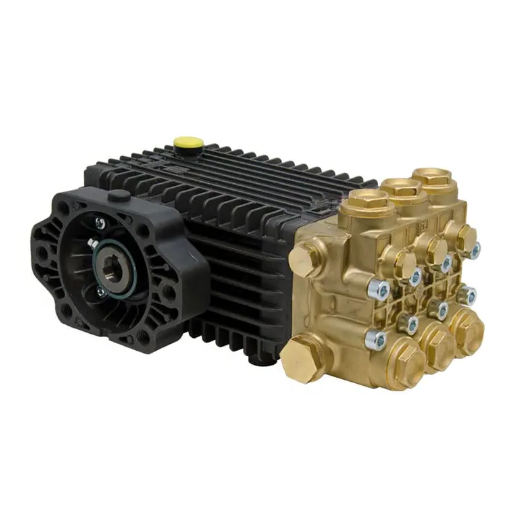
The drive axis answers a practical question: what turns the crankshaft, and how does that rotation reach the plungers? Every option below ends at the same power end, but the drive choice follows your power source and duty.
Ready to match a configuration to your duty? Contact us for an industrial solution consultation, and we will recommend a drive and cylinder count for your operating point.
Power-End Drives: Motor, Engine, Gear, and Belt
These drives convert a rotating prime mover into plunger reciprocation through the crankshaft:
- Electric motor (direct or motor-mounted): simplest and most common in fixed plant
- V-belt: allows speed adjustment and absorbs shock loads
- Gear reducer (helical gearing): compact, precise speed reduction for continuous duty
- Engine / gas drive: for field and mobile applications without grid power
- Variable speed drive (VSD): lets flow track demand instead of running flat out
Direct-Acting and Fluid Drives: Air, Hydraulic, Steam
Direct-acting pumps skip the rotating power end and use motive-fluid pressure to drive the plunger:
- Air and gas drives: simple, intrinsically safe in hazardous areas
- Steam drives: traditional where steam is available
- Hydraulic drive: the basis of waterjet intensifiers, where a large oil-side plunger drives a small water-side plunger to multiply pressure
For most industrial buyers, the drive decision comes down to available power and whether flow must vary during operation.
By Valve Design: Valved vs Valveless
The valve axis is easy to overlook, yet it separates two genuinely different product families.
A valved plunger pump uses spring-loaded inlet and discharge check valves to govern flow. This is the standard high-pressure process pump, and it tolerates a wide range of pressures and fluids.
A valveless design, often called a packed-plunger metering pump, controls displacement directly through stroke length instead of check valves. That gives precise, repeatable dosing at low flow, which is why valveless plungers appear in chemical-injection and metering service.
By Pressure and Service Level
The final axis sorts pumps by what they are built for. Pressure class and duty cycle are tightly linked, and conflating them is the most common buying error.
| Service level | Typical use | Duty cycle |
|---|---|---|
| Low pressure | Cooling, irrigation, circulation | Often intermittent |
| Medium pressure | Industrial cleaning, hydrostatic testing | Intermittent to continuous |
| High pressure | Surface preparation, hydro-blasting | Intermittent |
| Extreme pressure | Waterjet (to 100,000 psi), RO/desalination (55–80 bar), oilfield injection | Usually continuous |
The critical distinction is intermittent-rated cleaning pumps versus continuous-rated process pumps. A pump rated for intermittent cleaning duty will fail early if you run it continuously, because its lubrication and seal design assume pauses. Always match the pressure class and the duty cycle to the application.
Which Type of Plunger Pump Should You Choose?
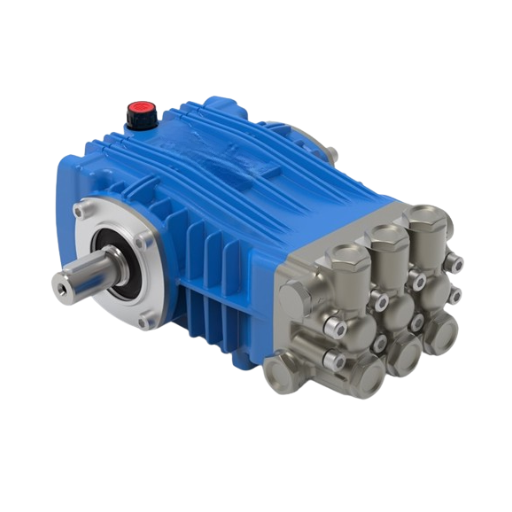
With all five axes in view, selection becomes a short set of questions rather than a guess. Match each axis to the duty:
- Action: default to single-acting; it is the norm for process plunger pumps and suits high pressure.
- Cylinder count: choose triplex for high-pressure work; step up to quintuplex when smooth, high-flow, lower-pressure delivery matters.
- Drive: match the drive to your power source and whether flow must vary (use a VSD if it must).
- Valve design: choose valved for general pressure service, valveless for precise low-flow metering.
- Pressure/service level: confirm the rating and the duty cycle, especially for continuous process duty.
A practical rule: if you are replacing an existing pump, specify the same plunger diameter and stroke as well as the same footprint. Two pumps can look interchangeable and still differ in flow and pressure because their plungers differ.
Mini-story: the duty-cycle shortcut that backfired. Tom, a blasting contractor, replaced a worn-out cleaning pump with a cheaper intermittent-rated model and ran it through eight-hour continuous shifts. The packing and plungers failed within weeks. The pump was not defective; it was rated for the wrong duty. Switching to a continuous-rated process pump restored service life and removed the recurring downtime. The pressure class matched the whole time; the duty cycle did not.
If you are unsure which configuration fits an existing system, the plunger pump complete guide shows how the axes combine, and how a plunger pump works explains the mechanism behind each stroke.
Frequently Asked Questions
What are the types of plunger pumps?
Plunger pumps are classified along five axes: action (single- or double-acting), cylinder count (simplex, duplex, triplex, quintuplex, multiplex), drive (motor, engine, belt, gear, air, hydraulic), valve design (valved or valveless), and pressure/service level (low to extreme pressure).
Are plunger pumps single-acting or double-acting?
Almost all process plunger pumps are single-acting, discharging once per plunger per revolution. Double-acting designs discharge on both strokes and are mostly piston-pump architectures.
What is a triplex plunger pump?
A triplex plunger pump has three plungers phased 120 degrees apart. The overlapping strokes reduce pulsation, making it the most common configuration for high-pressure duty.
What is the difference between simplex, duplex, and triplex pumps?
The words describe plunger count: simplex = 1, duplex = 2, triplex = 3. More plungers mean smoother flow and higher capacity for the same plunger size and speed, at the cost of more service points.
What is a quintuplex plunger pump?
A quintuplex has five plungers phased 72 degrees apart. It delivers very smooth flow and suits high-flow, lower-pressure duties such as injection and RO feed.
How many cylinders does a plunger pump need?
It depends on flow smoothness and pressure. High-pressure duty usually calls for a triplex; smooth, high-flow, lower-pressure duty often favors a quintuplex. Odd counts balance better than even ones.
What drives a plunger pump?
Common drives include electric motor (direct or V-belt), gear reducer, engine/gas, air, and hydraulic. A variable speed drive lets flow follow demand.
What is a valveless plunger pump?
A valveless (packed-plunger) design controls flow by stroke displacement instead of check valves, giving precise low-flow metering for chemical injection and dosing.
Choosing the Right Type of Plunger Pump
The types of plunger pumps are not competing categories so much as coordinates on five independent axes. Action tells you how often the pump discharges. Cylinder count tells you how smoothly. Drive tells you what powers it. Valve design tells you how flow is controlled. Pressure and service level tell you what it is built to survive.
Hold those axes together and three practical rules follow. Default to a single-acting triplex for high pressure. Reach for a quintuplex when steady, high flow at lower pressure is the priority. And always confirm the duty cycle, not just the pressure rating, before you order; it is the single most common source of premature failure.
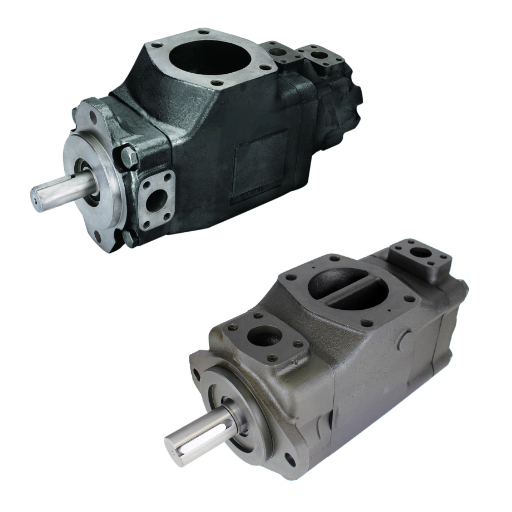
For buyers cross-shopping pump families, the types of hydraulic pumps explained guide shows where rotary hydraulic pumps (gear, vane, piston) end and where reciprocating process pumps like the plunger begin.
Not sure which configuration matches your system? Contact LOYAL INDUSTRIAL for a customized hydraulic system recommendation, or request a technical specification sheet for the cylinder count and drive that fit your operating point. Our engineers will match flow, pressure, and duty cycle to your application so you can get a quote with confidence.