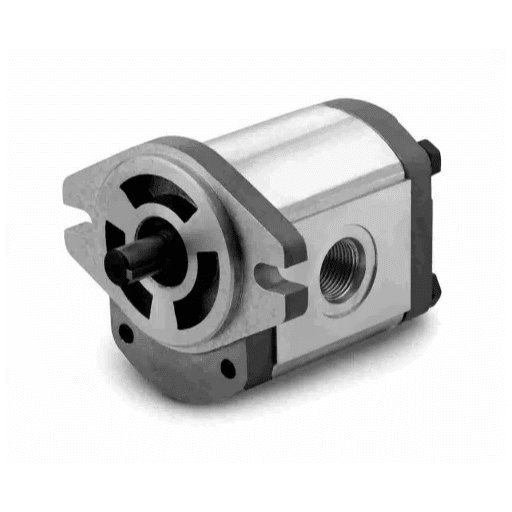
A fleet manager in Malaysia watched his maintenance budget evaporate. Twelve pump replacements in one year across 40 dump trucks. Every generic replacement unit failed within three months. Then his engineer insisted on switching to HYVA Brite series pumps matched to their 25-ton GVWR. The result: two replacements the following year and downtime costs that dropped 70%. The difference was not the brand name alone. It was understanding which HYVA pump series, displacement, and part number matched the actual duty cycle.
Most content about a HYVA hydraulic pump for dump trucks falls into two categories: thin product pages that list a part number and a price, or generic hydraulic advice that never addresses the HYVA-specific specifications a buyer actually needs. If you are sourcing a pump for a dump truck, tipper, or trailer-mounted tipping system, you need exact HYVA hydraulic pump specifications, a decoder for the 1457xxxx part numbers, and a clear comparison of the Alpha, Brite, and CVP series. This guide delivers all three, plus application-specific selection guidance that connects pump displacement to tipping weight.
You will learn how Hyva Group engineers its pumps for mobile tipping hydraulics, what each series is designed for, how to read a HYVA part number, and when a HYVA unit is the optimal choice versus Parker or Bosch Rexroth alternatives. We will also cover installation best practices, maintenance intervals, and how to evaluate genuine versus aftermarket sourcing.
For broader pump type selection, our hydraulic pump for dump truck guide connects pump technology to the full system architecture.
What Is a HYVA Hydraulic Pump?

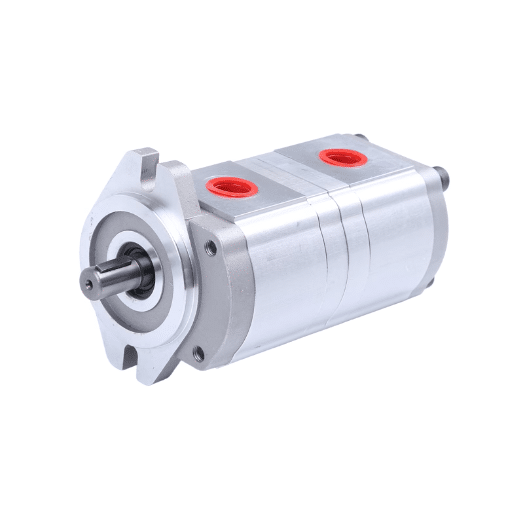
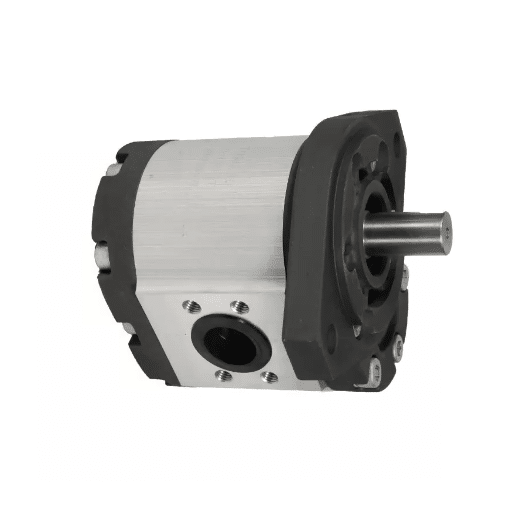
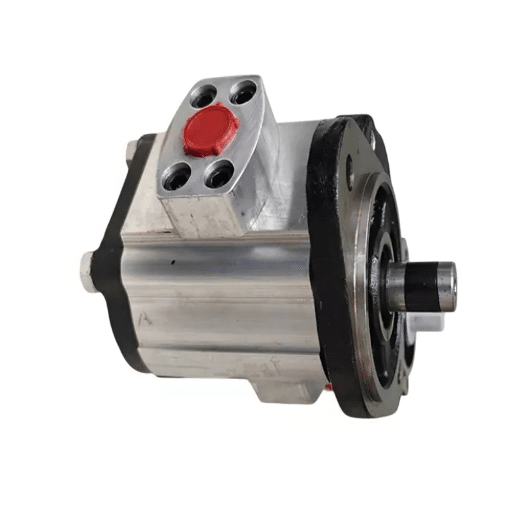
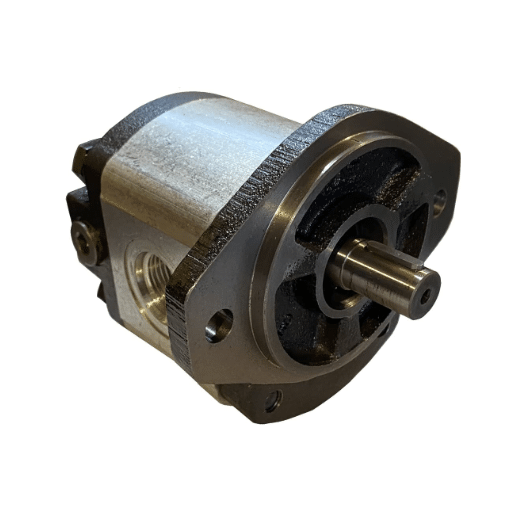
A HYVA hydraulic pump is a fixed-displacement external gear pump engineered by Hyva Group specifically for mobile tipping applications such as dump trucks, tippers, and trailer-mounted lifting systems. It converts mechanical power from a truck’s Power Take-Off into hydraulic pressure that drives telescopic cylinders, with pressure ratings from 205 to 250 bar and displacements ranging from 13.8 to 151 cc/rev.
HYVA is the pump and cylinder brand of Hyva Group, a Netherlands-based company founded in 1979 in Alphen aan den Rijn. The company built its reputation on front-end telescopic hydraulic cylinders for commercial vehicles and now holds more than 40% of the global market share for front-end tipping cylinders. In October 2024, JOST Werke SE acquired Hyva Group for approximately $398 million, adding smart hydraulic solutions to its commercial vehicle safety systems portfolio. The pumps and cylinders continue to carry the HYVA brand and engineering standards.
Hyva Group employs approximately 3,000 to 3,500 people across 30-plus subsidiaries and 14 manufacturing facilities in Brazil, China, Germany, India, Italy, and Mexico. Its distribution network covers more than 110 countries and 200 distributors. In 2023, the company produced its 3-millionth hydraulic cylinder, a milestone that reflects its scale in the mobile hydraulics sector.
The HYVA pump portfolio centers on external gear pumps engineered specifically for tipping applications. These pumps are not general-purpose industrial units retrofitted for trucks. They are designed for the intermittent high-pressure cycles of dump body lifting, with an endurance standard that simulates 100,000 tipping cycles before release. The global hydraulic gear pump market reached approximately USD 2.1 billion in 2025, and HYVA holds a significant share within the mobile tipping segment. HYVA also sources piston pumps through a partnership with Parker Hannifin, marketed under the “HYVA by PARKER” designation, for applications requiring variable displacement or pressures above the gear pump range.
HYVA Gear Pump Series: Alpha, Brite, and CVP Compared
HYVA gear pumps are not a single product line. The company organizes its pumps into three families: Alpha, Brite, and CVP (Compact Versatile Pump). Each series targets a different duty cycle, packaging constraint, or pressure requirement. Understanding the distinction prevents the mismatch that leads to premature failure.
HYVA Alpha Series
The Alpha series is the standard-duty external gear pump line for general tipping applications. Displacement ranges from approximately 20 cc/rev to 133 cc/rev, with continuous pressure ratings up to 210 bar on most models and 250 bar on select configurations. Alpha pumps are available with both needle roller bearings and oil-free bearings, giving fleet operators flexibility based on lubrication system design and maintenance access. These pumps suit light-to-medium duty tipping where cycle frequency is moderate, and system pressure stays within the 200 bar range.
HYVA Brite Series
The Brite series is the heavy-duty evolution. It uses reinforced bearings and housings designed for higher pressure tolerance and more demanding duty cycles. While displacement options overlap with Alpha, the Brite construction supports the upper end of the HYVA pressure envelope, up to 250 bar continuous and higher intermittent peaks. The improved contamination resistance is relevant for mining and construction environments where hydraulic fluid cleanliness is harder to maintain. If your fleet operates in high-cycle commercial tipping or dirty conditions, Brite is the series to evaluate first.
HYVA CVP (Compact Versatile Pump)
The CVP addresses a specific constraint: modern truck chassis with tight packaging between the frame rail and the tipping body. The CVP 85cc and CVP 105cc are the most common variants.
The CVP 85cc delivers a max continuous pressure of 230 bar and flows approximately 157 L/min at 2,000 RPM. The CVP 105cc flows approximately 193 L/min at the same speed. Both models weigh roughly 14 to 15 kg. Side and rear port configurations accommodate different hose routing layouts.
The slim profile is the differentiator. When a standard pump body interferes with chassis brackets or air tanks, the CVP often fits where others cannot.
| Feature | Alpha Series | Brite Series | CVP Series |
|---|---|---|---|
| Duty Rating | Standard | Heavy | Standard to Heavy |
| Max Continuous Pressure | Up to 210 bar (250 bar select) | Up to 250 bar | 230 bar |
| Displacement Range | 20-133 cc/rev | 20-133 cc/rev | 85cc, 105cc (common) |
| Bearing Options | Needle roller / Oil-free | Needle roller / Oil-free | Needle roller |
| Profile | Standard | Standard | Compact / Slim |
| Best Application | Light-medium tipping | High-cycle commercial, mining | Space-constrained installs |
HYVA Hydraulic Pump Specifications and Part Numbers
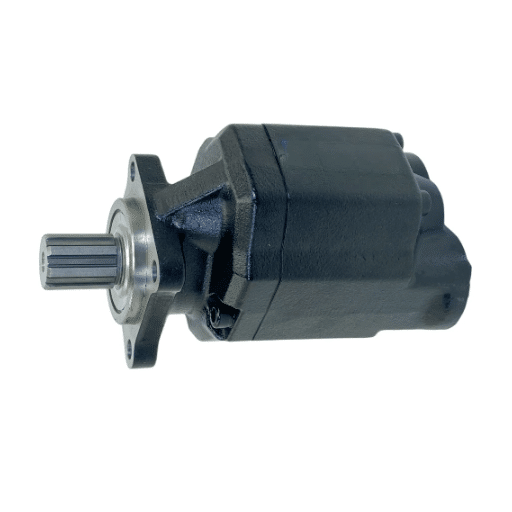
One of the most frustrating gaps in existing HYVA content is the absence of a part number decoder. Buyers encounter numbers like 14571251, 14571340, and 14562030 without any explanation of what each segment means. Here is how to read them.
Decoding HYVA Pump Part Numbers
The 1457xxxx series is the most common OEM numbering system for HYVA gear pumps. Understanding HYVA pump part numbers prevents ordering errors that cost days of downtime. The prefix 1457 identifies the pump family. The subsequent digits encode displacement and configuration. The suffix letters indicate mounting, port orientation, and shaft type. For example:
- 14571251: 105cc gear pump for standard dump truck and tipper applications
- 14571340: CVP 85cc with side ports
- 14571341: CVP 85cc with rear ports
- 14571350: CVP 105cc with side ports
- 14571351: CVP 105cc with rear ports
- 14571231C: Common OEM variant for heavy-duty truck applications
- 14562030: Another frequently referenced OEM hydraulic pump variant
When ordering a replacement, match the full part number exactly. A single-digit difference can mean a different shaft spline, port thread, or port orientation that will not align with your existing PTO and hose routing.
Quantified Specifications Table
The following table consolidates the key HYVA hydraulic pump specifications across all gear pump series:
| Specification | Typical Range |
|---|---|
| Displacement | 13.8 to 151 cc/rev |
| Max Continuous Pressure | 205 to 250 bar |
| Max Intermittent Pressure | 225 to 300 bar |
| Operating Speed | 300 to 3,000 rpm |
| Flow at 2,000 rpm (85cc) | ~157 L/min |
| Flow at 2,000 rpm (105cc) | ~193 L/min |
| Oil Temperature Range | -25°C to 80°C (select models -40°C to 80°C) |
| Recommended Viscosity | 12 to 100 mm²/s |
| Max Starting Viscosity | 750 mm²/s |
| Filtration | 25 μm nominal below 200 bar; 10 μm absolute above 200 bar |
| Port Threads | BSP 3/4″, 1″, 1-1/4″ |
| Mounting | ISO 4-hole flange; DIN 5462 / DIN 5482 shaft options |
| Rotation | Bi-rotational (left/right) as standard |
| Noise Level | Minimized via precision gear matching |
The bi-rotational design is worth highlighting. Most HYVA gear pumps operate in either left-hand or right-hand rotation without modification. This reduces inventory for fleet operators who run mixed truck models with different PTO output directions. One pump SKU covers both configurations.
Applications: When to Choose a HYVA Pump
A HYVA hydraulic pump for dump trucks is purpose-built for mobile tipping hydraulics. The primary applications include rear-tipping dump trucks, construction trucks hauling sand and demolition debris, mining trucks moving ore and rock, agricultural trucks handling crops and fertilizers, water trucks, lube trucks, garbage collection trucks, and trailer-mounted tipping systems.
The critical selection factor is matching pump displacement to tipping weight and cycle frequency. An undersized pump takes too long to lift the body. An oversized pump wastes energy, generates excess heat, and accelerates seal wear. Use the following matrix as a starting point:
| Tipping Weight | Recommended Displacement | Recommended Series |
|---|---|---|
| Light (under 7 tons) | 20 to 40 cc/rev | Alpha |
| Medium (7 to 17 tons) | 52 to 85 cc/rev | Alpha or CVP |
| Heavy (17 to 30 tons) | 85 to 105 cc/rev | Brite or CVP |
| Extra-heavy (over 30 tons) | 105 to 151 cc/rev | Brite |
The PTO Integration Factor
HYVA gear pumps typically mount via cardan shaft to the truck’s Power Take-Off (PTO). The PTO ratio determines the pump speed at a given engine RPM. Matching the PTO ratio to the pump’s optimal speed range is essential for both performance and longevity. A pump driven too fast cavitates. A pump driven too slowly delivers insufficient flow for acceptable lift times. If you are selecting a PTO for a new installation or replacing a pump on an existing PTO, verify the output speed against the pump’s recommended operating range. Our dump truck PTO hydraulic pump installation guide covers PTO ratio selection and driveshaft alignment in detail.
HYVA vs Competitors: Parker and Bosch Rexroth

HYVA is often compared to Parker Hannifin and Bosch Rexroth, the two largest names in hydraulic pumps. The comparison is valid, but the conclusion depends entirely on the application. HYVA is not a direct substitute for either brand across all use cases. It is optimal for a specific segment.
| Factor | HYVA | Parker Hannifin | Bosch Rexroth |
|---|---|---|---|
| Core Focus | Mobile tipping hydraulics | Full-spectrum industrial and mobile | Heavy-duty industrial and automation |
| Pump Types | Gear + piston (Parker-sourced) | Gear, piston, vane | Gear, piston, vane |
| Max Pressure | 250 bar (gear) / 350 bar (piston) | High-pressure capable | 400+ bar |
| Special Feature | Bi-rotational standard; 100,000 cycle endurance | 10,000+ global distribution locations | Precision electronic control systems |
| Cost Position | Practical / mid-range | Premium | Premium |
| Best For | Dump trucks, tippers, skip loaders | Global fleets, diverse machinery types | Mining, complex industrial systems |
When HYVA Is the Right Choice
Choose a HYVA pump when the application is truck tipping or mobile lifting. The 100,000-cycle endurance standard is specific to the start-stop, high-pressure-spike environment of dump body operation. The bi-rotational design simplifies fleet inventory. The CVP compact profile solves packaging problems on modern chassis. For budget-conscious operators who need OEM-grade reliability without the premium pricing of full-line hydraulics manufacturers, HYVA occupies a practical middle ground.
When to Consider Parker or Bosch Rexroth
Parker is the stronger choice when your operation spans multiple machinery types, and you need a single supplier with global aftermarket support. Parker’s variable displacement piston pumps also offer energy savings in systems with highly variable flow demands. Bosch Rexroth leads in extreme-pressure applications above 400 bar and in systems requiring precision electronic control, such as complex industrial automation or large mining excavators.
For a deeper technical comparison of pump technologies, our gear pump vs piston pump comparison breaks down efficiency, pressure, and lifecycle cost differences across all major pump types.
Installation and Maintenance Best Practices
Even a correctly specified HYVA pump will fail prematurely if installation or maintenance is neglected. The following practices are drawn from HYVA system documentation and field service experience.
Installation Checklist
- Verify PTO rotation direction matches the pump requirement. HYVA pumps are bi-rotational, but the system must still be assembled for the correct direction.
- Confirm cardan shaft alignment and full spline engagement. Misalignment causes accelerated bearing wear and seal leakage.
- Select port orientation, side or rear, based on chassis hose routing before mounting.
- Install filtration rated for the system pressure: 25 μm nominal for systems under 200 bar, 10 μm absolute for systems above 200 bar.
- Connect the leak indicator line if the pump is equipped with one. This small line protects the truck transmission by diverting seal leakage away from the gearbox in the event of a primary seal failure.
Maintenance Schedule
- Change hydraulic fluid every 1,000 to 2,000 operating hours. Use ISO VG 46 or HVLP 46 grade oil unless the equipment manufacturer specifies otherwise.
- Replace filters per the service schedule, or sooner if differential pressure across the filter indicates clogging.
- Inspect hoses monthly for bulges, cracks, abrasions, or loose connections.
- Check cylinder alignment annually. Misaligned mounting points create side-loading that damages seals, bushings, and pump bearings.
- Lubricate PTO splines per the truck manufacturer’s schedule. Dry splines wear rapidly and introduce metal particles into the system.
Common Issues and Troubleshooting
- Slow or incomplete lifting: Check fluid level first. Bleed air from lines after any maintenance. Test pump output pressure with a calibrated gauge. Replace clogged inline filters.
- Oil leaks around cylinder stages: Clean rod surfaces and inspect for scoring or corrosion. Polish or replace damaged stages. Install new seal kits using OEM part numbers.
- Uncontrolled lowering or drift: Disassemble and clean the control valve. Test for internal bypass. Replace faulty cartridges or the valve body if necessary.
- Cavitation noise (high-pitched whine): Verify oil viscosity and temperature. Do not cold-start below 4°C without preheating. Clean the suction strainer. Ensure the inlet hose is SAE 100R4 rated and not collapsed or kinked.
Genuine HYVA vs Aftermarket: A Procurement Guide

Not every pump labeled “HYVA-compatible” delivers HYVA performance. Buyers need a framework for distinguishing genuine units from aftermarket alternatives and for evaluating whether an aftermarket unit is acceptable for their application.
Verifying Genuine HYVA Units
- Cross-reference the part number against the official HYVA catalog or an authorized distributor database.
- Inspect casting quality and manufacturer markings. Genuine HYVA housings carry specific casting marks and surface finishes.
- Verify packaging and documentation consistency. OEM units ship with specification sheets, torque values, and installation instructions.
Evaluating Aftermarket Alternatives
Quality aftermarket pumps that match HYVA specifications can be viable, particularly for non-critical auxiliary systems or cost-sensitive fleets. Before sourcing an aftermarket unit, verify:
- Compatibility: Displacement, pressure rating, port configuration, shaft type, and rotation must match exactly.
- Material quality: Cast iron housing grade, bearing specifications, and seal compounds should meet or exceed the original.
- Warranty terms: Compare coverage duration and conditions. A shorter warranty may indicate lower confidence in longevity.
- Cost differential: Typical savings range from 30% to 50% for quality aftermarket units. Savings below 20% often indicate corner-cutting on materials.
A procurement manager at a Brazilian aggregate hauler learned this lesson the hard way. He ordered “HYVA-compatible” pumps at 40% below OEM price. The units lacked bi-rotational capability and used nitrile shaft seals rated for lower temperatures than the genuine fluorocarbon seals. Three units failed within eight months due to spline wear and cold-start seal leakage. The labor cost of repeated replacements, plus the downtime during peak hauling season, exceeded what genuine HYVA pumps would have cost by a factor of two.
At LOYAL INDUSTRIAL PTE. LTD., we supply OEM-compatible HYVA specification pumps with verified interchangeability. Our technical team cross-references part numbers against application requirements and provides specification sheets that confirm displacement, pressure, port, and shaft compatibility before shipment. For fleet operators managing bulk procurement, we offer consolidated technical documentation and consistent quality control across production batches.
Request a technical specification sheet for any HYVA part number, and our engineering team will confirm compatibility with your existing system architecture.
Frequently Asked Questions
What is the main difference between HYVA Alpha and Brite pumps?
The Alpha series is the standard-duty line for general tipping applications up to approximately 210 bar continuous. The Brite series uses reinforced bearings and housings for higher pressure tolerance and more demanding duty cycles, supporting up to 250 bar continuous. Brite is the better choice for high-cycle commercial fleets and dirty operating environments.
What does a HYVA pump part number mean?
The 1457xxxx numbering system encodes pump family, displacement, and configuration. The prefix 1457 identifies the gear pump family. Subsequent digits indicate displacement and physical configuration. Suffix letters specify mounting style, port orientation (side or rear), and shaft type. Always match the full part number exactly when ordering replacements.
What hydraulic oil should I use in a HYVA pump?
HYVA recommends ISO VG 46 or HVLP 46 mineral hydraulic oil for standard operating conditions. The oil should maintain a viscosity between 12 and 100 mm²/s during operation. At a cold start, viscosity must not exceed 750 mm²/s.
Are HYVA pumps bi-rotational?
Yes. Bi-rotational capability is standard on most HYVA gear pumps. The pump operates in either left-hand or right-hand rotation without modification, which reduces inventory stocking requirements for fleets with mixed truck models.
What is the maximum pressure of a HYVA gear pump?
Max continuous pressure ranges from 205 bar to 250 bar, depending on the series and model. Max intermittent pressure reaches 225 to 300 bar. For applications requiring sustained pressure above 250 bar, HYVA offers piston pumps sourced through its Parker partnership.
Conclusion
A HYVA hydraulic pump for dump trucks dominates the tipping hydraulics segment because it is engineered for a specific application, not adapted from general industrial designs. The 100,000-cycle endurance standard, bi-rotational convenience, and compact CVP profile address real constraints that dump truck operators face daily. The key to getting value from a HYVA pump is matching the right series to the duty cycle and the right displacement to the tipping weight.
Use Alpha for light-to-medium duty. Use Brite for high-cycle commercial or mining operations. Use CVP when chassis packaging is tight. Decode part numbers carefully before ordering. Verify filtration ratings against system pressure. And evaluate aftermarket alternatives on specification match and warranty terms, not price alone.
If you are specifying pumps for a fleet or replacing a failed unit, the first step is confirming the exact displacement, pressure, and configuration your application requires. Our dump truck hydraulic power unit guide covers system-level integration for operators who need to match pump selection to reservoir, valve, and motor specifications.
Contact our engineering team for a customized hydraulic system recommendation or to request a technical specification sheet for any HYVA part number.