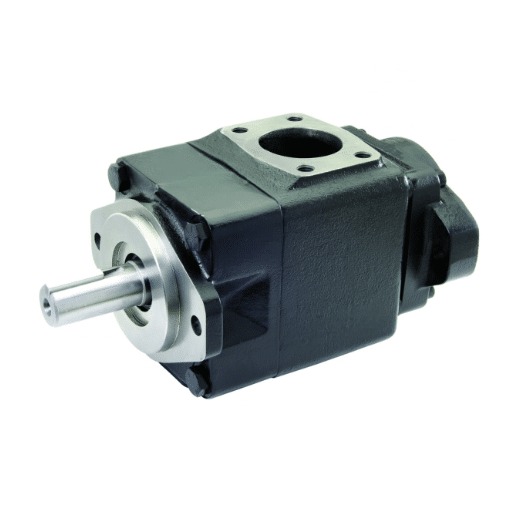
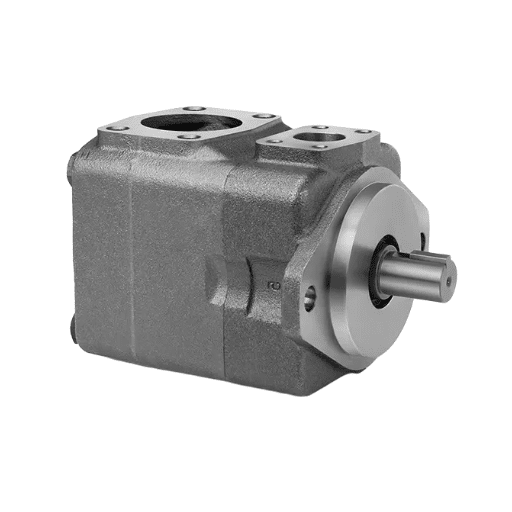
The wedge on Dave’s 27-ton log splitter stopped dead the moment it touched a knotty oak round. The engine didn’t stall. The pump didn’t make noise. It simply had no force. He replaced the pump. The bill was $340, and he lost the rest of his Saturday. Later, he found the old pump had a stuck unloader valve he could’ve cleaned in twenty minutes.
That story repeats in maintenance shops and firewood yards every week. HI/LO hydraulic pump troubleshooting isn’t complicated once you know what to look for. Two-stage pumps fail in predictable ways because the same components do the same jobs on every machine. An unloader valve switches stages. A check valve isolates them. Two gear sets share the same oil.
This guide gives you a field-tested diagnostic flowchart and symptom-to-cause tables for the most common two stage hydraulic pump troubleshooting scenarios. You’ll learn how to tell a setting problem from a worn pump, when a seal kit’s enough, and when replacement is the smarter call.
New to two-stage pumps? Start with our complete 2 stage hydraulic pump guide for working principle, specs, and selection basics.
How a HI/LO Pump Fails Differently Than a Single-Stage Pump

A single-stage gear pump has one job: move oil against a load. A two-stage pump has two. The large high-flow stage moves the cylinder fast during the approach stroke. When pressure reaches the transition point, the unloader valve diverts that stage back to the reservoir.
The small high-pressure stage takes over for force work. A check valve keeps the stages from fighting each other. That design creates failure modes that a single-stage pump doesn’t have.
Contamination is twice as damaging because both gear sets share the same oil. A single piece of debris can jam the unloader valve, score the check valve seat, and accelerate gear wear all at once. Transition pressure drift can make the pump shift too early, too late, or not at all.
The symptoms look like engine problems or weak cylinders. Often, the root cause is a $20 valve cartridge.
For a deeper look at the internal flow paths, see our article on how a 2 stage hydraulic pump works. Understanding the unloader and check valve relationship is the foundation of every HI/LO hydraulic pump troubleshooting decision you’ll make.
Diagnostic Flowchart: Start Every Troubleshooting Job Here
A random list of possible causes won’t help you in the field. Use this sequence to narrow the problem before you start replacing parts.
- Is the pump actually turning? Check the Lovejoy coupling, Woodruff key, set screws, and motor rotation. A sheared key is a five-minute fix that looks like a dead pump.
- Is the oil level and condition OK? Read the reservoir with the cylinder retracted. Look for foam, milkiness, burnt smell, or metal particles.
- Is the suction side clear? Inspect the strainer, suction hose, and fittings for collapse, kinks, or air leaks.
- What is outlet pressure under load? Install a calibrated gauge at the pump outlet or a test port. Numbers eliminate guesswork.
- Does the pump shift stages? Listen for the sound change when the load hits. Note the pressure at the shift point.
- Is the pump overheating? Feel the casing after a few cycles. Temperature above ~60°C (140°F) points to recirculation or bypass.
Answer these six questions in order. You’ll identify most failures without disassembling the pump. The rest of this guide maps the answers to specific fixes.
How to Verify Transition Pressure as a Diagnostic Test
Transition pressure is the single most useful number in HI/LO hydraulic pump troubleshooting. It tells you whether the unloader valve is doing its job and whether the pump is shifting at the right point. If the hydraulic pump won’t shift to high pressure, this test will show why.
Tools you need:
- Calibrated pressure gauge, 0-5,000 PSI range
- Tee fitting or test port adapter for your pump outlet
- Wrenches, safety glasses, and clean rags
Procedure:
- Install the gauge at the pump outlet or a high-pressure test port.
- Start the power unit and cycle the actuator unloaded two or three times.
- Load the cylinder slowly against a log, stop, or dead-head fitting.
- Watch the gauge and listen for the pump sound to change.
- Record the pressure at the shift point.
For most log splitter pumps, normal transition pressure falls between 500 and 750 PSI. Light-duty setups may run as low as 400 PSI. Heavy industrial systems may reach 900 PSI.
Factory preset is commonly around 650 PSI. If the transition pressure drifts from the spec, suspect spring fatigue, contamination, or wear in the unloader valve. For the adjustment procedure, see our 2 stage hydraulic pump adjustment guide.
Symptom-to-Cause Troubleshooting Tables

These tables are the core of practical two stage hydraulic pump troubleshooting. Match what you see to the most likely cause, then verify with a gauge before spending money.
Pump Won’t Build Pressure
| Symptom Clue | Likely Cause | Field Fix |
|---|---|---|
| No pressure, but pump turns | Air in system, low oil, suction leak | Top off oil, bleed system, tighten suction fittings |
| Low pressure only under load | Worn gears or internal leakage | Rebuild or replace pump |
| Pressure rises, then drops | Relief valve stuck open or set low | Clean, adjust, or replace relief valve |
| Pressure OK cold, weak when hot | Internal slippage from wear | Replace pump |
| Pressure fine but ram has no force | Cylinder seal bypass, not pump | Inspect cylinder and valve |
If the gauge reads normal at the pump but the actuator won’t work, the problem’s downstream. Test pressure at the cylinder port before you blame the pump.
Pump Stays in High-Flow Mode / Hydraulic Pump Won’t Shift to High Pressure
This is the classic two stage pump stuck in high flow failure. The ram advances quickly but stalls or has no force when it meets the load. It’s also the most common symptom in HI/LO hydraulic pump troubleshooting for log splitters and mobile power units.
| Symptom Clue | Likely Cause | Field Fix |
|---|---|---|
| Engine stalls when wedge hits wood | Transition pressure set too high | Lower unloader transition pressure |
| No sound change at load | Unloader stuck open or contaminated | Remove cap, inspect spring and seat, clean or replace |
| Slow force build-up, pump works hard | Check valve leaking | Inspect poppet and seat, replace cartridge |
| Shifts too early, weak work force | Transition pressure too low | Raise transition pressure |
| Won’t shift at all after warm-up | Oil is too thin or internal wear | Check viscosity, test pressure, replace if worn |
A missing Woodruff key can also cause this symptom. If the pump shaft isn’t turning at full speed, neither stage develops enough pressure to shift properly. Always check drive components first.
Pump Overheats
Overheating is one of the most common hydraulic pump overheating causes in two-stage systems. It usually means oil is recirculating somewhere it shouldn’t be.
| Symptom Clue | Likely Cause | Field Fix |
|---|---|---|
| Hot within minutes of startup | Unloader stuck, continuous recirculation | Clean or replace unloader valve |
| Hot during hold or heavy cuts | Relief valve bypassing | Adjust or replace relief valve |
| Hot only in warm weather | Reservoir undersized or oil too thin | Check reservoir sizing, switch viscosity |
| Hot with foamy oil | Aeration or cavitation | Fix suction leaks, clean strainer, bleed air |
| Hot with dark burnt smell | Oil oxidized from overheating | Change oil and filters, find heat source |
Normal pump casing temperature should stay below roughly 60°C (140°F). If you can’t hold your hand on the housing for more than a few seconds, the oil’s breaking down faster than it should.
Excessive Noise or Whining
Noise is valuable diagnostic data. Different sounds point to different hydraulic pump cavitation noise sources.
| Symptom Clue | Likely Cause | Field Fix |
|---|---|---|
| High-pitched whine at shift or idle | Cavitation | Check oil level, strainer, suction hose, viscosity |
| Knocking or rattling | Aeration (air in oil) | Bleed system, tighten suction fittings |
| Grinding or growling | Bearing or gear wear | Replace pump |
| Hissing at relief valve | Relief valve issue | Inspect and replace relief valve |
| Metallic rattling under load | Internal damage, metal in oil | Inspect filter, replace pump |
Cavitation sounds like gravel or loud whining from the inlet side. Aeration sounds like knocking or hammering. Gear wear sounds like grinding.
If you’re unsure, use a mechanic’s stethoscope on the pump body. It helps isolate the source fast.
Slow Cycle Time / Weak Force
A hydraulic pump slow cycle time complaint can come from the pump, the prime mover, the valves, or the load itself. Use this table to isolate whether you’re dealing with flow loss or a pressure setting issue.
| Symptom Clue | Likely Cause | Field Fix |
|---|---|---|
| Slow approach and slow work stroke | Low flow from worn pump or restriction | Flow test, inspect suction line and relief |
| Fast approach, weak work force | Transition pressure too low | Raise transition pressure |
| Weak only when oil is hot | Internal leakage | Rebuild or replace pump |
| Weak in one direction only | Cylinder seal bypass | Inspect cylinder, not pump |
| Slow after filter change | Wrong filter rating or collapsed element | Verify filter specs and flow direction |
If performance degrades sharply after warm-up, internal leakage is the most likely cause. As oil thins, wear clearances become highways for bypass flow.
Common Component Failures in Two-Stage Pumps

Once you know the symptom, the next step is to identify the component. These four parts cause most two stage hydraulic pump troubleshooting cases.
Stuck or Leaking Unloader Valve
The unloader valve is the most common failure point. It can stick open, stick closed, or hang anywhere between. When it sticks open, the pump stays in high-flow mode and can’t build force.
When it sticks closed, the pump never unloads the large stage. That causes slow cycles and overheating. To inspect the valve, stop the engine, relieve pressure, and remove the valve cap.
Look for varnish, debris, or scored seats on the spring and spool. Clean everything with fresh hydraulic fluid and lint-free wipes. Don’t use shop rags; they leave fibers behind. If the seat is damaged or the spring is cracked, replace the valve kit.
Leaking Check Valve
The check valve isolates the high-flow stage when the pump shifts to high pressure. If it leaks, high-pressure oil bleeds back into the low-pressure stage. The pump works harder, runs hotter, and builds force slowly.
A pressure-decay test is the cleanest way to confirm this. Build pressure, hold it, and watch the gauge. If pressure drops faster than the application allows with no cylinder movement, the check valve or cylinder seals are bypassing.
Worn Shaft Seal
A leaking shaft seal is easy to spot: oil weeps from the drive shaft area. But before you replace the seal, check coupling alignment and mounting bolt torque. Misalignment and vibration kill seals faster than age.
If the shaft is smooth and the pump still produces rated pressure and flow, a seal kit is the right fix. If the shaft has grooving or bearing play, the pump needs deeper repair or replacement.
Relief Valve Problems
The relief valve caps the maximum system pressure. If it sticks open or is set too low, the system can’t do work. If it bypasses continuously, it generates heat and wastes power.
Use the gauge to find the relief cracking pressure. On log splitters, common settings are 2,500 PSI for consumer units, 3,000-3,200 PSI for standard commercial splitters, and up to 3,500 PSI for heavy-duty machines.
Never set the relief above the lowest pressure rating of any component in the circuit.
Field Repair vs. Replace: When to Stop Troubleshooting
Troubleshooting has a stopping point. At some point, the right decision is to stop diagnosing and start replacing.
When a Seal Kit or Valve Kit Is Enough
- External seal leak with otherwise good pressure and flow
- Minor unloader seat scoring with an OEM valve kit available
- Pump under roughly 5,000 hours with a clean oil history
- Cost: $30-80 for small log splitter pumps
When to Replace the Pump
- Internal wear causes pressure to drop after warm-up
- Gear housing or bearing damage is present
- No rebuild kit is available
- Repair cost exceeds roughly 50% of a new pump
- Failures keep recurring after repair
- Cost: $150-400 for small log splitter pumps; higher for industrial units
For small log splitter pumps, that narrow gap often makes replacement the better value. You avoid the labor of chasing unknown internal wear.
For industrial two-stage gear pumps, OEM rebuild kits are frequently cost-effective. Before ordering a replacement, compare two stage hydraulic gear pump specifications to ensure shaft, port, and mounting compatibility. For a complete maintenance schedule, see our 2 stage hydraulic pump maintenance guide.
Log Splitter Specific Troubleshooting Notes

Log splitters are the most common home for two-stage pumps, so log splitter hydraulic pump troubleshooting deserves its own section.
Typical pressures on a 20-30 ton splitter are:
- Transition pressure: ~650 PSI
- Relief pressure: ~3,000 PSI
Common field mistakes include using the wrong oil viscosity for the season and running the engine below rated RPM. A used splitter with a worn coupling is also a prime candidate for a “pump failure” that is really a drive failure.
Need help sizing or selecting a replacement? Our log splitter hydraulic pump selection guide walks through matching GPM, PSI, cylinder bore, and engine horsepower.
One Minnesota operator learned this the hard way. He ran ISO VG 46 hydraulic oil through a sub-zero winter. The thick oil caused cavitation on cold starts that damaged the high-flow stage gears within one season. A 35 oil change with the right winter viscosity would have prevented a 260 pump replacement.
HI/LO Hydraulic Pump Troubleshooting FAQ
Why is my 2 stage hydraulic pump not building pressure?
Check the oil level and condition first. Then inspect the suction strainer and fittings for air leaks. Install a pressure gauge at the pump outlet. If pressure is low at the pump, suspect internal wear, a stuck relief valve, or air in the system.
Why does my log splitter pump overheat?
Common causes include a stuck unloader valve, relief valve bypassing, aeration, or a reservoir that’s too small for the pump flow. Check the unloader first. Continuous recirculation is the most common cause of hydraulic pump overheating in two-stage pumps.
What does hydraulic pump cavitation sound like?
Cavitation usually sounds like a high-pitched whine, screech, or gravel in a can near the pump inlet. It gets worse at high speed or during cold starts. Low oil, a clogged strainer, or oil that’s too viscous for the temperature are the usual causes.
Why won’t my two-stage pump shift to high pressure?
The unloader valve may be stuck open, the transition pressure may be set too high, or the check valve may be leaking. A pressure gauge will show whether the pump reaches the transition point. If it never shifts, inspect the unloader and check valve.
How do I test a 2 stage hydraulic pump?
Install a calibrated gauge at the pump outlet. Run the actuator unloaded, then load it gradually. Note the pressure where the pump shifts stages and the maximum pressure before the relief valve opens. Compare both to manufacturer specs.
Can a two-stage hydraulic pump be rebuilt?
Yes, if the damage is limited to seals, O-rings, or a replaceable valve cartridge. Full gear or bearing damage usually makes replacement more economical, especially for small log splitter pumps.
Why is my hydraulic pump whining?
Whining is usually cavitation. Check oil level, suction strainer, and suction hose for restrictions or collapse. If the whine is more of a grinding sound, suspect internal gear or bearing wear.
What causes slow cycle time in a hydraulic pump?
Slow cycles come from low flow. Causes include worn pump internals, suction restriction, relief valve bypassing, or oil that’s too thick. If the pump is fast when cold but slow when hot, internal leakage is the likely cause.
Should I replace or rebuild my log splitter pump?
Rebuild if the failure is external, minor, and the pump has low hours. Replace if internal wear causes pressure loss, bearings are damaged, or repair cost exceeds about half the price of a new pump.
How do I know if my unloader valve is bad?
Symptoms include overheating, failure to shift stages, erratic transition pressure, or the pump staying in high-flow mode under load. Remove the cap and inspect the spring and seat for contamination, varnish, or scoring.
Conclusion
HI/LO hydraulic pump troubleshooting comes down to a few core principles. Most failures trace to the unloader valve, check valve, oil condition, or contamination. A calibrated pressure gauge and a systematic flowchart will solve most problems faster than guesswork.
Start with the simple checks. Check the coupling. Check oil level. Inspect the suction strainer. Then measure pressure and listen for the stage shift.
If the pump shifts at the right pressure and the relief valve holds, the problem is probably downstream. If it doesn’t shift, overheats, or loses pressure when hot, the pump or its valves need attention.
Follow the repair-vs-replace rules. Seal and valve kits save money on external leaks and minor scoring. Replacement is smarter when internal wear or bearing damage is involved.
If you need replacement valves, seal kits, or a compatible two-stage pump, LOYAL INDUSTRIAL PTE. LTD. can supply tested components matched to your system specs. Contact us for a technical specification sheet or a replacement-pump recommendation.