At 6:15 a.m. on a Tuesday in March 2025, the maintenance manager for a 40-vehicle regional delivery fleet opened his inbox to three identical ABS warning light reports from overnight drivers. By noon, his shop had confirmed hydraulic control unit failure on all three units. The dealer quoted 4,200 per replacement. The fleet′s quarterly maintenance budget was 12,000 total. The math did not work.
ABS pump replacement cost varies by roughly 400 percent depending on vehicle class, parts tier, and labor market. A passenger car owner in the Midwest might pay 650 for a quality replacement.
In the case of a Class 8 truck operator on the West Coast, if the repair falls under the same category, a $5,000 invoice may be expected. Situated between such high and low values, there is a whole range of parts depth, labor rate, and adjustable factors, diagnostic fall-offs, testing, and setup steps taken upon the replacement that are usually omitted by most cost sources.
This article delivers exact cost ranges by vehicle category, a complete step-by-step replacement procedure, and a procurement decision framework that prevents both overspending and premature replacement. Whether you manage a single vehicle or a fleet of forty, the data here grounds every decision in engineering reality and market accuracy.
For a deeper understanding of how the ABS hydraulic unit functions before failure, see our complete ABS hydraulic unit engineering guide.
What Is an ABS Pump and When Does It Need Replacement?

ABS Pump vs. ABS Module — Cost Implications
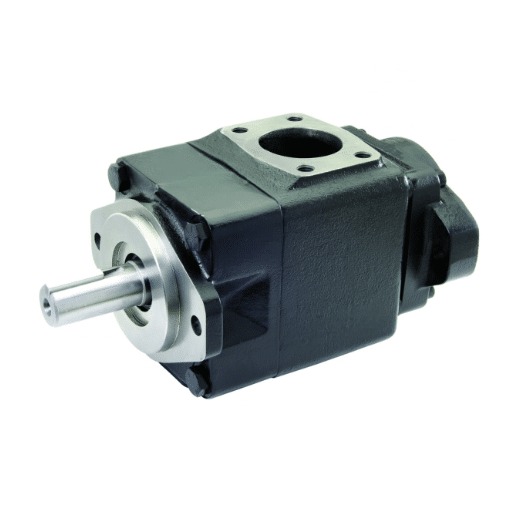
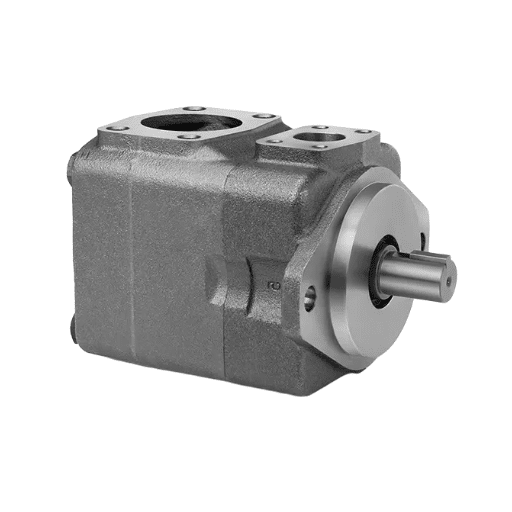
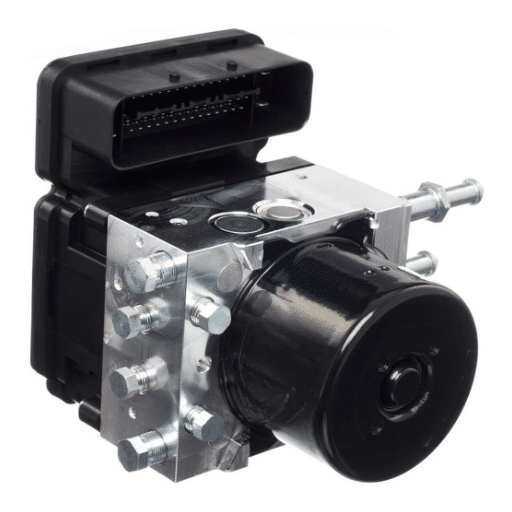
By the term “ABS pump” we mean the Anti-Lock Braking System Hydraulic Control Assembly (HCU) in the first place, which is an electro-hydraulic component enabling pressure modulation in the brake fluid during anti-lock brake system action. Material to know is that the latter is comprised of solenoids, a low-pressure check valve, a low-pressure reservoir, and electrically operated pumps and computer components, all wrapped into one design. Clearly, the ABS unit is an HCU as well, and the electronic control unit (ECU) will receive data about the speed of each wheel. This observation, of course, does not apply to every vehicle and sometimes those are packed into one piece, though.
Misdiagnosing an ECU fault as an HCU failure wastes 600 to 2,100 in unnecessary parts and labor. Always confirm the fault through a bidirectional scan tool diagnosis before committing to replacement.
Common Failure Symptoms Requiring Replacement
To determine when you ABS pump should be replaced, check out for these common symptoms: whenever the indicator light is illuminated in the system, whenever the pads are pushed against the break disks very strongly and release the pedal, areas in the motor wear are in contact soon after ignition (start), during the final breaking the rear wheels stops whilst still in gear, and fault codes of the solenoid or the motor pump circuits which are stored in the vehicles memory. A spongy or sinking brake can be felt from the driver’s seat in case there is a hydraulic pump leak.
If you observe these symptoms, follow a systematic hydraulic diagnostic methodology to confirm the root cause before ordering parts.
Diagnostic Confirmation Before Replacement
No single system component should ever be replaced purely because the ABS lamp is illuminated on the dashboard. When this light comes on, it does not refer to the hydraulic unit specifically, but shows that the ABS system has a weakness and for ERM systems, they rely on the wheel speed. Common false assumptions involve the replacement of the wheel speed sensors, potential and actual damage to the padding, and errors in miscommunication with the ECU.
A bidirectional scan tool with ABS module access is the minimum diagnostic requirement. The tool should command pump motor activation, cycle individual solenoid valves, and read real-time pressure data where supported.
In the year 2024, a resident of Ohio who had a car faced a situation in which the Anti-lock Braking System (ABS) indicator was on continuously, making him aspire to take the vehicle to the after-market shop for service. The service advisor prepared a repair order and the total estimate was $1800 for the ABS Antilock Brake Pump. The second opinion of an independent diagnostics specialist showed a rusted front wheel speed sensor harness, right-hand side only. Replacing it cost $180. The HCU was ok. In short, the difference in cost between a correct and a wrong conclusion was $1620, which is the cost of a correct scan tool.
If your ABS Pump often has problems, please check out our article about ABS Pump Failure Symptoms.
ABS Pump Replacement Cost Breakdown
The following table summarizes national average costs by vehicle category. Parts costs reflect OEM and OES tier pricing. Labor costs reflect standard independent shop rates.
| Vehicle Category | Parts Cost | Labor Cost | Total Replacement Cost | Labor Hours |
|---|---|---|---|---|
| Passenger Car | 400−1,100 | 200−450 | 600−1,550 | 2-3 hours |
| Light Truck / SUV | 550−1,500 | 250−600 | 800−2,100 | 2.5-4 hours |
| Medium-Duty Commercial | 1,200−2,800 | 300−700 | 1,500−3,500 | 4-6 hours |
| Heavy-Duty Commercial | 1,800−4,000 | 400−1,000 | 2,200−5,000 | 5-8 hours |
Passenger Vehicle Replacement Cost
For standard passenger vehicles, the hydraulic unit accounts for 60 to 75 percent of total replacement cost. Labor constitutes the remaining 25 to 40 percent. Compact and mid-size vehicles with easily accessible engine bays occupy the lower end of the range. European luxury sedans with integrated stability control and advanced driver assistance systems occupy the upper end due to higher parts costs and coding requirements.
Light Truck and SUV Replacement Cost
Combination vehicles – light trucks and SUVs are always within the average range; however, they might have higher costs as they have larger brake systems, and HCUs may have higher pressure and complex integration in the body. Additional calibration may be required for any four-wheel-drive cars with or without a traction control system in place, after installation.
Commercial Vehicle Replacement Cost
The cost to change an ABS pump in a commercial vehicle can range from 1,500 on average for mid−trucks, reaching 5,000 for large heavy Class 8 tractors with integrated brake pressure modulation. These basically have the largest bodies, 24-volt pump motors, 250 bar (3,625 PSI) in most spheres up to a certain point and it also takes longer to install frame-mounted units than dash ones. The same positive displacement pump principles that govern industrial hydraulic pumps apply to these scaled-up automotive units.
Parts vs. Labor Cost Distribution
In all the stated segments of vehicles, parts constitute the largest share of costs. HCU is a precision-like machined part that is tested for pressure, among other processes and is not field serviceable. The amount of labor depends on vehicle access and how much work is related to fixing units, bleeding systems and coding. Practices in labor rates centered places which have 120 to 150 per hour, will show a significant difference in prices in comparison to slow-paced rural setups, which are at 70 to 90 per hour.
If your operation sources ABS pumps for a fleet or repair network, the unit specification and supplier tier determine long-term cost more than labor rate. Contact our technical team for a sourcing consultation that matches exact vehicle specifications to quality-tier suppliers.
If you are not sure which repair and replacement is more appropriate for you when the ABS pump has issues, please check out our article on ABS Pump Repair vs Replace.
OEM vs. Aftermarket ABS Pump Cost Comparison
| Parts Tier | Typical Cost vs. OEM | Warranty | Reliability Rating | Best For |
|---|---|---|---|---|
| OEM (Dealer) | 100% baseline | 12-24 months | Highest | Warranty repairs, lease vehicles |
| OES (Original Equipment Supplier) | 60-70% of OEM | 12-24 months | High | Cost-conscious fleet operators |
| Premium Aftermarket | 50-60% of OEM | 12-18 months | Medium-High | Independent repair shops |
| Economy Aftermarket | 30-45% of OEM | 6-12 months | Variable | Budget-limited private owners |
OEM and OES Replacement Units
The OEM units and factory installation are of the same quality and offer dealership warranty. The only difference between the OEMs and the OES is that Original Equipment Service Components (OES) are approved by dealers as genuine spare parts, whereas the Original Equipment Manufacturer (OEM) parts are not.
For safety-critical brake components, OES units represent the optimal balance of specification accuracy and cost control. The hydraulic component construction standards that determine valve body durability apply equally to OEM and OES tiers.
Premium Aftermarket Options
Aftermarket pump manufacturers create ABS pumps that are of the same quality, if not even better, compared to OEM designs. Independent tests are often performed on these components, and they come with 12 to 18 month warranties, most of which cost 40 to 50 percent less compared to factory ABS units. Their quality has never been fair across the board; thus, it is a standard procedure to purchase from suppliers who have certified ISO audits and have test data available for decision-making of their products.
Economy Aftermarket Risks
Low-cost HCUs acquired in the Economy aftermarket from unknown world companies are inclined to cause major performance issues due to their low reliability. It is possible that quality characteristics of the seat of the valve, quality of the solenoid spool as well as corrosion protection are not observed in accordance with the design limits of the OEM.
Field failure rates for economy-tier units substantially exceed OE-tier equivalents. The initial cost savings often evaporate when premature failure requires a second replacement.
Warranty and Reliability by Tier
The warranty period runs from 6 months for economy class to 24 months for genuine and original equipment suppliers. However, the warranty conditions differ in terms of the labor coverage, the return of goods or accessories, and the coverage area as well. In a typical TCO study for fleet operations, the choice is for OES parts and premium aftermarket products, with the OEM as the more cautious option for individuals with one vehicle but who are looking for the most extensive warranty advantages.
Not sure how to choose a supplier for your ABS pump? Please check out our article on ABS Hydraulic Unit Manufacturers.
ABS Pump Replacement Procedure (Step-by-Step)

Required Tools and Equipment
Replacement requires a bidirectional OBD-II scan tool with ABS module access, brake fluid recovery equipment, line wrenches for hydraulic fittings, a multimeter for electrical verification, and the replacement HCU with mounting hardware. Post-installation requires the scan tool for solenoid cycling during bleeding and module coding, where required.
Step 1: System Depressurization and Fluid Recovery
Remove the checkpoint cap on the brake master cylinder. Please ensure that the brake fluid level does not reach the top and or the center of the reservoir fluids. The purpose of this is to avoid overpouring when the brake lines are being uncovered. Be wary of any brake fluid that may splash on any finished sections, like steel bodywork.
Step 2: Electrical Disconnection
Turn the negative battery terminal to the off position. Locate the HCU and detach the electrical harness of the HCU, disconnecting the locking tab gently to avoid any damage around the pins. Prior to the removal, record the position of the harness by capturing an image.
Step 3: Hydraulic Line Disconnection
When using line wrenches, to avoid damage to the ends of the brake lines, remove the brake lines from the HCU in a manufacturer – recommended sequence. Seal off all lines once they are removed to prevent the loss of brake fluid and contamination. Each line should be identified by each circuit and wheel.
Step 4: Unit Removal and Installation
Remove the HCU mounting bolts and withdraw the unit. Install the replacement unit in reverse order. Torque mounting bolts and line fittings to the manufacturer’s specification. Overtightening line fittings cracks the aluminum valve body. The same pump specification calculations used for industrial hydraulic systems apply when verifying replacement unit pressure ratings.
Step 5: System Bleeding with Scan Tool
This is the step that separates professional installation from incomplete installation. Standard manual or pressure bleeding does not purge air from the HCU’s internal valve passages because the solenoid valves remain closed at rest. The technician must use the bidirectional scan tool to command sequential solenoid cycling while bleeding each wheel circuit. Failure to perform a scan-tool bleeding produces a persistent spongy pedal.
Need information on ABS Hydraulic Unit Bleeding? Please see our article on How to Bleed ABS Hydraulic Unit.
Step 6: Coding and Initialization
Many manufacturers require VIN-specific coding or calibration after HCU replacement. The replacement unit must recognize the vehicle’s tire size, ESC tuning, and ADAS integration parameters. The scan tool performs this programming. Skipping this step produces stored DTCs and may disable ABS and ESC functions.
Can You Replace an ABS Pump Yourself?
DIY Feasibility Assessment
Mechanically competent owners can perform the physical removal and installation of an ABS pump. The procedure involves standard hand tools and follows logical steps. However, two critical post-installation requirements present barriers for most DIYers.
Required Technical Skills
Another thing that makes DIY enthusiasts worry about the replacement as a side job is the expectation that the person is capable of changing hydraulic issues, dealing with electrical connector application and torque specification adherence. The more daunting challenge for which post-installation procedure is equipped is finally the replacement of scan tool bleeding and the module of required coding, which in turn calls for the use of equipment that costs 2,000 to 10,000 and above or operates within a dealership setting.
Tools Needed for DIY Replacement
Beyond standard mechanics tools, DIY replacement requires a quality line wrench set, brake fluid recovery equipment, and a basic OBD-II reader. The basic reader can clear codes but cannot command solenoid cycling or perform coding. Without scan-tool bleeding, the installation remains incomplete.
When Professional Installation Is Required
Professional installation is required for any vehicle with integrated ESC, traction control, or ADAS features, which describes virtually every vehicle manufactured after 2012. It is also required for commercial vehicles subject to FMCSA brake system standards. The cost of improper installation far exceeds the labor savings of DIY attempts.
Fleet ABS Pump Replacement Budgeting

Predictive Maintenance to Control Costs
Fleet operations that track ABS pump motor current draw during routine inspections can identify units approaching failure before the warning light appears. Elevated current consumption indicates worn motor brushes or increasing pump resistance. Replacing units during scheduled maintenance avoids emergency roadside repairs at premium labor rates.
Bulk Procurement Strategies
Fleet managers sourcing multiple ABS pumps annually should negotiate tiered pricing with OES suppliers. Volume commitments of 10 or more units per year typically unlock 15 to 25 percent discounts below single-unit retail. Bundling scheduled maintenance appointments further reduces per-unit labor costs.
Standard Labor Time Estimates by Vehicle Class
| Vehicle Class | Standard Labor Hours | Complexity Factors |
|---|---|---|
| Compact Passenger | 2.0-2.5 hours | Easy access, simple bleeding |
| Full-Size SUV / Truck | 3.0-4.0 hours | Limited access, integrated systems |
| Medium-Duty Commercial | 4.0-6.0 hours | Frame mounting, 24-volt systems |
| Heavy-Duty Commercial | 5.0-8.0 hours | Trailer integration, advanced ESC |
Warranty and Core Return Programs
Most OES and premium aftermarket manufacturers also offer core return allowances ranging from 75 to 200 for the returned defective units. There is a need for the core tracking system to be in place so that fleet managers can maximize the core process. When filing a claim under warranty, it is important to provide the e followed by the DTC code, date of stamping and history or process of the failed product off distribution.
Warming up the rear fleet in 2023, the minister says that failing to come up with the four medium−duty truck ABS pump replacement line budget constituted 8,400 dollars after seeking an OES solution as opposed to the dealer. This work was then included in the regular quarterly maintenance activity and the total outlay was reduced to $6,300. Both vehicles were the same and came with 24 months warranty. The $2,100 saved went towards the introduction of a predictive maintenance solution that assisted in the avoidance of two premature emergencies on the road breakdowns.
Frequently Asked Questions
How much does an ABS pump replacement cost?
ABS pump replacement costs from 600 to 2100 for passenger vehicles and from 1600 to 5000 for commercial usage vehicles. The separate cost of items is reported as 60–75 percent of the pertinent total. The labour charges as well as service accessibiliy is recieved for the shell of parts that covers the remaining cost. Use of the VIN encoder software always results in low costs of 30–50 percent from what is charged when using a much higher OEM vendor, the dealer.
Can I drive with a bad ABS pump?
In cases of its failure, braking is automatically restated to the conventional hydraulic system, thus allowing limited driving of the vehicle. However, the loss of driving safety systems, such as anti-lock braking system, stability management and traction control, makes the driving risky as wheel lock during an instant standstill can be created in emergencies. It is also certain that in case of a failure of the ABS pump, one should not continue to drive.
How long does an ABS pump replacement take?
Installation by a pro requires 2 to 4 hours in the case of a passenger car and from 4 to 8 hours in the case of a commercial car network; this time includes diagnostic, the physical uninstall and install it, bleed by scan purposes, and programming. People who do not have the proper tools to perform this task will end up wasting a lot of time over the stipulated time but will still not complete the work.
Do I need to program a new ABS pump?
Most modern vehicles require module coding or initialization after ABS pump replacement. The replacement unit must learn the vehicle’s VIN, tire size, ESC calibration, and ADAS parameters. A bidirectional scan tool performs this programming. Skipping this step disables ABS and ESC functions.
Conclusion
The replacement cost of an ABS pump varies from $600 (for vehicles like a small hatchback) to $5,000 (for motor trucks and other bigger commercial vehicles). The difference in pricing results from such variables as the pressure limit per unit, the vehicle’s structure and the vehicle mechanics accessibility, and the high-priced labor market, along with the important post-repair procedures, namely, scan tool bleeding and module coding.
Taking all these factors into consideration helps in avoiding any excessive expenditure on premium dealership parts that are not actually required and equally protects the use of low-cost remanufactured aftermarket units with low durability.
It could be argued, that the process of replacement of the ABS management unit in itself is little different from any other mechanical operation, but it is in fructifying the diagnostic into parts stage, determining the quality level based on the total cost, and the additional electronics post operational measures, which are usually not covered by repair manuals where majority of the expenses are involved. Fleet management through scheduling and enforcing practices such as premonitory servicing as well as steady follow-up on returned parts, helps decrease the future costs for ABS pump repairs.
Your procurement shall enable sourcing multiple ABS pumps and associated repair parts. Warranty claims, in most cases, result from failed specifications when ordering replacement components in such operations. Contact our technical team to consult on supplier selection in line with vehicle make and model requirements, also involving cost consideration. Accurate part specification minimizes some health and safety risks and avoids possible warranty claims in future visits for the same job.