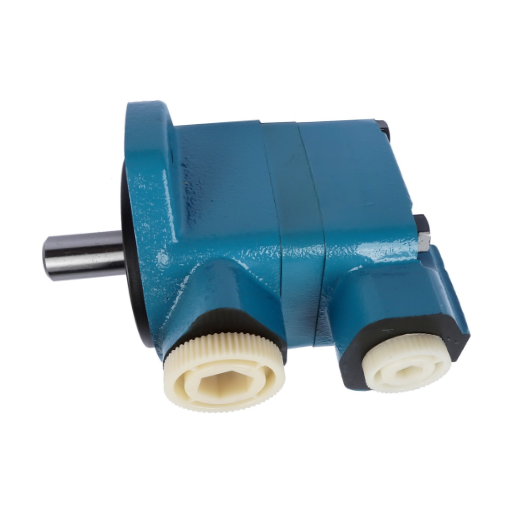
A contractor running a pressure-washing trailer tried to reach 8,000 psi by re-gearing the piston pumps already on the truck. Within two weeks, the moving seals had failed twice, and the discharge pressure was never stable even when the pumps held together. The fix was not a heavier gearbox. It was a different reciprocating architecture: a triplex plunger pump.
If you’re comparing a plunger pump vs. a piston pump, you’ve probably noticed that most guides repeat the same two paragraphs of description without a single pressure rating, efficiency figure, or selection rule. That’s a problem, because both designs are reciprocating positive-displacement pumps, and on paper they look almost identical.
Here is what this guide delivers. You will learn the one mechanical difference that drives every trade-off between the two, see a quantified side-by-side comparison, and finish with a decision rule you can apply to a real fluid and duty cycle. If you want the surrounding context first, the plunger pump complete guide covers the mechanism, configurations, and applications end to end. LOYAL INDUSTRIAL PTE. LTD. supplies multiple reciprocating pump families, so the goal here is a neutral, engineering-level comparison rather than a pitch for one architecture.
What Is the Difference Between a Plunger Pump and a Piston Pump?
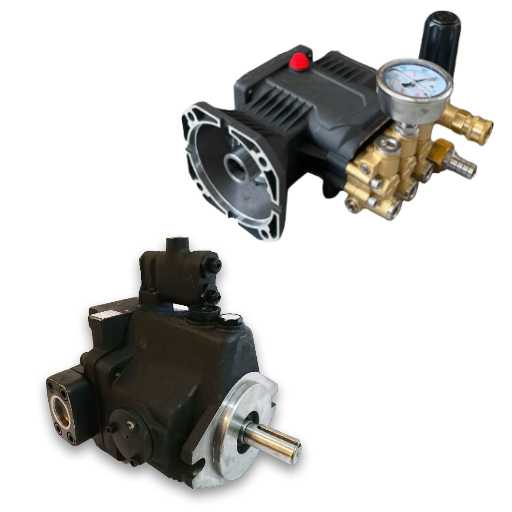
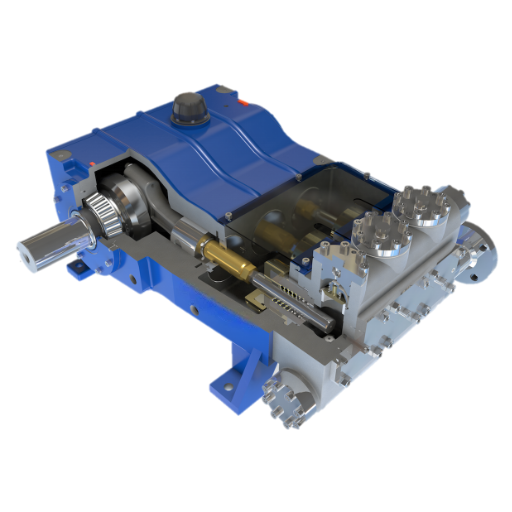
The difference is where the high-pressure seal sits. In a piston pump, the seal is mounted on the moving piston and travels with it inside a bored cylinder. In a plunger pump, the seal (packing) is stationary in the pump head, and a smooth, precision-ground plunger slides back and forth through it.
That single design choice cascades into pressure ceiling, friction, seal life, and priming behavior. Both pumps use the same two-stroke cycle, drawing fluid through an inlet check valve and ejecting it through a discharge valve, so the mechanism is not what separates them. The seal location is.
The Defining Difference: Stationary Seal vs Moving Seal
In a piston pump, the packing is installed between the piston and the cylinder wall. The cylinder must be bored to an exact, uniform size because the bore itself carries the sealing load, and the piston slides against it.
In a plunger pump, only a short stuffing box has to be bored and packed. The plunger, a smooth cylindrical rod, is generally unpacked and simply travels through the fixed seal. Because the sealing surface is the plunger’s external diameter rather than an internal bore, it can be ground to a much tighter tolerance and made from very hard materials such as hardened steel or solid ceramic.
That precision advantage is why plungers reach pressures a moving seal can’t survive. There’s also a friction difference. A moving seal creates a pushback force against the piston, so the pump works harder for the same output. The stationary seal moves friction along the plunger’s travel instead of pushing against it, which reduces wear and heat.
If you are specifying a reciprocating pump for a process duty, the seal type is the first decision, not the last. You can request a technical specification sheet to confirm the architecture that matches your pressure and fluid.
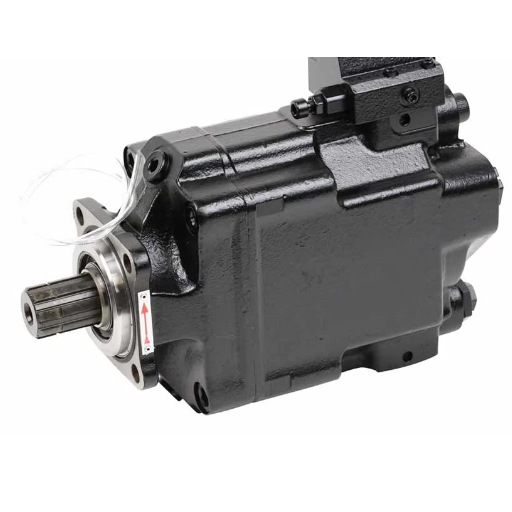
One terminology trap is worth clearing up before going further. The colloquial “hydraulic plunger pump” often refers to a radial or axial piston-type pump moving oil in a closed hydraulic circuit, which is a different family covered under hydraulic axial piston pumps. This article compares the process plunger pump and the process piston pump, both of which handle water, chemicals, and slurries rather than oil circuits.
The full stroke-by-stroke mechanism, including valve timing and the fluid path, is explained in how a plunger pump works.
Plunger Pump vs Piston Pump: Head-to-Head Comparison
The table below consolidates the comparison into one grid so you can read it like a specification sheet rather than a paragraph.
| Criterion | Piston Pump | Plunger Pump |
|---|---|---|
| High-pressure seal | On the piston (moves with it) | Fixed in the head (stationary) |
| Sealing surface | Internal cylinder bore | External plunger diameter |
| Typical pressure | ~100-1,200 psi | ~100-10,000 psi |
| Upper pressure ceiling | ~150 barg / ~20 MPa in larger classes | 4,000 bar / ~58,000 psi |
| Priming | Self-priming | Not self-priming |
| Inlet requirement | ~-8.5 to 40 psig | ~60-70 psi, flooded or booster |
| Volumetric efficiency | Higher at low pressure | ~85-95%, rises with pressure |
| Overall efficiency | Above 90% | Above 90% |
| Friction and seal wear | Higher, shorter seal life | Lower, longer packing life |
| Typical action | Often double-acting | Almost always single-acting |
| Continuous-duty speed | Often below ~80 rpm | ~200-500 rpm |
| Abrasive/solids handling | Good with replaceable liners | Clean fluid preferred; needs flush |
| Best-duty fit | Medium/low pressure, high flow | High pressure, clean fluid, dosing |
Read across the rows, and the pattern is clear. The plunger wins on pressure and seal life. The piston wins on priming, low-pressure efficiency, and abrasive duty.
Pressure Capability: Why Plungers Own the High-Pressure End
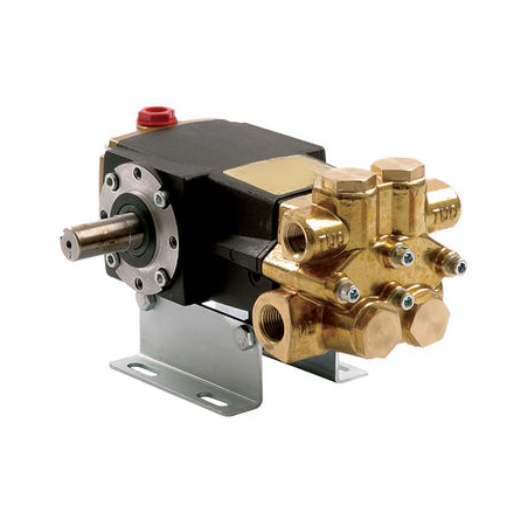
Plunger pumps cover roughly 100 to 10,000 psi in ordinary industrial service, according to CAT Pumps, and reach far beyond that in specialized duty. Industrial high-pressure plunger pumps run to 4,000 bar (about 58,000 psi) per Kamat, and waterjet intensifiers push toward 100,000 psi.
Piston pumps are typically applied from about 100 to 1,200 psi. Larger piston classes in oilfield and mud-pump service reach roughly 150 barg, or about 20 MPa, but the design doesn’t extend into the extreme-pressure range.
The reason is mechanical. A moving seal has to be extruded and dragged against a bore every stroke, and at extreme pressure that seal fails quickly. A stationary seal in a stuffing box doesn’t experience the same extrusion, so it survives pressures that would destroy a moving seal. What’s counterintuitive is that efficiency actually rises with pressure for reciprocating designs, so the plunger isn’t trading efficiency for pressure. It’s gaining both.
For a specific pressure band, you can request a technical specification sheet from our engineering team to confirm the right frame size.
Priming and Inlet Requirements: Self-Priming vs Flooded Suction
Here the piston pump has a real advantage. Piston pumps can draw their own liquid because their inlet valves are mechanically actuated, and they tolerate inlet pressures from roughly -8.5 psig up to 40 psig. In many installations, they self-prime within those limits.
Plunger pumps are not self-priming. They rely on pressure differential to seat and lift the suction valve, so they need flooded suction or a booster pump. A common requirement is a positive inlet pressure of about 60 to 70 psi.
One honest caveat applies to both. Reciprocating pumps are poor compressors, and most manufacturers recommend venting and priming before operation even when the design is nominally self-priming. Self-priming should never be the only reason you choose one architecture over the other.
Volumetric Efficiency and Flow
Piston pumps generally show higher volumetric efficiency at low pressure. The packing between the piston and cylinder wall helps limit slip, the internal leakage from discharge back to suction.
Plunger pumps run at about 85 to 95 percent volumetric efficiency, and the figure rises as discharge pressure increases. Overall efficiency for both architectures exceeds 90 percent, but the split matters. Total efficiency is mechanical efficiency multiplied by volumetric efficiency, so a design can look efficient overall while losing ground in one component.
Fluid viscosity shifts the balance. Higher viscosity improves volumetric efficiency because it helps seal internal clearances, but it also raises mechanical losses, so there is a sweet spot for each fluid and temperature. Flow itself is set by the pumping element’s area, its stroke, the number of elements, and the drive speed.
Seal Wear, Friction, and Service Life
When Mike, a maintenance planner at a water-treatment plant, switched an injection duty from piston to plunger pumps, his repack interval moved from roughly every six weeks to several months. The reason was the friction difference described earlier, combined with the ease of adjusting packing in a stationary stuffing box.
The piston’s trade-off is serviceability with abrasives. Its seal rides in a wearing bore, which shortens seal life, but the cylinder liner is replaceable, and that replacement is the piston’s strongest advantage when the fluid carries solids.
The plunger’s trade-off is fluid sensitivity. Packing and valves become the wear components, and the correct running state for plunger packing is a slight, controlled drip rather than a dry seal. Over-tightening a gland to stop that drip causes heat and shortens packing life.
Abrasives, Fluids, and Material Selection
This is often the factor that decides the comparison before pressure even comes into play.
Piston pumps handle drilling mud, slurries, sand-laden water, and other abrasive fluids well when fitted with replaceable liners and either soft (rubber or urethane) or hard-ring pistons. Piston service degrades sharply above a Miller Number of about 50, which is the abrasivity index used to rank slurries.
Plunger pumps suit clean, high-pressure fluids: pressure washing and jetting, waterjet cutting, chemical injection, saltwater disposal, boiler feedwater, and CO2 or gas injection. They can handle some abrasive service, but only with reduced speed, hardened or ceramic plungers, and stuffing-box flushing. Without that flush, solids reach the packing and abrade both the seal face and the plunger.
Material pairing follows the same logic. Plungers are commonly hardened steel or solid ceramic, matched to packing in NBR, FKM, EPDM, or PTFE depending on chemistry. Pistons pair with a lined cylinder and a rubber, urethane, or hard-ring element.
Duty Cycle and Speed: Single-Acting vs Double-Acting
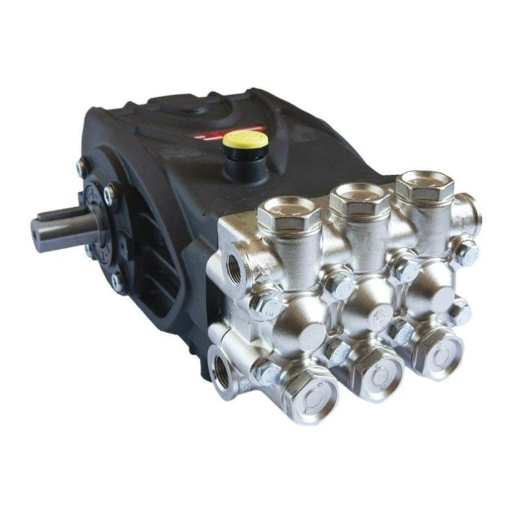
Duty cycle catches more buyers than pressure does. The industry pattern is that continuous-duty double-acting pumps are normally offered with pistons, often running below about 80 rpm, while continuous-duty single-acting pumps are normally offered with plungers at 200 to 500 rpm, with a ceiling commonly around 600 rpm.
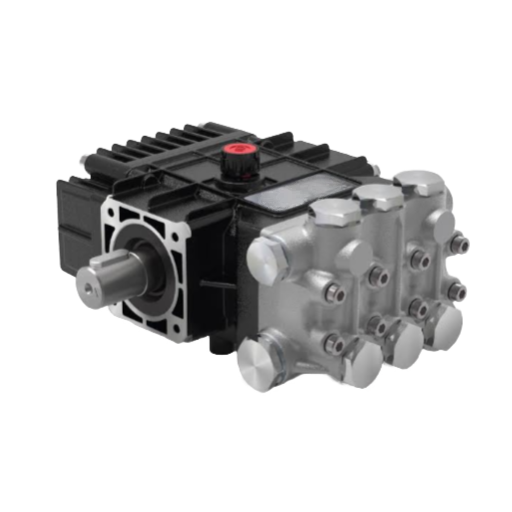
Plunger pumps are almost always single-acting, which means one discharge pulse per plunger per revolution, and that produces pulsation. A triplex plunger pump fires six pulses per revolution with roughly +6 percent to -17 percent amplitude, smoothing the flow considerably compared with a simplex unit. Piston pumps, being commonly double-acting, discharge on both strokes and are smoother per revolution.
The practical rule is to match the choice to duty, not to a headline number. Intermittent duty such as jetting favors a compact plunger; continuous duty such as reverse-osmosis feed favors a larger plunger running slower for longer service intervals. The configuration trade-offs from simplex to quintuplex are detailed in types of plunger pumps.
When to Choose a Plunger Pump vs a Piston Pump
A single threshold resolves most selection decisions. For sustained pressures above roughly 5,000 to 7,500 psi with a relatively clean fluid, choose a plunger pump. For abrasive or solids-laden fluid, choose a piston pump with replaceable liners and pistons, regardless of pressure.
Beyond that rule, use these two lists.
Choose a plunger pump when you need:
- High or ultra-high discharge pressure
- Precise, repeatable dosing or injection
- Long seal life and infrequent repacking
- Clean or mildly contaminated fluid
- A compact, single-acting pump on intermittent duty
Choose a piston pump when you need:
- Medium or low pressure at high flow
- Self-priming or a low available inlet pressure
- Tolerance of abrasives and solids
- Replaceable liners as a maintenance strategy
- A double-acting, smoother-per-revolution discharge
The two ranges overlap, so verify the actual liquid-end construction, action, and duty rating rather than assuming a matching footprint means a matching pump.
Cost: Purchase Price vs Total Cost of Ownership
Cost claims in this market conflict, which is itself a useful signal. Some suppliers describe plunger pumps as cheaper upfront with lower lifetime cost, while others describe piston pumps as simpler to build and cheaper to maintain. Both can be true for the duty each supplier is selling into.
The honest approach is to compare total cost of ownership. The drivers are seal and packing life, repack frequency, liner or piston replacement cost, the energy consumed by friction and pushback, and the value of lost production during downtime.
Consider a desalination operator, Priya, who chose the lowest-priced plunger pump for a continuous reverse-osmosis feed. The pump saved money at purchase, but its intermittent-duty packing failed every few months, and the standby pumps plus lost output pushed the five-year cost well above a correctly rated unit. The purchase price was the smallest number in the calculation.
A cheaper, faster single-acting pump can cost more over its service life than a higher-priced double-acting machine if the duty is continuous and the seal life is short. Build the comparison around your duty cycle and your fluid, and the price tag becomes the last variable rather than the first.
Sourcing the Right Reciprocating Pump
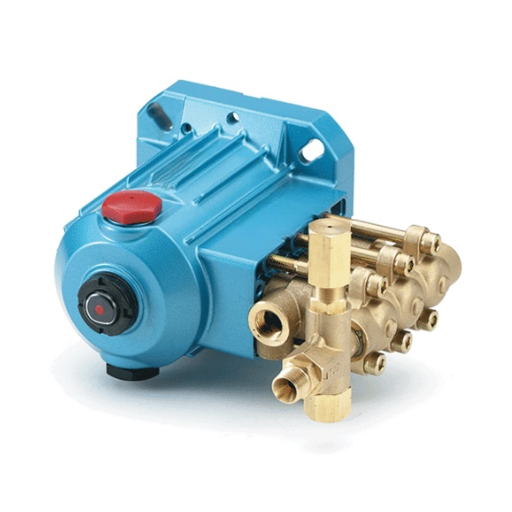
A complete request for quotation removes most of the ambiguity between the two architectures. The data set that matters includes fluid and chemistry, required flow, discharge pressure, fluid temperature, abrasivity or solids content and Miller Number, duty cycle in hours per day, drive type, available inlet pressure or flooded suction, required materials, and mounting.
When you are swapping between architectures, confirm the liquid-end construction, the action (single or double), the plunger or piston diameter and stroke, the valve and seat type, and rotation. A pump that fits the footprint but differs on those points will run, but it won’t deliver the duty you specified.
For a duty-specific recommendation, contact LOYAL INDUSTRIAL PTE. LTD. for an industrial solution consultation.
Frequently Asked Questions
Is a plunger pump a type of piston pump?
No. Both are reciprocating positive-displacement pumps, but the stationary-seal design of a plunger pump is mechanically distinct from the moving-seal design of a piston pump. Many general sources conflate the two, which is why the terminology is so confusing.
Why do plunger pumps handle higher pressure than piston pumps?
Because the plunger’s seal doesn’t move with the pumping element. A stationary seal avoids the extrusion and friction that destroy a moving seal at extreme pressure, which is why plunger pumps reach 4,000 bar and beyond.
Are plunger pumps self-priming?
Not normally. Plunger pumps rely on pressure differential to lift the suction valve, so they need flooded suction or a booster, commonly at about 60 to 70 psi of positive inlet pressure.
Are piston pumps self-priming?
Within limits, yes. Piston pumps use mechanically actuated inlet valves and tolerate inlet pressures from around -8.5 to 40 psig, which allows self-priming in many installations.
What pressure can a plunger pump handle compared with a piston pump?
Plunger pumps typically cover about 100 to 10,000 psi and can reach 58,000 psi in industrial duty, while piston pumps are generally applied from about 100 to 1,200 psi.
Which is more efficient, a plunger pump or a piston pump?
Both exceed 90 percent overall efficiency. Piston pumps tend to show higher volumetric efficiency at low pressure, while plunger pumps run 85 to 95 percent volumetric efficiency that rises with discharge pressure.
Do plunger pumps have a piston?
No. A plunger is a smooth, generally unpacked rod that slides through a fixed seal, whereas a piston carries its own packing and moves inside a cylinder bore.
How do I choose between them?
For sustained pressures above about 5,000 to 7,500 psi with clean fluid, choose a plunger pump. For abrasive or solids-laden fluid, choose a piston pump with replaceable liners.
Conclusion
The plunger pump vs piston pump decision comes down to one mechanical fact: the seal is either stationary in the head or moving with the piston. That fact explains the pressure ceiling, the friction and seal life, and the priming requirements. The plunger owns extreme pressure and seal longevity, while the piston owns priming, low-pressure efficiency, and abrasive duty.
Use the selection threshold first, then confirm it against your fluid cleanliness, duty cycle, and available inlet pressure. If you fix the duty classification before you compare a price tag, the right architecture usually selects itself.
To turn this comparison into a specification, contact LOYAL INDUSTRIAL PTE. LTD. for a technical specification sheet, an OEM quotation, or a customized recommendation for your plunger pump vs. piston pump decision.