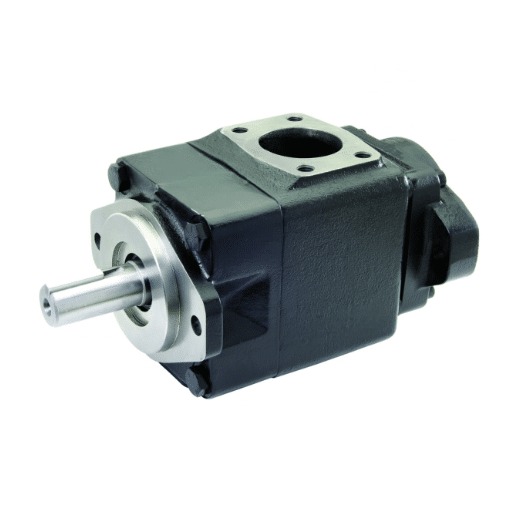
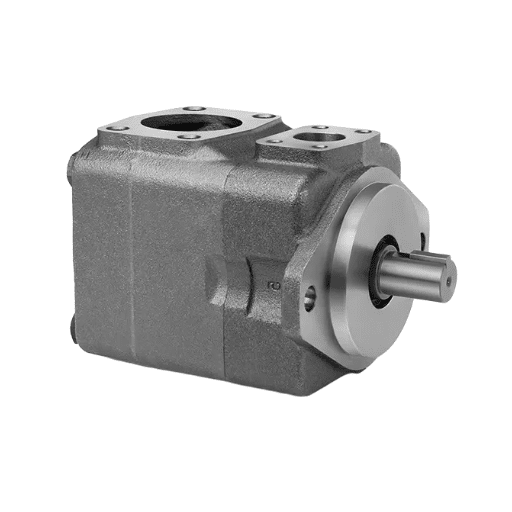
A builder in Ohio once called us about a 14,000 lb dump trailer that would not lift a full load of gravel. He had installed a 3,200 PSI power unit and a 3-inch bore cylinder. On paper, the cylinder force looked sufficient, but the bed stalled at the start of the lift. The problem was not the pressure rating. It was geometry. The effective lift force at the initial bed angle was less than half of what he expected.
That story is why selecting a dump trailer hydraulic pump is not a simple part-number swap. The pump, cylinder, reservoir, electrical system, and hoist geometry all work together. Get one wrong and the entire system underperforms.
This guide walks through how to choose and size a dump trailer hydraulic pump for scissor hoists, direct-push cylinders, and telescopic hoists. You will see real specs, worked calculations, wiring guidance, and the most common mistakes we see in the field. We will also explain why a 2 stage hydraulic pump dump trailer configuration is usually not the right choice, and where a two stage hydraulic pump vs single stage design fits into the picture.
What Is a Dump Trailer Hydraulic Pump?
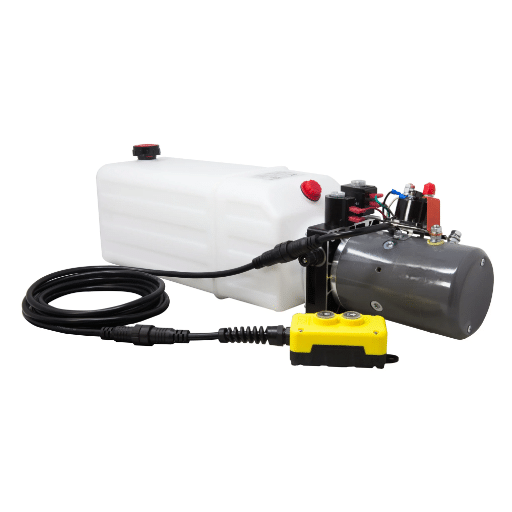
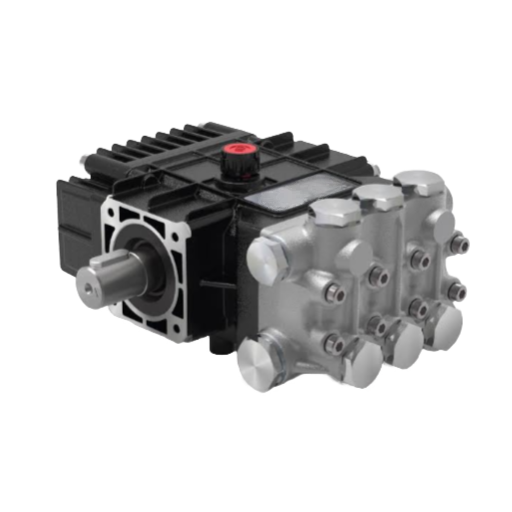
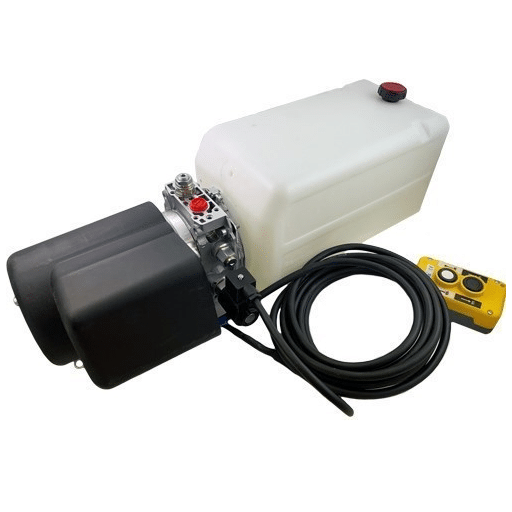
A dump trailer hydraulic pump is the pressure-generating heart of a self-contained lift system. In most trailers it is sold as part of a hydraulic power unit that includes a DC electric motor, a gear pump, a reservoir, a directional control valve, and a relief valve.
The pump draws oil from the reservoir and sends it to a lift cylinder. The cylinder extends, raises the dump bed, and the oil returns to the tank when the bed lowers. Unlike a dump truck PTO system, a trailer power unit is independent of the towing vehicle. It only needs a 12V battery and a control pendant. You can read more about the broader architecture in our dump truck hydraulic pump system guide.
The main components you will see in a dump trailer hydraulic power unit are:
- DC motor: Usually 12V, 1.6–3.0 kW, intermittent duty
- Gear pump: Positive-displacement pump, typically 1.1–2.25 GPM
- Reservoir: 4–12 qt for standard trailers, larger for telescopic cylinders
- Directional valve: Solenoid-operated, single-acting or double-acting
- Relief valve: Limits maximum pressure, commonly 2,500–3,200 PSI
- Control pendant: Wired or wireless remote with up/down buttons
Because the pump is only one part of the system, buying on pressure alone is a common mistake. Flow rate, duty cycle, reservoir volume, and cylinder geometry matter just as much. If you want a visual reference for how the pump, valve, and reservoir connect, our 2 stage hydraulic pump diagram article covers similar schematic symbols.
Power Unit Types: 12V DC, PTO, and Gas Engine
Most dump trailer hydraulic pumps and dump trailer hydraulic power unit designs fall into one of three drive categories. The right choice depends on whether the trailer operates independently or is permanently coupled to a truck.
12 Volt Hydraulic Pump Dump Trailer (DC Electric Power Unit)
A 12 volt hydraulic pump dump trailer system is the standard for pull-behind designs. The unit mounts on the trailer frame and draws power from an onboard battery. It is self-contained, relatively quiet, and requires no PTO.
Typical specs:
- Voltage: 12V DC
- Motor power: 1.6–3.0 kW
- Flow: 1.1–2.25 GPM
- Max pressure: 2,100–3,200 PSI
- Reservoir: 4–12 qt
- Duty cycle: Intermittent, usually 2–3 minutes on, then cooldown
The trade-off is battery load. A 12V pump can draw 100–180 amps under load, so the electrical system must be sized for high current, not just average use.
PTO-Driven Pump
Some heavy or dedicated trailers are plumbed into the towing truck’s PTO hydraulic system. The truck engine drives the pump, so power is much higher and continuous. This setup works well for trailers that never operate behind different vehicles.
The downside is dependence on the truck. If the trailer is disconnected, it has no lift capability. PTO-driven trailer systems also require compatible quick-connect couplers and a truck with the right hydraulic output.
Gas Engine Power Unit
For remote job sites without a suitable tow vehicle, a small gas engine can drive a hydraulic pump directly. These units deliver higher flow and pressure than 12V systems, but they add weight, noise, fuel maintenance, and theft risk.
Single Acting vs Double Acting Dump Trailer Pump: Which One Do You Need?
One of the first decisions when buying a dump trailer hydraulic pump is the single acting vs double acting dump trailer pump question.
Single-Acting (Power Up / Gravity Down)
In a single-acting system the pump sends oil to extend the cylinder. The bed lowers by gravity, with a flow-control or lowering valve metering the return oil. These systems are simpler, less expensive, and common with telescopic cylinders.
Single-acting works best when:
- The load dumps cleanly without sticking
- Fast lowering is not required
- The cylinder is a front telescopic design
Double-Acting (Power Up / Power Down)
A double-acting system uses the pump to extend the cylinder and to retract it. This gives controlled, forceful lowering, which is important for scissor hoists, tailgate locks, and trailers that operate on uneven ground.
Double-acting is the better choice when:
- The hoist is a scissor linkage
- The trailer needs controlled or powered lowering
- Material tends to stick in the bed
Decision Matrix
| Hoist Type | Recommended Action | Why |
|---|---|---|
| Scissor hoist | Double-acting | Needs controlled retraction of the linkage |
| Direct-push single-stage | Either | Gravity down is fine for light duty; power down improves control |
| Telescopic cylinder | Usually single-acting | Simpler plumbing, common OEM configuration |
| Trailer with tailgate lock | Double-acting | Allows positive retraction and lock release |
Matching the Dump Trailer Hydraulic Pump to the Hoist Type

The hoist type determines how cylinder force translates into lift capacity. Each design places different demands on the dump trailer hydraulic pump.
Scissor Hoist
A scissor hoist uses a folding X-linkage under the bed. The cylinder pushes the linkage open, which raises the bed. This design is compact, stable side-to-side, and common on trailers from 7,000 lb to 14,000 lb GVWR.
Scissor hoists almost always use double-acting cylinders. The pump must supply enough flow for the linkage geometry and enough pressure for the initial lift. A 12V 1.6–2.2 kW unit with a 6–10 qt reservoir is typical.
Example: Marcus built a 10,000 lb scissor-hoist trailer with a 4-qt reservoir and a 1.6 kW pump. After two cycles, the pump began to cavitate. The reservoir was too small for the double-acting cylinder displacement plus thermal expansion. Moving to an 8-qt tank solved it.
Direct-Push Cylinder
A direct-push cylinder is mounted under or near the front of the bed and pushes it up directly. This is the simplest geometry to calculate because the cylinder force aligns with the lifting direction, but only when the bed is already tilted.
At the start of the lift, the bed is nearly flat. The cylinder force must overcome both the load and the poor mechanical advantage. Rod buckling can also be an issue with long-stroke single-stage cylinders.
Telescopic Cylinder
Telescopic cylinders collapse to a short length but extend in stages, giving long strokes from a small package. They are popular on heavy dump trailers and front-mount designs because they provide excellent leverage.
The challenge is oil volume. A 120-inch stroke telescopic cylinder can require several gallons of oil to fill. A standard 6-qt power unit will not work. Many heavy telescopic setups need a 7-gallon or larger reservoir.
Dump Trailer Hydraulic Pump Sizing: How to Match Flow and Pressure
Dump trailer hydraulic pump sizing requires matching pressure and flow to the cylinder and load, then adding a margin for reservoir capacity and electrical load. For help matching flow and pressure to your engine, see our hydraulic pump sizing guide.
Step 1: Calculate Cylinder Force
The theoretical lifting force of a cylinder is:
Force (lbf) = Pressure (PSI) × Piston Area (in²)For a cylinder bore D:
Area = π × D² / 4Examples at 2,500 PSI:
- 3″ bore: 7.07 in² × 2,500 PSI = 17,675 lbf
- 4″ bore: 12.57 in² × 2,500 PSI = 31,416 lbf
- 5″ bore: 19.63 in² × 2,500 PSI = 49,087 lbf
These numbers are theoretical. Actual lift capacity is lower because of bed angle, linkage geometry, friction, and pressure losses.
Step 2: Apply the Geometry Correction
At the start of the lift the dump bed is nearly horizontal. The cylinder force that actually lifts the load is much less than the raw push force. Real-world builders often find that a 3″ cylinder at 2,500 PSI only delivers about 3,000 lbf of useful lift at a 10° bed angle, while a 4″ cylinder delivers closer to 5,500 lbf.
For scissor hoists, the linkage ratio must also be considered. The cylinder may be pushing at an angle through a linkage that multiplies or divides the effective force. Always check the worst-case geometry, not the horizontal push rating.
Step 3: Size the Reservoir
The reservoir must hold enough oil to fill the cylinder at full extension plus extra for thermal expansion, de-aeration, and suction head. The rule of thumb is:
- Single-acting: 2.5–3× cylinder displacement
- Double-acting: 4× cylinder displacement
Cylinder displacement for a single-stage bore D and stroke S:
Volume (gal) = (π × D² / 4) × S / 231A 3″ bore × 24″ stroke cylinder displaces about 0.73 gallons. A single-acting system should have at least a 2.2-gallon (9 qt) reservoir. A double-acting system should have closer to 3 gallons (12 qt) because oil is also needed on the rod side.
Step 4: Estimate Lift Time
Lift time depends on cylinder volume and pump flow:
Time (seconds) = Volume (gal) / (GPM × 231 / 60)For the 3″ × 24″ cylinder (0.73 gal) at 2.0 GPM:
Time = 0.73 / (2.0 × 231 / 60) ≈ 36 secondsReal lift time will be longer because of pump efficiency, voltage sag, and system losses.
Sizing Table by Trailer Capacity
| Trailer GVWR | Typical Cylinder | Pump Power | Flow | Reservoir | Acting Type |
|---|---|---|---|---|---|
| Under 7,000 lb | 2.5″–3″ bore | 1.6 kW | 1.1–1.5 GPM | 4–6 qt | Single or double |
| 7,000–10,000 lb | 3″–3.5″ bore | 1.6–2.0 kW | 1.5–2.0 GPM | 6–8 qt | Double-acting for scissors |
| 10,000–14,000 lb | 3.5″–4″ bore | 2.0–2.5 kW | 2.0–2.25 GPM | 8–12 qt | Double-acting |
| 14,000+ lb / telescopic | 4″–5″ bore or multi-stage | 2.5–3.0 kW | 2.0+ GPM | 12 qt–7 gal | Single or double |
Wiring and Electrical Requirements
The electrical side of a dump trailer hydraulic pump is where many installations fail. The pump motor draws high current, and undersized wiring is a common cause of slow lifting or burned terminals.
Battery Requirements
Use a deep-cycle battery, not a starting battery. Starting batteries are designed for short bursts of high current and will not survive repeated deep discharge from pump cycles.
For light use, a 100 Ah battery may work. For regular or heavy use, choose 200 Ah or more. Some builders use two batteries in parallel to share the load.
Amperage Draw
A 12 volt hydraulic pump dump trailer installation drawing 150 amps at full load consumes:
Power (W) = 12V × 150A = 1,800 WThat is 2.4 HP of electrical input. With motor and pump efficiency losses, the hydraulic output is lower. This is why a 1.6 kW pump cannot be pushed beyond its duty cycle without overheating.
Proper wiring is essential for any dump trailer hydraulic pump because voltage drop directly reduces motor output.
| Pump Distance from Battery | Recommended Wire Gauge |
|---|---|
| Under 10 ft | 4 AWG |
| 10–20 ft | 2 AWG |
| Over 20 ft | 1/0 AWG |
Always use a fused connection close to the battery. Ground connections must be clean and tight. Corroded grounds cause a voltage drop, which reduces pump speed and can make the motor overheat.
Texas Pride Trailers notes that voltage at the pump should stay above 10V while the motor is running. Below that, solenoids may not fully shift, and the motor will struggle.
Installation and Hose Routing Best Practices
Where and how you mount the dump trailer hydraulic pump affects reliability as much as the specifications.
Mounting Location
Mount the dump trailer hydraulic power unit in a protected, ventilated location. Keep it away from exhaust heat, road spray, and vibrating frame members. Many installers use a toolbox or a dedicated frame bracket. The reservoir filler cap and breather must remain accessible.
Magister Hydraulics recommends M10 mounting bolts and clearance around the filler, valves, and unloading throttle for service access. Their dump trailer power unit manual also warns against replacing the air breather with a plug, which can cause tank collapse or seal damage.
Hose Routing
- Keep hoses as short as possible to reduce pressure drop and heat
- Avoid sharp bends; respect the hose’s minimum bend radius
- Secure hoses to the frame with cushioned clamps
- Route hoses high and tight to avoid road debris
- Use SAE #6 or SAE #8 fittings that match the pump ports
- Protect hoses from chafing at frame edges
Initial Fill and Bleeding
Fill the reservoir with the cylinder fully retracted. This prevents overfilling and overflow when the cylinder extends. Run the pump through several cycles with no load, checking the fluid level and listening for cavitation. Add oil as needed.
Common Mistakes When Selecting a Dump Trailer Hydraulic Pump
Even experienced builders make these errors:
Undersizing the Reservoir
A reservoir that is too small causes cavitation, aeration, and overheating. Always size to 2.5–4× cylinder displacement depending on the acting type.
Ignoring Starting-Angle Force
A cylinder that works on paper may stall at the start of the lift. Calculate force at the lowest bed angle, not at full extension.
Using a Starting Battery
Starting batteries die quickly under repeated deep discharge. Use a deep-cycle battery sized for the amp-hour demand.
Wrong Acting Type
Choosing the wrong acting type for your dump trailer hydraulic pump can damage the hoist linkage and create unsafe lowering conditions. Trying to gravity-lower a scissor hoist with a single-acting valve is a common example.
Overlooking Duty Cycle
12V pumps are intermittent-duty devices. Running them continuously or cycling rapidly without a cooldown will overheat the motor and shorten its life.
For a full diagnostic workflow, see our HI/LO hydraulic pump troubleshooting guide.
Cost Guide and Sourcing

Budget expectations for a dump trailer hydraulic pump system in 2026:
| Component | Price Range |
|---|---|
| 12V DC power unit only | 350–800 |
| Replacement pump head | 200–450 |
| Dump trailer hydraulic cylinder and pump kit | 600–1,400 |
| Heavy-duty telescopic kit | 1,200–2,500 |
| Wiring, fittings, and hardware | 50–150 |
OEM buyers and fleet operators should look beyond catalog price. Consistent port configurations, standardized coil voltages, and documented duty cycles reduce long-term maintenance and parts inventory.
LOYAL INDUSTRIAL PTE. LTD. supplies dump trailer hydraulic pumps, dump trailer hydraulic cylinder and pump kit packages, and power units for OEM trailer builders, distributors, and fleet maintenance operations. We can match pump displacement, reservoir size, valve configuration, and port specifications to your hoist design.
FAQ
What size dump trailer hydraulic pump do I need?
Match the pump to the cylinder bore, stroke, and trailer GVWR. Most 7,000–14,000 lb trailers use a 12V 1.6–2.5 kW pump with 1.5–2.25 GPM flow and a 6–12 qt reservoir.
How does a hydraulic pump work on a dump trailer?
The pump draws oil from the reservoir and pushes it into a lift cylinder. The cylinder extends and raises the bed. When the valve shifts, oil returns to the reservoir and the bed lowers.
What is the difference between single acting and double acting dump trailer pumps?
The single acting vs double acting dump trailer pump choice comes down to lowering control. Single-acting pumps power the cylinder up; gravity lowers the bed. Double-acting pumps power both up and down, giving controlled lowering and better performance with scissor hoists.
Can a 2 stage hydraulic pump dump trailer system work?
Usually no. A dump trailer hydraulic pump needs a single flow/pressure curve for smooth lifting. A 2 stage hydraulic pump dump trailer setup switches between high-flow/low-pressure and low-flow/high-pressure stages, which is ideal for log splitters but unnecessary for most dump trailers.
How many amps does a dump trailer hydraulic pump draw?
Most 12V units draw 100–180 amps under load. Larger 2.5–3.0 kW motors can exceed 200 amps during peak demand.
What size battery do I need for a dump trailer pump?
Use a deep-cycle battery rated at least 100 Ah for light use and 200 Ah or more for regular or heavy use.
How do I approach dump trailer hydraulic pump sizing?
Dump trailer hydraulic pump sizing starts with cylinder force, applies a geometry correction, sizes the reservoir to 2.5–4× cylinder displacement, and matches electrical wiring to the pump’s amperage draw.
How do I bleed air from a dump trailer hydraulic pump?
Cycle the cylinder with no load several times, keeping the reservoir filled. Check fittings for leaks and add oil as the air works out of the system.
What is the best hydraulic pump for a 14k dump trailer?
A 14,000 lb trailer typically needs a 2.0–2.5 kW double-acting power unit, a 3.5″–4″ bore cylinder, and an 8–12 qt reservoir. Telescopic cylinders may require a larger tank.
Conclusion
Choosing the right dump trailer hydraulic pump means treating the power unit, cylinder, reservoir, and electrical system as one integrated design. Pressure rating alone does not tell the story. Flow rate, duty cycle, reservoir volume, bed geometry, and wire gauge all determine whether the trailer lifts reliably or stalls under load.
The key steps are simple: size the cylinder for the worst-case starting angle, match the pump flow to the lift time you need, size the reservoir to 2.5–4× cylinder displacement, and use deep-cycle batteries with properly sized wiring.
Need help specifying a dump trailer hydraulic pump or a complete dump trailer hydraulic cylinder and pump kit for your next build? Contact LOYAL INDUSTRIAL PTE. LTD. for a compatibility review, technical specifications, or an OEM quote.