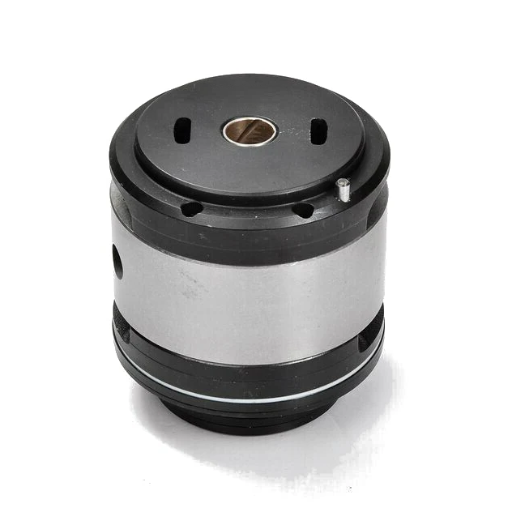
A log splitter that stalls the moment the wedge bites into hardwood. A hydraulic press that takes forever to build force for the forming stroke. A dump trailer pump that runs hot after ten minutes of intermittent use. In each case, the owner assumes the pump is worn out. More often than not, the real problem is simpler: the 2 stage hydraulic pump adjustment is wrong.
Two-stage pumps save cycle time by running in a high-flow, low-pressure stage for a fast approach, then switching automatically to a low-flow, high-pressure stage for work. That switch is controlled by an unloader valve.
A separate relief valve caps the maximum system pressure. When those two valves are out of balance, the system underperforms, overheats, or fails to shift at all.
In this guide, you’ll learn exactly how to adjust a 2 stage hydraulic pump. We also cover 2 stage hydraulic pump adjustment techniques, 2 stage hydraulic pump pressure adjustment procedures, and hydraulic pump relief valve adjustment for safe operation. We cover the difference between transition pressure and relief pressure, the tools you need, safe step-by-step procedures, common symptoms of incorrect settings, and when adjustment is no longer enough.
Need the full picture first? See our complete guide to 2 stage hydraulic pumps for working principles, sizing, and selection.
What Are You Actually Adjusting on a 2 Stage Hydraulic Pump?
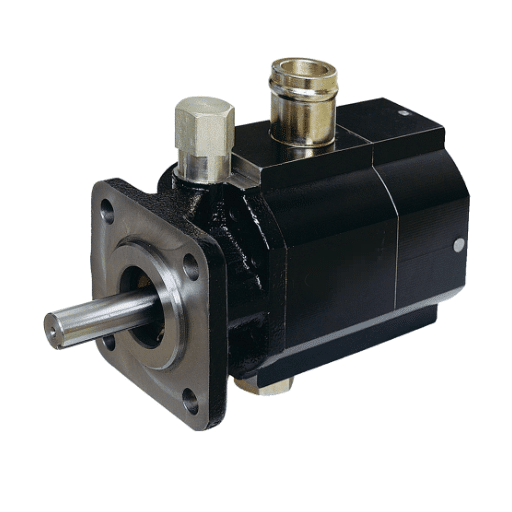
A two-stage pump contains two pumping sections in one housing. The large-displacement section moves oil quickly at low pressure. The small-displacement section delivers force at high pressure. For a deeper look at the internal mechanics, read our article on how a 2 stage hydraulic pump works. Two valves manage how those sections behave under load.
What is a 2 Stage Hydraulic Pump Adjustment?
2 stage hydraulic pump adjustment is the process of calibrating the unloader valve transition pressure and the system relief valve pressure on a two-stage hydraulic pump. Proper adjustment ensures the pump shifts from a high-flow approach to high-pressure work at the correct point, maximizing cycle speed while protecting the system from overpressurization.
The Unloader Valve (Transition Pressure)
The unloader valve sets the pressure at which the pump switches from the high-flow stage to the high-pressure stage. When system pressure reaches the preset transition point, the valve opens and diverts flow from the large stage back to the reservoir or inlet.
For many GC-series and Haldex-style two-stage gear pumps, the factory preset is around 650 PSI. The adjustable range on integral unloaders is typically 400–900 PSI, though the exact range depends on the model.
On common log splitter pumps, the adjustment is a slotted screw under a cap on the inlet side of the pump. Turning it clockwise usually raises the transition pressure. Turning it counterclockwise lowers it.
Want to understand the internal flow? Our 2 stage hydraulic pump diagram explained article shows exactly where the unloader valve sits and how it interacts with the check valves.
The System Relief Valve
The relief valve is the second half of 2 stage hydraulic pump adjustment. It limits the absolute maximum pressure the system can reach. It protects the pump, cylinder, hoses, and control valve from overpressurization.
On log splitters, the relief valve is often built into the directional control valve. On standalone power units, it may be a separate cartridge in the manifold. Typical settings are:
- Consumer/light-duty splitters: ~2,500 PSI
- Standard 20–30 ton splitters: ~3,000–3,200 PSI
- Heavy-duty commercial splitters: up to ~3,500 PSI
Why the Two Valves Must Work Together
The transition pressure must sit below the relief pressure. If the unloader is set higher than the relief valve, the pump will relieve before it ever shifts into the high-pressure stage. If the relief is set too close to the transition point, the system may bypass oil during normal work, generating heat and wasting power.
Think of the unloader as the gear selector and the relief valve as the rev limiter. Both need to be calibrated for the engine, load, and duty cycle during 2 stage hydraulic pump adjustment.
Tools and Preparation for 2 Stage Hydraulic Pump Adjustment
Before touching any adjustment screw during a 2 stage hydraulic pump adjustment, gather the right equipment:
- Calibrated pressure gauge, 0–5,000 PSI range, 0.5–1% accuracy, with the correct fittings for your test port.
- Wrenches and screwdrivers, sized for the valve cap, jam nut, and slotted adjustment screw.
- PPE, safety glasses, gloves, and steel-toe boots; hot hydraulic oil can spray under pressure.
- Clean rags and drain pan, for oil that escapes when caps are removed.
- Service manual, for model-specific pressures, thread sizes, and screw rotation direction.
- Lockout/tagout kit, for electrically driven power units.
- Notebook, record starting pressures, turns made, and final readings.
Warm the hydraulic oil to normal operating temperature before testing. Cold oil is thicker and can give misleading pressure readings during 2 stage hydraulic pump adjustment. At the same time, avoid working on an overheated system; let it cool to a safe touch temperature before removing caps.
How to Adjust the Unloader Valve on a 2 Stage Pump (Transition Pressure)

This procedure covers the integral unloader found on many two-stage gear pumps used in log splitters, presses, and mobile hydraulic systems. It explains exactly how to adjust the unloader valve on 2 stage pump models with integral unloaders.
Quick Overview: How to Adjust a 2 Stage Hydraulic Pump
- Install a calibrated pressure gauge at the pump outlet.
- Warm the oil and cycle the system unloaded.
- Load the system and note the current transition pressure.
- Stop the engine, depressurize, and remove the unloader cap.
- Turn the adjustment screw in 1/8 to 1/4 turn increments.
- Retest under load and lock the final setting.
- Repeat the 2 stage hydraulic pump adjustment process for the relief valve.
- Install the pressure gauge at the pump outlet or a test port in the high-pressure line before starting the 2 stage hydraulic pump adjustment. Make sure the fitting seals properly; a leaking fitting will give a false low reading.
- Start the power unit and cycle the actuator unloaded two or three times to warm the oil and purge air.
- Load the system gradually. On a log splitter, advance the wedge against a log. On a press or cylinder, dead-head the actuator against a mechanical stop. Watch the gauge and listen for the change in pump sound when the large stage unloads. The pressure at that moment is your current transition pressure and the baseline for all subsequent 2 stage hydraulic pump pressure adjustment steps.
- Stop the engine and depressurize the system before continuing the 2 stage hydraulic pump adjustment. Verify that no trapped pressure remains before removing the unloader cap.
- Remove the cap and loosen the jam nut if one is fitted.
- During two stage pump unloader valve adjustment, turn the slotted adjustment screw in small increments:
- Clockwise usually increases transition pressure (delays shift to second stage).
- Counterclockwise usually decreases transition pressure (shifts earlier).
- Reinstall the cap, restart, and retest the 2 stage hydraulic pump adjustment. Make changes in 1/8 to 1/4 turn steps. Large adjustments can push the pump past what the engine or motor can handle.
- Lock the setting. Hold the adjustment screw steady while tightening the jam nut or cap. If the screw moves, the pressure changes.
Typical Target Pressures
Use these values as a starting point for 2 stage hydraulic pump adjustment. Actual optimum pressure depends on engine power, oil temperature, and load characteristics.
| Application | Engine/Motor Size | Typical Transition Pressure |
|---|---|---|
| Light-duty log splitter | 5–7 HP / 1.5 kW | 500–650 PSI |
| Standard commercial splitter | 8–13 HP / 2.2–3 kW | 650–750 PSI |
| Heavy-duty industrial setup | 15+ HP / 4 kW+ | up to ~900 PSI |
Never exceed the pump or prime mover rating just to keep the pump in the first stage longer.
2 Stage Hydraulic Pump Pressure Adjustment: The System Relief Valve
With the transition pressure set, move on to the hydraulic pump relief valve adjustment portion of your 2 stage hydraulic pump adjustment. This sets the ceiling for system pressure.
- With the gauge still installed, warm the oil and load the system to maximum pressure for this part of the 2 stage hydraulic pump adjustment.
- Note the pressure at which the relief valve opens. You will see the gauge needle stop rising and possibly feel or hear oil returning to the tank.
- Stop the engine and depressurize before continuing the 2 stage hydraulic pump adjustment on the relief valve. Remove the relief-valve cap or plug.
- Loosen the locknut on the adjustment screw.
- Turn the screw in small increments:
- Clockwise usually increases relief pressure.
- Counterclockwise usually decreases relief pressure.
- Restart and retest under load. Approach the target pressure from below. It is safer to arrive at the setting while pressure is rising than to overshoot and have to back off.
- Set the relief to the lowest pressure that still completes the work reliably during 2 stage hydraulic pump adjustment. The relief valve is a safety device, not a power booster. Never set it above the lowest pressure rating of any component in the circuit.
Working on a log splitter? Our log splitter hydraulic pump selection guide explains how cylinder bore, stroke, and GPM interact with relief pressure to produce splitting force.
Verifying Flow and Cycle Performance
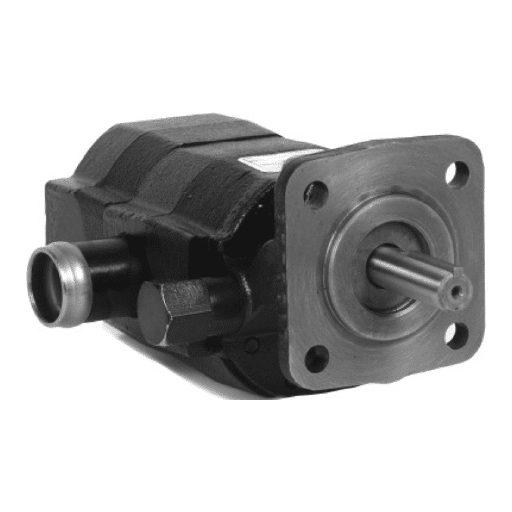
Pressure numbers mean nothing if the machine does not perform. After completing your 2 stage hydraulic pump adjustment, verify cycle behavior:
- Approach stroke should be fast, with the pump running quietly in high-flow mode.
- Work stroke should slow down as the pump shifts to the high-pressure stage.
- Force at the tool should match the application. If the wedge still stalls, the transition pressure may be too low or the engine may be undersized.
- Return stroke should be smooth. If the return is sluggish, check return-line back pressure and filter condition, not just pump settings.
Measure and record the final transition pressure, relief pressure, and cycle times for your 2 stage hydraulic pump adjustment. Maintenance records make future troubleshooting faster and help you spot drift before it causes failure.
Common Symptoms of Incorrect Adjustment
The following table maps symptoms to causes and fixes during two stage hydraulic pump adjustment work. Use it to diagnose problems before reaching for a wrench.
| Symptom | Likely Cause | Fix |
|---|---|---|
| Pump runs hot / overheats | Unloader stuck or set too low; continuous recirculation | Clean or replace unloader; verify transition pressure |
| The pump won’t shift to high pressure | Transition pressure set above relief; unloader stuck open | Lower transition or raise relief within ratings; inspect valve |
| Shifts too early, weak workforce | Transition pressure too low | Raise transition pressure in small steps |
| Shifts too late, engine stalls | Transition pressure too high for available power | Lower transition pressure or increase engine/motor size |
| System maxes at relief but cannot do work | The relief pressure is set too low | Raise relief within component ratings |
| Erratic pressure or valve chatter | Contamination, air in oil, worn spring | Flush oil, bleed air, replace valve assembly |
| Slow return or hesitation | Restricted return line, clogged filter | Clean or replace filter; check hose routing |
Mini-Story: The Over-Tuned Log Splitter
Mike, a small-scale firewood producer in Wisconsin, bought a used 22-ton splitter with a 9 HP engine and an 11 GPM two-stage pump. The machine advanced fast but bogged down on oak rounds. Following a forum tip, he turned the unloader screw all the way in, hoping to keep the pump in high-flow mode longer.
The wedge did move faster on the approach. But as soon as it contacted the wood, the engine stalled. The problem wasn’t a lack of pressure; it was too much flow demand at too high a pressure for the engine.
After backing the screw out to roughly 700 PSI and setting the relief valve to 3,000 PSI, the splitter completed most splits in the first stage. It only dropped to the second stage on knotty pieces. Total 2 stage hydraulic pump adjustment time: fifteen minutes. Replacement pump cost avoided: several hundred dollars. For a full diagnostic workflow, see our HI/LO hydraulic pump troubleshooting guide.
Safety Warnings and Mistakes to Avoid
2 stage hydraulic pump adjustment is not complicated, but it is unforgiving. Follow these rules every time you tune pump pressure:
- Never exceed the lowest pressure rating in the system. Hoses, cylinders, valves, and pumps all have limits. The relief valve protects the weakest link.
- Always approach final pressure from below. Make adjustments while pressure is rising, not falling.
- Hold the adjustment screw steady when tightening the locknut or cap.
- Don’t adjust without a calibrated gauge. “Feeling” the pressure leads to over-adjustment.
- Do not remove caps while pressurized. Relieve the system first.
- Match transition pressure to engine or motor power. A higher setting demands more horsepower at the worst possible moment.
- Use clean oil. Contamination is the leading cause of stuck unloader valves and erratic pressure.
- Lock out electrically driven units before working on valves.
When to Rebuild or Replace Instead of Adjust

2 stage hydraulic pump adjustment can only correct settings. It can’t fix mechanical wear or internal damage. Consider a valve kit, rebuild, or pump replacement if:
- The valve chatters or leaks after correct adjustment.
- Pressure cannot be held steady regardless of the setting.
- Performance degrades sharply after warm-up, indicating internal leakage.
- The unloader spring is broken, cracked, or visibly distorted.
- The valve seat or spool is scored, corroded, or contaminated beyond cleaning.
- You have already adjusted the valves twice and the symptoms return.
Replacement valve assemblies are often available from the pump manufacturer or an industrial supplier. When 2 stage hydraulic pump adjustment no longer fixes the issue, a new unloader cartridge costs less than the labor spent chasing an intermittent pressure problem. For a complete maintenance schedule, see our 2 stage hydraulic pump maintenance guide.
Need help sourcing replacement valves or a compatible two-stage pump? Contact LOYAL INDUSTRIAL PTE. LTD. to request a technical specification sheet or get a customized hydraulic system recommendation.
FAQ
What pressure should a log splitter relief valve be set at?
Most consumer splitters use 2,500 PSI. Standard 20–30 ton commercial splitters run 3,000–3,200 PSI. Heavy-duty units may reach 3,500 PSI. Always stay below the lowest pressure rating of hoses, cylinders, valves, and pumps.
Can I turn the unloader screw all the way in?
You can, but you shouldn’t. Turning the screw all the way in raises the transition pressure to the maximum. If the engine or motor can’t supply the resulting power demand, the machine will stall or overheat. Adjust incrementally and test under load during 2 stage hydraulic pump adjustment.
Why does my 2 stage pump get hot after adjustment?
Overheating during 2 stage hydraulic pump adjustment usually means the unloader is set too low or stuck open, forcing oil to recirculate continuously. It can also mean the relief valve is set below the transition pressure, so the pump runs at relief instead of shifting to the high-pressure stage.
Does clockwise always increase pressure on hydraulic valves?
For most integral unloader valves and direct-acting relief valves, clockwise increases pressure. Always confirm the direction in your pump or valve manual. A mistake of one full turn at 3,000 PSI can damage components and ruin an otherwise correct 2 stage hydraulic pump adjustment.
Should I adjust transition pressure or relief pressure first?
Set the relief pressure first if it is clearly wrong or unsafe. Otherwise, set the transition pressure to match the load curve, then verify that the relief valve still opens above the transition point. The relief valve must always cap pressure above normal working pressure in any 2 stage hydraulic pump adjustment.
How often should hydraulic pump pressures be checked?
Check pressures during seasonal startup, after any valve or pump service, and whenever performance changes. For equipment in daily use, verify settings quarterly. Vibration and thermal cycling can cause locknuts to loosen over time, so regular checks are part of good 2 stage hydraulic pump adjustment maintenance.
Conclusion
A proper 2 stage hydraulic pump adjustment comes down to two valves, one accurate gauge, and small incremental changes. The unloader valve controls when the pump shifts from fast approach to forceful work. The relief valve sets the absolute pressure ceiling. If you are also learning how to adjust the unloader valve on 2 stage pump systems, remember that the unloader controls the shift point and the relief sets the ceiling.
When both valves are calibrated to the engine, load, and component ratings, the system runs fast, cool, and reliable.
Before you replace a pump that stalls or overheats, check the settings. Record your baseline, adjust in small steps, and verify cycle performance under load. If the valves cannot hold a stable setting, a replacement cartridge or pump may be the more economical choice.
For engineering support, replacement components, or a customized hydraulic system recommendation, contact LOYAL INDUSTRIAL PTE. LTD. today.