In February 2023, a driver on Interstate 80 outside Rawlins, Wyoming, hit black ice at 70 mph. The rear of the pickup broke into an oversteer slide toward the median. Before the driver could react, the ESC system individually braked the left rear wheel, pulsed the right front caliper, and cut engine torque. The truck straightened and stayed in its lane.
That was not ABS. It was ESC, a system that operates through the same hydraulic control unit as your anti-lock brakes, but thinks in a completely different dimension.
Most technicians understand ABS. But the way ESC piggybacks on that hardware, adds new sensors, and issues different hydraulic commands remains a knowledge gap. If you service modern brake systems, you need to understand how ESC and ABS integration works, what additional components are involved, and why diagnostic and replacement procedures differ between ABS-only and ABS-plus-ESC vehicles.
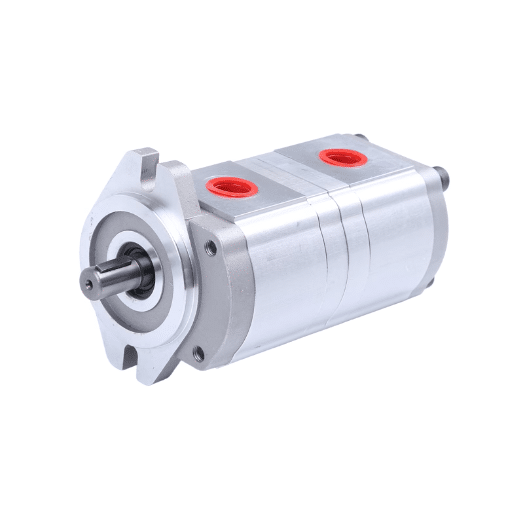
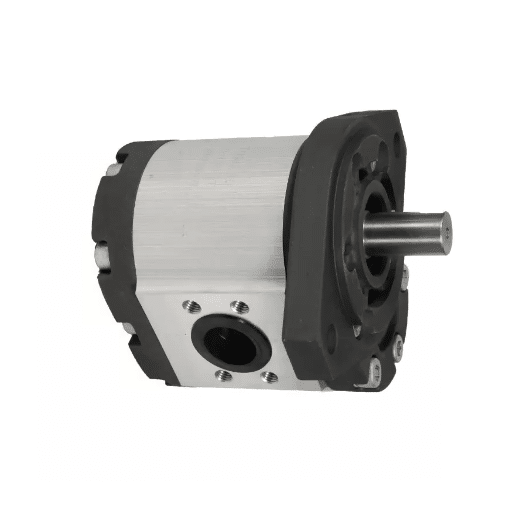
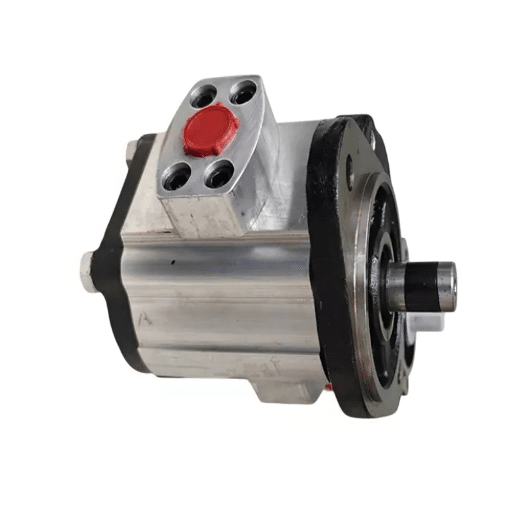
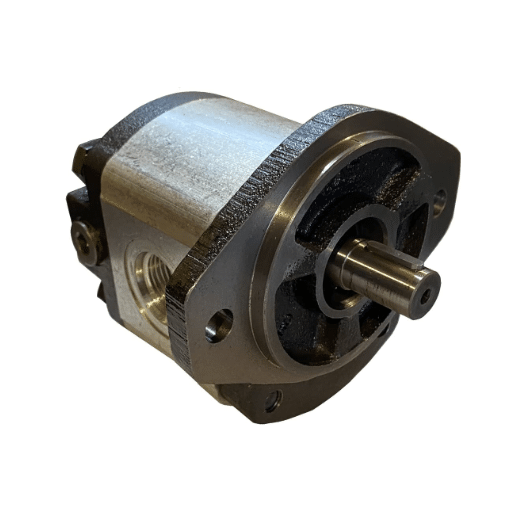
Need a replacement hydraulic control unit? Contact LOYAL INDUSTRIAL, and we supply ESC-compatible ABS hydraulic units for passenger and commercial vehicles.
What Is Electronic Stability Control (ESC)?
Electronic stability control is an active safety system that detects and reduces loss of traction and directional control. Where ABS prevents wheel lockup during straight-line braking, ESC prevents the vehicle from skidding sideways or plowing straight ahead during cornering and evasive maneuvers.
ESC does not replace ABS. It extends it. The system uses the ABS hydraulic control unit as its actuator platform, then adds sensors and control logic that monitor whether the vehicle is actually going where the driver intends. Understanding the relationship between electronic stability control and ABS is the first step toward diagnosing integrated system faults.
How ESC Differs from ABS
ABS reacts to wheel deceleration. When a wheel locks, ABS modulates brake pressure to keep every wheel rotating so the driver retains steering ability during hard braking.
ESC reacts to vehicle dynamics. It compares the driver’s intended path, measured by steering angle, against the vehicle’s actual path, measured by yaw rate and lateral acceleration. If the vehicle is rotating too much (oversteer) or not turning enough (understeer), ESC selectively brakes individual wheels to generate a corrective yaw moment and can request engine torque reduction.
The key distinction: ABS works when you brake. ESC works while you are driving, whether you touch the brake pedal or not. The ESC and ABS integration means both systems share the same brake hardware but operate on different trigger conditions.
The Physics of Vehicle Stability
Vehicle stability breaks down into two failure modes that ESC addresses.
Oversteer occurs when the rear slides outward and the vehicle rotates more than intended. ESC counters this by braking the outside front wheel, creating a yaw moment that pulls the nose back into the turn.
Understeer occurs when the vehicle plows straight ahead despite the driver turning the wheel. ESC counters this by braking the inside rear wheel, creating a yaw moment that rotates the vehicle into the turn.
In both cases, ESC applies brake pressure to individual wheels in fractions of a second without waiting for the driver to brake.
ESC Mandate Timeline (Passenger and Commercial)
ESC did not become standard equipment overnight. Regulatory mandates drove adoption on different schedules for passenger and commercial vehicles.
The National Highway Traffic Safety Administration (NHTSA) required ESC on all new passenger vehicles under 10,000 pounds starting with the 2012 model year. NHTSA data shows ESC reduces single-vehicle crashes by 34 percent and rollover risk by 59 percent.
For commercial vehicles, the Federal Motor Carrier Safety Administration (FMCSA) mandated ESC on all new Class 3-8 trucks and buses starting in 2017. The regulation applies to vehicles with a gross vehicle weight rating above 11,793 pounds. Fleet managers can reference FMCSA regulations for the full compliance framework.
The European Union followed a similar trajectory, making ESC mandatory on all new passenger cars in 2018. By 2026, ESC will be effectively universal on new vehicles sold in major markets worldwide.
ESC and ABS Integration: Shared Hardware Architecture
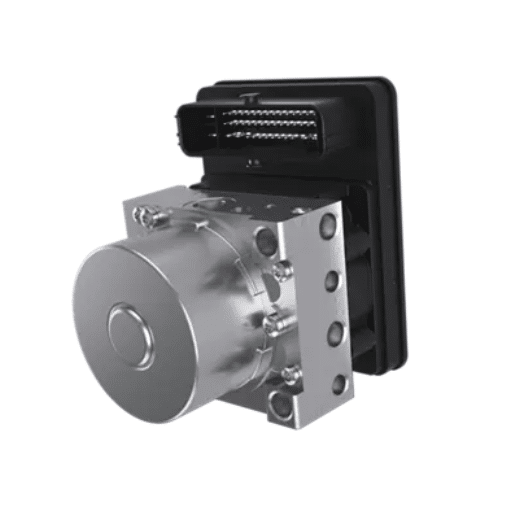
On 95 percent or more of vehicles, ESC uses the exact same HCU as ABS. The integration is so tight that many technicians do not realize the hardware platform is shared until they diagnose or replace a component.
The Common Hydraulic Control Unit (HCU)
The HCU contains the pump motor, accumulator, solenoid valves, and isolation valves that modulate brake pressure to each wheel circuit. In an ABS-plus-ESC system, the same HCU receives commands from the ESC control module, which manages ABS functions as a subsystem. The physical HCU is often identical between ABS-only and ESC-equipped variants of the same platform. What changes are the control module software, the sensor suite, and the wiring harness?
For a deeper dive into HCU construction and function, see our complete ABS hydraulic unit engineering guide.
Shared Pump Motor and Solenoid Valves
The stability control ABS pump serves both systems. During ABS events, the motor returns brake fluid to the master cylinder. During ESC events, the motor builds brake pressure at individual wheels even when the driver is not pressing the pedal. ESC must generate pressure proactively. The pump motor pressurizes the accumulator and holds that pressure ready for instant deployment. When ESC commands a corrective brake pulse, the solenoid valves cycle at high frequency to deliver precise pressure to the target wheel.
How ESC Commands Differ from ABS Commands
ABS commands are reactive and symmetrical. When a wheel locks, ABS pulses pressure at that wheel. The cycling is relatively slow, typically 10 to 20 Hz, because the goal is to maintain slip ratio near optimal, not to generate precise yaw forces.
ESC commands are predictive and asymmetrical. The control module calculates exactly how much brake force at exactly which wheel will correct the vehicle’s trajectory. It then commands individual solenoid valves to deliver short, high-frequency pressure pulses, up to 30 Hz, to generate the required yaw moment without causing noticeable deceleration.
The command structure also differs. ABS modulates pressure at one or two wheels. ESC may command three or four wheels with different pressure levels simultaneously while requesting engine torque reduction. For more on solenoid valve behavior, see our ABS modulator valve diagnostic guide.
Duty Cycle Differences: ABS vs ESC Pump Motor Usage
Pump motor duty cycle is where hardware stress becomes visible. A typical ABS stop runs the motor for 3 to 5 seconds. In ESC operation, the motor may run dozens of times per drive cycle, often for 0.5 to 2 seconds per intervention. On slippery roads, ESC can activate 20 to 50 times in a single commute.
This increased duty cycle explains why ESC-equipped vehicles experience HCU and pump motor failures at higher rates than ABS-only vehicles of similar age. The hardware is the same, but the workload is significantly higher.
ESC-Specific Sensors and Components

While the hydraulic hardware is shared, ESC requires sensors that ABS does not. These sensors tell the control module what the vehicle is actually doing versus what the driver wants it to do.
Yaw Rate Sensor
The yaw rate sensor measures how fast the vehicle is rotating around its vertical axis. It is typically mounted near the vehicle’s center of gravity, often under a seat or on the floor pan. Yaw rate data tells the ESC module whether the vehicle is oversteering or understeering. A failed yaw rate sensor usually sets a stability control warning lamp and disables ESC.
Steering Angle Sensor
The steering angle sensor, usually integrated into the clock spring or steering column, tells the ESC module where the driver is pointing the wheels. The module compares steering angle against yaw rate and lateral acceleration to calculate the vehicle’s actual path. Steering angle sensors require calibration after replacement. An uncalibrated sensor can cause false ESC activation or failure to activate when needed.
Lateral Accelerometer
The lateral accelerometer measures side-to-side g-force. It helps the ESC module understand how hard the vehicle is cornering and whether the tires are approaching their lateral grip limit. On some vehicles, the lateral accelerometer and yaw rate sensor are combined into a single inertial measurement unit. Both require careful mounting orientation. Installing an IMU at the wrong angle produces reversed or incorrect signals.
Wheel Speed Sensors (Shared with ABS)
Wheel speed sensors are the one sensor type that ABS and ESC share completely. ESC uses wheel speed data to calculate individual wheel slip, vehicle reference speed, and estimated cornering radius. Because wheel speed sensors are shared, a failed sensor affects both ABS and ESC. A single sensor fault typically disables both systems and illuminates both warning lamps.
ESC Control Module vs ABS Control Module
Module architecture varies by manufacturer. On many platforms, the ESC and ABS control modules are the same physical unit with different software levels. On older systems, a separate ESC module communicates via the vehicle CAN bus. Regardless of packaging, the ESC module requires more processing power and runs vehicle dynamics models in real time, typically at 50 to 100 Hz. Replacing an ESC module without proper programming or VIN coding can render the system inoperative.
ABS vs ESC: When Each System Activates
Understanding when each system intervenes helps technicians interpret driver complaints and diagnose faults correctly.
ABS Activation Scenarios
ABS activates during braking when wheel deceleration exceeds the lockup threshold. Common triggers include hard braking on dry pavement, braking on slippery surfaces, and emergency stops.
The driver feels pedal pulsation and hears the pump motor run. ABS prevents wheel lockup so the driver can steer, but it does not steer the vehicle.
ESC Activation Scenarios
ESC activates when vehicle dynamics deviate from the driver’s intended path, regardless of braking. Common triggers include oversteer during aggressive cornering, understeer when entering a turn too fast, sudden lane changes, evasive steering, accelerating on split-friction surfaces, and towing instability.
The driver feels the brake pedal drop as the pump motor pressurizes the system, followed by selective braking at individual wheels. Many drivers describe the sensation as the vehicle “fixing itself.”
Simultaneous ABS and ESC Operation
During hard braking in a corner, ABS prevents wheel lockup while ESC maintains yaw stability. The control module prioritizes commands so the two systems do not conflict. ESC typically defers to ABS when slip ratios are high, then resumes yaw control as wheel speeds stabilize.
Driver Experience Differences
The driver experience differs in timing and sensation. ABS is expected. Drivers know that hard braking causes pedal vibration. ESC is unexpected. Drivers often do not understand why the vehicle brakes a single wheel or cuts power during normal driving. Technicians who understand ESC and ABS integration can explain the difference and verify whether the activation was normal behavior or a sensor fault.
Commercial Vehicle ESC and ABS Integration

Commercial vehicle ESC adds complexity that passenger car systems do not face. Higher mass, longer wheelbases, articulated trailers, and varying load conditions all affect stability control logic and hardware requirements.
FMCSA ESC Mandate for Class 3-8 Trucks
Since 2017, all new commercial trucks and buses with a GVWR above 11,793 pounds must be equipped with ESC. The mandate applies to Class 3 through Class 8 vehicles.
In May 2024, a DOT inspector in Ohio flagged a Class 7 truck for an inoperative ESC warning lamp. The fleet manager did not know ESC was federally mandated for that vehicle class. The result was an out-of-service order and $1,200 in fines. The lesson: know your mandate dates and verify that used equipment meets federal requirements.
Heavy-Duty ESC Hardware Differences
Heavy-duty ESC systems use larger pump motors and higher-capacity accumulators to generate sufficient brake pressure for loaded trucks. The control modules run more complex vehicle dynamics models that account for payload variation. Many heavy-duty ESC systems interface with air brake systems or electro-hydraulic brake boosters rather than pure hydraulic circuits.
Trailer ESC Integration
Trailer ESC, sometimes called Roll Stability Control (RSC), is a related but distinct system. Trailer ESC monitors trailer wheel speeds and lateral acceleration to detect impending rollover. When rollover risk exceeds the threshold, the system brakes the trailer axles to reduce speed and stabilize the combination.
Trailer ESC can operate independently of tractor ESC, but the most effective systems communicate between tractor and trailer via the ISO 11992 CAN bus. This integration allows the tractor to anticipate trailer instability and coordinate braking across the entire combination.
Fleet Maintenance Implications
Fleet managers must track ESC as a mandated safety system. Inoperative ESC on a 2017 or newer commercial vehicle is a federal violation. Maintenance programs should include scan tool checks for ESC DTCs during every PM interval, verification of warning lamp bulb check at key-on, calibration records after component replacement, and driver training on ESC activation.
The ABS ESC combined system on modern commercial vehicles is federally required safety equipment that demands the same maintenance attention as brakes, lights, and tires.
ESC and ABS Integration: Diagnostic Differences
Diagnostic procedures change when a vehicle has integrated ESC. The additional sensors, control modules, and communication networks create new fault paths that do not exist on ABS-only platforms.
Scan Tool Requirements
ABS-only systems can often be diagnosed with a basic scan tool that reads generic OBD-II codes in the C0000-C0999 range. ABS+ESC systems require a scan tool with manufacturer-specific software to access the full ESC diagnostic dataset.
Many ESC DTCs are manufacturer-proprietary and do not appear in generic OBD-II output. Codes related to yaw rate sensor plausibility, steering angle sensor calibration, or lateral acceleration offset may only be readable with a factory-level tool or high-end aftermarket platform. For a complete testing protocol, see our complete ABS hydraulic unit test procedure.
Common Integrated System DTCs
Technicians working on ABS+ESC vehicles should know these common code families:
- C0035-C0050: Wheel speed sensor circuit faults (shared with ABS)
- C0060-C0070: Yaw rate sensor and lateral accelerometer faults
- C0075: Steering angle sensor circuit
- C0080-C0090: ESC control module internal faults
- C0095: Brake pedal position sensor (used by ESC to detect driver braking)
- C0100-C0110: Pump motor and solenoid valve circuit faults (shared hardware, but ESC may set unique subcodes)
A single sensor fault can cascade into multiple codes. A failed yaw rate sensor may set its own circuit code plus plausibility codes in the steering angle and lateral acceleration channels because the module can no longer reconcile the data sets.
ESC Calibration After HCU Replacement
In March 2024, a fleet replaced HCUs on six Class 6 trucks after pump motor failures but skipped ESC calibration. Within 500 miles, three trucks illuminated stability control warning lamps.
HCU replacement on ESC-equipped vehicles almost always requires recalibration. The ESC module must relearn brake pressure response characteristics, valve timing, and pump motor performance for the specific unit installed. Skipping calibration is not a time-saver. It is a recall generator. Always follow the manufacturer’s calibration procedures after any hydraulic or electronic brake component replacement.
Sensor Alignment Procedures
After collision repair or suspension work, technicians should verify sensor mounting and run calibration routines. A yaw rate sensor mounted at a 2-degree tilt can introduce a constant bias that causes false ESC activation on long, straight highway drives. For guidance on recognizing pump motor stress, review our complete guide to ABS pump failure symptoms.
ESC and ABS Integration: Replacement Part Compatibility and Procurement

Parts procurement for ESC-equipped vehicles carries risks that ABS-only platforms do not. The most expensive mistake is ordering a hydraulic unit that fits physically but lacks the software or valving configuration for ESC operation.
Can an ABS-Only HCU Work in an ABS+ESC Vehicle?
Physically, sometimes. Functionally, no. An ABS-only HCU may bolt into an ESC-equipped vehicle and operate the brakes normally. ABS will function. The brake pedal will feel correct. But ESC will be silently disabled because the HCU cannot execute the high-frequency, multi-wheel pressure commands the ESC module requires.
In late 2023, a Tennessee shop installed a remanufactured ABS-only HCU in a 2019 Ford F-150 with ESC. The unit handled ABS fine, but the ESC warning lamp illuminated immediately. The shop had to remove the unit, reorder an ESC-compatible HCU, and reprogram the module. The double repair labor costs more than the price difference between the two units. Always verify ESC compatibility before ordering.
OEM vs Aftermarket ESC-Compatible Units
OEM HCUs include the correct solenoid valve configuration, pump motor spec, and control module programming. Aftermarket and remanufactured units can be ESC-compatible, but the label must explicitly state compatibility. Ask your supplier whether the unit has been tested for ESC solenoid cycling at 30 Hz and multi-wheel simultaneous pressure commands.
Programming and Calibration Requirements
New ESC modules and many HCUs require VIN coding or parameter programming after installation. The module must know the vehicle’s weight class, tire size, axle ratio, and sensor configuration to run the correct vehicle dynamics model. An unprogrammed ESC module may refuse to activate or, worse, activate with incorrect pressure targets that destabilize the vehicle.
Core Exchange Considerations
When returning a core, verify that the supplier accepts ESC modules and HCUs with integrated electronics. Some core programs reject units with module damage or corrupted memory, which reduces core credit. Fleet buyers should negotiate core return terms upfront, especially for multi-unit orders.
Frequently Asked Questions
How does esc work with abs?
ESC uses the ABS hydraulic control unit as its brake actuator. When ESC detects oversteer or understeer, it commands the same solenoid valves and pump motor that ABS uses. The difference is that ESC activates proactively during driving, while ABS reacts to wheel lockup during braking.
What is the ABS vs ESC difference?
ABS prevents wheel lockup during braking so the driver can steer. ESC prevents the vehicle from skidding sideways or plowing straight during cornering and evasive maneuvers. ABS uses wheel speed sensors only. ESC adds yaw rate, steering angle, and lateral acceleration sensors.
Can ABS and ESC fail independently?
A failed wheel speed sensor or pump motor disables both systems because the hardware is shared. However, a failed yaw rate sensor or steering angle sensor disables ESC while leaving ABS functional. The failure mode determines which systems are affected.
Is ESC mandatory on all vehicles?
ESC is mandatory on all new U.S. passenger vehicles since the 2012 model year and on all new Class 3-8 commercial trucks and buses since 2017. Most major global markets also require ESC on new vehicles. Used vehicles are not required to be retrofitted.
Conclusion
The ESC and ABS integration means that stability control uses the same hydraulic control unit, pump motor, and solenoid valves as your anti-lock brake system. What changes are in the sensor suite, the control logic, and the diagnostic requirements?
Technicians who understand this shared architecture can diagnose integrated systems faster, avoid the costly mistake of installing ABS-only hardware in ESC-equipped vehicles, and explain to drivers why their vehicle occasionally brakes a single wheel without warning. Fleet managers who track ESC as mandated safety equipment can avoid DOT violations and keep their vehicles on the road.
If you are sourcing replacement hydraulic control units for ESC-equipped vehicles, verify compatibility before you order. LOYAL INDUSTRIAL supplies ESC-compatible ABS hydraulic units, modulator valves, and pump motors for a wide range of vehicle applications. Every unit is bench-tested and backed by a warranty.