At 7:42 a.m. on a rain-slicked interstate outside Detroit in November 2024, a driver applied emergency brake pressure to avoid a collision. The pedal went solid. No pulsation. No ABS chatter. Three wheels locked simultaneously while the right front continued to rotate. The vehicle skidded 47 feet before stopping in the shoulder. The post-incident inspection found the cause in under five minutes: a stuck inlet solenoid valve in the ABS Hydraulic Control Unit that had been throwing an intermittent C0276 fault code for six weeks. The shop had cleared the code twice without investigating the valve circuit.
The ABS modulator valve is the most precision-critical and most commonly misdiagnosed component in modern brake systems. Technicians routinely replace complete HCUs when a single valve circuit has failed. Fleet managers throw away $1,200 valve assemblies because no one tested the 2-ohm solenoid coil. Independent shops clear fault codes and return vehicles to customers with ticking time bombs under the hood.
This guide closes that diagnostic gap. You will learn exactly how the ABS modulator valve functions, how to distinguish inlet valve failures from outlet valve failures, how to test solenoid circuits with a multimeter, and how to decide whether the valve can be serviced or the complete HCU must be replaced. Whether you are a technician, a fleet manager, or a procurement buyer, the framework here prevents unnecessary parts spend and keeps brake systems operating to specification.
What Is an ABS Modulator Valve?
Definition and Primary Function
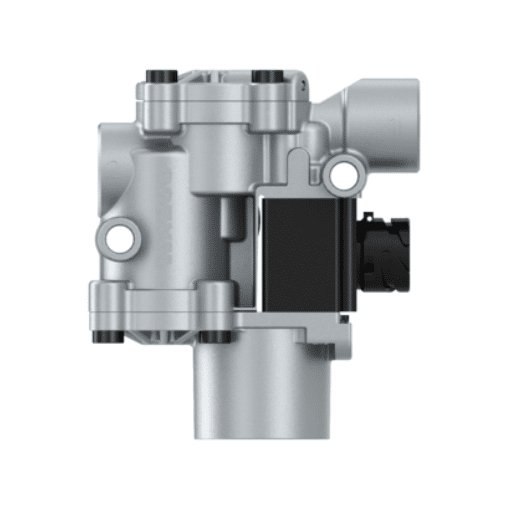
An ABS modulator valve is an electro-hydraulic solenoid valve mounted within the ABS Hydraulic Control Unit (HCU) that regulates brake fluid pressure to individual wheel circuits during anti-lock braking and stability control events. The valve acts as a precision pressure gate, commanded by the electronic control unit to hold, reduce, or increase brake pressure at each wheel within 3 to 5 milliseconds of receiving an electrical signal.
For a complete system-level understanding of how these valves integrate with the pump motor, accumulator, and electronic control module, see our complete ABS hydraulic unit engineering guide.
Inlet Valve (Normally Open)
The inlet solenoid valve sits between the master cylinder and the wheel caliper. In its default state, with no electrical current applied, the valve remains open. Brake fluid flows freely from the master cylinder through the valve body to the wheel circuit. When the ABS electronic control unit commands anti-lock activation, the inlet valve closes to prevent additional pressure from reaching the wheel. This is the hold phase of ABS operation.
Outlet Valve (Normally Closed)
The outlet solenoid valve sits between the wheel caliper and the low-pressure accumulator. In its default state, the valve is closed. No fluid escapes the wheel circuit. When the ECU commands pressure reduction, the outlet valve opens to release brake fluid from the caliper into the accumulator. This allows the wheel to regain rotation during an incipient lockup event.
Where Valves Fit in the HCU
A standard four-channel ABS HCU contains eight modulator valves: four inlet valves (one per wheel circuit) and four outlet valves (one per wheel circuit). The valves are machined into a single aluminum valve body, sharing common fluid passages and mounting points. This integrated construction is why most modern HCUs are sealed assemblies. The valves are not individually replaceable in passenger vehicle applications.
How ABS Modulator Valves Work
Normal Braking Mode
During standard braking, both valve types remain in their default positions. Inlet valves are open. Outlet valves are closed. The driver controls braking force entirely through pedal pressure. The modulator valves are electrically inactive and hydraulically transparent.
ABS Activation: Pressure Hold Phase
When a wheel speed sensor detects rotational deceleration approaching lockup, the ECU commands the inlet valve for that wheel circuit to close. The valve solenoid energizes, drawing approximately 1.5 to 2.5 amps at 12 volts. The plunger shifts against spring pressure and seals the valve seat. Brake pressure at the wheel remains constant. No additional fluid can enter the circuit.
ABS Activation: Pressure Reduce Phase
If wheel deceleration continues despite the hold phase, the ECU commands the outlet valve to open. The normally closed valve energizes, lifting the poppet from its seat. Brake fluid flows from the wheel caliper into the low-pressure accumulator. Wheel braking torque drops. The wheel begins to accelerate back toward vehicle speed.
ABS Activation: Pressure Increase Phase
Once the wheel regains stable rotation, the ECU closes the outlet valve and reopens the inlet valve. Simultaneously, the HCU pump motor activates to pressurize fluid from the accumulator back into the main circuit. The cycle repeats at 10 to 20 cycles per second until the vehicle stops or the driver releases the pedal.
Cycling Frequency and Duty Cycle
The valve response time of 3 to 5 milliseconds determines how quickly the system can transition between hold, reduce, and increase phases. At 15 cycles per second, each complete cycle lasts 67 milliseconds. The valve spends roughly 20 milliseconds in each phase, with 5 milliseconds consumed by mechanical switching. This duty cycle explains why valve failures often manifest as degraded ABS performance rather than immediate complete failure. A valve that responds in 8 milliseconds instead of 3 produces noticeable ABS pulsation irregularity long before it fails.
The same hydraulic pressure and flow principles that govern industrial hydraulic valve design apply directly to these automotive solenoid valves, scaled for the 170 to 180 bar operating pressure of passenger brake systems.
ABS Modulator Valve Components and Specifications

Solenoid Coil Design and Resistance
Each modulator valve uses a copper wire solenoid coil wound around a ferrous core. When energized, the coil generates a magnetic field that drives the plunger against spring pressure. Standard passenger vehicle solenoid resistance ranges from 1.5 to 4.0 ohms, depending on manufacturer design. Commercial vehicle valves designed for 24-volt systems typically run 3.0 to 6.0 ohms. A multimeter test across the valve connector pins is the fastest diagnostic step.
Valve Seat and Poppet Construction
The sealing interface uses a precision-machined metal or composite poppet against a hardened steel valve seat. Seat tolerances are measured in microns. Contamination from degraded brake fluid or corrosion products degrades this sealing surface over time. Once the seat leaks, the valve cannot maintain pressure hold integrity, and the HCU must be replaced.
Valve Body Machining and Tolerances
The valve body is machined from forged aluminum in passenger vehicles and cast iron or steel in commercial applications. Internal passages are drilled and honed to precise diameters to ensure consistent flow coefficients. The same hydraulic component construction standards that determine industrial pump housing durability apply to HCU valve body material selection.
Electrical Connector and Pinout
The HCU electrical connector carries power and ground for all eight solenoid coils plus the pump motor. Pinout configurations vary by manufacturer. A typical 4-channel HCU uses 12 to 16 pins, with each valve circuit individually addressable by the ECU. Connector corrosion from road salt and moisture is a common cause of intermittent valve circuit faults.
If you are sourcing replacement HCUs and need valve specification matching for a specific vehicle platform, contact our technical team for a compatibility verification before ordering.
Not sure how to choose a supplier for your ABS pump? Please check out our article on ABS Hydraulic Unit Manufacturers.
Common ABS Modulator Valve Failure Symptoms
The symptoms of a failing ABS modulator valve include the ABS warning light with valve-specific DTCs, a hard brake pedal caused by a stuck inlet valve, a spongy or sinking pedal from internal valve seat leakage, loss of anti-lock function in a specific wheel circuit, and continuous pump motor operation. Most valve failures progress from intermittent response degradation to permanent circuit faults.
| Symptom | Likely Valve | Diagnostic Priority |
|---|---|---|
| Hard brake pedal, no ABS pulsation | Stuck inlet valve (open circuit or mechanical seizure) | High |
| Spongy pedal, fluid loss without external leak | Outlet valve seat leakage | High |
| ABS light with C0276-C0279 codes | Specific valve circuit electrical fault | High |
| ABS functions on some wheels only | Single valve failure in one circuit | Medium |
| Pump motor runs continuously | Outlet valve stuck open, preventing pressure buildup | High |
| Intermittent ABS light, no pattern | Connector corrosion or coil degradation | Medium |
ABS Warning Light with Valve-Specific DTCs
The most reliable indicator of modulator valve failure is a stored diagnostic trouble code pointing to a specific valve circuit. Common valve-related DTCs include C0276 (inlet valve circuit), C0277 (outlet valve circuit), C0278 (valve circuit low), and C0279 (valve circuit high). These codes indicate the ECU has detected an electrical anomaly in a specific valve coil, such as an open circuit, short circuit, or resistance out of specification.
Hard Brake Pedal (Stuck Inlet Valve)
When an inlet valve sticks closed or fails to open after ABS activation, the affected wheel circuit receives no brake pressure from the master cylinder. The driver experiences a hard pedal with reduced braking effectiveness at that wheel. This is a safety-critical failure that requires immediate repair.
Spongy or Sinking Pedal (Internal Leakage)
A worn valve seat allows brake fluid to bypass the closed valve, producing a pedal that sinks gradually under pressure or feels spongy. This symptom mimics air in the brake lines but persists after bleeding. Internal leakage typically affects outlet valve seats because they operate under reverse pressure differential during the reduce phase.
In 2024, a Class 6 delivery truck operating a regional freight route began showing an intermittent ABS warning light at 89,000 miles. The shop connected a scan tool and identified a slow-responding outlet valve in the left-rear circuit. A pressure differential test confirmed internal valve seat wear. Because the vehicle was still under the manufacturer’s powertrain warranty, the HCU was replaced at no cost to the operator. The technician noted that had the valve been tested 10,000 miles earlier, the resistance drift would have been detectable before seat damage occurred.
Diagnosing ABS Modulator Valve Problems

A systematic five-step procedure resolves the majority of valve diagnoses without expensive guesswork. The same systematic hydraulic diagnostic methodology used for industrial systems applies directly to automotive ABS valve evaluation.
Need to know how to test the ABS Hydraulic Unit? Please check out our article on How to Test ABS Hydraulic Unit.
Step 1: Read Valve-Specific DTCs
Connect a bidirectional scan tool with ABS module access. Document every stored, pending, and historical code. Pay particular attention to C0276 through C0279 series codes, which indicate specific valve circuit electrical faults. Note whether the code is current or intermittent, as this distinction guides the subsequent diagnostic path.
Step 2: Command Valve Activation via Scan Tool
Use the scan tool’s bidirectional control function to command individual valve activation. The technician should hear a distinct mechanical click from each solenoid as it cycles. A silent valve indicates either an open electrical circuit or a mechanically seized plunger. Compare the sound and response time across all eight valves. Any valve that sounds weaker or slower than its counterparts warrants further investigation.
Step 3: Measure Solenoid Resistance
Disconnect the HCU electrical connector. Use a digital multimeter to measure resistance across each valve coil at the connector pins. Refer to the manufacturer’s specification, typically 1.5 to 4.0 ohms for passenger vehicle 12-volt valves. An open circuit (infinite resistance) indicates a broken coil winding. A reading significantly below specification suggests an internal short. Either condition requires HCU replacement.
Step 4: Test Valve Response Time
With the scan tool commanding rapid valve cycling, measure the electrical response at the connector with an oscilloscope or graphing multimeter. A healthy valve shows a clean current spike followed by stable holding current. A degraded valve shows slow current rise, indicating increased coil resistance or mechanical binding. Response time exceeding 8 milliseconds indicates valve degradation even if the valve still functions.
Step 5: Check for Mechanical Sticking
If electrical tests pass but symptoms persist, the valve may be mechanically stuck due to corrosion, contamination, or degraded brake fluid varnish. There is no field test for mechanical sticking beyond observing valve behavior during scan-tool-commanded cycling. A valve that clicks but fails to modulate pressure has a mechanical failure inside the sealed valve body. In 2023, a vehicle owner diagnosed his own ABS light using a 35 Bluetooth OBD-II reader. The code reader displayed C0276: inlet valve circuit fault. He purchased a multimeter, disconnected the HCU connector, and measured open-circuit resistance across the right-front inlet valve pins. Instead of spending $1,400 on a complete HCU replacement, he presented the vehicle to a shop with the specific diagnosis already confirmed. The repair was completed in two hours with no unnecessary diagnostic labor. The 35-minute reader and 15 minutes of testing saved $680 in diagnostic fees.
If your ABS Pump often has problems, please check out our article about ABS Pump Failure Symptoms.
ABS Modulator Valve Replacement Options
Individual Valve Replacement (Rare)
Individual modulator valve replacement is technically possible only on a limited number of commercial vehicle HCUs with serviceable valve cartridges. Passenger vehicle HCUs are sealed assemblies. Attempting to disassemble a sealed HCU valve body destroys the precision-machined tolerances and introduces contamination that guarantees failure. For the vast majority of applications, individual valve service is not a realistic option.
Complete HCU Replacement (Standard)
The standard industry practice is to replace the complete HCU assembly when any internal valve fails. This ensures all valves, the pump motor, and the accumulator are restored to specification simultaneously. Replacement cost ranges from 400 to 1,500 for passenger vehicles and 1,200 to 4,000 for commercial vehicles, including parts and labor. For a detailed cost breakdown and step-by-step replacement procedure, see our ABS pump replacement cost and procedure guide.
OEM vs. Aftermarket Valve Assemblies
Replacement HCUs are available in four quality tiers: OEM dealer parts, OES (Original Equipment Supplier) units from the same manufacturer at 30 to 50 percent below dealer cost, premium aftermarket with documented specification compliance, and economy aftermarket with variable quality. For safety-critical brake components, OES and premium aftermarket units with published test data are the minimum defensible choice.
Cost Considerations
The valve itself represents a small fraction of HCU cost. The precision-machined valve body, pump motor, accumulator, and electronic integration dominate the parts price. When a single valve fails, the complete assembly replacement restores the entire pressure modulation system to specification. Attempting partial repair on a sealed unit produces unreliable results and potential liability exposure.
Can ABS Modulator Valves Be Cleaned or Rebuilt?

Field Cleaning Attempts and Risks
Some technicians attempt to free stuck valves by flushing the HCU with brake cleaner or ultrasonic cleaning fluid. These attempts almost always fail. The valve seat tolerances are too precise for cleaning to restore sealing integrity. Introducing non-brake-fluid solvents degrades seals and contaminates the entire hydraulic system. Cleaning attempts on sealed HCUs void any remaining warranty and introduce safety risk.
Professional Rebuild Services
A small number of specialized rebuilders offer HCU refurbishment, including valve seat re-machining and solenoid coil replacement. This service is economical only for high-value commercial vehicle HCUs where the replacement cost exceeds $3,000. The rebuild process requires clean-room conditions, precision machining equipment, and post-assembly pressure testing. Rebuilt units should carry the same warranty coverage as new replacements.
When Cleaning Is Not Recommended
Cleaning is not recommended for any passenger vehicle HCU. The cost of professional rebuild approaches the cost of a quality OES replacement unit. The risk of incomplete repair and subsequent in-service failure outweighs any potential savings. For fleet operators managing multiple vehicles, establishing a consistent OES sourcing relationship provides more predictable long-term cost control than experimenting with rebuilds.
In 2024, a regional fleet of 28 delivery vans implemented valve-specific DTC monitoring during quarterly maintenance inspections. Over 18 months, the program identified three HCUs with early-stage valve coil resistance drift before any warning light appeared. Preemptive replacement during scheduled service windows costs 2,100. Waiting for failure would have produced the three roadside emergency repairs estimated at 5,300, including towing, overtime labor, and expedited parts shipping. Monitoring costs less than reacting.
Need more information? Please check out our article about ESC and ABS Integration.
Frequently Asked Questions
What does an ABS modulator valve do?
An ABS modulator valve is an electro-hydraulic solenoid valve inside the ABS Hydraulic Control Unit that regulates brake fluid pressure to individual wheels. Inlet valves (normally open) control pressure entry to the wheel caliper. Outlet valves (normally closed) release pressure into the accumulator. The valves cycle 10 to 20 times per second during ABS activation to prevent wheel lockup.
How do you test an ABS modulator valve?
Testing requires a bidirectional scan tool and a digital multimeter. First, read stored DTCs for valve circuit faults (C0276-C0279). Second, command individual valve activation through the scan tool and listen for mechanical cycling. Third, measure solenoid coil resistance at the HCU connector, which should read 1.5 to 4.0 ohms for passenger vehicle valves. Fourth, test valve response time with an oscilloscope if available.
What causes ABS modulator valve failure?
The primary causes are brake fluid contamination, solenoid coil degradation from thermal cycling, valve seat erosion from millions of open-close cycles, and electrical connector corrosion. Degraded brake fluid that has absorbed moisture accelerates internal corrosion and varnish buildup that can mechanically stick valve plungers.
Can you drive with a bad ABS modulator valve?
The vehicle retains basic hydraulic braking, so limited driving is possible. However, anti-lock braking, stability control, and traction control are disabled for the affected circuit. Wheel lockup during emergency braking becomes more likely. Continued driving with a known valve fault is not recommended and may violate commercial vehicle safety regulations.
Conclusion
The ABS modulator valve is a precision electromechanical component that cycles 10 to 20 times per second, responds in 3 to 5 milliseconds, and maintains brake pressure integrity through millions of operations over 200,000 miles. Understanding the distinction between inlet and outlet valves, recognizing valve-specific DTCs such as C0276 through C0279, and executing systematic electrical testing with a multimeter prevents the unnecessary complete HCU replacements that cost technicians and fleet operators thousands of dollars annually.
Valve-specific diagnosis is not complex. It requires a bidirectional scan tool, a multimeter, and the willingness to test before replacing. The solenoid valve fundamentals that govern all hydraulic valve operation apply equally to these automotive assemblies. When diagnosis confirms a valve circuit failure, complete HCU replacement is the standard and safest repair path. For fleet operations managing multiple vehicles, valve-specific DTC monitoring during routine maintenance catches degradation before it becomes a roadside failure.
If your operation sources ABS Hydraulic Control Units for a fleet, repair network, or distribution channel, specification accuracy determines whether replacement units deliver their designed service life. Contact our technical team for valve specification matching, supplier qualification, and bulk procurement planning. Precision in specification today prevents safety failures and repeat replacement costs tomorrow.