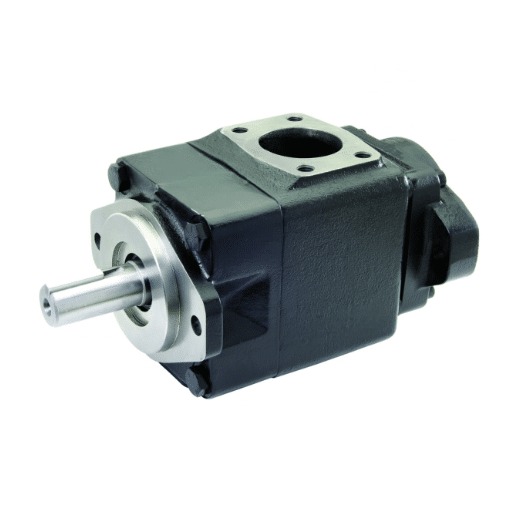
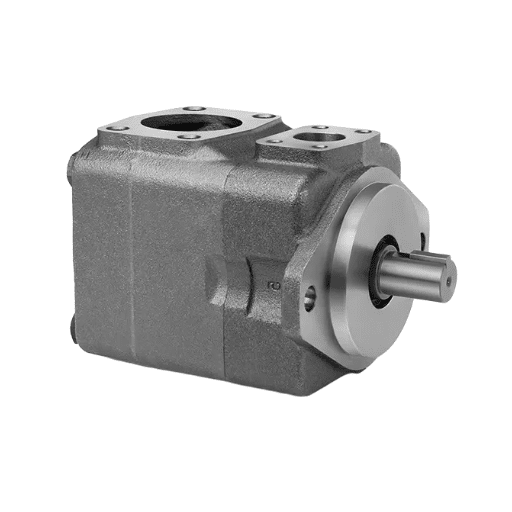
Elena, a hydraulics engineer at a Turkish steel mill, once replaced a failed main pump with the same catalog model. The new unit met the rated pressure. It fit the mounting flange. It even carried the same model code.
Yet the press cycle time dropped by 22% because the replacement displacement was 12% smaller than the original. The pump wasn’t broken; it was simply the wrong size.
That story repeats in maintenance shops every week. Axial piston pump specifications look like a list of numbers, but each value is a checkpoint between the pump and the machine. Miss one, and the system under-performs, overheats, or fails early.
This guide shows how to read those specifications and size a pump from real application requirements. You’ll learn what displacement, pressure, speed, and efficiency mean in practice. You’ll also get the formulas for flow, torque, and power in both SI and US units.
You won’t need advanced math. Let’s start with the spec sheet itself.
Need the right pump for your system? Contact us to request a technical specification sheet matched to your pressure, flow, and duty cycle.
What Axial Piston Pump Specifications Tell You

A specification sheet is a compatibility checklist. It answers one question: will this pump produce the flow and pressure your actuators need, without exceeding its mechanical or hydraulic limits? Read it carefully and you won’t miss a mismatch.
Each spec maps to a machine requirement. Displacement connects to the required flow. Pressure ratings must exceed the highest system pressure.
Speed limits control noise and cavitation risk. Efficiency values predict heat generation and power consumption. Fluid and cleanliness requirements tell you what oil condition is needed for the rated service life.
Specifications also protect the pump. Running continuously at the catalog maximum pressure, speed, and temperature at the same time is a recipe for early wear. That’s why smart selection leaves a margin on at least one operating parameter.
If you’re new to how these pumps create flow, our axial piston pump working principle guide explains the rotating group, swashplate angle, and valve-plate timing before you size a unit.
Key Axial Piston Pump Specifications Explained
Displacement (Vg)
Displacement is the volume of fluid the pump moves per revolution at full stroke. It’s measured in cubic centimeters per revolution (cm³/rev) or cubic inches per revolution (in³/rev). In variable pumps, the actual displacement can be anything from near zero up to the maximum Vg.
Industrial axial piston pumps range from about 10 cm³/rev for small charge pumps to over 1,000 cm³/rev for large open-circuit power units. A 71 cm³/rev pump at 1,800 RPM will move more oil than a 45 cm³/rev pump at the same speed. That’s why displacement is the first sizing number to check.
Pressure Ratings
Pressure is usually quoted in three levels:
- Nominal or continuous pressure: The pressure the pump can handle indefinitely without reduced service life. Common industrial ratings fall between 250 bar and 350 bar (3,600–5,100 PSI).
- Maximum operating pressure: The highest pressure allowed during normal operation, including load peaks.
- Peak pressure: A short-duration limit for transients such as shock loads or relief-valve spikes. Heavy-duty series reaches 400–450 bar (5,800–6,500 PSI).
For replacement matching, never size only to the peak rating. The continuous rating must cover the pressure where the machine spends most of its cycle. Don’t rely on transient limits for normal duty.
Speed Ratings
Speed is given as rated speed and maximum speed. Higher speed increases flow for a given displacement. It also raises noise, heat, and the risk of cavitation if inlet conditions are poor.
Most industrial pumps run between 1,500 and 3,000 RPM. Mobile pumps may be rated to 3,500 RPM or more, but only with adequate inlet pressure and clean oil. You can’t simply pick the highest catalog speed. Always check the manufacturer’s curve; maximum allowable speed drops as displacement and pressure increase.
Efficiency
Three efficiency values matter. They’re not just catalog numbers; they predict heat, power consumption, and cooler sizing.
- Volumetric efficiency accounts for internal leakage past pistons and the valve plate. Typical values are 92–97% at rated speed and viscosity.
- Mechanical efficiency covers friction losses in bearings, pistons, and the swashplate or bent-axis joint. It usually runs from 90–95%.
- Overall efficiency is the product of the two. For well-sized axial piston pumps, overall efficiency is commonly 85–93%.
Higher viscosity and lower pressure improve volumetric efficiency. Higher speed and pressure reduce it. These losses show up as heat, so efficiency directly affects cooler sizing.
Fluid and Cleanliness
Axial piston pumps need mineral or synthetic hydraulic fluid. It must stay within a defined viscosity window. Most manufacturers recommend an operating viscosity between 16 and 100 mm²/s, with an optimum near 30 mm²/s. Oil temperature is best kept between 30°C and 60°C.
Cleanliness is just as vital, and it’s the most ignored spec on the datasheet. A target ISO 4406 code of 18/16/13 or better is common for medium-pressure pumps. High-pressure units benefit from 17/15/12 or cleaner. The correct filter rating is usually ß10 ≥ 200, meaning the filter removes particles 10 µm and larger with high efficiency.
Mounting and Ports
Mounting flanges follow SAE or ISO standards. Shaft options include keyed, splined, and tapered shafts. Port configurations vary by frame size and may be SAE flange ports, BSP threads, or metric threads. Check every detail before you order.
When replacing a pump, check:
- Mounting flange and bolt pattern
- Shaft diameter, spline count, and keyway
- Inlet and outlet port sizes and positions
- Case drain port location and thread type
- Control option mounting pad
These mechanical details determine whether the new pump drops in or whether you’ll need plumbing changes.
For a deeper look at control options, read our variable displacement axial piston pump controls guide. For a closer look at the axial piston pump internal components, see our guide to axial piston pump parts.
Specification Snapshot
| Parameter | Typical Range | What It Controls |
|---|---|---|
| Displacement | 10–1,000 cm³/rev | Flow output per revolution |
| Continuous pressure | 250–350 bar | Safe long-term operating pressure |
| Peak pressure | 400–450 bar | Short transient limit |
| Rated speed | 1,500–3,000 RPM | Flow, noise, and cavitation margin |
| Volumetric efficiency | 92–97% | Actual flow vs theoretical flow |
| Overall efficiency | 85–93% | Input power vs hydraulic output |
| Oil cleanliness | ISO 18/16/13 or better | Wear rate and service life |
Axial Piston Pump Sizing Formulas

Sizing starts with the application’s required flow and pressure. From there, you calculate displacement, torque, and input power.
The three formulas below are the ones you’ll use most often. The first table gives SI units; the second gives US customary units. Here’s how each one fits into the sizing process.
SI Formulas
| To Find | Formula | Units |
|---|---|---|
| Output flow | Q = (Vg × n × ηv) / 1,000 | Q = L/min, Vg = cm³/rev, n = RPM |
| Input torque | M = (Vg × Δp) / (20π × ηm) | M = N·m, Vg = cm³/rev, Δp = bar |
| Input power | P = (Q × Δp) / (600 × ηt) | P = kW, Q = L/min, Δp = bar |
US Customary Formulas
| To Find | Formula | Units |
|---|---|---|
| Output flow | Q = (Vg × n × ηv) / 231 | Q = GPM, Vg = in³/rev, n = RPM |
| Input power | HP = (Q × Δp) / (1,714 × ηt) | HP, Q = GPM, Δp = psi |
In these formulas:
- Vg = geometric displacement per revolution
- n = shaft speed
- Δp = pressure difference between the outlet and the inlet
- ηv = volumetric efficiency (decimal)
- ηm = mechanical efficiency (decimal)
- ηt = overall efficiency (decimal)
Solving for Required Displacement
If you know the required flow and speed, rearrange the flow equation:
Vg = (Q × 1,000) / (n × ηv) [SI, Vg in cm³/rev]
Vg = (Q × 231) / (n × ηv) [US, Vg in in³/rev]
The result is the minimum displacement. In practice, select the next standard frame size up. Also leave a margin for speed droop, viscosity changes, and wear over the service life.
Step-by-Step Sizing Example

Example 1: SI Units, Excavator Main Pump
A 20-ton excavator needs 180 L/min at 320 bar. The diesel engine drives the pump at 1,800 RPM. We expect 94% volumetric efficiency and 88% overall efficiency. Let’s walk through the numbers.
- Required displacement:
Vg = (180 × 1,000) / (1,800 × 0.94) = 106.4 cm³/rev
- Select the next standard size: a 110 cm³/rev variable axial piston pump.
- Verify actual flow at full stroke:
Q = (110 × 1,800 × 0.94) / 1,000 = 186.1 L/min
- Input power:
P = (186.1 × 320) / (600 × 0.88) = 112.8 kW
With a 1.15 service factor, size the engine or electric motor for about 130 kW.
This is the same sizing path a procurement team in India followed when replacing a main pump on a 20-ton excavator. They first matched displacement and mounting, then confirmed the prime mover had enough reserve power for combined arm and bucket loads.
Example 2: US Customary Units, Industrial Press
A press cylinder needs 25 GPM at 3,000 PSI. The electric motor runs at 1,750 RPM. Use 95% volumetric efficiency and 85% overall efficiency.
- Required displacement:
Vg = (25 × 231) / (1,750 × 0.95) = 3.47 in³/rev
- Select a 3.54 in³/rev (58 cm³/rev) pump from a standard catalog.
- Input horsepower:
HP = (25 × 3,000) / (1,714 × 0.85) = 51.5 HP
- With a 1.15 service factor, specify a 60 HP motor.
These two examples show the same process with different units. Start with required flow and pressure, solve for displacement, select a standard frame, then confirm power.
For application examples, see our axial piston pump applications article.
Manufacturer Spec Comparison
The table below compares three widely used open-circuit axial piston pump families. Use it as a starting point, then verify exact values in the current manufacturer catalog.
| Specification | Bosch Rexroth A10VSO | Parker PVplus | Danfoss Series 42 |
|---|---|---|---|
| Nominal pressure | 280 bar | 350 bar | 310 bar |
| Peak pressure | 350 bar | 420 bar | 400 bar |
| Displacement range | 18–140 cm³/rev | 16–270 cm³/rev | 28–130 cm³/rev |
| Max speed | 2,400 RPM (size dependent) | 2,400 RPM (size dependent) | 3,300 RPM (size dependent) |
| Typical efficiency | 90–93% overall | 90–94% overall | 90–93% overall |
| Control options | Pressure compensator, load sensing, horsepower limiting, electro-proportional | Pressure/flow compensator, load sensing, torque/horsepower limiting | Pressure compensator, load sensing, electro-proportional |
Looking for a complete selection overview? Our axial piston hydraulic pump complete guide connects working principle, specifications, controls, and applications in one place.
Common Sizing Mistakes

Even experienced engineers make these errors. Avoiding them saves downtime and money.
- Ignoring efficiency losses. Don’t rely on theoretical flow from displacement and speed alone. Always include volumetric efficiency and size the motor using overall efficiency.
- Overlooking inlet conditions. High speed, cold oil, or a restricted suction line can cause cavitation. Check the manufacturer’s minimum inlet pressure for your operating speed.
- Using the wrong fluid viscosity. Oil that’s too thick at startup causes suction problems. Oil that’s too thin when hot increases internal leakage and reduces efficiency.
- Undersizing filtration. A pump rated for 350 bar won’t last with dirty oil. Size the filter for the required cleanliness code, not just the pump inlet size.
- Forgetting the service factor. Real duty cycles include peaks, heat, and wear. Don’t size the motor without at least a 1.15 service factor for industrial applications.
- Matching only the model name. Two pumps with the same model series can have different displacements, shaft options, or control pads. Always match the full specification code.
Axial Piston Pump Specifications FAQ
What is axial piston pump displacement?
Displacement is the fixed volume of fluid a pump moves per revolution at maximum stroke. In variable pumps, the actual displacement changes with the swashplate or bent-axis angle, but the catalog displacement Vg is the maximum value used for sizing.
How do you calculate axial piston pump flow?
Use Q = (Vg × n × ηv) / 1,000 in SI units, or Q = (Vg × n × ηv) / 231 in US units. The result is the actual output flow after accounting for internal leakage.
What is the typical axial piston pump pressure rating?
Most industrial axial piston pumps are rated for 250–350 bar continuous pressure. Peak ratings for heavy-duty series can reach 400–450 bar for short transients.
What efficiency should I expect?
Expect volumetric efficiency of 92–97% and overall efficiency of 85–93% at rated speed, pressure, and viscosity. Efficiency falls at higher pressure, higher speed, or lower viscosity.
How do I size the motor for an axial piston pump?
Calculate hydraulic power from flow and pressure, then divide by overall efficiency. Apply a service factor of at least 1.15 for industrial duty cycles. Use the SI formula P = (Q × Δp) / (600 × ηt) or the US formula HP = (Q × Δp) / (1,714 × ηt).
What oil cleanliness level is needed?
A target ISO 4406 code of 18/16/13 or better is common for medium-pressure pumps. High-pressure pumps benefit from 17/15/12 or cleaner, combined with a ß10 ≥ 200 filter.
How long do axial piston pumps last?
With clean oil, correct sizing, and normal duty, service life is commonly 8,000–15,000 hours. Contamination, overheating, or continuous operation at maximum pressure and speed will shorten that range.
What mounting standards are used?
Mounting flanges follow SAE J744 or ISO 3019-1 standards. Shafts may be keyed, splined, or tapered. Port threads and flange sizes vary by frame size and manufacturer.
Can I replace a pump with a different brand?
Yes, if the displacement, pressure rating, speed rating, mounting flange, shaft, port configuration, and rotation all match. You’ll often need a cross-reference sheet for OEM replacements. LOYAL INDUSTRIAL PTE. LTD. supports replacement matching with specification sheets and compatibility checks.
Conclusion
Reading axial piston pump specifications isn’t just about checking the model name. Displacement, pressure, speed, efficiency, fluid requirements, and mounting details all interact. A pump that meets pressure but misses displacement will still fail to deliver the cycle times your machine needs.
The sizing process is straightforward: define required flow and pressure, calculate the displacement, select a standard frame, confirm input power with a service factor, and verify inlet conditions and oil cleanliness. Do that, and it’ll run for thousands of hours with minimal attention.
If you need help selecting, replacing, or sourcing an axial piston pump, LOYAL INDUSTRIAL PTE. LTD. supplies industrial-grade pumps with tested performance and export-ready documentation. Contact us for a sizing recommendation or to request a specification sheet matched to your application.