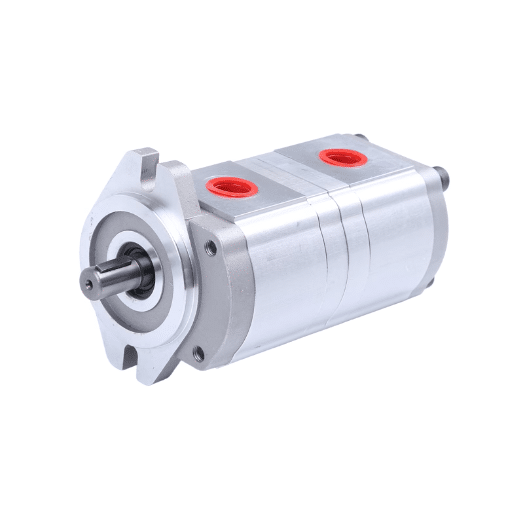
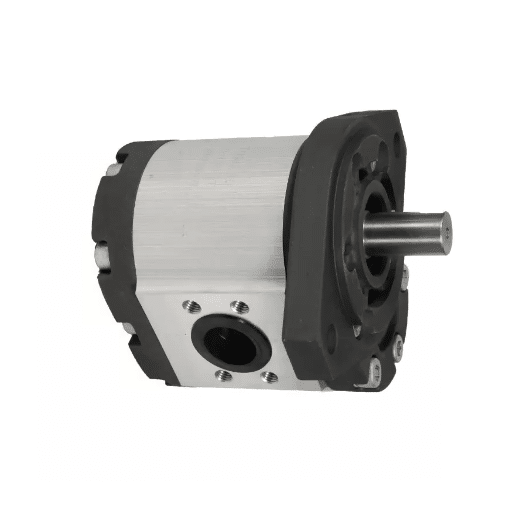
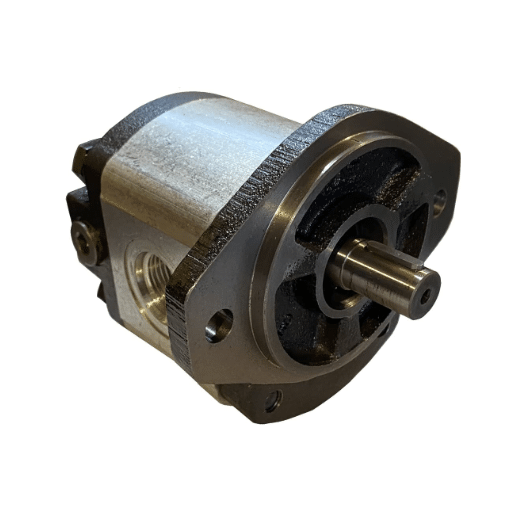
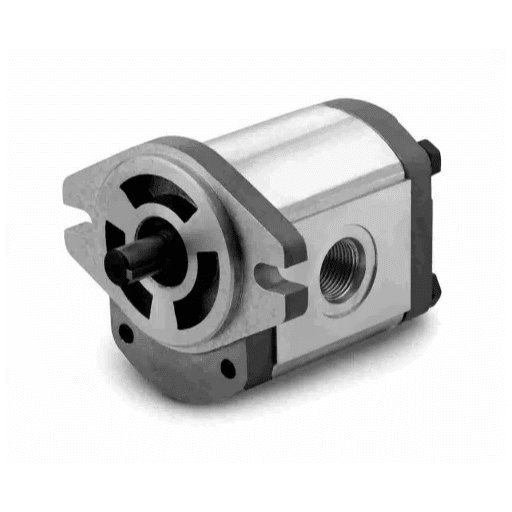
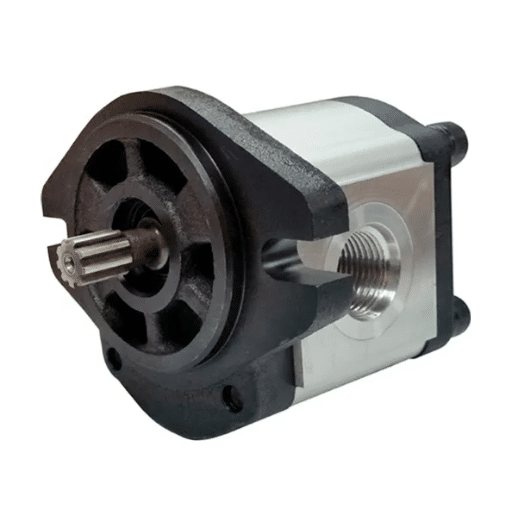
In his second season running a fleet of compact wheel loaders, Arun watched one machine crawl home every hot afternoon. The dealer had fitted a fixed-displacement gear pump where the loader needed a variable closed-loop propel drive. Fuel use climbed, oil temperature pushed past 90 °C, and two pumps failed inside a year. The pump was never defective. The application match was.
That kind of mismatch is common because the axial piston pump has become the default high-pressure power source in modern mobile machinery. It drives the boom of a 20-tonne excavator, the propel system of a wheel loader, the header of a combine, and the winch of a mining shovel. But the right choice depends on the machine, the circuit, and the duty cycle, not on the pump alone.
This guide maps axial piston pump applications machine by machine, with real models and working pressures. You will see why the architecture dominates mobile hydraulics, how open-circuit and closed-loop systems differ, and how to match a pump class to a machine class without overspending or overheating. Want to learn more about the axial piston hydraulic pump? Please check out our axial piston hydraulic pump complete guide.
Specifying or replacing a pump? Contact us to request a specification review or a data sheet matched to your machine and circuit.
Where Are Axial Piston Pumps Used?

Axial piston pumps appear wherever a mobile machine needs high pressure, controllable flow, and high power density in a compact package. They are the standard choice for the work and drive functions of off-highway equipment. Typical axial piston pump uses include:
- Excavators, for implement, swing, and travel functions
- Wheel loaders and telehandlers, for hydrostatic propel drives
- Mobile cranes, for hoist, slew, and outrigger circuits
- Agricultural harvesters and tractors, for propel and implement hydraulics
- Forestry harvesters and forwarders, for crane and drive systems
- Mining shovels and trucks, for attachment, swing, and travel
- Road rollers, pavers, and milling machines, for propulsion and vibration
Each of these machines places different demands on pressure, flow, and control. The sections below break down the main classes.
Why Axial Piston Pumps Dominate Mobile Machinery
Four engineering traits explain why this architecture leads the mobile sector.
Power density. An axial piston pump delivers more flow and pressure per kilogram than a gear or vane pump. On a machine where every kilogram of weight and every centimeter of space matters, that compact rotating group is decisive.
Variable displacement. The swashplate or bent-axis geometry lets a control system change piston stroke on the fly. Flow rises to meet a digging load and falls to near zero at idle. That behavior cuts fuel use and heat, which is why axial designs anchor demand-driven circuits. For the control options themselves, see our guide to variable displacement axial piston pump controls.
Efficiency. Overall efficiency typically runs 90 to 95 percent. Less wasted energy means less heat to reject and better fuel economy over a long shift.
Closed-loop capability. In a closed circuit, oil flows directly between the pump and a motor. Crossing the swashplate through neutral reverses flow, so a machine can drive forward and backward without a directional valve. This is the foundation of the hydrostatic propel drive. For a mechanical breakdown of the architecture, read our axial piston pump working principle and types article.
These traits matter more in mobile duty than in most stationary systems, because mobile machines face variable loads, limited cooling, and strict weight budgets. For how the architecture compares with radial designs, see axial piston pump vs radial piston pump.
Axial Piston Pump Applications by Machine Class
The table below maps common machine classes to their typical circuit, a representative pump model, and a working pressure range. Use it as a quick reference before reading the detailed sections.
| Machine class | Typical function | Circuit type | Example pump model | Typical pressure |
|---|---|---|---|---|
| Excavator (20 t) | Implement, swing, travel | Open, load-sensing | Kawasaki K3V / K5V | ~350 bar |
| Large mining excavator | Attachment, travel, swing | Open + closed swing | 3x variable, Liebherr R9150 | 350 bar, 512 L/min |
| Wheel loader / telehandler | Propel / travel drive | Closed-loop hydrostatic | Rexroth A4VG + A6VM | 400 to 450 bar |
| Road roller / paver / miller | Propel + vibration | Closed-loop | Rexroth A4VG | 400 to 450 bar |
| Combine harvester | Propel + header | Closed-loop + open | Rexroth A4VG175 | 400 to 450 bar |
| Forestry forwarder | Crane + drive | Open, load-sensing | Rexroth A10VO / Sauer LRR025 | 310 to 350 bar |
| Forestry harvester | Implement | Open, load-sensing | Rexroth A11VLO | 350 to 400 bar |
| Mining shovel | Attachment, swing, travel | Open, multi-pump | Rexroth A4V250 | 350 to 400 bar |
| Mobile crane | Hoist, slew, outriggers | Open, load-sensing | Rexroth A10VSO | 280 to 350 bar |
Pressures are nominal working values and vary by machine size and manufacturer. The point of the table is the pattern: implement and work functions usually run open load-sensing circuits, while propel and travel drives usually run closed-loop hydrostatic circuits.
Excavators
The excavator is the single largest home for the excavator axial piston pump. A typical 20-tonne machine runs one or two variable open-circuit main pumps, such as the Kawasaki K3V or K5V series, at around 350 bar. Those pumps feed the implement cylinders, the swing motor, and the travel motors through a load-sensing or negative-flow control that matches output to demand.
Variable displacement is what makes an excavator feel responsive. One moment the pump delivers maximum flow for a heavy dig; the next, it drops to a trickle while the operator repositions. That demand-following behavior saves fuel and keeps oil temperature under control on a long shift.
Attachments add another circuit. A hydraulic hammer or shear draws high intermittent flow, so the pump and control must tolerate sharp load spikes. At the top of the size range, a large mining excavator such as the Liebherr R9150 runs three variable-flow axial piston pumps at 512 L/min and 350 bar for attachment and travel, plus a separate reversible swashplate pump driving the swing in a closed loop.
Wheel Loaders, Telehandlers, and Road Machinery

Propel is the defining job here, and propel means a closed-loop hydrostatic drive. The benchmark is the Rexroth A4VG, a swashplate variable pump built for closed circuits. Depending on frame size, from NG28 to NG280, it runs 400 to 450 bar nominal and 450 to 500 bar maximum, paired with an A6VM variable motor.
Several features make the A4VG the default propel pump. Crossing the swashplate through neutral reverses flow, giving forward and reverse without a directional valve. An integrated charge pump supplies make-up oil, cooling flow, and pilot pressure. Built-in high-pressure relief valves protect against overload, and a through-drive option lets a second pump mount in tandem for an independent circuit. Control options include manual, hydraulic pilot, and electro-proportional, plus pressure cut-off to manage engine load.
The same closed-loop approach drives road rollers, pavers, and milling machines, where precise low-speed control matters as much as tractive effort.
If you’re comparing Rexroth series, our Bosch Rexroth axial piston pump guide covers A10VSO, A4VSO, and A11VO in detail.
Agricultural Machinery
Self-propelled harvesters lean on axial piston pumps for both propulsion and implement work. A combine typically runs a closed-circuit propel drive and a separate open circuit for the header and unloading functions. Real examples include the Rexroth A4VG175 in Case IH combines and Sauer-Danfoss variable pumps in Laverda grain harvesters, both in the 400 to 450 bar class.
Implement control is where precision pays. Electro-hydraulic header height control holds the cutting table at a set height over uneven ground, which protects the crop and the machine. That kind of automated, demand-driven function is only practical with a variable mobile hydraulic pump that responds instantly to a control signal.
Forestry Equipment
Forestry is a punishing duty. Loads are high, cycles are fast, and shock loads are constant. Forwarders such as the Cat 584 and 584HD run load-sensing, pressure-compensated axial piston pumps with high-load bearings and hydrostatic swashplate balancing to survive that environment.
Harvester heads and cranes draw on similar hardware. Rexroth positions the A11VLO as the heart of implement hydraulics in forestry harvesters, the A10VO for forwarder cranes, and the A6VM motor for feller bunchers. Compact forwarders such as the John Deere 810E and Komatsu 825TX use Sauer-Danfoss LRR025 and LRL025 variable pumps with load-sensing control, in the 310 to 350 bar range.
A crew lead named Sofia learned the value of matching the hard way. Her team fitted a light-duty open-circuit pump to a forwarder crane that cycled hundreds of times per shift. The pump survived the pressure but not the cycle rate, and it wore out in a single season. Swapping to a load-sensing unit rated for high-cycle forestry duty ended the failures and cut fuel use on the same route.
Mining Equipment
Mining pushes every specification to its limit. Large shovels and excavators run multiple high-flow axial piston pumps at once, one set for the attachment, another for travel, and often a dedicated closed-loop pump for the swing. The Rexroth A4V250, a 250 cc unit rated 350 bar nominal and 400 bar peak, appears in Liebherr R992 and R994 shovels and in Cat RH200 and RH400 machines.
Contamination is the constant enemy. Dust, vibration, and long service intervals punish tight internal clearances, so mining pumps depend on strict fluid cleanliness and robust filtration. Duty cycle also drives selection, because a shovel that loads trucks all day places a far heavier thermal and mechanical load on its pumps than an intermittently used machine.
Mobile Cranes and Material Handling

Mobile cranes run open load-sensing circuits for the hoist, slew, and outrigger functions. A load-sensing pump such as the Rexroth A10VSO or A10VO holds a small pressure margin above the highest load, so several functions can move at once without fighting each other. That simultaneous, proportional control is what lets an operator swing, hoist, and telescope smoothly at the same time.
Material handling equipment, from container handlers to large forklifts, uses the same open load-sensing approach for lift and drive functions, trading the propulsion efficiency of a closed loop for the simplicity of a shared open circuit.
Open-Circuit vs Closed-Circuit in Mobile Machinery
The two circuit types solve different problems, and most mobile machines use both.
An open circuit draws oil from a reservoir, pushes it through the work functions, and returns it to the tank. It suits implement and work functions because one pump can feed many actuators through a valve bank, and a load-sensing control trims flow to demand. Excavator implements, crane hoists, and forestry cranes all run open circuits.
A closed circuit loops oil directly between the pump and a motor, with a small charge pump topping up leakage. It suits propel, travel, and swing drives because flow reversal gives smooth forward and reverse control, and the tight loop is efficient and responsive. Wheel loader, combine, and road machinery propel drives all run closed loops.
Choosing between them is not arbitrary. If the function is a drive that needs reversing and precise speed control, specify a closed loop. If the function feeds multiple work actuators, specify an open load-sensing circuit.
How to Match an Axial Piston Pump to a Machine
Selection comes down to a short checklist. Work through it before requesting a quote.
- Required pressure and flow. Size to the heaviest duty cycle, not the average. Mining and shovel work need the top of the range.
- Circuit type. Closed loop for propel and swing drives, open load-sensing for multi-function implement work.
- Control type. Load sensing for simultaneous functions, constant power for engine-limited machines, and electro-proportional for automated functions.
- Duty cycle. High-cycle forestry and continuous mining duty demand more margin than intermittent work.
- Contamination environment. Field dust and long service intervals require tighter fluid cleanliness and better filtration.
- Cold-start and viscosity. Machines in cold climates need a pump and fluid that tolerate low-temperature starts.
For the formulas and pressure, flow, and displacement figures behind these choices, read our axial piston pump specifications and sizing guide.
Common Application Mistakes

Most premature failures trace back to a handful of avoidable errors.
- Under-specifying pressure. Running a 280 bar pump at a continuous 350 bar duty shortens its life, especially in mining and shovel work.
- Using a fixed pump where load sensing is needed. A fixed pump wastes energy and generates heat on any demand-variable function.
- Ignoring closed-loop charge pressure. Low charge pressure starves a propel drive and accelerates wear.
- Poor contamination control. Field dust and skipped filter changes destroy tight clearances fast.
- Overlooking cold-start viscosity. Thick cold oil can cavitate a pump on startup before it warms.
Axial Piston Pump Applications FAQ
What are axial piston pumps used for?
They power the work and drive functions of mobile machinery, including excavators, wheel loaders, cranes, agricultural harvesters, forestry machines, and mining shovels, wherever high pressure and controllable flow are needed in a compact package.
Why are axial piston pumps used in excavators?
Their variable displacement matches the unpredictable loads of digging, lifting, and traveling, while high efficiency limits fuel use and heat on long shifts.
What is the difference between open-circuit and closed-circuit pumps?
An open circuit draws from and returns to a reservoir and suits multi-function implement work. A closed circuit loops oil between the pump and a motor and suits propel and swing drives that need reversing.
Which hydraulic pump is best for mobile machinery?
For high-pressure, demand-variable mobile duty, the axial piston pump is the standard choice because of its power density, efficiency, and control options.
What pressure do axial piston pumps run in construction equipment?
Open-circuit implement systems typically run 280 to 350 bar nominal, while closed-loop propel drives commonly run 400 to 450 bar.
Why do mobile machines use variable displacement pumps?
Variable displacement matches flow to demand, which saves fuel, reduces heat, and gives smooth control across changing loads.
Can one axial piston pump run multiple functions on a machine?
Yes. In an open load-sensing circuit, a single variable pump can supply several actuators through a valve bank while holding a small pressure margin above the highest load.
Conclusion
Across every class of off-highway equipment, the pattern holds. Implement and work functions run open load-sensing circuits, while propel and travel drives run closed-loop hydrostatic circuits, and the axial piston pump anchors both. That is why axial piston pump applications now span the excavator on a construction site, the combine in a field, the forwarder in a forest, and the shovel in a mine.
The right result comes from matching the pump to the machine, the circuit, and the duty cycle, not from picking a model in isolation. Get the pressure, circuit type, control, and contamination environment right, and the pump will deliver years of reliable service.
LOYAL INDUSTRIAL supplies axial piston pumps for open- and closed-circuit mobile duty, with engineering support to match the unit to your machine. If you are specifying a new system or sourcing a replacement, contact us for a specification review, and we will confirm the right model, pressure, and control for your application.