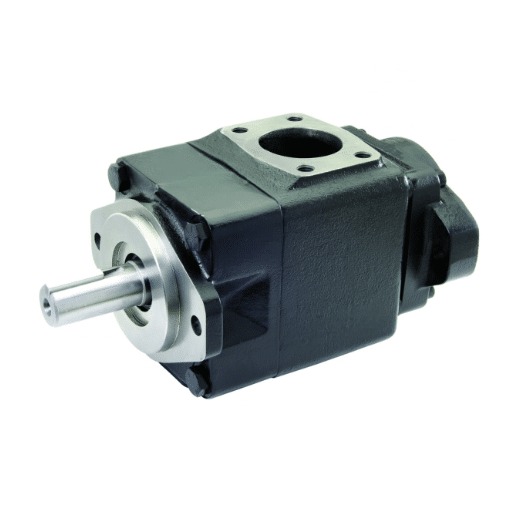
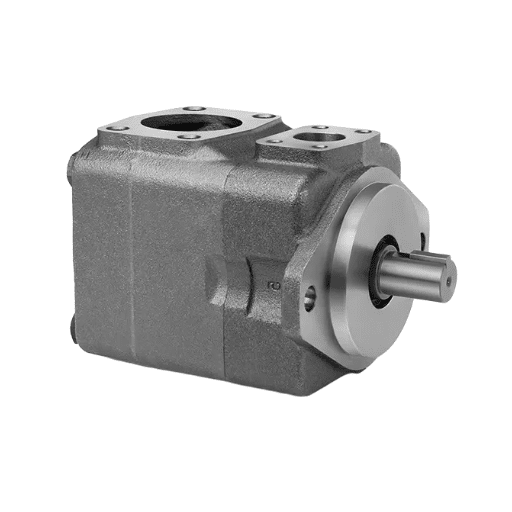
Marcus, a maintenance manager at a German mobile crane fleet, once ordered two identical 71 cm³/rev axial piston pumps for two cranes. The model numbers matched. The displacement matched. The mounting matched.
Only after installation did he discover that one pump had a simple pressure-compensated control, while the other carried a power-limiting DFLR control. The first crane burned through fuel and overheated during combined boom-and-winch operation. The second ran within its diesel engine’s power envelope. The difference wasn’t the pump. It was the control.
That mistake costs more than downtime. Variable displacement axial piston pump controls determine how the pump responds to pressure, flow demand, and available power. Pick the right control and the system runs cooler, faster, and safer. Pick the wrong one, and even a premium pump underperforms.
This guide explains how pressure compensators, load-sensing, power-limiting, and electronic displacement controls work. You’ll learn when to specify each one, how manufacturer model codes map to control types, and how to avoid the most common replacement mistakes.
Need help matching a control option? Contact us to request a control-option recommendation or a full specification sheet for your replacement pump.
What Variable Displacement Axial Piston Pump Controls Do

A variable displacement axial piston pump can change its output flow by adjusting the swashplate or bent-axis angle. But it can’t make that decision on its own. It needs a control system to sense operating conditions and command the swashplate to move.
The control’s job is to balance three variables: flow, pressure, and power.
- Pressure priority: Keep the circuit at a set maximum pressure.
- Flow priority: Match pump output to the load’s demand.
- Power priority: Keep the pump within the engine’s available torque.
Each task requires a different control strategy.
The link between control type and efficiency is direct. A pump that runs at full displacement until pressure peaks wastes energy whenever the circuit doesn’t need full flow. A load-sensing control, by contrast, reduces displacement the moment the valves throttle back. That difference can cut heat generation and fuel consumption significantly under variable load.
If you’re not yet familiar with how the swashplate changes displacement, read our axial piston pump working principle guide first. The mechanics of the rotating group and valve plate make the control logic much easier to follow.
How Variable Displacement Axial Piston Pump Controls Work
All variable displacement axial piston pump controls use the same basic mechanical loop. The swashplate is pushed toward maximum angle by a bias spring or bias piston. On the opposite side, a servo piston or stroking cylinder can push it back toward neutral.
The control valve decides when to send pressure oil to the servo piston. It compares a sensed signal, outlet pressure, load pressure, or an electronic command against a spring setting or reference value. When the sensed signal exceeds the reference, the control valve shifts, oil flows to the servo piston, and the swashplate destrokes.
A direct-acting compensator uses the pump’s own outlet pressure to shift the spool. A pilot-operated compensator uses a small pilot valve to control a larger main spool, giving smoother response at higher pressures. Many modern pumps combine both. A pilot stage gives sensitivity, and a main stage gives flow capacity.
This closed mechanical feedback loop is what makes the control stable. The swashplate position itself creates a feedback force through springs or linkages. When the feedback force balances the command force, the control valve returns to neutral, and the swashplate holds its new angle. For application examples, see our axial piston pump applications article.
Pressure-Compensated Control
A pressure-compensated axial piston pump maintains a set maximum outlet pressure. At pressures below the compensator setting, the bias spring holds the swashplate at full angle and the pump delivers full flow. When system pressure reaches the setting, the compensator spool shifts and the pump destrokes. Flow drops to whatever is needed to maintain that pressure.
This behavior makes pressure compensation ideal for clamping, pressing, and holding circuits. A hydraulic press, for example, needs high flow during the fast approach and low flow during the high-pressure hold. The pressure-compensated pump provides both automatically.
The cut-off pressure is adjustable on most pumps. A single-stage compensator uses a heavy spring; a two-stage compensator uses a pilot orifice and a lighter spring for better stability. Typical hysteresis, the pressure rise between full flow and fully stroked, is small, often around 4 bar or less on quality pumps.
Rexroth labels this option DR on the A10VSO series. DRG adds a remote pressure port, letting you set the compensator pressure from an external relief valve. That’s useful when the operator needs to change pressure without touching the pump itself.
Looking for a complete pump selection overview? Our axial piston hydraulic pump complete guide connects working principle, specifications, and controls in one place.
Load-Sensing Control

Load-sensing control takes efficiency one step further. Instead of producing full flow until the pressure limit is reached, the pump produces only the flow the directional valve asks for. It does this by maintaining a constant pressure drop across the valve’s metering orifice. This is the core of a load-sensing pump control.
The pump senses load pressure through a separate load-sense (LS) line connected downstream of the main control valve. The control then keeps the pump outlet pressure at the load pressure plus a fixed differential, typically 10–30 bar (150–450 PSI).
If the operator opens the valve further, the pressure drop across the orifice tries to fall, and the pump increases displacement to restore it. If the operator closes the valve, the pump destrokes.
This is why load sensing is common in excavators, wheel loaders, and agricultural machinery. The pump doesn’t waste energy pumping oil that the valves don’t need. Heat generation drops, fuel consumption falls, and the system responds faster because the pump is already primed to follow the operator’s command.
Rexroth marks load-sensing pressure/flow control as DFR on the A10VSO. DFR1 is similar but omits the bleed-down orifice in the LS line. Parker and Danfoss offer comparable LS options on their PVplus, P1, and Series 42 pumps.
The trade-off is more plumbing. The LS line must run from the pump to the load-sensing port on the directional valve. Contamination in that line can make the control unstable, so filtration matters.
For a closer look at the axial piston pump internal components, see our guide to axial piston pump parts.
Power / Torque-Limiting Control
A power-limiting control protects the prime mover. It prevents the pump from demanding more torque than the engine or motor can deliver. The result is a constant-power envelope: high flow at low pressure, low flow at high pressure. In manufacturer terms, this is the most common form of axial piston pump power control.
The math is simple in concept. Hydraulic power is proportional to pressure times flow. To keep power constant, the control must reduce flow as pressure rises.
Mechanically, this is done by adding a pressure-sensing piston and a displacement-feedback spring to the servo loop. As pressure increases, the combined force destroys the pump. As displacement falls, a feedback spring modifies the balance so the product of pressure and flow stays near the set limit.
This matters on mobile cranes, excavators, and forestry equipment. A diesel engine has a fixed maximum torque. Without power limiting, a simultaneous boom-lift and swing command could stall the engine. With power limiting, the pump automatically reduces flow to keep the engine within its capability.
Rexroth combines pressure compensation, load sensing, and power limiting in the DFLR control code. Parker uses power-compensator options on PVplus and P1 series, often marked with a CC or similar suffix. Danfoss offers torque limiters on H1 and Series 42 pumps.
Electronic Displacement Control (EDC)
Electronic Displacement Control replaces the hydraulic command signal with an electrical one. A PWM current signal drives proportional solenoids on the pump’s control valve. This makes the electronic displacement control axial piston pump the most flexible option for CAN-based machine control.
The solenoids shift a three-position spool, porting charge pressure to either side of the servo piston. A mechanical feedback linkage returns the valve to neutral once the swashplate reaches the commanded angle.
EDC offers two major advantages. First, the pump can be controlled from the machine’s electronic controller, enabling coordinated multi-pump strategies. Second, the control is proportional: swashplate angle, and therefore flow, tracks the input current. The operator or controller can request 10%, 50%, or 100% flow smoothly.
There are practical limits. EDC has a neutral deadband, often requiring a small “jump” current to start swashplate movement. If the electrical signal or charge pressure is lost, the pump returns to neutral. That’s a built-in fail-safe, but it also means the control depends on clean electrical connections and a healthy charge pump.
Danfoss uses EDC widely on Series 90 and H1 pumps. Rexroth offers ED and ER electrohydraulic pressure controls on the A10VSO. These options are especially common on transit mixers, backhoe loaders, and any machine with CAN-based machine control.
Control Type Comparison and Selection
| Control Type | What It Controls | Best For | Efficiency | Key Trade-Off |
|---|---|---|---|---|
| Pressure compensation (DR) | Maximum outlet pressure | Clamping, pressing, holding circuits | Moderate | Full flow until pressure limit |
| Load sensing (DFR) | Flow demand via LS differential | Mobile machinery, multi-actuator systems | High | Requires LS line and clean oil |
| Power limiting (DFLR) | Input torque / power | Cranes, excavators, combined-load circuits | High | More complex adjustment |
| Electronic (EDC) | Swashplate angle by current | CAN-controlled mobile equipment | High | Needs electrical integration |
When you select a control, start with the circuit’s priority. If the machine spends most of its time at full pressure with low flow, pressure compensation is enough. If the operator throttles flow through directional valves, load sensing saves energy. If the prime mover is small relative to the pump’s maximum capability, power limiting is essential. If the machine already has an electronic controller, EDC gives you the most flexibility.
Manufacturer Control-Code Decoder
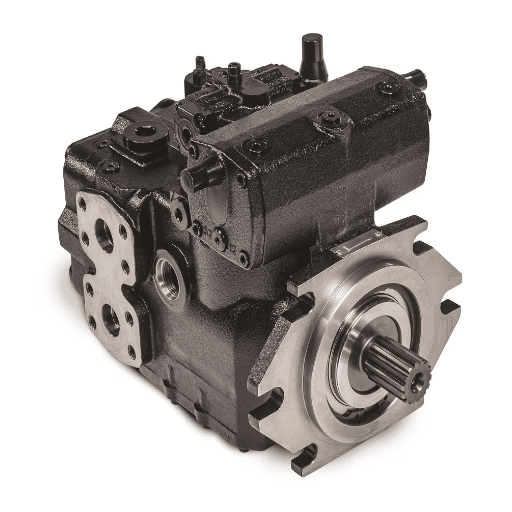
Model codes tell you more than frame size. The control suffix determines what the pump will do under load.
Rexroth A10VSO
| Code | Control Function |
|---|---|
| DG | Two-point, direct-operated displacement control |
| DR | Pressure controller (pressure compensator) |
| DRG | Pressure controller, remote controlled |
| DFR | Pressure and flow control (load sensing) |
| DFR1 | Pressure and flow control without LS bleed orifice |
| DFLR | Pressure, flow, and power control |
| ED / ER | Electrohydraulic pressure controls |
If you’re comparing Rexroth series, our Bosch Rexroth axial piston pump guide covers A10VSO, A4VSO, and A11VO in detail.
Parker PVplus / P1
| Option | Control Function |
|---|---|
| Pressure compensator | Standard pressure control, similar to DR |
| Load sensing | Maintains constant pressure drop across valve |
| CC / power compensator | Torque or horsepower limiting |
| Electronic proportional | EDC-style displacement control |
Danfoss Series 42 / H1
| Code | Control Function |
|---|---|
| PC | Pressure compensator |
| LS | Load sensing with pressure compensator |
| EDC | Electric displacement control |
| PCP | Pressure control pilot for EDC |
Always verify the exact code in the current manufacturer catalog. A single letter difference can mean a completely different control response.
Common Control Selection Mistakes

Even experienced buyers make these errors when specifying or replacing a variable displacement axial piston pump control. Need help matching specs to your system? Our axial piston pump specifications guide explains each rating in more depth.
- Specifying pressure compensation when load sensing would save energy. A pressure-compensated pump runs at full flow until it hits the pressure limit. In mobile equipment with variable valve openings, it wastes fuel and generates heat.
- Ignoring case-drain flow and pilot oil consumption. Some controls bleed pilot oil to the case. If the case-drain line or heat exchanger is undersized, the pump overheats.
- Mismatching open-circuit and closed-circuit controls. Open-circuit controls like DR and DFR are designed for pumps that draw from a reservoir. Closed-circuit hydrostatic transmissions need different control logic and charge pressure management.
- Overlooking neutral deadband in EDC. A small current may produce no flow at all until the deadband is crossed. The controller must be tuned for this.
- Forgetting remote pressure adjustment needs. If the operator must change pressure from the cab, a DR control won’t work. You need DRG or an electronic option.
- Assuming a control swap is plug-and-play. Switching from DR to DFR usually requires adding an LS line and possibly a different valve. Check the full circuit before ordering.
Variable Displacement Axial Piston Pump Controls FAQ
How do variable displacement axial piston pump controls work?
They sense system conditions, pressure, load pressure, or an electronic command, and adjust the swashplate angle through a servo piston. A feedback linkage returns the control valve to neutral once the swashplate reaches the commanded position.
What is the difference between pressure compensation and load sensing?
Pressure compensation limits the maximum outlet pressure. The pump delivers full flow until that pressure is reached, then destrokes. Load sensing maintains a constant pressure drop across the directional valve, so the pump produces only the flow the valve demands.
When should I use a power-limiting control?
Use power limiting when the prime mover, diesel engine or electric motor, can’t deliver enough torque for full flow at full pressure. Mobile cranes, excavators, and forestry machines commonly need this protection.
What does DFLR mean on a Rexroth pump?
DFLR stands for pressure, flow, and power control. It combines a pressure compensator, load-sensing flow control, and a power limiter in one control module.
What is electronic displacement control (EDC)?
EDC uses a PWM electrical signal to drive proportional solenoids that position the pump swashplate. It allows electronic flow control and integrates with machine controllers and CAN networks.
Can I replace a DR pump with a DFR pump?
Only if the circuit already has or can be modified to include a load-sense line and the correct directional valve. The pump mounting may match, but the control plumbing does not.
How do I set the pressure compensator?
Turn the adjustment screw while the pump is running at normal temperature. Increase the setting slowly while monitoring system pressure with a calibrated gauge. Set it above normal operating pressure but below the relief valve setting and the pump’s continuous pressure rating.
What oil cleanliness do these controls need?
Most variable displacement axial piston pump controls need ISO 4406 18/16/13 or better. High-pressure and electronically controlled pumps benefit from 17/15/12 or cleaner to protect the small pilot orifices and solenoid valves.
Do electronic controls fail-safe?
Most EDC systems return to neutral if the electrical signal or charge pressure is lost. This prevents uncommanded movement but also means the machine loses that pump’s function until the fault is corrected.
Conclusion
Variable displacement axial piston pump controls turn a mechanical pump into an adaptive power source. Pressure compensation protects the circuit. Load sensing matches flow to demand. Power limiting protects the engine. Electronic displacement control integrates the pump into a modern machine controller.
The right choice depends on what the machine does. A press needs pressure holding. An excavator needs load sensing. A crane needs power limiting. A mixer needs electronic control. Match the control to the duty cycle, and the pump will run cooler, use less energy, and last longer.
If you’re specifying a new pump or replacing an existing control, LOYAL INDUSTRIAL PTE. LTD. can help you match the control option to your circuit. Contact us for a control-option recommendation or request a specification sheet with the correct DR, DFR, DFLR, or EDC configuration for your machine.