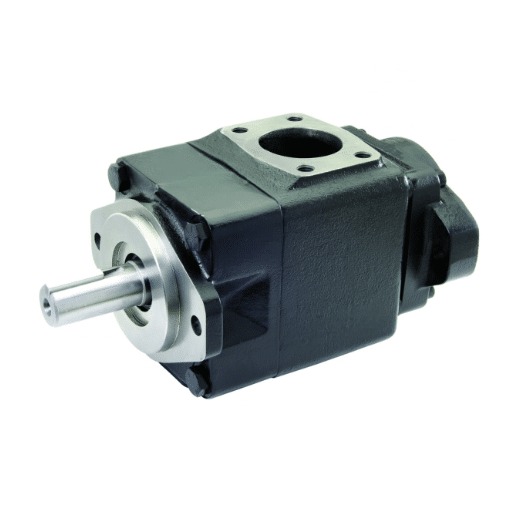
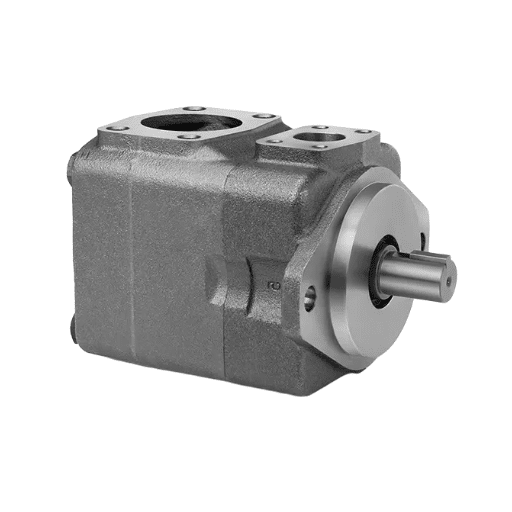
Twelve miniature wheel loaders operating within a logistics yard in the Midwest were the focus of Rajesh’s duties as the fleet maintenance manager. From January 2024 to June 2025, his team of mechanics replaced three aluminum-bodied gear pumps within the loading equipment. The legacy pumps held on the original housing for six years. The gear pumps with the steel body were still running in the same system with the same fluid and duty cycle and were still on the same original housing. The difference was not in the build quality. It is the material of the housing.
Most engineering requirements sheets only say “gear pump” without any reference to the material of the housing. This, though, causes avoidance of modeling and material selection errors, also known as being expensive for buyers, since the material determines the safe operation of the part in relation to the external influences and therefore the final cost of such a pump. Aluminum and steel are different materials intended for different applications, and using another material for another application is a sure way to bring about the unwanted results of premature breakdown or an excessive amount of mass.
This guide gives industrial buyers a complete material comparison for aluminum vs steel hydraulic pumps. You will get the property table that belongs in your RFQ, real failure mode data from field maintenance, application-specific recommendations, and a five-question decision framework you can use before the next purchase order.
What the Pump Housing Actually Does

The housing structure of a gear pump is not simply cosmetic. This is the frame, heat sink as well as sealing parts, which seal the operational lifespan of the pump under pressure.
Structural Load Bearing Under Internal Pressure
Every single pump of the hydraulic nature gives rise to pressure, which fights to pass through the walls of the casing. For instance, the cavity of a gear pump at 3000 PSI can produce several thousand pounds of pressure per square inch of the surrounding material. Alloyed Aluminum deforms at slightly above 200 and around 250 MPa, as per the alloy, while 316L stainless steel deforms at more than 520 MPa. This disparity will decide whether the casing will maintain its original form or buckle and change its shape under the influence of maximum loads.
Heat Dissipation and Thermal Management
According to the exercises, pumps disperse around 15% to 25% of the power in the form of heat. It does not produce heat but wicks it away from the fluid over which it is situated, which intentionally exposes the heat generated to the surrounding air. Aluminum, for one example, has a coefficient of thermal conductivity that is approximately four times faster in comparison to carbon steel, hence, offering a reduction in the temperature of the fluid between 5-10°C in small systems with boundaries such as limited cooler volume.
Sealing Surface Integrity and Clearance Maintenance
Within gear pumps, clearances of the gear tips to the housing depends are typically in the order of micrometers, and these clearances are affected by thermal expansion. It can be seen that for instance, aluminium expands more quickly than steel with about 22 to 24 µm/m·°C, hence the volume increase due to thermal expansion.
Corrosion Barrier and Fluid Compatibility
The very first shield against pollutants and chemicals is the house. Aluminum forms a very thin oxide that protects it from moisture or any other kind of atmosphere. Besides that, the steel resists corrosion in the presence of moisture or salts unless it is composed of more than one metal.
Aluminum Hydraulic Pump Housing: Properties and Limits

Aluminum is the metal of choice for mid-pressure mobile equipment applications. It is essential to understand when to and when not to use it to avoid causing problems that lead to claims.
Common Alloys and Their Properties
Three alloys cover most aluminum hydraulic pump housings:
- ADC12: An alloy used in the manufacture of gear pumps such as those from Asian manufacturers. High machinability, medium strength, and suitable for high volume production runs.
- A356: A356 is a high-pressure and low-pressure cast alloy with superior mechanical properties and fatigue resistance over ADC12. This alloy is a selectively preferred material for applications involving repeated heating and cooling.
- 6061-T6: 6061-T6 is a casting grade within the 606 alloy family of aluminum, also used in computer numerical control machining for housings. This alloy has the highest tensile strength of the three and has the least ease of machining and hence, the most expensive.
Weight Advantage and Power-to-Weight Ratio
Aluminum, with a density of 2.7 g/cm³, is about 65% lighter than steel, and some gear pump housings in aluminum are about 40-60% lighter than the corresponding steel or cast iron ones. For a mobile application, this reduction in weight helps to lessen the power consumption, helping towards the conservation of fuel and also the load ceilings. A standard set of machines equipped with such pumps, losing just three kilos, will allow the removal of 150 kg of mass from the entire set.
Thermal Conductivity Benefit
The thermal conductivity of aluminum is approximately 205 W/m·K. For carbon steel materials, the conductivity of such materials is much lower, about 50 W/m·K. The size of a hydraulic system can be affected by the limitation of a tank which is few with politically correct terminology. This, in turn, causes the housing to assume the function of a rather significant heat dissipation element.
Pressure Rating Ceiling
In general, many aluminum gear pump housings can be used in working pressures of between 2,500 and 3,500 PSI. In maximum hydraulic operating conditions, the housings may have to withstand an excess pressure of a whopping 4,000 PSI. Still, the danger zone here is the permissible limit of 3,000 PSI when the pump is required to run for prolonged periods. For such applications, the manufacturer recommends the use of steel or ductile iron.
Corrosion Resistance and Anodizing Options
High-strength aluminum surfaces have a microscopically thin oxidation film known as Al₂O₃. The latter’s significance vis-à-vis environmental factors lies with the layers in conditions prone to corrosion and are somewhat aggressive, which are quite effective.
Hard Anodizing that is more permeable in the surface keeps the original hardness and increases corrosion resistance; however, making the system more expensive. For more aggressive environments, one can prolong the life of the plating or even apply anodic coating to the plating, plus some Teflon items which are highly effective.
Machinability and Cost Profile
While aluminum machines faster than steel, it has a lower distortion level than steel because of low rate of tool wear and cost is definitely lower for less than several hundred or one thousand units. Looking at the big picture, steel has proven to have better wear resistance and fatigue endurance in high endurance activities, given dangling loads although less costly alternatives must be pursued in this respect.
Need help selecting the right pump housing material for your fleet? Request a material compatibility review and our engineers will match alloy grade to your operating envelope.
Steel Hydraulic Pump Housing: Properties and Limits
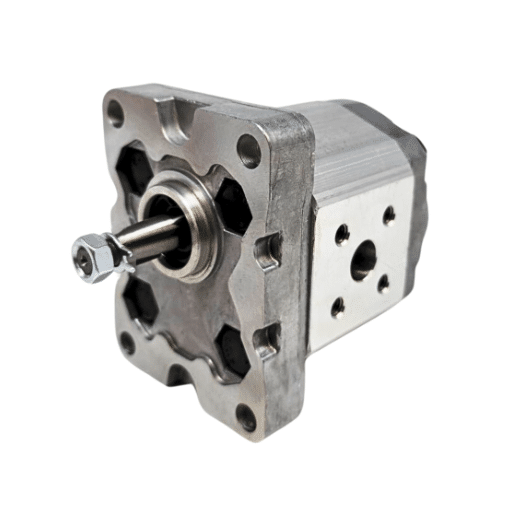
Dealing with high-pressure usage, wear and tear steel is on the opposite extreme in the product line. There is an increase in weight but better abrasion resistance compared to aluminum.
Carbon Steel vs Stainless Steel
Two families dominate steel pump housings:
- Carbon steel (4140, 1045): High tensile properties, lower costs, but prone to rust thus needing painting or plating, especially for fixings. Common in commercial fixed applications
- Stainless steel (316L, 17-4 PH): Minimum corrosion, higher costs, but excellent fatigue. 316L is used either without any modification or in the form of welded pipes. 17-4 PH strength abilities are due to precipitation hardening and are directed outward, outward – or to the ends of the torsion faces as a figure until reaching its boundaries radially.
Pressure Rating Ceiling
Steel pump bodies are often exposed to unbroken loads of above 5000 PSI. Thus, steel bodies are designed to operate successfully even in other stringent applications with the design threshold of 6500 PSI. This capability is essential in mining, heavy tools, and presses.
Wear and Abrasion Resistance
In particular, steel is more of quite more difficult material to work with as compared with aluminum. Thus, in aggressive media, abrasive emboli wear out the aluminum more intensively, which includes even an upgrade of the external clearance and flow capacity. As far as the dirty, contaminated fluid is concerned, the abrasion is limited. For this reason, most of the pumps for mining and demolition are designed with either steel or ductile iron casings.
Thermal Stability and Dimensional Rigidity
Expansion in cold temperatures is also high to a level of about 10 to 12 µm/m·°C; this is however, not as high as when aluminum is used. When used in hot hydraulic systems, steel results in smaller internal clearances and therefore discourages seizure without excessive wear. For a deeper look at how thermal load affects system sizing, see our hydraulic reservoir sizing guide.
Weight Penalty and Fleet Implications
At 7.8 g/cm³, steel adds significant mass. On a single pump, the difference may be two to four kilograms. Across a mobile fleet, that weight accumulates into a measurable fuel penalty and reduced payload. The engineering decision becomes a TCO calculation, not a performance calculation.
Cost Profile and Coating Requirements
Raw steel is more than aluminum in terms of density in terms of metal and cost of an alloy that can be depended on for commercial use. This also includes Steel mouldings, which are made of carbon steel and therefore require galvanizing, nickel-plating or painting to avoid corrosion in aeration contact zones. Whereas the use of stainless steel removes the need for the coating, the expenses for materials in such cases rise by two or three times, depending on the thickness and grade of the steel products.
Head-to-Head Material Comparison Table
Use this table as your quick reference during specification reviews and RFQ preparation.
| Property | Aluminum Alloy Housing | Steel Alloy Housing |
|---|---|---|
| Density | ~2.7 g/cm³ | ~7.8 g/cm³ |
| Tensile Strength | 200–310 MPa (alloy dependent) | 520–1,170 MPa (grade dependent) |
| Typical Pressure Rating | 2,500–3,500 PSI continuous | 5,000+ PSI continuous |
| Thermal Conductivity | ~205 W/m·K | ~50 W/m·K |
| Thermal Expansion | 22–24 µm/m·°C | 10–12 µm/m·°C |
| Corrosion Resistance | Good (oxide layer); anodizable | Moderate (requires coating); excellent in stainless grades |
| Wear/Abrasion Resistance | Moderate; softer surface | High; hardened surfaces tolerate contaminants |
| Weight Savings vs Steel | 40–60% lighter | Baseline |
| Relative Machining Cost | Lower | Higher |
| Best Applications | Mobile, moderate pressure, weight-sensitive | High pressure, abrasive fluid, continuous duty |
Mini-story: In 2024, a European manufacturer of ski lifts phased out the use of iron in favor of A356 aluminum as the material for the double secondary hydraulic circuit mobile hydraulic cylinders. Elimination of 4.2 kg for each pump allowed a weight reduction on 800 pumps in total equal 3360 kg and static ram martinique was utilized. Pilot tests indicated a 2.3 percent decrease in fuel consumption of the whole fleet. Despite the components being used in seams poised at 2000 PSI with clean ISO 32 pure mineral oil within an 18 month period endorsement of no leak and failure. The preferred material is the fitting choice as aluminum is top rated for such services.
Real-World Failure Modes: What Field Maintenance Data Shows

Maintenance specialists, in their forums, found flaws in the choices made when in addition to the economically attractive characteristics of various options, they used certain specifications of materials.
Cavitation Erosion in Aluminum Housings
When vapor bubbles recompress and implode on the opposite wall in exploitation, the section of the housing undergoes an impact of micro-jets, causing ‘pitting’. When cavitation takes place in aluminium, this decrease is referred to as an ‘orange peel’ or a ‘sponge’ by the sound of its characteristics at the entrance. As aluminum is a softer material, cavitation preys on the surface aggressively more so than steel or cast iron would. The moment any attack occurs, there are stress ribs created and the rate of attack increases. However, the solution is simple: replace the housing instead of trying to fix it.
Corrosion from Water Contamination
The presence of water in hydraulic fluids leads to oxidation and the electrolytic attack of the surface of aluminum. The reports of the field assure the reader that water contamination levels more than 500 ppm have the bad consequence: a receiver manifold made out of aluminum alloys loses its operational life by 30–50%. The attack caused by corrosion makes the sealing surfaces rough and the side leakage goes up; the efficiency comes down. Metal boxes which are made of reinforcing steel tend to endure water well and these are suggestive of the fact that even carbon steel will corrode if its oxide coating is in a poor state.
Fatigue Cracking Under Cyclic Pressure Pulses
Equipment like compactors and rock breakers is typically used under conditions of frequent pressure buildup, causing cyclic stresses in the casing. Compared with steel, the maximum number of cycles before a fatigue crack is initiated is in aluminum. Over 1,000 or more cycles, stress raisers at ports or mounting bolt holes, crack initiation at the geometric corners of the splashblock and its direction is perpendicular to the bending axis and present structural members. Steel out of the two materials is express recommendation for burden bet environment based on the having higher fatigue strength of the two materials.
Steel Housing Corrosion in Marine and Humid Environments
Untreated carbon steel casings exposed to highly humid or marine conditions tend to edge and will not last for long. It is reported by a lot of guys in the field that within a period of two years of hassle steel fresh out of the oven begins to notice rust bleeding from painted steel housings upon their deployment to the coastal areas. This problem completely disappears with stainless steel, or when coated carbon steel is used which is economically costly.
When Contamination Accelerates Aluminum Wear
Mining and quarrying activities, as well as the demolition of structures, generate contaminated hydraulic fluids that cause degradation of aluminum housings. It is not uncommon for the latter to be replaced with either homogeneous steel or ductile iron as this is the conventional approach. The additional burden, including the weight in terms of fixed-size mining machinery, becomes insignificant, especially since the durable gain is higher priced per unit.
Application-by-Application Material Recommendations
The right material depends on the operating envelope more than the pump type.
Mobile Equipment
Forklifts, aerial lifts, compact excavators, and agricultural tractors benefit from aluminum’s weight savings. In most cases, the operational pressure is kept below 3,000 PSI, and the thermal conductivity offered by aluminum helps to address the concerns of high temperatures on compact installations. Hard-anodized aluminum must be used if the machinery is to be used in wet areas of the world, for example, outdoors in rainy, humid surroundings.
Industrial Presses and Fixed Machinery
Fixed industrial systems running continuous duty at 2,500 to 4,000 PSI are a mixed case. If the fluid is clean and the ambient is controlled, aluminum works. If the press cycles rapidly with pressure spikes, steel or ductile iron provides the fatigue margin that prevents housing failure.
Mining and Abrasive Fluid Environments
The process of mining, quarrying, and demolition deals with the hydraulic fluid that is primarily contaminated with abrasive particles, which increases the wear on aluminum casings. Here the obvious choice would be to use steel or, as is conventionally done, ductile iron. For stationary mining equipment, the weight penalty as such does not hold, especially since the durability does make up for the increase in the individual machine cost.
Marine and Offshore Systems
A salty marine atmosphere and high moisture levels require constructions tolerant to corrosion effects. One potential solution is to anodize aluminum parts for lubricating marine medium-pressure booster units. Steel—specifically 316L SS is only furnished when severe service, high pressure, or subsea applications are necessary. Such applications will make ‘carbon steel without coating’ unachievable.
Agricultural Machinery
Agricultural hydraulic uses low pressure and low duty cycles as it operates intermittently. Aluminum can be used for building tractors and combine harvesters as the low weight of the metal reduces the time and consequently improves the productivity in the field. The elements require maximum cleanliness due to the presence of dust, and the smallest solid particles are especially dangerous since with time they can clean out the housing made of aluminum more quickly than it was expected.
The 5-Question Procurement Decision Framework

Use these five questions in your next RFQ to eliminate the material mismatch that drives premature pump failure.
Q1: What is your continuous operating pressure?
- Below 3,000 PSI: Aluminum is viable
- 3,000 to 4,500 PSI: Evaluate duty cycle; aluminum may work for intermittent loads
- Above 4,500 PSI: Specify steel or ductile iron
Q2: Is weight reduction a system-level priority?
- Yes (mobile, aerospace, robotics): Aluminum strongly preferred
- No (fixed industrial, mining): Steel or cast iron acceptable
Q3: How clean is your hydraulic fluid?
- ISO 4406 18/16/13 or better: Aluminum acceptable
- 20/18/15 or worse (mining, demolition): Steel or cast iron required
Q4: What is your duty cycle and pressure pulsation severity?
- Intermittent, steady pressure: Aluminum
- Continuous duty with pressure spikes: Steel for fatigue margin
Q5: What is your environmental exposure?
- Controlled indoor: Any material with appropriate coating
- Humid or marine: Anodized aluminum or stainless steel
- Chemical exposure: Stainless steel or coated steel
Mini-story: In the early days of the year 2025, a procurement officer from a mining maintenance company in Queensland ordered twelve aluminum gear pumps for a novel tension system in the belt conveyor. The specifications demanded 2800 PSI at a flow rate of 15 GPM and this fell comfortably within aluminum limits. What the spec missed was the fluid cleanliness. The open reservoir ingested silica dust, driving ISO codes past 22/20/17. All six primary pumps failed within eleven months from abrasive erosion of the housing bores. The replacement steel-bodied units, running the same fluid, lasted three years. The upfront cost of the aluminum pumps was one-third of the steel units, but the total replacement cost was triple.
Cost and Total Cost of Ownership
Unit price is only the first line item. The material decision shapes maintenance intervals, downtime, and fuel costs.
Upfront Unit Cost Comparison
An aluminum gear pump typically costs 20 to 40 percent less than an equivalent steel pump in small to medium sizes. The gap narrows in large displacement pumps where machining cost dominates material cost. Stainless steel housings can cost two to three times the aluminum equivalent.
Fleet Weight-Savings TCO Example
Think of a group of lightly built sixty construction diggers. Changing the material of the pump housings from steel to aluminium will lead to a three-kilogram weight reduction in each unit. If a change is prevalent in the whole fleet of around 150 kg due to the improvement and if diesel has a penalty of 0.15 liters per 100 km per an additional 100 kg of weight through utilization of two thousand hours of work every year, then the fuel cost per year reduces by about 450 liters. Over the span of five years this value reaches about 2,250, which is roughly $2,800 at current diesel prices, before any gain in payload capacity is taken into consideration.
Maintenance Interval Differences
In clean fluid, moderate-pressure applications, aluminum and steel pumps require similar maintenance intervals. In dirty or high-pressure applications, aluminum housings may need replacement at half the interval of steel. The cost of unplanned downtime in industrial settings often exceeds the pump replacement cost.
When Steel Pays Back Despite Higher Upfront Cost
Steel pays back when any of the following apply: continuous duty above 3,500 PSI, contaminated fluid, severe pressure pulsation, or abrasive operating environment. In those conditions, the longer service interval and lower failure rate offset the higher initial price within the first replacement cycle.
For a deeper understanding of how pressure and flow translate to system requirements, our hydraulic pump horsepower calculator helps you size the motor and pump together.
Common Mistakes When Specifying Pump Housing Material

Four specification errors account for most material-related pump failures in the field.
Ordering on Flow and Pressure Alone
A specification that lists “20 GPM at 2,500 PSI” without naming the housing material leaves the supplier free to choose the cheapest option. That option is usually aluminum. If your application is mining or continuous industrial duty, aluminum may fail early. Always specify the housing material alongside flow and pressure. For a full system-level sizing approach, see our 20 GPM hydraulic power unit guide, which treats the pump as part of a complete subsystem.
Using Aluminum in Dirty Fluid Without Filtration Upgrade
Aluminum will perform very well under light use, especially in systems handling all clean fluids. Yet it will corrode very quickly if employed in dirty oils. If your equipment is in a dirty or moist environment up the service rating of the filtration to beta 10 or better, or use steel in those applications.
Skipping Corrosion Protection on Steel in Humid Environments
Carbon steel rusts. A steel pump housing installed in a coastal plant or outdoor mobile equipment without galvanizing, plating, or painting will corrode within two years. The corrosion pits the sealing surfaces and creates leak paths.
Ignoring Thermal Expansion in High-Temperature Circuits
Aluminum’s higher thermal expansion coefficient opens internal clearances as fluid temperature rises. In circuits that run above 70 degrees Celsius continuously, volumetric efficiency can drop measurably. Steel maintains tighter clearances under thermal load.
Want to learn more about the 20 GPM Hydraulic Pump? Please check out our guide about the 20 GPM Hydraulic Pump.
FAQ
Which is better, aluminum or steel hydraulic pumps?
Neither is universally better. Aluminium excels for weight-sensitive applications, as long as the pressure is low and the fluid does not have to be cleaned. Steel works excellently in high-pressure, non-toxic applications, such as grooving components in fatigued areas. Select the material according to the operating requirements.
What is the pressure limit for aluminum hydraulic pumps?
Most aluminum gear pumps come with a continuous duty between 2,500 and 3,500 PSI. Some high-strength alloys have been manufactured with the capability to handle 4,000 PSI occasionally. Those higher than 4,000 PSI are therefore more effectively built with steel or ductile iron.
Do aluminum hydraulic pumps corrode?
Aluminium naturally has a thin oxide layer that protects it from surface rusting. When contact with the oil in the hydraulic oil, it avoids the possibility of galvanic corrosion and pitting may occur on the surfaces. The anodised layer will enhance the corrosion resistance of the hydraulic component even further.
How much lighter are aluminum pumps than steel?
Aluminum pump housings are typically 40%-60% less in weight compared to their steel or cast iron equivalents. Take a typical gear pump for instance, two to four Kilos of weight reduce significantly.
Conclusion
The choice between aluminum and steel hydraulic pump housings is not a brand decision or a cost decision. It is an application decision driven by pressure, fluid cleanliness, duty cycle, weight constraints, and environment.
Three principles should guide your next specification:
- Pressure first. In general, under clean fluid application pressure under 3000 PSI, aluminum is generally the better choice. For pressures above 4500 PSI or in presence of contamination, steel or ductile iron are the other options that cannot be disregarded.
- Weight matters on mobile equipment. Mount each of the structures on standards, first by correcting weight factors. The 40-60% weight saving of aluminium yields measurable benefits in terms of fuel consumption and loading capacities among fleets.
- Fluid cleanliness protects aluminum. If you cannot maintain ISO 4406 18/16/13 or better, do not specify aluminum regardless of how attractive the unit price looks.
Procurement engineers who build in the housing material into their RFQ template, who pose the above-noted five fundamental questions, and who make an appropriate selection of the alloy for the application boundary, weed out a substantial proportion of the pump-sred material failures before it reaches the field.
Need a procurement-ready material specification for your hydraulic pump program? Contact our engineering team for alloy-grade recommendations, compatibility testing, and factory-direct sourcing.