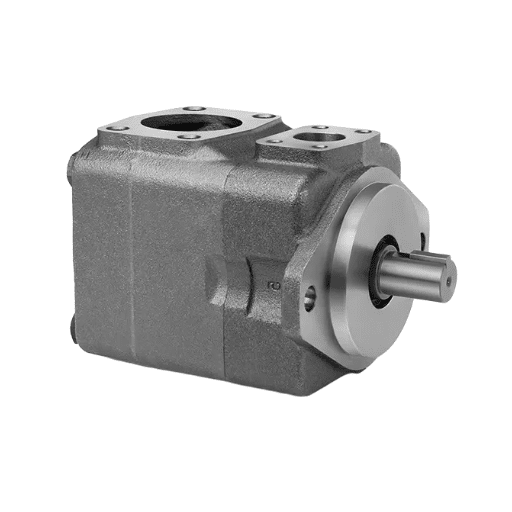
It was 6:15 in the morning on a temperate Tuesday when Marcus Chen had his 20 GPM hydraulic power unit’s pressure failing to get built on a 50-ton press in Ohio. The motor kept spinning all the while. The tank was full cohesive with the full system. However, the pressure gauges kept being at a constant point of zero.
Four hours later, his crew traced the fault to a relief valve stuck open by a single shard of contaminated steel from a failed filter. The fix took twelve minutes. The diagnosis took four hours.
That story repeats in shops worldwide because generic 20 GPM hydraulic pump troubleshooting guides never give you the numbers that matter at this flow rate. They tell you to “check the suction line” without telling you that a 20 GPM pump needs a minimum 1.5-inch suction line to keep inlet velocity below 4 ft/sec. They tell you to “verify reservoir size” without stating that a 20 GPM unit needs 60 to 100 gallons for proper heat dissipation. This article fills those gaps.
You will get exact suction line diameters, heat load formulas, pressure thresholds, a noise-to-cause matrix, and a seven-step field diagnostic flowchart you can follow with a wrench and a test gauge. Every recommendation is tied to the 20 GPM flow rate that defines your system.
Want to learn more about the 20 GPM Hydraulic Pump? Please check out our guide about the 20 GPM Hydraulic Pump.
Why 20 GPM Pump Failures Need a Different Diagnostic Lens

A 20 GPM hydraulic pump occupies a vital part in the sizing spectrum. It has the capacity to pump rather bulky fluids as it is capable of driving such a process which leaves such axial concerns for criticism as the relative in-flow peculiarities; high temperature fluids’ effect on the machinery, and even the increase of velocity shining in such devices, the so-called 5 GPM pumps in such behaviour don’t do that.
Flow Rate vs. Cavitation Threshold
At 20 GPM, inlet velocity climbs fast. A 1-inch suction line pushes fluid at nearly 8 ft/sec. That velocity creates enough pressure drop to drop the inlet below the fluid’s vapor pressure. Bubbles form. They implode inside the pump.
The result is hydraulic pump cavitation, and at 20 GPM it destroys pumping elements within weeks. Preventing hydraulic pump cavitation 20 GPM systems starts with correct suction line sizing. The threshold is clear: keep suction velocity under 4 ft/sec, which for 20 GPM means a minimum 1.5-inch inner diameter line.
Thermal Load at 20 GPM
Twenty gallons per minute doesn’t just make things wave; it also causes heat. For instance, a twenty-gallon per pump running at 2,000 pounds per square inch with 85 percent, overall efficiency turns nearly 4.7 hydraulic horsepower into application of thermal energy. Annul it and introduce waste heat by 12,000 BTU per hour, approximately.
No matter how powerful the stimulation in response to sudden demand, an undersized reservoir or blocked cooler can’t fail to absorb it. As the temperature climbs past 82 degrees Celsius, the seals harden and the viscosity drops.
Suction Dynamics in Mid-Capacity Units
Higher flow demands more from the inlet. A 20 GPM pump pulls fluid faster than a smaller unit, which magnifies any restriction. A partially clogged suction strainer that a 5 GPM pump would tolerate becomes a starvation point at 20 GPM. The margin for error is thinner. The diagnostics must be sharper.
Mobile 20 GPM units on dump trailers and cranes face identical suction and thermal challenges. Our hydraulic pump for dump trailer guide covers the 12V DC and mobile-specific variants of these same failure modes.
If you are still mapping the baseline specifications for your unit, our 20 GPM hydraulic power unit guide breaks down HP requirements, reservoir sizing, and duty cycle selection.
Symptom 1: Pump Won’t Build Pressure
When a 20 GPM hydraulic pump runs but fails to develop system pressure, you have only a few seconds to search for the cause before taking apart the wrong part. The most common situation when 20 GPM pump doesn’t build pressure. Stick with this list.
20 GPM-Specific Pressure Loss Causes
The most common pressure failures in 20 GPM units fall into four categories.
Relief valve stuck open. Contamination is not enough to justify this point. A single particle is enough to push the poppet off the seat. This causes the system’s flow to connect directly to the tank, bypassing the pump. The pump continues to work without developing pressure. Remove the valve, check the seat and spring and set the pressure with a dead weight tester or any other calibrated gauge.
Pilot valve orifice blockage. In the case of pilot-operated relief valves, should the orifice leading to the pilot stage become blocked, the system will not be able to receive correct pressure in the pilot stage. The main poppet never seats. Disassemble the pilot section and clear the orifice with solvent and compressed air.
Internal leakage exceeding 10 percent. As gear teeth, piston shoes, or vane tips wear, fluid bypasses internally from discharge back to suction. The pump still moves fluid, but it cannot generate rated pressure against a load. Preferably a closed-load condition as compared to an open one. Use a portable flow meter at the pump outlet under a closed-load condition. If measured flow drops more than 10 percent below the 20 GPM nameplate at rated speed with the applicable load, the pump needs a rebuild.
Suction-side air leaks. At an inlet loss of 20 GPM, even an unfastened hose clip can take in air. The pump then becomes frothy. The air bubbles will be compressed in order to build up the system pressure. Allow the pump to run and pour clean hydraulic oil over each and every suction connection point on the pump. Bubbles from the fittings and cracks create the system leakage accordingly.
Drive errors. Such as an incorrect motor rotation angle, a stretched belt, or misuse of the pulley system will lead to a decrease in the pump speed as prescribed by the manufacturer. For example, a gear pump that delivers 20 GPM at a speed of 1600 RPM instead of 1800 RPM, it gives about 17.8 GPM. This may seem very close to the required value, but with the system operating, the decreased pump’s displacement fails to overcome the system resistance.
When It’s the System, Not the Pump
If the pump reaches the recommended pressure at the outlet, but the system pressure is inadequate, locate the problem downstream. A leaking cylinder seal, an open bypass valve, a damaged hydraulic line are allowing the flow to the tank rather than flowing on the line. The pump is in a healthy condition, but the operational power has gone.
| Pressure Symptom | Likely Cause | First Check | Fix |
|---|---|---|---|
| Zero pressure, motor running | Relief valve stuck open | Gauge at pump outlet | Clean or replace valve; verify set pressure |
| Pressure low under load only | Internal leakage >10% | Flow test at closed load | Rebuild or replace pump |
| Pressure erratic, foamy fluid | Suction-side air leak | Fluid poured over fittings | Tighten clamps; replace damaged hoses |
| Pressure OK at outlet, low downstream | System leak or bypass | Isolate circuits sequentially | Repair cylinder seals, valves, or lines |
| Pressure builds then drops | Compensator spool sticking | Test at multiple load points | Clean or replace compensator |
Symptom 2: Excessive Noise, Whining, or Knocking

Unusual noise is the earliest warning sign of 20 GPM hydraulic pump failure. This hydraulic pump noise troubleshooting section maps each sound to its root cause. The specific sound tells you exactly what is wrong.
Decode the Sound
A high-pitched whine almost always signals cavitation. The pump is not getting enough. The pressure is already below the vapor pressure of the solution, and the suction bubbles are hitting the head of the pump violently. You will know immediately what causes the noise once you hear it.
A grinding or knocking sound indicates mechanical wear. Bearings are failing, gears are clashing, or piston shoes have separated from the swashplate. Shut the unit down immediately. Continued operation will scatter metal debris through the entire hydraulic system.
A chattering or fluttering at the relief valve means the setting of the valve is close to the setting of another pressure control valve in the hydraulic circuit. The pressure difference between isolated valves is recommended to be no less than 125 PSI. It is not recommended to make a difference of less than because it will cause the system to be very unstable.
A deep rumble with vibration suggests aeration. Air is entering the system through a suction leak, a low fluid level, or a damaged shaft seal.
Suction Line Sizing for 20 GPM
This is where most generic guides fail. They tell you to “check for restrictions.” Here are the exact numbers.
A 20 GPM unit also should have a suction line that is at least 1.5 inches ID for runs up to 10 feet. For 10-20 feet, a line of 2 inches in diameter can be used. Length of the line with fittings should be restricted to 6 feet, if possible.
Every elbow adds equivalent length. It could be calculated that a 90-degree elbow would be equal to approximately 3 feet of straight pipe when pressure drop terms are used.
| Suction Line Length | Minimum ID | Max Elbows | Velocity at 20 GPM |
|---|---|---|---|
| Under 10 ft | 1.5 in | 2 | ~3.6 ft/sec |
| 10 to 20 ft | 2.0 in | 2 | ~2.0 ft/sec |
| Over 20 ft | 2.0 in | 0 | ~2.0 ft/sec |
However, it is recommended to try and keep the suction velocity below 4 ft/sec at all times. Above that threshold, NPSH margin collapses and cavitation phenomena occur.
Viscosity and Cold-Start Noise
Raj Patel runs a fabrication shop in Minnesota. Every January morning, his 20 GPM gear pump whines for the first ten minutes of operation. The rest of the day it is silent.
The problem here is not with the pump but with the fluid properties. He used hydraulic oil of ISO 68 grade. For the oil with such viscosity, at minus 10 degrees Celsius, it becomes impossible for the pump to even try to suck it out and deliver it through the oil suction line, even at a relatively slow rate and hence the inlet will be starved. The inlet starves. Cavitation whine follows.
The solution to this issue is very simple, as we can either change the oil to ISO 32 for the operation or put the fluid heater on the reservoir that warms the fluid to 20 degrees Celsius before starting up. The viscosity of the fluid approximately doubles with a 10 temperature decrease. The fluid which flows perfectly at 40 degrees Celsius, turns into workable cavitation provoking refrigerant at 10 degrees Celsius.
For guidance on SAE port dimensions and O-ring boss fitting torque specs during line installation, refer to our SAE mounting and port standards guide.
Symptom 3: Overheating Above 180°F / 82°C
A 20 GPM hydraulic power unit running at 2,000 PSI dissipates around 4.7 HP at 85% efficiency as heat. That heat energy has to be transferred somewhere. If the combination of the reservoir and cooler cannot contain the overheated 20 GPM pump, it will surely overheat terribly and the temperature will exceed the limits.
Heat Load Math for 20 GPM
The hydraulic horsepower lost to heat follows this relationship:
HP_heat = (Bypass Flow in GPM × PSI) / 1,714
A constant relief valve bypass of 5 GPM at 2,000 PSI would contribute 5.8 HP of power to the system, the equivalent of dumping over 14,800 BTU/hr worth of heat into the fluid system in use. The absence of an adequately dimensioned cooler will cause the oil to exceed 82 degrees Celsius within one hour of use.
Reservoir Sizing Rule
For a 20 GPM pump, the reservoir must hold 60 to 100 gallons. That is 3 to 5 times the pump flow rate per minute. The reservoir does two jobs: it stores fluid, and it provides surface area for heat rejection to ambient air.
A 30-gallon tank on a 20 GPM unit is a thermal time bomb. The fluid cycles too fast. Dwell time is too short. Heat accumulates.
Jennifer Ortiz came to understand this fact the painful way. Every afternoon, her mobile 20 GPM power unit on a barge-mounted crane overheated. In an aim to rationalize space usage, she resorted to requesting the manufacturer to put in a 30-gallon tank. Instead, she installed a 75-gallon tank with the baffles. The overheating was over. The cooler which she was ģoing to buy was needed planets.
Cooler Sizing Quick Reference
In case the environmental temperature is more than 30 degrees Celsius, or if the equipment is operated non-stop round the clock or without a sufficient on-off period, then an engine oil cooler is required. Projection scale map: It can be more than 20 horsepower in case two pumps have to operate over a dusty surface. A cooler of 8 to 12 horsepower can cool approximately 20 pulses of hydraulic fluid per minute in an industry that has flow rates to the order of GPM. The cooling fins should be cleaned every 200 hours of operation. A layer of dirt reduces efficiency by about 30% or more, depending on its thickness.
Common Thermal Culprits in 20 GPM Units
| Operating Temp | Likely Cause | Immediate Action |
|---|---|---|
| 60-70°C (140-158°F) | Normal operating range | Monitor; no action needed |
| 70-82°C (158-180°F) | Elevated; check cooler and load | Clean cooler fins; verify relief valve not bypassing |
| >82°C (>180°F) | Danger zone; shutdown recommended | Stop unit; check fluid level, cooler, relief valve setting, reservoir size |
The four most common causes of 20 GPM pump overheating are relief valve bypassing continuously, an undersized reservoir, blocked oil cooler fins, and hydraulic fluid with the wrong viscosity grade. Check them in that order.
If you need the full math on hydraulic heat load and HP conversion, our hydraulic pump horsepower calculator walks through the formula step by step.
Symptom 4: Slow or Weak Operation / Increased Cycle Times

Sometimes, when the hydraulic press takes three seconds extra per cycle and the hydraulic lift gate falls inch by inch rather than snapping up, it is evident that the 20 GPM pump is not providing 20 GPM of flow. This means that the system is flow-deprived.
Flow Loss vs. Pressure Loss
The first half of this sentence is clear that there is some kind of relationship between pressure drop and loss of flow, i.e., the latter possibility suggests that the pump has worked at the factory and developed full pressure at the outlet but has delivered only 16 GPM instead of 20 GPM. The actuator can still lift the weight but the time period increases by 20%, helping in completing the cards. On the other extreme, a pump operating at low pressure may be able to generate 20 GPM but may not be able to operate when the load calls for 2500 PSI. Each test point should be of help to you.
Filter Clog Detection at 20 GPM
A clogged return-line filter on a 20 GPM system creates back pressure that forces the pump to work harder. The symptom is sluggish operation without a corresponding pressure drop.
Fit a differential pressure indicator across the filter. Replace the element when the differential pressure is more than 25 PSI at the operating temperature. At 20 GPM, a filter of beta 10 rating with a 10 micron element should be good enough for protection with minimal dissipation.
Case Drain Flow Test
For axial piston pumps, case drain flow is the single best indicator of internal condition. A healthy 20 GPM-rated speed piston pump should indicate less than 1 GPM for the case drain flow. If the case drain exceeds 2 GPM, the piston shoes, valve plate or swashplate bearings are worn. The flow is bypassing internally from the discharge to the case, then back to the tank. Rebuild or replace the system.
When Internal Wear Exceeds 10 Percent Flow Drop
Proper fluid leakage checks are performed with a portable flow meter installed at the pump discharge. The pump is operated under normal conditions with a closed throttling valve. Flow is compared to 20 GPM nameplate.
Generally, a 5 to 10 drop in pressure signifies that the wear and tear is normal, whereas 10% is such that the pump can no longer perform the required duties to satisfaction due to reduced displacement efficiency. Prompt action should be taken and the pump should be either rebuilt or replaced.
Symptom 5: External Leaks
External leaks on a 20 GPM hydraulic pump are not just messy. They are diagnostic signals.
Shaft Seal Leaks
A weeping shaft seal is the most common leak on continuous-duty 20 GPM units. The seal lip hardens from sustained heat. Pressure behind the seal forces fluid past the lip.
Check the seal material. Viton handles 100 degrees Celsius. Nitrile fails above 80 degrees Celsius. If your pump runs hot, upgrade the seal material before replacing it with the same grade.
Port and Fitting Leaks
About 20GPM mostly all comes with standard SAE Oring boss fittings. There may be a possibility of external leakage where the O-ring in the groove is found to be broken when there is a scratch to the port surface, or when proper torque is not applied.
The O-ring boss fittings only seal on the O-ring crush. Tightening is more important than thread engagement. If the components are overtightened, the port will deform and create a sealing leak. Always follow the torque for the size that you are dealing with. For example, a 1-inch O-ring boss uses 35-40 lb-ft.
Housing Cracks
Cracks in the pump housing are rare but catastrophic. They result from thermal shock, freezing fluid, or overpressure events. If you find a crack, replace the pump housing immediately. Welding introduces distortion that destroys internal clearances. For guidance on selecting the right pump body material for your thermal and pressure environment, see our comparison of aluminum vs steel hydraulic pumps.
Field Diagnostic Flowchart: The 7-Step System

If a problem arises while using a 20-GPM hydraulic pump on a job site, you will be given instructions on recourse. This helps avoid unnecessary actions that transform what should be a twelve-minute job into a four-hour drama.
| Step | Action | What It Tells You | If Abnormal |
|---|---|---|---|
| 1 | Verify motor direction and coupling integrity | Mechanical basics are sound | Correct wiring; replace coupling |
| 2 | Check reservoir level and fluid condition | Fluid supply is adequate and clean | Top off; change contaminated fluid |
| 3 | Inspect suction strainer, hoses, and fittings | Inlet path is clear and sealed | Clean strainer; tighten fittings; replace damaged hoses |
| 4 | Install test gauge at pump outlet | Pump can build pressure independently | If no pressure here, fault is in pump or relief valve |
| 5 | Run pump in closed-loop test | Pump delivers rated flow at pressure | If flow low, internal wear or speed error |
| 6 | Remove and inspect relief valve | Valve is clean and correctly set | Clean; replace damaged spring or seat |
| 7 | Measure case drain flow and shaft rotation | Internal condition is acceptable | Rebuild or replace if case drain >2 GPM or shaft binds |
Preventive Maintenance Schedule for 20 GPM Units
Some of the best troubleshooting is the troubleshooting that you need not do ever. Regular maintenance alone can prevent approximately 80% of common failures on a 20 GPM hydraulic power unit.
| Interval | Action | Acceptable Threshold |
|---|---|---|
| Daily | Check fluid level and temperature | Level above minimum mark; temp under 70°C |
| Daily | Listen to pump noise | No whining, knocking, or chattering |
| Weekly | Check filter differential pressure | Delta-P under 25 PSI |
| Weekly | Inspect external leaks | No visible seepage at seals, ports, or fittings |
| Weekly | Verify coupling alignment | Runout under 0.005 in |
| Monthly | Sample fluid for ISO 4406 cleanliness | Target 18/16/13 or better |
| Monthly | Measure case drain flow (piston pumps) | Under 1 GPM at rated speed |
| Monthly | Check vibration with portable analyzer | Trend stable or declining |
| Annual | Full system flush and fluid change | Replace all fluid; clean reservoir |
| Annual | Replace shaft seals and O-rings | Proactive replacement before leaks |
| Annual | Descale oil cooler and clean fins | Full airflow restored |
| Annual | Calibrate pressure gauges and switches | Within 2% of certified reference |
However, the consequence of even the slightest contamination is that the pump’s operational efficiency would be impaired with as much as 30% loss. Such contamination hastens the wear and tear of equipment, increases temperature and clogs the valves. Following the cleanliness code in terms of ISO 4406 grade 18/16/13 is in the same vein as doing exercises regularly, eating a balanced diet, and sleeping well. It is the most influential in preventing the most possible failures.
For a deeper look at reservoir sizing, baffle design, and dwell time calculations, see our hydraulic reservoir sizing guide.
Repair vs. Replace: The 20 GPM Decision Framework

At some point every other maintenance technician has to face a very tough question: should a pump be rebuilt or a new one be bought?
Repair or Reseal Indicators
In case when the malfunction did not cause any structural damage to the pump, and the pump body remains in good condition, repair can be considered as an option. For example, a failed shaft seal, a stuck safety or relief valve, or a filled glass-type suction strainer are all component-level issues. The pumping element is still worth working. A proper rebuild, which includes replacing seals, adjusting bearings, and installing a properly cleaned valve plate, costs only 30 – 50 % to that of the new pump. And, in such cases, it may be reasonable to perform a rebuild operation rather than replace the whole equipment.
Replace Indicators
If mechanical damage is widespread, it is time to discard the pump. The gear teeth are scarred, the pistons are also subject to cracking and the non-ferrous valves are all pitted, which all point to the fact that metal particles have scattered around the fluid. Once rebuilt, the pump is likely to fail soon due to contamination of the new components. Therefore, one must change the pump, wash the entire system with purified wash-out fluid, and fit the new screens.
Moreover, if the pump is tackled for the second time within the space of one year, another pump is needed. An increase in the number of failures is a sign of a problem and not an occasional issue. It seems that contamination exists within the system or that there is a pressure surge, or the pump is being used continuously for a pump-to-air ratio that does not fit the requirements of the performance of the machine.
The Two-Strikes Rule
If a 20 GPM hydraulic pump malfunctions twice in a span of twelve months, fix it once, then do not repair it further. It is false economy to simply fix the chainsaw and use it for another year. Fill the hydraulic system with clean oil, then check the status of each cylinder, each unit of the control system and every hose in the system. It is pointless to recycle waste oil as there are no known uses for the derivative product. Do ensure all filters are replaced and then proceed to replace the pump. Meanwhile, turning back to the lack of flushing of the system will only warrant failure within months on the same pump.
If you need help selecting a replacement 20 GPM pump that matches your exact duty cycle and application, contact us for an industrial solution consultation.
FAQ
Why is my 20 GPM hydraulic pump not building pressure?
If a 20 GPM hydraulic pump runs but fails to build pressure, the main liable reasons are air leakage on the suction side, worn pump elements or a free wheel, and worn seals. Open the pump outlet and install a gauge, sealing the outlet myself. If there is zero pressure, inspect the relief valve and remove the intake side of the pipeline.
What causes a 20 GPM hydraulic pump to overheat?
The predominant reasons are usually a continuous bypass from the relief valve, a reservoir with at least 60 gallons capacity or undersized, a hydraulic system with a radiator with clogged cores, and an oil of a different grade of viscosity. The increase in load to a 20 GPM 2000 PSI pump leads to the injection of 4.7 horsepower total energy due to friction that is within the system block. This energy will be dissipated from the two sources: the top of the reservoir tank and the hydraulic oil cooler. The coolant and lubricant systems must be of sufficient capacity, as the temperature can go as high as 82 degrees Celsius, which is dangerous.
How do I know if my 20 GPM pump has cavitation?
The compressor screams with foam noise during cavitation, which causes extreme vibration in the side shroud. Since you may additionally be looking at pressure gauges that are dancing, as well as a water tank filled with suds. The reason why in the vast majority of cases, the flow rate is 20 horsepower pounds per minute. Insufficient water supply, and third, the possible presence of dust or gases between the pump and the lowered water level than usually expected. Check the suction tube is 1.5 inch inner bore.
What size suction line do I need for a 20 GPM hydraulic pump?
Use a 1.5-inch inner-bore pipe for suction lines less than 10 feet long. Use a 2-inch pipe for 10 to 20 feet long suction lines only. Do not exceed 4 feet per second cavitation allowance. Limit the number of elbows to 2 or fewer since 90-degree fittings cause a pressure drop of approximately 3 feet.
Conclusion
Maintaining a 20 GPM hydraulic pump effectively requires math. Not presumptions. Avoid the suction pipe reaching a maximum velocity of 4 ft/sec, meaning a minimum line of 1.5 inches. Realise servicing a 20 GPM pump possibly requires a reservoir capacity ranging from 60 to 100 gallons for building a heat sink. Understand that in cases where there is a 10 percent change in flow, there is the first sign of internal wear and immediate rehabilitation is advised to avert a total shutdown. Although a case drain higher than 2 GPM will tell you a revolution will come to an end very unlikely for a piston pump; it will prolong its life expectancy for suction pumps.
The seven-step flowchart gives you a systematic path from symptom to root cause. The maintenance schedule prevents failures before they happen. And the repair versus replace framework saves you from pouring money into a pump that will fail again because the real problem is in the system around it.
There is chaos in hydraulic pumps and it takes a lot of time to put together what is available. Technical information is the best to get. For any 20 GPM pumps that you would like to replace, need compatible OEM parts, or in case you need technical assistance with the designed hydraulic system, please request a technical specification sheet and we shall provide the appropriate information to your application.