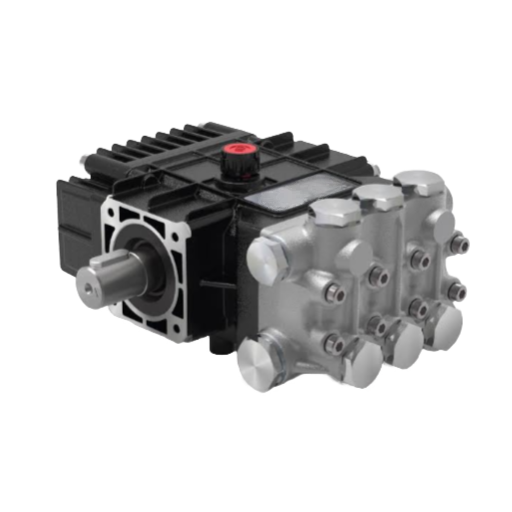
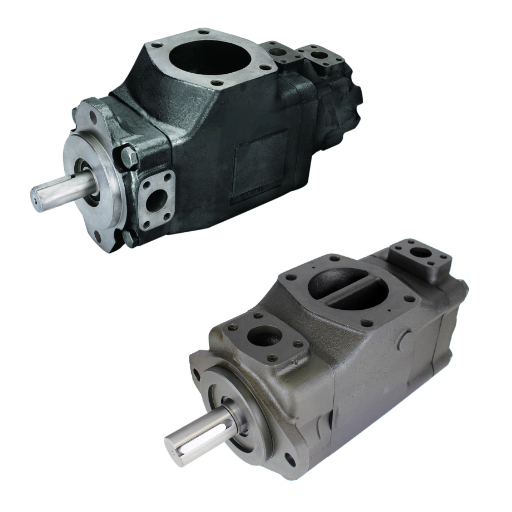
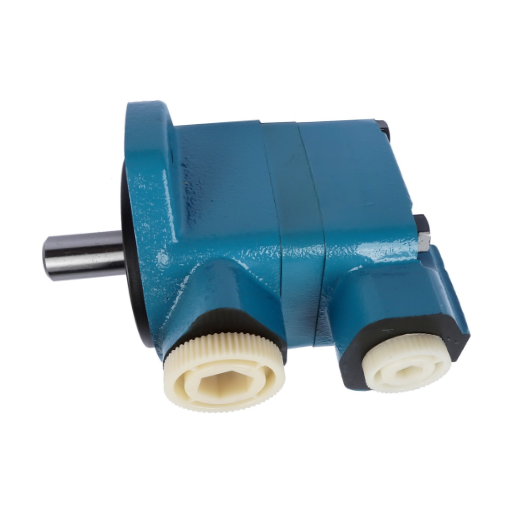
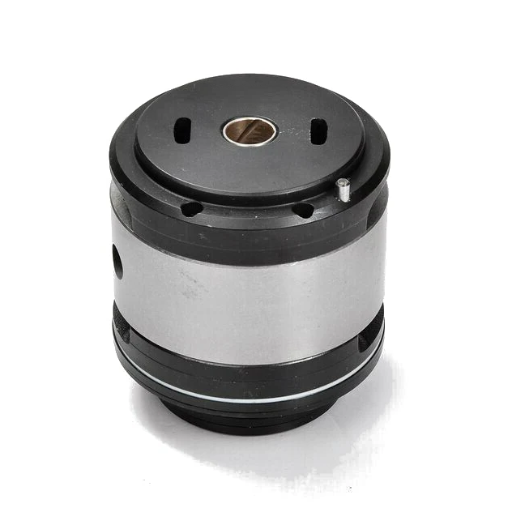
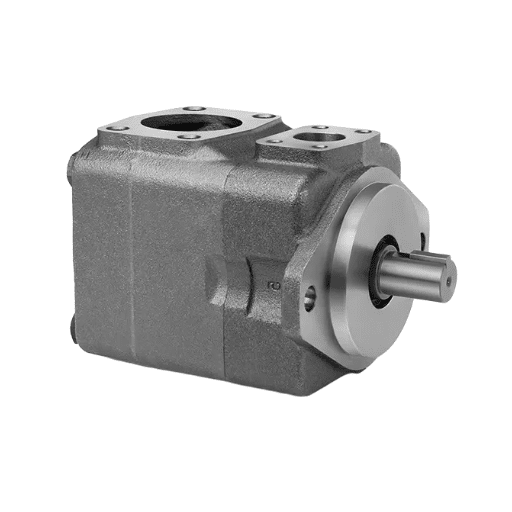
Raj, a maintenance supervisor at a Gujarat cement plant, watched the same pump fail twice in fourteen months. Both times, the diagnosis was “worn internals.” The real cause was simpler. He had specified a fixed-displacement swashplate pump for a circuit that needed variable flow. The pump ran at full displacement most of the day, bypassing oil through the relief valve and generating enough heat to cook the seals.
That mistake is more common than most engineers admit. The axial piston pump working principle isn’t complicated. Choosing the right type for the application is where projects succeed or fail.
This guide explains how these pumps convert shaft rotation into high-pressure flow. It also compares the four main design variants. You’ll learn to specify confidently, avoid overheating, and match pump type to real machine requirements.
You’ll learn the step-by-step mechanism, the difference between swashplate and bent-axis construction, when fixed displacement beats variable displacement, and how control methods affect energy use. If you’re selecting a replacement or specifying a new system, the selection checklist at the end will keep you out of trouble.
Looking for a complete selection guide? Our axial piston hydraulic pump complete guide covers specifications, controls, applications, and sourcing in one place.
What Is an Axial Piston Pump?

An axial piston pump is a positive-displacement hydraulic pump. It moves a fixed volume of fluid for every shaft revolution, then converts that flow into system pressure when the fluid meets resistance.
The name describes the geometry. The pistons are arranged in a circle inside a rotating cylinder block. Each piston moves parallel — or axial — to the drive shaft. That straight-line motion is what makes the pump different from radial piston designs, where pistons sit perpendicular to the shaft.
Axial piston pumps dominate high-pressure mobile and industrial systems. They handle continuous pressures from 250 bar to 350 bar in most industrial models, matching the continuous-pressure ranges listed in Bosch Rexroth axial piston pump datasheets. Peak ratings above 400 bar are common in heavy-duty series.
They also accept variable-displacement controls. That makes them far more efficient than gear or vane pumps in circuits where flow demand changes constantly.
For a closer look at the axial piston pump internal components, see our guide to axial piston pump parts.
How an Axial Piston Pump Works
The axial piston pump working principle can be summarized in one sentence. A motor spins a cylinder block, angled mechanical contact forces pistons to reciprocate, and a valve plate times suction and discharge so fluid moves from inlet to outlet at high pressure.
Here is the cycle in detail:
- The drive shaft rotates the cylinder block. The block is splined to the shaft and spins with it. Pistons sit in bores around the block’s face.
- Pistons slide against an angled surface. In a swashplate pump, that surface is a stationary angled plate. In a bent-axis pump, the cylinder block itself is angled relative to the shaft flange.
- Each piston reciprocates once per revolution. As the block rotates, the angle pushes pistons inward and outward.
- The valve plate ports fluid. A stationary plate with kidney-shaped openings covers the cylinder block face. When a piston moves outward, its bore connects to the inlet and draws oil in. When it moves inward, the bore connects to the outlet and pushes oil out.
- Multiple pistons fire in sequence. With 7, 9, or 11 pistons running, the output is smooth and continuous.
Need help matching specs to your system? Our axial piston pump specifications guide explains each rating in more depth.
Why Odd Numbers of Pistons?
Most axial piston pumps use 7, 9, or 11 pistons. An odd number reduces flow pulsation and torque ripple because the pistons never reach top and bottom dead center at the same time. The result is smoother output, less noise, and longer life for downstream components.
Axial Piston Pump Types
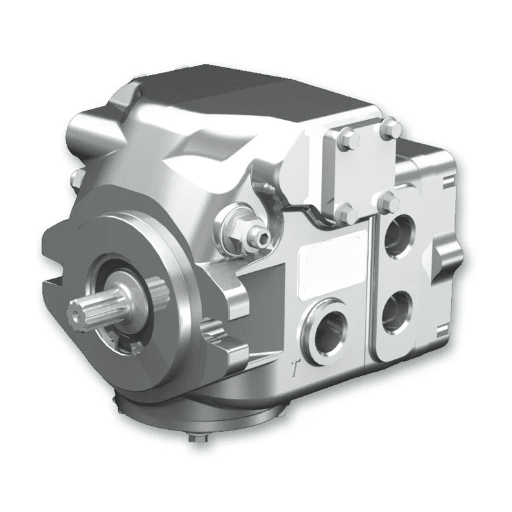
The phrase “axial piston pump types” covers two independent classification axes: mechanism (swashplate vs. bent-axis) and displacement (fixed vs. variable). A pump can be a fixed-displacement swashplate model, a variable-displacement bent-axis model, or any other combination.
Swashplate (Inline) Axial Piston Pump
In a swashplate axial piston pump, the cylinder block and drive shaft share the same centerline. Pistons are connected to shoes that slide against a stationary angled swashplate. As the block rotates, the shoes follow the plate and force the pistons to reciprocate axially.
Swashplate pumps are compact and easy to make variable. Tilting the swashplate changes the piston stroke. That changes displacement per revolution.
This makes them the default choice for mobile equipment, machine tools, and injection molding machines. They also cost less than bent-axis designs in equivalent sizes.
The trade-off is slightly lower mechanical efficiency. The shoe-to-swashplate interface generates more friction than the ball-joint connection in a bent-axis pump.
Bent-Axis Axial Piston Pump
A bent-axis axial piston pump angles the entire cylinder block relative to the drive shaft. Pistons connect to the drive flange through ball-and-socket joints. When the shaft turns, the angled block causes pistons to move in and out of their bores.
Because there is no sliding shoe on a swashplate, mechanical efficiency is higher. Noise and vibration are typically lower, and the design handles higher speeds well. Bent-axis pumps are common in hydrostatic transmissions, heavy-duty mobile equipment, and applications where energy efficiency matters more than initial cost.
The main limitations are size and cost. The angled block needs more radial space, and manufacturing precision is higher.
Fixed Displacement vs. Variable Displacement
Fixed-displacement axial piston pumps deliver the same volume of oil per revolution regardless of system demand. They are simple, lower cost, and reliable. They work well in constant-speed, constant-load circuits such as pilot circuits, charge pumps, and some open-circuit power units.
Variable-displacement axial piston pumps change their displacement on the fly. In a swashplate pump, a control piston tilts the swashplate angle from maximum down to near zero. In a bent-axis pump, the block swivel angle changes. The pump only produces the flow the system needs. That cuts heat, reduces energy use, and extends oil life. For a deeper look at control options, read our variable displacement axial piston pump controls guide.
Variable displacement is the right choice when:
- The machine has multiple actuators with different flow demands.
- The system spends time idling or holding pressure.
- Energy efficiency and heat reduction are priorities.
Fixed displacement is the right choice when:
- Flow demand is steady and predictable.
- Cost and simplicity matter more than efficiency.
- The pump runs at a constant speed with a known load.
Common Variable Displacement Controls
Variable pumps do not change displacement by themselves. A control mechanism reads system conditions and adjusts the swashplate or block angle.
- Pressure compensator. The pump stays at maximum displacement until system pressure reaches a set value. It then destrokes to maintain pressure without bypassing oil through the relief valve.
- Load sensing. The pump senses downstream pressure demand and delivers only the flow required. This saves energy when actuators are not moving at full speed.
- Horsepower limiting. The control reduces displacement at high pressure to keep input power below a set limit. This protects the prime mover from overload.
- Electronic proportional. Sensors and a proportional valve adjust displacement based on an electronic signal. This enables precise, programmable motion control.
Need help matching a pump type to your circuit? Contact us for a customized hydraulic system recommendation based on your pressure, flow, and control requirements.
Understanding the parts makes the axial piston pump working principle easier to apply in the field.
- Cylinder block. Holds the pistons and rotates with the drive shaft. It must maintain precise bore alignment under high pressure.
- Pistons and piston shoes. Transfer force from the angled surface to the fluid. Shoes spread the load on the swashplate to reduce wear.
- Swashplate or bent-axis flange. The mechanical element that converts rotation into reciprocating motion.
- Valve plate. The stationary plate that times the suction and discharge ports. Its kidney-shaped openings align with cylinder bores at the correct rotational position.
- Drive shaft and bearings. Deliver input torque and support radial and axial loads.
- Housing and case drain port. Contains the rotating group and routes leakage oil back to the reservoir. Case drain flow is an important diagnostic signal.
Performance Specs at a Glance

| Parameter | Typical Range | Notes |
|---|---|---|
| Continuous pressure | 250–350 bar (3,600–5,100 PSI) | Common industrial rating |
| Peak pressure | 400–450 bar (5,800–6,500 PSI) | Heavy-duty series such as Parker PVplus or Rexroth AA4VG |
| Displacement | 10–1,000 cc/rev | Varies widely by frame size |
| Rated speed | 1,800–3,000 RPM | Check manufacturer limits for each model |
| Volumetric efficiency | Up to ~95% | At rated speed, pressure, and viscosity |
| Service life | 8,000–15,000 hours | Depends on oil cleanliness and duty cycle |
| Common piston count | 7, 9, or 11 | Odd numbers reduce pulsation |
Where Axial Piston Pumps Are Used
The same mechanism shows up in very different machines. The pump type changes, but the working principle stays the same.
- Construction machinery. Excavators, loaders, and cranes use variable-displacement swashplate pumps as their main hydraulic supplies.
- Agricultural equipment. Tractors and harvesters use pressure- and flow-compensated axial piston pumps to reduce fuel consumption.
- Industrial machinery. Presses, injection molding machines, and machine tools need repeatable high-pressure motion.
- Marine and aerospace. Compact, high-power-density axial piston pumps power steering, flight controls, and deck equipment.
A procurement engineer at a Korean excavator OEM once told us that switching from a fixed gear pump to a variable axial piston pump on a 20-ton machine reduced fuel use by nearly 10% over a standard work cycle. The higher pump cost is paid back within the first warranty period.
How to Choose the Right Axial Piston Pump Type
Selecting a pump means matching four system requirements to the pump’s strengths. Use this checklist before you request a quote.
- Maximum system pressure. Add a safety margin to the highest working pressure. Make sure continuous and peak ratings exceed that number.
- Required flow rate. Calculate flow from actuator speed and cylinder or motor displacement. Don’t forget multiple actuators operating together.
- Circuit type. Open-circuit pumps return oil to the tank. Closed-circuit pumps circulate oil between the pump and the motor. The wrong choice causes overheating and control problems.
- Control strategy. If flow demand varies, choose a variable pump with pressure compensation or load sensing. If flow is constant, fixed displacement is simpler and cheaper.
- Efficiency priority. Bent-axis designs cost more but run more efficiently. Swashplate designs offer the best balance of cost, size, and control flexibility.
- Space and mounting. Bent-axis pumps need more envelope space. Verify shaft, port, and mounting compatibility with your frame.
- Fluid and contamination. Axial piston pumps are sensitive to particle contamination. Confirm ISO cleanliness targets and filtration before installation.
Not sure which type fits your machine? Request a technical specification sheet and our engineers will recommend a pump matched to your duty cycle.
Common Specifying Mistakes

Even experienced engineers make these errors. Avoiding them saves money and downtime.
- Ignoring case drain flow. Variable pumps always have some internal leakage. If the case drain line is undersized or blocked, pressure builds in the housing and blows the shaft seal.
- Wrong oil viscosity. Oil that is too thick causes cavitation and cold-start damage. Oil that is too thin increases internal leakage when hot.
- Poor contamination control. Axial piston pumps need clean oil. An ISO 4406 target of 18/16/13 or better is typical for medium-pressure pumps; cleaner is better for high-pressure units.
- Mismatching open and closed circuits. A pump designed for an open circuit will fail quickly in a closed hydrostatic loop because of a missing charge pump or flushing features.
- Oversizing the pump. More displacement than needed leads to excess flow, heat, and energy waste. Size for the application, not the maximum catalog rating.
Axial Piston Pump Working Principle FAQ
How does an axial piston pump work?
A motor rotates a cylinder block containing several pistons. The pistons slide against an angled swashplate or bent-axis flange, forcing them to move in and out of their bores. A valve plate times the motion so each piston draws fluid in during the outward stroke and pushes it out under pressure during the inward stroke.
What are the two main types of axial piston pumps?
The two main mechanical types are swashplate (inline) pumps, where pistons press against an angled plate, and bent-axis pumps, where the cylinder block is angled relative to the drive shaft. Both can be built as fixed or variable displacement.
What controls the output flow of an axial piston pump?
In variable pumps, the swashplate angle or bent-axis swivel angle controls piston stroke length, which controls displacement per revolution. Larger angles produce more flow; smaller angles produce less.
Fixed vs variable displacement: which do I need?
Choose fixed displacement for steady, predictable flow at constant speed. Choose variable displacement when flow demand changes, the system idles, or energy efficiency is important.
Why do axial piston pumps use an odd number of pistons?
An odd number of pistons — typically 7, 9, or 11 — reduces flow pulsation and torque ripple. It gives smoother output than an even number would.
What is the typical pressure range of an axial piston pump?
Most industrial axial piston pumps are rated for 250–350 bar continuous pressure, with peak ratings of 400–450 bar in heavy-duty series.
Are bent-axis pumps more efficient than swashplate pumps?
Yes, generally. Bent-axis pumps have lower friction because pistons connect through ball joints rather than sliding shoes. They are often chosen for high-efficiency, high-speed applications.
Can an axial piston pump be used as a motor?
Many fixed-displacement bent-axis designs can operate as motors. Some swashplate units can too, but the suitability depends on the specific design and lubrication path.
What causes an axial piston pump to overheat?
Overheating usually comes from continuous relief-valve bypassing, incorrect displacement control, poor filtration, low oil level, or a blocked case drain line.
How long do axial piston pumps last?
With clean oil and proper maintenance, service life typically ranges from 8,000 to 15,000 hours. Harsh duty cycles, contamination, and overheating shorten that range.
Conclusion
The axial piston pump working principle is straightforward. Rotating pistons, angled mechanical contact, and timed valve ports create high-pressure flow. The real engineering decision is choosing among the four main types.
Swashplate pumps balance cost and control flexibility. Bent-axis pumps deliver higher efficiency and quieter operation. Fixed displacement is simple and inexpensive. Variable displacement saves energy and reduces heat in dynamic systems.
Match the pump type to your pressure, flow, circuit, and control requirements. Check case drain routing, oil cleanliness, and mounting compatibility before installation. A correctly selected axial piston pump will run for thousands of hours with minimal attention. A mismatched one will fail early, no matter how well it’s built.
If you need help selecting, replacing, or sourcing an axial piston pump for your system, LOYAL INDUSTRIAL PTE. LTD. supplies industrial-grade pumps with tested performance and export-ready documentation. Contact us for a technical specification sheet or a replacement-pump recommendation.