The procurement specialist at a Texas-based fabrication shop decided to order and chose, in the same breath, the procurement of the ‘20 GPM hydraulic power unit’ capable of resisting 1,500 PSI. The offer was a fair one. However, it was three weeks of working properly, when suddenly, while in operation, the press stopped in the middle of a stroke set under 2,400 PSI load, the motor tripped due to overload and the plant’s production line was without a shift. The hydraulic power pack was not faulty. It was just not meant for the job.
This type of error is widespread in almost every industry because the phrase ‘20 GPM’ by itself does not identify a pump. Flow rate is one of the system parameters that is related to pressure, output power of the motor, the volume of the reservoir, the duty cycle and the cooling system. Any deviation will adversely affect the combined performance of the system.
This guide provides the industrial buyers and design engineers with comprehensive support on how to specify a 20 GPM hydraulic power unit. You will be able to access the horsepower tables for every pressure tier, reservoir size that considers the actual heat load, numerous applications involving various machines such as presses and mobile equipment, including a list of what you need to ask for in a form.
What Is a 20 GPM Hydraulic Power Unit?

One thing we need to understand is that a hydraulic power unit (HPU) refers to a self-contained system that creates flow of pressurised fluid for a hydraulic circuit. The unit is an assembly of components, such as the pump, motor, tank, filter, valves and heat exchanger, along with the electrical controls on the same skid or base plate. It is possible to come across an HPU referred as a 20 GPM unit, implying that such a unit will deliver 20 gallons at a particular pressure in a minute.
HPU vs Hydraulic Pump: The Distinction That Costs Engineers Money
Despite the two terms being synonymous, they are inaccurately so. While a hydraulic pump is considered the component that does the function of transforming shaft turning into a flow of fluid, a hydraulic power unit is the very function of the pump and the other equipment attached to it. When a “20 GPM pump” is purchased with the belief that it is to be mounted and immediately used, such disappearances are additional activities of installing a motor, a tank, and a manifold to the tune of 60-80 percent of the pump cost.
Core Components of a 20 GPM HPU
Every 20 GPM HPU contains the same building blocks, sized to support the target flow and pressure:
- Hydraulic pump: Gear, vane, or piston, sized for 20 GPM at the rated PSI
- Prime mover: Electric motor, gasoline engine, or diesel engine
- Reservoir: Steel, aluminum, or polyethylene tank, typically 60 to 100 gallons
- Filtration: Suction strainer, return-line filter, often with a β10 rating
- Manifold and valves: Directional, pressure relief, flow control
- Cooling: Tank surface area only, oil-to-air cooler, or oil-to-water heat exchanger
- Instrumentation: Pressure gauges, temperature switches, level sensors
Where 20 GPM Sits in the HPU Size Spectrum
Industrial hydraulic power units (HPUs) can be manufactured with flow rates varying from 1 GPM to 200 GPM. Out of all those, twenty gallons per minute is the most common flow rate. It can be too large for such applications as a 30-ton press, a deck winch on a ship or even a side crane on a truck, yet just large enough to be accommodated rather easily within a typical three-phase 460-volt power system without enlargement of the sight. The average 20 GPM HPU can be serviced by most North American factories without the need for zone enlargement.
20 GPM Hydraulic Power Unit Specifications
A 20 GPM unit is important only if associated with a nominal pressure, a service class and a certain working fluid temperature limit. The equipment cost group inserted 20 GPM as the flow rate for the pump that changes fluid consumed at 1000 PSI. One and the same 20 GPM plate can correspond to a 17 HP unit that could work at 1500 PSI and a 41 HP unit that serves at 3000 PSI. It can be said that specification has its completion only when these two values are inserted.
Flow Rate and Pressure Combinations
It is the case that flow does the work of motion while pressure does the work of force. A hydraulic press requires both to operate, but it varies under multiple scenarios. For instance, a 20 GPM HPU made for 2,000 PSI is such that the 6-inch ram extends in approximately 9 seconds with all valves wide open. The same power pack as above but working against a 3,000 PSI load at the same flow, requires a 60 percent bigger motor.
Common Pressure Tiers
20 GPM HPUs cluster around four common pressure tiers in industrial use:
- 1,500 PSI: Low-pressure transfer, lift gates, small log splitters
- 2,000 PSI: General industrial presses, packaging equipment, mobile booms
- 3,000 PSI: Heavy presses, mining hydraulics, marine deck machinery
- 4,000 PSI: High-force compaction, aviation ground support, niche tooling
Standard Specification Table
| Parameter | Typical 20 GPM HPU Range |
|---|---|
| Flow rate | 20 GPM (76 L/min) |
| Operating pressure | 1,500 to 4,000 PSI |
| Motor power | 17.5 to 55 HP |
| Reservoir volume | 60 to 100 gallons |
| Pump type | Gear, vane, piston |
| Voltage (electric) | 230V / 460V / 575V, 3-phase |
| Duty cycle | S1 continuous or S3 intermittent |
| Fluid temperature ceiling | 60 to 70 °C (140 to 158 °F) |
| Cleanliness target | ISO 4406 18/16/13 |
| Compliance | NFPA T3.16.2, ISO 4413, CE |
Motor Horsepower for a 20 GPM HPU

The motor is the single most expensive component in any 20 GPM HPU system and in many HPU applications is the first item that is estimated. For the right horsepower number, there is a single equation and then a quick check against the requested duty cycle vs. the starting condition.
The Standard HP Formula
The hydraulic horsepower required at the motor shaft follows this relationship:
HP = (PSI × GPM) / (1,714 × Overall Efficiency)
Overall efficiency for a typical industrial 20 GPM HPU lands between 80 and 87 percent. Use 85 percent as a planning baseline.
For deeper math on this calculation, see our hydraulic pump horsepower calculator, which walks through volumetric and mechanical efficiency layers.
Worked Example: 20 GPM at 2,000 PSI
A press shop sizing a new 20 GPM HPU at 2,000 PSI runs the math:
HP = (2,000 × 20) / (1,714 × 0.85) = 27.5 HP
The next rated NEMA frame is 30 HP so the requirement calls for a 30 HP TEFC motor. That buffer will handle any increase in feed pressure during cold starts or an excessive demand on start-up and subsequent beginning of skip operation and after that, minimum generator load so that the protective setting does not interrupt operation and power consumption.
HP Required at Each Pressure Tier
| Operating Pressure | HP Required (85% efficiency) | Recommended NEMA Motor |
|---|---|---|
| 1,000 PSI | 13.7 HP | 15 HP |
| 1,500 PSI | 20.6 HP | 25 HP |
| 2,000 PSI | 27.5 HP | 30 HP |
| 2,500 PSI | 34.4 HP | 40 HP |
| 3,000 PSI | 41.2 HP | 50 HP |
| 4,000 PSI | 54.9 HP | 60 HP |
If you could only remember one thing from reading anything in this guide, it would be this: state the pressure first, work out the HP hence after, and then oversize and come with the next NEMA position. In fact, many low-powered 20 GPM HPUs in the external market were procured as a result of a purchaser being misled by only the flow requirement.
Need a procurement-ready spec for your 20 GPM application? Request an engineering consultation → and our team will return an HP, reservoir, and cooling sizing within 48 hours.
Electric vs Combustion Engine Sizing
Continuous duty 20 gpm, 2000 psi HPU under working conditions loses approximately 8 to 12 kW as heat. A 100-gal steel tank with decent side area can remove 5 to 7 kW by natural pit cavitation. Besides that, you need to provide an oil-to-air cooler. A reliable alert: in case the operation is over 50% and the temperature goes up to 35 °C, it would be advisable to involve a forced air cooler system from the very beginning of installation.
Pump Selection for 20 GPM HPUs

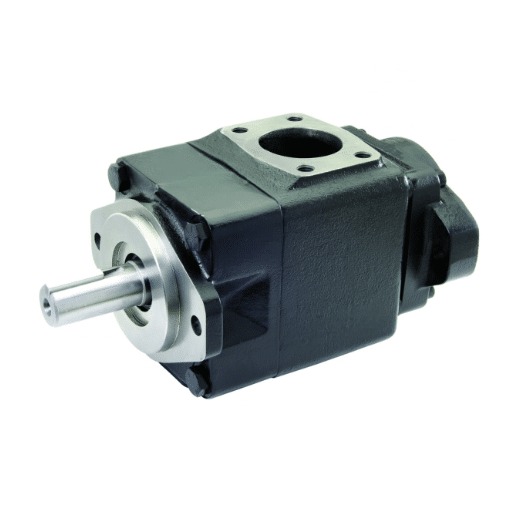
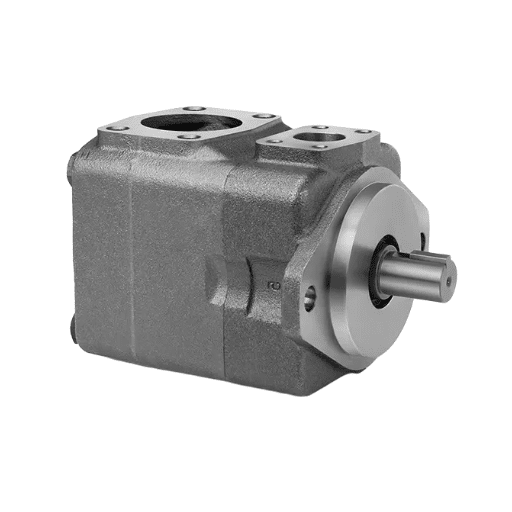
Pump selection also affects noise levels, efficiency, service life, and cost. At 20 GPM, three groups take up a sizeable portion of the market, with each having its own range of application most preferred.
Gear Pump (Most Common at 20 GPM)
The 20 GPM range below 3,000 PSI is best suited for external gear pumps. They have a better tolerance for contamination compared to piston pumps and operate on the oil of 32-68 cSt. They can also be acquired at only a fraction of the price of the piston ones. Their only disadvantage is the loss in volumetric efficiency after 3,000 PSI and the high noise of this approach to pumps reaching as high as 80 dB under full pressure.
Piston Pump (High-Pressure 20 GPM Applications)
Axial piston pumps are worth looking into better when the system’s pressure exceeds 3,000 PSI, or is under constant load for more than 4 hours in any shift. They do not lag in efficiency at high heads, reaching inside of 92 percent and being enabled with a run-down on displacement. The lifespan of axial piston pumps is longer when they are put in high cycles. They also need a purer fluid at the outlet, whereas the filtration grade should be not less than ISO 4406 17/15/12. In such cases, the allocation of reserve funds is also prescribed.
Vane Pump (Quiet/Servo 20 GPM Applications)
Vane pumps fill the line between gear and piston pumps. On the one hand, vane pumps are quieter than gear pumps and, in many instances, these are less than 72 dB, and on the other, they provide fluid for servo-controlled systems in a better way. Vane pumps are often applied with a discharge capacity of 20 GPM, which makes them the most widely applied type of pumps in auxiliary equipment of injection molding machines, for example, for clamping of workpiece on lathe, and in packaging lines, Flexpack, etc., in which the noise is considerable, and the pulsations can be felt.
Reservoir Sizing for 20 GPM Power Units
The tank does more than store oil. It gets rid of heat, deaerates air, assists in the settling of contaminants, and acts as a buffer in times of high loads. Construct an undersized reservoir and you will have to purchase an external cooler in the future.
The 3x to 5x Rule Applied to 20 GPM
Modern hydraulic design practices, as outlined in the quality system standard ISO 4413, hydraulic fluid power system and components, and supplemented by information from the NFPA, suggest specifying a suitable size of the reservoir at 3 to 5 times the flow per minute through the pump. For a 20 GPM HPU, that means:
- Minimum (3x): 60 gallons
- Standard (4x): 80 gallons
- Heavy duty (5x): 100 gallons
For a deeper sizing methodology including thermal load and air-release time, our hydraulic reservoir sizing guide gives you the full calculation flow.
Reservoir Materials and Configurations
When 20 GPM Needs an External Cooler
Continuous duty 20 GPM, 2000 PSI HPU under working conditions loses approximately 8 to 12 kW as heat. A 100-gal steel tank with decent side area can remove 5 to 7 kW by natural pit cavitation. Besides that, you need to provide an oil-to-air cooler. A reliable alert: in case the operation is over 50% and the temperature goes up to 35 °C, it would be advisable to involve a forced air cooler system from the very beginning of installation.
Duty Cycle and Cooling Considerations

Duty cycle is relative to the two variances, where the first variance is the rest period and the other is the full load. All those users who do not care about it will have HPUs overheating as early as week three.
Continuous (S1) vs Intermittent (S3) Duty
Service factor continuous duty refers to operation at full load for an unlimited time. Mostly industrial pressers, plastic moulders and process pumps work at S1. Service factor intermittent duty is S3 which means that there are electric motors operated with specified rest cycles. Frequent in log splitters, dock levelers and mobile platforms. In the given scenario, the S3-safe 30 HP motor in an S1 duty will exceed the limit for an insulation class within a few short hours.
Heat Load Calculation for 20 GPM at Various Pressures
A rule of thumb suggests that the heat generated during operation is usually 25 to 30% of the available power for a standard 20 GPM HPU. At 3000 PSI and with a 50 HP motor, about 9 to 11 KW of waste heat is generated under continuous load. All the tanks, piping, and radiator if any should be able to dissipate the heat so that fluid temperature will not rise above 70°C
Cooling Strategies
Three cooling tiers fit 20 GPM HPUs:
- Tank-only: Suitable for intermittent duty under 30 percent load
- Oil-to-air cooler: Standard for 50 to 80 percent duty in 25 to 35 °C ambients
- Oil-to-water exchanger: Required for continuous duty above 80 percent load or in hot climates
20 GPM HPU Applications by Industry
Twenty gallons per minute is a good benchmark for many different applications but the specifics can vary significantly across the industries. This is how one particular flow rating presents itself in the five very different markets.
Industrial Presses and Stamping
The punch press will have a motor pump with a capacity of around 20 GPM, enabling the addition of a 50 to 200-ton capacity range of presses. Pressures are around 2,500 to 3,000. Cooling and service lines should be made for Stauff clamps from the suction tank, 20 GPM flow rate, and hydraulic systems should be filled with oil. Applying factors such as fast pump response times and higher efficiencies from commanding higher volumetric piston pumps to the effective use of the latter in production.
Mobile Equipment and Mining
In the case of mining shovels and drill rigs and bolt machinery (bolting) a variety of splitting machinery tools, for machining and cylinder work applications can also use these mobile power units. Diesel mobile power units of 65-75 HP with 80-gallon hydraulic oil tanks and high-pressure piston pumps are mainly used in this category. Contamination level is increased up to 17/15/12 in ISO 4406, because of the industrial levels of contamination outside.
Marine and Offshore Hydraulic Tools
Similarly, deck winches, hatch covers, and offshore equipment require 20 GPM HPUs at 3,000 PSI conditions. The level of fit and finish among these components and materials will include either stainless or epoxy-coated tanks, motors suitable to IP56 specifications and cooling that is anti-corrosive. Operation is yet intermittently therefore the fact that the cycles are severe mandates an energy service factor and a cooler size.
Aviation Ground Support
Ground-power and aircraft jacking systems use 20 GPM HPUs that drive landing-gear, towbar, and lift platforms at 3,000 to 4,000 PSI. The use of compact skid designs, quiet engines that do not exceed 78 dB, and replacement of the oil with specialized aerospace fluids are on the other hand those compact skid designs, quiet engines that do not exceed 78 dB, and replacement of the oil with specialized aerospace fluids are not even considered.
Log Splitters and Wood Processing
A 20 GPM HPU on a heavy log splitter runs at 2,000 to 2,500 PSI with a gear pump, 30-gallon mobile reservoir, and S3 duty cycle. For a deeper application breakdown, see our hydraulic pump for log splitter guide.
Mini-story: Maria is responsible for service and maintenance at a stamping tooling facility in Midwest. Soon after their change team had completed the conversion from an old 20 GPM gear pump to more efficient higher PSI piston pump in 2024, the faster press cycles were observed, but the original 60 gallon tank failed to meet new heat transfer levels. Of course, within fourteen days, the oil temperature went beyond 75°C, and particles caused oxidation, hence reducing the filter operating life by fifty percentage annual. Two repairs were made by implementing a 100 gallon tank kit with an oil to air cooler, and such a solution involved shelling out there 4800 dollars, which, however, could have been avoided had they analyzed the heat load for only 30 minutes while purchasing it.
How to Specify a 20 GPM HPU for Procurement

Ensuring that the questions to be responded to are the least possible increases the chances of an appreciable reduction in the lead time and a decrease in the cross-planning that results in the delay of the project. For the purchase of any 20 GPM HPU, use the list here
Required Information for RFQ
- Operating pressure (continuous and peak)
- Duty cycle (S1, S3, or actual run/rest schedule)
- Available power source (voltage, phase, frequency, or engine)
- Fluid type (mineral, synthetic, fire-resistant)
- Ambient temperature range
- Cleanliness requirement (ISO 4406)
- Mounting (skid, vertical, mobile)
- Compliance (CE, UL, NFPA, customer specs)
Pump and Motor Specifications
Include the pump design, displacement volume (cc/rev), pressure capacity, rotation, and the style of the shaft. Describe power motors by specifying the horsepower, NEMA frame, voltage rating, ventilation (TEFC, TENV, and IP), service class (efficiency), and overload or service factor.
Reservoir, Cooling, and Filtration Specs
Define the reservoir’s size, material of construction, breather’s contaminant size, and clean-out accessibility. Concerning cooling, advise on the desired working Temperature of the oil and the type of cooler to be used. When specifying the need for filters, be exact as to where the filters are to be installed: the head calls for a suction strainer, also state the return-line β10 rating, and the presence of any off-line conditioning.
Compliance and Certifications
ISO 4413 and NFPA T3.16. 2 support is usually required for 20 USGPM Hydraulic power units. These units are designed to be used in an export unit and these have some additional requirements, which include the CE Marking Directive, specific machine directives, and electrical safety certifications, as required in the country. However, in aerospace, marine and oil sectors, company and field service is even more entrenched in such deliverables due to the available cost of adaptations as AS, ABS, or API.
Want to learn more about the 20 GPM Hydraulic Pump? Please check out our guide about the 20 GPM Hydraulic Pump.
20 GPM HPU Cost Drivers
Two 20 USGPM HPUs can be offered with 40 percent guard irrigation as opposed to the same level of general power. There are a number of differences that relate to four particular cost drivers which consumers can evaluate before engaging in the acquisition process.
Pump Type Impact
A 20 USGPM gear pump can be estimated to be 30 percent to 50 percent lower than an equivalent capacity piston pump unit. The piston pump is justified for premium when the working period exceeds 60%, or the working pressure exceeds 3000 PSI, through a number of factors such as fluid life and equipment wear.
Motor Frame and Voltage
The practice is to have costs specified for a 30 HP TEFC motor working on 460V electricity. Users pay 8-18% more than the basic price if they order other modifications of engines, such as enhanced efficiency, IP65 and IP66 or 575V. And also 5-10% additional charge in case of inverter duty versions, which come as a new category of motor frames designed for variable speed applications.
Tank Material and Capacity
It is carbon steel grades that form the foundation. As such, the tank becomes twice as expensive when manufactured in stainless steel. Besides, if the supplier were to improve the tank loads from 60 gallons to 100 gallons, which is a variation process associated with weight, welding, and transport, the corresponding percent might usually range from 12% to 15%.
Optional Features
All installable valves, accumulators, manifold blocks, pressure transducers, return-line filters with element-clogged switches, and remote panels are other hidden costs. Procurement procedures should attempt to keep costs down by choosing uptime-relevant features and eliminating the ones that only record and document information no one ever looks at.
Mini-story: Daniel, an offshore platform OEM in Houston, reprogrammingly changed a 20 owner gear pump, diesel-fuelled, from electric to diesel in the 2025 to serve installations which are far from house. His original 25 HP electric motor had to be scaled to 65 HP Tier 4 diesel, the gear pump changed due to a piston pump for 3,500 PSI hot – stand by demand and the reservoir also increased from 80 to 100 gallons with a forced cooler. (Unit cost climbed up another 78% although the platform saved $40,000 monthly) Sizing decisions cascade.
Common Mistakes When Sizing a 20 GPM HPU

The next five errors account for over 80 per cent of the field failures of 20 GPM HPUs in the field. Those who bring them to the fore early do not need to call them after the horse has bolted.
Picking HP Without Pressure Context
The error most often repeated. The phrase ‘the 20 GPM HPU with 25 HP motor headlamps’ sounds perfect until the point when 3000 PSI is demanded. In which case the motor is underrated by 60% of its capacity. ‘Start with the pressure’ in every case.
Reusing the Wrong Reservoir
When a 1,500 PSI HPU is replaced with a 3,000 PSI unit, its heat load is doubled. The 60-gallon tank previously implemented cannot endure the adjusted load. The heat-load calculation has to be redone whenever there is a comparison of different operating pressures.
Skipping Duty Cycle Analysis
S3-rated motors on S1 applications fail in weeks. The cost of an S1 service-factor upgrade at quote time is a fraction of the unplanned shutdown cost.
Neglecting Cleanliness Standards
The expected remaining life of a B20-size axial piston pump running at 20 GPM and at ISO 4406 20/18/15 fluid will drop by approximately 30 percent. The proper filtration kit solution is a fraction of the hydraulic power unit, with a payback period in less than 6 months.
Ignoring Inrush and Starting Loads
FAQ
How many HP do I need for a 20 GPM hydraulic power unit?
With a 20 GPM HPU running at 85% thereabout, energy which is often around 14 HP will be required to run it at 1000 PSI. At 2,000 psi, the hydraulic power unit will have grown to nearly 27.5 HP, except here it will need 27.5 HP. The same but for 3,000 PSI will be about 41 HP. It is good to always increase the horsepower figure to the bracket that the NEMA frame will accept.
What size reservoir does a 20 GPM HPU need?
Applying the rule of thumb, which allows for three to five times the flow capacity for the return line, the tank, if installed for the 20 GPM HPU, would be between 60 gallons and 100 gallons. However, the continuous duty is considered as anything above 2000 PSI and for that, 100 gallons is used, even if a larger reservoir.
Can a 20 GPM HPU run continuously?
Yes, if you have the correct specification available. This would require a motor which is S1-rated, a 100 and more oil tank and a cooler that would include air-to-oil coolers or water-to-oil coolers appropriate to the duty of the heat load at hand.
What is the difference between a 20 GPM pump and a 20 GPM power unit?
A hydraulic system consists of a pump and its driver, ninety percent and for that matter more of the power unit, the tank, the filter and the energy management system. Twenty gallons per minute of hydraulic fluid flying through the plumbing is more than a piece. It is affirmatively at the end product level in the industrial world.
Conclusion
The mere activity of specifying a 20 GPM hydraulic power unit already transcends a simple technical task, but is seen as a system undertaking a decision. The flow is the physical cause of motion. The pressure gives rise to a force. The frequency of purchase of the motor, the tank, and the pump assort when the requirement in terms of flow and pressure has been analyzed and the conditions of operation are known.
Customers, who take into account more than just the 20 GPM HPU, undertake all the calculations together with the HP and reservoir sizing and indicate the cycle percentage with the pressure specification, freely enjoy the advantage of successful competition with due reference to cost estimates. Those who don’t go through the treasure hunt will use the extra finances for modifications and/or equipment maintenance and eventually still file a warranty case.
Three takeaways for your next 20 GPM specification:
- Pressure first, HP second. Use 27.5 HP at 2,000 PSI and 41 HP at 3,000 PSI as your reference points.
- Reservoir 4x flow as the planning default. An 80-gallon tank suits most 20 GPM industrial work; go to 100 gallons for continuous duty.
- Match duty cycle and cleanliness to the application. S1 motors and ISO 4406 18/16/13 fluid prevent the failures that show up in month four.
The indicated procurement practices remain applicable regardless of whether a single HPU will be purchased for a press installation or a 20-wheeled equipage is intended to support a Mobile platform.
Ready to specify your 20 GPM hydraulic power unit? Contact our engineering team for a complete sizing review, RFQ template, and factory-direct quote within 48 hours.