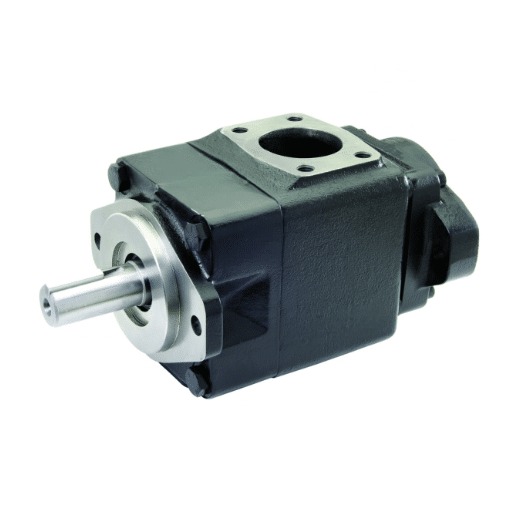
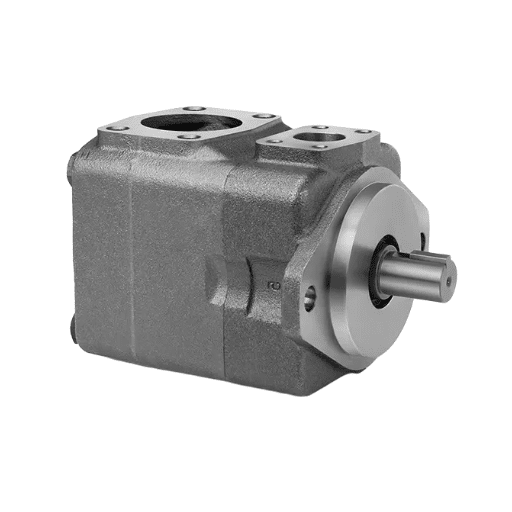
In February 2024, a shop in Tucson replaced an ABS hydraulic unit on a 2019 Chevrolet Silverado, bled the four wheel circuits, and handed the keys back to the customer with a firm brake pedal. Two hundred miles later, the pedal went soft on a downhill descent. The customer returned, the shop re-bled the wheel circuits a second time, and the pedal felt firm again. Three days later, it went soft a second time. The third time the truck came back, the lead technician pulled the service information and realized the shop had never run the ABS solenoid cycling step. Air trapped inside the modulator valve block had been migrating back into the lines every time the ABS cycled. A proper ABS hydraulic unit bleeding procedure, including modulator cycling, fixed it permanently. The $340 in comebacks was the tuition for learning that conventional brake bleeding and ABS bleeding are not the same job.
Most technicians know how to bleed conventional brakes. Fewer understand how to bleed abs hydraulic unit assemblies correctly because the ABS modulator valve creates internal chambers where air can hide. Gravity bleeding, pressure bleeding, and even standard two-person manual bleeding will leave air trapped in those chambers unless the solenoid valves are cycled open during the procedure. This article walks through the complete 7-step ABS hydraulic unit bleeding procedure for passenger and commercial vehicles, with brake fluid specifications, pass/fail verification criteria, and a decision tree for choosing between manual, scan tool, and pressure bleeder methods.
Need more information about the ABS Hydraulic Unit? You can read our article about the ABS Hydraulic Unit.
Why ABS Hydraulic Unit Bleeding Is Different from Conventional Brake Bleeding
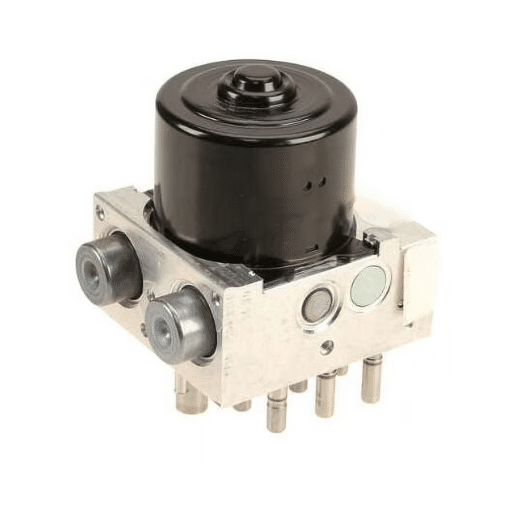
A conventional brake system is a simple closed hydraulic circuit: master cylinder, steel lines, flexible hoses, wheel cylinders or calipers. Air rises to the highest point and exits through the bleeder screws. An ABS hydraulic unit adds a modulator valve block with multiple internal chambers, solenoid valves, and a pump motor between the master cylinder and the wheel circuits. That valve block is where air becomes trapped.
How the ABS Modulator Valve Traps Air
When a wheel locks during braking, the ABS control module commands the inlet solenoid for that wheel to close and the outlet solenoid to open. Brake fluid diverts from the wheel circuit into a low-pressure accumulator, the pump motor activates to return fluid to the master cylinder side, and the wheel unlocks. For a deeper technical understanding of how these solenoids and chambers interact, see our ABS modulator valve diagnostic guide.
During a normal bleed, fluid flows through the modulator block but never pushes through the isolated accumulator and pump chambers. Air bubbles sit in those cavities indefinitely. The next time the ABS activates, that air compresses instead of transmitting hydraulic pressure, and the pedal goes soft. This is why the ABS hydraulic unit bleeding procedure must include a step that opens the solenoid valves and cycles the pump.
Why Gravity Bleeding Fails on ABS Systems
Gravity bleeding relies on fluid weight and natural air rise. It works for simple circuits but cannot generate enough flow volume or pressure to push fluid through the narrow solenoid passages and pump chamber inside the modulator. Gravity bleeding an ABS system typically leaves 15 to 30% of trapped air in place, which is why most OEM service information explicitly warns against gravity-only bleeding after HCU service.
Fluid Compatibility Requirements
ABS hydraulic units are precision valves with tight clearances. Using the wrong brake fluid causes seal swelling, valve sticking, or internal corrosion. Always match the fluid spec stamped on the master cylinder cap or listed in the service manual. Never mix DOT 5 silicone-based fluid with DOT 3, DOT 4, or DOT 5.1 glycol-based fluids; the incompatibility produces a gel that blocks solenoid valves.
Tools, Fluids, and Equipment for ABS Hydraulic Unit Bleeding
The tools required depend on which of the three bleeding methods you choose. Every method requires fresh brake fluid, a wrench set for bleeder screws, and clear tubing to watch for air bubbles.
Manual Bleed Kit Requirements
- 10 mm or 11 mm wrench for bleeder screws
- 3 to 4 feet of clear 3/16-inch tubing
- Catch a bottle or a jar
- Fresh brake fluid (1 to 2 liters for passenger, 2 to 3 liters for commercial)
- Assistant to operate the brake pedal
Pressure and Vacuum Bleeder Specifications
- Pressure bleeder rated to 20 PSI with master cylinder adapter cap
- Vacuum bleeder with hand pump or compressed-air venturi
- Pressure bleeders are faster but require the correct adapter for each master cylinder reservoir design
- Vacuum bleeders work on any system but can draw air past old bleeder screw threads if the seal is poor
Scan Tool Auto-Bleed Capability Requirements
A bidirectional scan tool with ABS module support is required for the ABS auto bleed scan tool method. The scan tool commands each solenoid open and closed in sequence and runs the pump motor to move fluid through the modulator chambers. Common tools include Autel MaxiSys, Snap-on Solus, Launch X431, and OEM factory scan tools. Generic code readers cannot perform this function.
For the full diagnostic context that precedes any bleeding operation, see our complete guide to how to test ABS hydraulic unit assemblies.
Brake Fluid Specification Table
| Property | DOT 3 | DOT 4 | DOT 5.1 |
|---|---|---|---|
| Dry boiling point | 205 degC (401 degF) | 230 degC (446 degF) | 260 degC (500 degF) |
| Wet boiling point | 140 degC (284 degF) | 155 degC (311 degF) | 180 degC (356 degF) |
| Base chemistry | Glycol ether | Glycol ether/borate ester | Glycol ether/borate ester |
| ABS compatibility | Standard | Preferred for performance vehicles | Preferred for track or heavy-duty use |
| Mixing risk | Compatible with DOT 4/5.1 | Compatible with DOT 3/5.1 | Compatible with DOT 3/4 |
| Change interval | 2 years | 2 years | 2 years |
7-Step ABS Hydraulic Unit Bleeding Procedure

Here is the complete 7-step procedure in summary form. Each step is expanded with detailed instructions below.
- Pre-bleed inspection and master cylinder top-off, 3 to 5 minutes
- Bench bleed the master cylinder (if removed), 5 to 10 minutes
- Standard wheel circuit bleed (RR-LR-RF-LF sequence), 10 to 15 minutes
- ABS solenoid cycling / manual modulator bleed, 10 to 15 minutes
- Scan tool auto-bleed activation (if equipped), 8 to 15 minutes
- Final wheel circuit bleed, 10 to 15 minutes
- Pedal feel and pressure verification, 3 to 5 minutes
Total elapsed time: 45 to 80 minutes for full manual procedure, 25 to 40 minutes with scan tool auto-bleed.
Step 1: Pre-Bleed Inspection and Master Cylinder Top-Off
Inspect the entire brake system before opening any bleeder. Look for leaks at the master cylinder, brake lines, flex hoses, and calipers. Check the brake fluid level in the reservoir and top it off to the maximum mark with the correct fluid spec. Verify the reservoir cap seal is intact. A cracked cap seal can draw air into the system during the bleed, which wastes the entire procedure.
Step 2: Bench Bleed the Master Cylinder (If Removed)
If the master cylinder was removed or replaced during HCU service, bench bleed it before installation. Place the master cylinder in a vise, install the bench bleed fittings and hoses, fill the reservoir, and use a Phillips screwdriver or wooden dowel to stroke the piston until no air bubbles exit the hoses. A master cylinder that is not bench bled will introduce air that circulates through the entire system and makes the ABS hydraulic unit bleeding procedure ineffective.
Step 3: Standard Wheel Circuit Bleed (RR-LR-RF-LF Sequence)
Bleed the wheel circuits in the manufacturer-specified sequence. Most vehicles use rear-right, rear-left, front-right, front-left (RR-LR-RF-LF), but always confirm the sequence in the service information. Use the two-person method: the assistant presses the pedal, you open the bleeder, fluid and air exit, you close the bleeder, the assistant releases the pedal. Repeat until the fluid stream is bubble-free. Do not let the reservoir run dry. Running dry introduces air into the master cylinder and requires starting over from Step 2.
Step 4: ABS Solenoid Cycling / Manual Modulator Bleed
This is the step most shops skip. With the ignition on and the scan tool connected, command each ABS solenoid to open individually while an assistant maintains steady brake pedal pressure. As each solenoid opens, brake fluid rushes through the modulator chamber, carrying trapped air out through the wheel circuit bleeder. Cycle each inlet and outlet solenoid two to three times per wheel. The pedal will drop slightly during each cycle. That drop is the trapped air compressing and escaping.
Without a scan tool, an alternative manual method exists: drive the vehicle on a loose surface at 15 to 20 mph and induce an ABS stop. The solenoid cycling during the ABS event moves fluid through the modulator chambers. Immediately return and re-bleed the wheel circuits. Repeat the ABS stop and re-bleed cycle two to three times. This method works but is less controlled than scan tool cycling.
Mini-story, 2024 scan tool auto-bleed time save. A shop technician in Dallas used a Launch X431 on a 2022 Ford F-150 in October 2024 after replacing the HCU. The scan tool auto-bleed cycled all eight solenoids and ran the pump motor in 11 minutes. The total job time from HCU installation to verified firm pedal was 28 minutes. The same technician had spent 55 minutes on a 2021 Toyota Tacoma the week before using the full manual two-person method because the shop loaner scan tool was checked out. The 27-minute difference is why fleet shops invest in multiple bidirectional platforms.
Step 5: Scan Tool Auto-Bleed Activation (If Equipped)
Vehicles with factory auto-bleed capability simplify the ABS brake bleeding with scan tool workflow considerably. Connect the scan tool, navigate to the ABS module special functions, and select “Auto Bleed” or “Brake Fluid Bleeding.” The tool commands the solenoids and pump automatically while you maintain pressure on the brake pedal or operate the bleeder screws according to on-screen prompts. OEM scan tools (Ford IDS, GM MDI, Toyota Techstream, Bosch KTS) typically offer the most reliable auto-bleed routines. Aftermarket tools vary by coverage; verify the tool supports auto-bleed for the specific year, make, and model before starting.
Step 6: Final Wheel Circuit Bleed
After cycling the solenoids or completing the scan tool auto-bleed, return to each wheel and perform a final bleed. This step catches any air that was pushed out of the modulator but has not yet exited the wheel circuit. The fluid should run clear and bubble-free at every wheel. If bubbles persist at one corner, concentrate additional bleed cycles there.
Step 7: Pedal Feel and Pressure Verification
With the engine off, press the brake pedal firmly ten to fifteen times to seat the pads against the rotors. The pedal should feel firm with minimal travel. Typical passenger-vehicle maximum pedal travel under 500N of force is 120 to 150 mm. If the pedal feels spongy or travels to the floor, air remains in the system. Start again at Step 3.
Start the engine and verify the power brake assist. The pedal should drop slightly and then hold firm. Perform a low-speed stop to confirm the brakes engage before road testing.
ABS Hydraulic Unit Bleeding Specifications and Pass/Fail Table

Use this table as a post-bleed verification checklist.
| Verification Test | Passenger Vehicle Target | Commercial Vehicle Target | Fail Indication |
|---|---|---|---|
| Pedal feel (engine off) | Firm within 120-150 mm travel | Firm within 120-150 mm travel | Spongy, excessive travel, or sinking |
| Pedal feel (engine running) | Firm with power assist drop | Firm with power assist drop | No assist change = vacuum or hydro-boost fault |
| Fluid clarity at bleeders | Clear, bubble-free | Clear, bubble-free | Cloudy, particulate, or bubbles present |
| Reservoir level | At MAX mark | At MAX mark | Below MIN = leak or underfilled |
| ABS lamp status | Off after ignition cycle | Off after ignition cycle | Lamp on = stored DTC or communication fault |
| Brake warning lamp | Off | Off | Lamp on = parking brake or fluid level |
| Fluid boiling point (tested) | Above 140 degC wet (DOT 3) | Above 155 degC wet (DOT 4) | Below spec = overdue for replacement |
| Total bleed time (manual) | 45-80 minutes | 60-100 minutes | Excessively long = air source not isolated |
| Total bleed time (scan tool) | 25-40 minutes | 35-55 minutes | Excessively long = check tool compatibility |
Manual Bleed vs. Scan Tool Auto-Bleed vs. Pressure Bleeder
Choosing the right method for how to bleed ABS brakes after pump replacement or routine service depends on available equipment, vehicle coverage, and technician experience.
When to Use Each Method
Manual two-person bleeding is the universal fallback. It works on every vehicle but requires an assistant and takes the longest. Use it when no scan tool or pressure bleeder is available.
Scan tool auto-bleed is the fastest and most thorough method when the tool supports the vehicle. The solenoid cycling is automated, pump timing is controlled, and the risk of human error is lowest. Use it whenever possible.
Pressure bleeding speeds up the wheel circuit portion but does not cycle the modulator solenoids. It is useful for flushing old fluid but must be followed by a scan tool or manual solenoid cycling step on ABS-equipped vehicles.
Time and Cost Comparison
| Method | Time | Labor Cost (at $90/hr) | Equipment Cost |
|---|---|---|---|
| Manual two-person | 45-80 min | 68−120 | $30 (wrench, tubing, fluid) |
| Scan tool auto-bleed | 25-40 min | 38−60 | 2,500−4,000 (bidirectional tool) |
| Pressure bleeder + manual cycling | 40-60 min | 60−90 | 150−400 (pressure bleeder) |
Mini-story, 2024 soft-pedal comeback. A general repair shop in Phoenix installed a remanufactured HCU on a 2018 Honda Accord in February 2024, bled the four wheels using a pressure bleeder, and test-drove the car with a firm pedal. The customer drove 220 miles over three days before the pedal went soft during a highway panic stop. The shop re-bled the wheels twice more before a senior technician suggested cycling the ABS solenoids with a scan tool. The scan tool activation pushed three large air bubbles out of the left-rear bleeder. Total comeback cost: $340 in warranty labor and one lost customer review. The original pressure bleed had never touched the modulator chamber.
Commercial Vehicle ABS Hydraulic Unit Bleeding (24V Systems)

Class 3 through Class 8 trucks with air-over-hydraulic or full-hydraulic ABS systems require the same fundamental ABS pump bleed procedure, but at a larger scale.
24V Pump Motor Cycling Differences During Bleed
Commercial ABS pump motors draw 30 to 60 amps and move significantly more fluid volume per cycle. During scan tool activation, the pump runs longer and louder than passenger systems. Do not be alarmed by extended pump run times; commercial modulator chambers are larger and require more fluid displacement to purge completely.
Larger Fluid Volume and Line Capacity
A typical passenger vehicle holds 0.4 to 0.6 liters of brake fluid. A Class 8 truck ABS holds 1.2 to 1.8 liters. This means more fluid consumption during the bleed, longer bleed times, and a higher risk of running the reservoir dry if it is not monitored closely. Plan on 2 to 3 liters of fresh fluid for a commercial ABS hydraulic unit bleeding procedure.
Mini-story, 2023 commercial fluid volume surprise. A technician at a fleet shop in Memphis used a single 0.5-liter bottle of DOT 4 to bleed a Class 7 delivery truck in March 2023. He ran the reservoir dry during the second wheel circuit, introduced air into the master cylinder, and had to start over with a bench bleed. The second attempt used 1.9 liters. Total elapsed time doubled from 45 minutes to 94 minutes. The shop now keeps 4-liter containers of DOT 4 on hand for any commercial ABS service.
Fleet-Scale Bleeding Workflow
For fleet operations maintaining multiple vehicles, establish a standardized ABS brake bleeding sequence and document each vehicle. A fleet workflow should include: vehicle VIN, mileage, fluid spec used, fluid volume consumed, bleed method, scan tool report number, technician name, and pedal verification result. This documentation supports FMCSA maintenance record requirements and identifies repeat air-entry patterns that may indicate a systemic issue.
Common ABS Hydraulic Unit Bleeding Mistakes
Even technicians who know how to bleed ABS hydraulic unit assemblies correctly can still make these errors. Avoiding them saves time, fluid, and comebacks.
Using the Wrong Brake Fluid
Mixing DOT 5 silicone fluid with glycol-based DOT 3, DOT 4, or DOT 5.1 creates a gelatinous precipitate that blocks solenoid valves and ruins the HCU. If the previous owner used the wrong fluid, the entire system must be flushed with denatured alcohol before refilling with the correct spec. The cost of a full flush and correct fill is still cheaper than replacing a modulator valve destroyed by incompatible chemistry.
Skipping the Second Pass
A single bleed pass through the wheel circuits is rarely sufficient after HCU replacement. Air migrates from the modulator into the lines in stages. The second pass at Step 6 catches air that was dislodged during Step 4 solenoid cycling but had not yet reached the bleeder screws. Skipping the second pass is the second most common cause of post-bleed soft pedals after skipping solenoid cycling entirely.
Forgetting to Cycle the Ignition Between Stages
Some ABS control modules require an ignition cycle to reset internal pressure sensors after a bleed. If the ABS or brake warning lamp remains on after the procedure, cycle the ignition off for 30 seconds and restart. If the lamp persists, scan for DTCs. A C0265 or U0121 code after bleeding often indicates the module detected an unexpected pressure drop during the procedure and requires a clear command.
Not Verifying Pedal Height After Bleed
Pedal feel is subjective. Pedal travel is measurable. Use a ruler or caliper to measure pedal height at rest and at full depression. A difference outside the 120 to 150 mm window means air is still in the system. Do not rely on “feels okay” as a pass criterion.
If you are not sure which repair and replacement is more appropriate for you when the ABS pump has issues, please check out our article on ABS Pump Repair vs Replace.
What to Do If the Pedal Is Still Soft After Bleeding
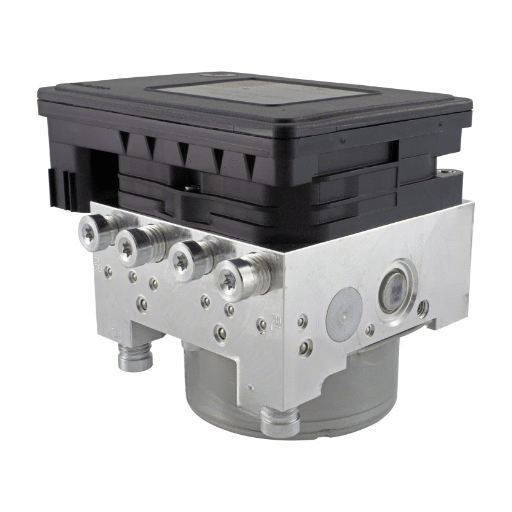
A soft pedal after a complete 7-step bleed indicates one of three problems: residual air, a leak, or a failed master cylinder. Understanding how to bleed ABS hydraulic unit systems thoroughly is the best way to rule out the first cause before suspecting the other two.
Re-Bleed Decision Tree
- Pedal soft immediately after bleed, no external leaks: Return to Step 3 and repeat the full procedure. Most intermittent soft pedals trace to a single missed bleeder or incomplete solenoid cycle.
- Pedal soft after sitting overnight: Check for external leaks at lines, hoses, and calipers. If dry, the master cylinder may be bypassing internally.
- Pedal soft only when engine is running: Verify vacuum booster or hydro-boost function. A failing booster mimics a soft pedal but is not a hydraulic fault.
- Pedal firms up after multiple pumps: Classic air symptom. Re-bleed, concentrating on the wheel circuit that produced the most bubbles during the first attempt.
When to Suspect a Failed Master Cylinder
If repeated bleeding produces bubble-free fluid at all four wheels, the pedal still sinks under sustained pressure, and no external leaks exist, the master cylinder is bypassing internally. The primary seal allows fluid to return to the reservoir instead of holding pressure in the lines. Replace the master cylinder and repeat Steps 2 through 7. For the broader decision framework on when component replacement is required, see our ABS pump replacement cost framework and procedure.
Mini-story, 2023 fleet bleeding sequence error. A Class 6 fleet in Atlanta standardized an RR-RF-LR-LF bleeding sequence across all trucks in 2022, based on a technician’s personal preference rather than manufacturer specification. In June 2023, four trucks experienced unexpected ABS activation on dry pavement during routine stops. Investigation traced the issue to air remaining in the left-rear circuit due to incorrect sequence. After switching to the manufacturer-specified RR-LR-RF-LF sequence and re-bleeding all 34 trucks in the fleet, the false activations stopped. The fleet manager documented the incident and now requires service information confirmation for every bleed sequence.
Frequently Asked Questions
Q: Can you bleed ABS brakes without a scan tool?
A: Yes, using the manual two-person method with solenoid cycling. However, the ABS auto bleed scan tool method is faster and more thorough. Without a scan tool, you can still learn how to bleed ABS hydraulic unit assemblies manually using the ABS-stop-and-re-bleed alternative method described in Step 4.
Q: How much brake fluid do I need to bleed an ABS?
A: Plan on 1 to 2 liters for passenger vehicles and 2 to 3 liters for commercial trucks. The ABS hydraulic unit bleeding procedure consumes more fluid than conventional brake bleeding because the modulator chambers add internal volume.
Q: What happens if I do not bleed the ABS module after replacing it?
A: Air trapped in the modulator chambers will migrate into the wheel circuits the first time the ABS activates. The pedal will go soft, often without warning. In extreme cases, braking performance is reduced enough to increase stopping distance.
Q: How do I know if my scan tool can auto-bleed ABS?
A: Check the tool’s coverage list for “ABS Bleed,” “Auto Bleed,” or “Brake Fluid Bleeding” under special functions for your specific vehicle year, make, and model. Generic OBD-II readers cannot perform this function. Bidirectional tools with OEM-level coverage are required.
Conclusion
Knowing how to bleed ABS hydraulic unit assemblies correctly is what separates a one-and-done repair from a comeback that costs labor, fluid, and customer trust. The 7-step procedure (pre-inspection, master cylinder bench bleed, wheel circuit bleed, solenoid cycling, scan tool auto-bleed if available, final wheel bleed, and pedal verification) addresses the one factor that makes ABS bleeding different from conventional brake bleeding: the modulator valve block with its internal chambers, accumulator, and pump circuit.
For passenger vehicles the targets are bubble-free fluid at all four wheels, firm pedal travel between 120 and 150 mm, and an ABS warning lamp that stays off after an ignition cycle. For commercial 24V systems the targets are the same but with 2 to 3 liters of fluid, longer pump cycling times, and strict documentation for fleet compliance. Whether you are using a 30 manual bleed kit or a 3,500 scan tool platform, the discipline is the same: bleed the modulator, not just the wheels.
If your bleeding procedure confirms the HCU itself is faulty, LOYAL INDUSTRIAL PTE. LTD. supplies bench-tested replacement ABS hydraulic units for passenger and commercial applications with documented pre-shipment pressure and solenoid verification. Contact our engineering team for unit specifications, compatibility confirmation, and bulk fleet pricing.